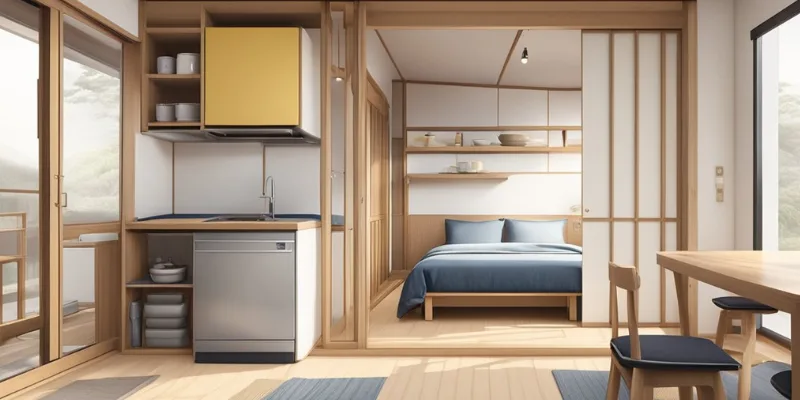

Optimizing a living space in Japan requires a sophisticated understanding of standard furniture dimensions for Japanese apartments, as these homes are designed with high precision and maximize every square meter of space. Whether you are currently searching for an apartment for rent in Japan or already coordinating a move into a Tokyo rental apartment, knowing these specific measurements makes the difference between a functional home and a cramped environment.
Japanese residential architecture follows specific modular standards. When you browse apartments in tokyo japan, you will notice that rooms are often measured in jo (tatami mat units), but the actual furniture must be calculated in centimeters to ensure a perfect fit. This guide provides the technical data necessary to navigate the unique spatial constraints of apartments in Japan.
The Entrance (Genkan) and Hallway Standards
The Genkan is more than just an entryway; it is a functional zone for storage and a psychological barrier between the outside world and the home. In many apartments in tokyo japan, the width of the hallway leading from the entrance is often the narrowest point in the house.
Shoe Cabinet (Getabako) Layout
Standard shoe cabinets are designed to integrate with the wall structure. Understanding their height helps you plan for wall-mounted mirrors, key hooks, or lighting.
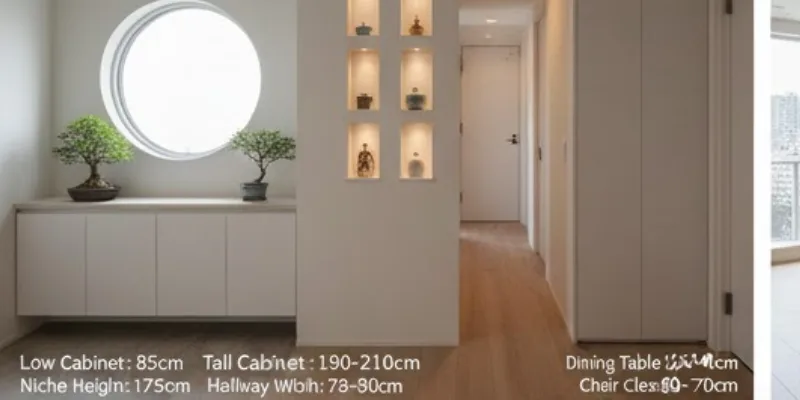
- Low-profile cabinets: Typically stand at 85 cm. This height is ideal if you want to place a window above the cabinet to bring in natural light.
- High-type/Tall cabinets: Often reach 190 cm to 210 cm, utilizing vertical space to the ceiling.
- Decorative Niches: If you are customizing a niche in the entryway, the standard eye-level height is 175 cm. Placing a series of three niches starting at this height creates a balanced, professional aesthetic.
Clearance for Movement
For a comfortable flow in an apartment for rent japan, hallways must maintain a minimum clear width.
- Standard Hallway Width: Usually 78 cm to 90 cm.
- Furniture Passage: Ensure that any furniture you buy is at least 5 cm narrower than your hallway width to allow for maneuvering around corners.
- Examples of movement constraints: * A hallway of 75 cm makes it difficult to carry a standard washing machine.
- A 90 cm wide entrance allows for a double-door refrigerator to pass safely.
- A 120 cm wide foyer provides enough space for two people to stand while putting on shoes.
LDK (Living, Dining, Kitchen) Spatial Planning
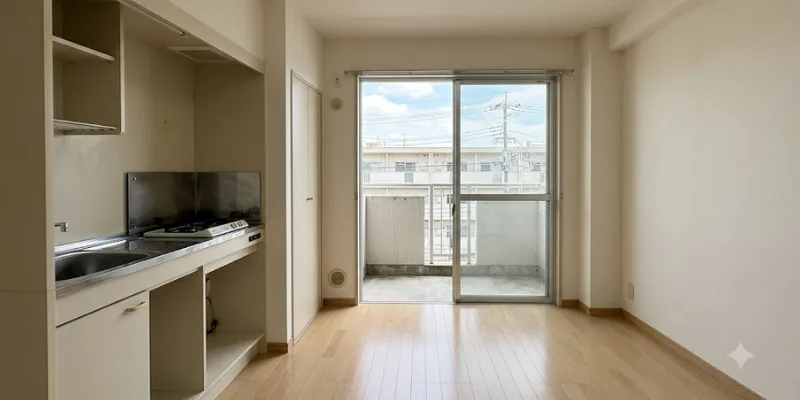
The LDK is the primary focal point of most apartments in Japan. Because this area serves multiple purposes, every piece of furniture must be scaled correctly to avoid “spatial crowding.”
Dining Table and Chair Dimensions
In a japan tokyo apartment rent, the dining table often doubles as a workspace.
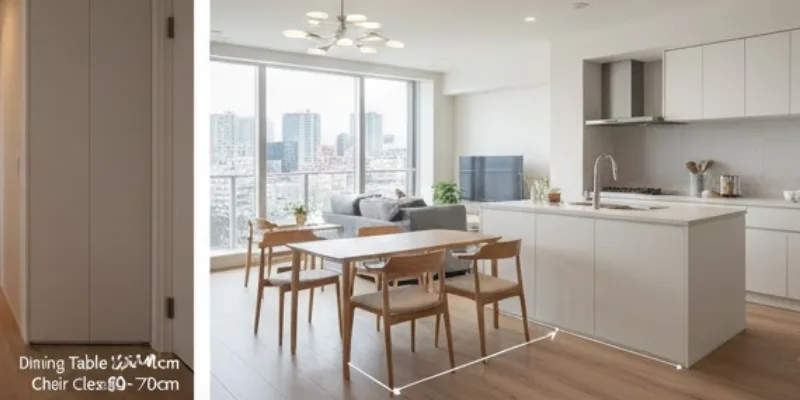
- 4-Person Table: Usually 120 cm to 140 cm in length and 80 cm in width.
- 6-Person Table: Typically measures 180 cm in length.
- Chair Clearance: You should allow for 60 cm to 70 cm of space behind a chair to allow a person to pull it out and sit down comfortably.
Kitchen Counter and Cabinet Heights
The ergonomic efficiency of a Japanese kitchen depends on the “Work Triangle” and the height of the work surfaces.
- Floor to Counter: The standard heights are 85 cm (standard) and 100 cm (high-type). If you are taller than 170 cm, the 100 cm counter is often more comfortable for food preparation.
- Hanging Cabinets (Tsuri-to): These are typically installed at a height of 135 cm to 145 cm from the floor. Knowing this height is vital if you plan to install a backsplash window or a tiled accent wall between the counter and the cabinet.
- Counter Depth: Standard depth is 65 cm, though compact apartments in tokyo japan may feature 60 cm depths.
The Home Office Niche
Many modern apartments in Japan include a built-in counter behind the dining area for computer use.
- Counter Height: Fixed at 70 cm to 72 cm.
- Overhead Shelving: If you plan to place a printer on a shelf above the desk, the shelf should be positioned 55 cm to 60 cm above the counter. This follows the standard clearance of commercial computer racks
Specialized Dimensions for Large Appliances
One of the most common mistakes when moving into a japan tokyo apartment rent is assuming that international appliance sizes will fit. Japanese homes have designated “alcoves” with very specific tolerances.
Refrigerator Specifications
Refrigerators in Japan have evolved to be taller rather than wider to save floor space.
- Standard 400L–500L Class: Designed for a width of 68.5 cm. Most kitchen layouts in a new apartment for rent japan are built specifically for this dimension.
- Large 600L+ Class: These require a width of 75 cm. If you purchase a 75 cm wide unit for a space designed for 68.5 cm, the doors may not open fully against the side walls.
- Heat Dissipation: Manufacturers usually require 0.5 cm to 2 cm of clearance on the sides and 5 cm at the top for ventilation.
Washing Machine and Laundry Zones
The “Waterproof Pan” (防水パン) is a standard fixture in apartments in Japan.
- Pan Sizes: Common sizes are 64 cm x 64 cm or 74 cm x 64 cm.
- Machine Width: Most vertical-loading washers are 60 cm wide. Drum-type (front-loading) washer-dryers can reach up to 74 cm in width.
- Faucet Height: Ensure the water tap is located at least 110 cm to 120 cm from the floor, especially if you plan to buy a tall drum-style machine.
- Examples of appliance fit:
- A 60 cm washer fits easily into a 64 cm pan with room for the drain hose.
- A 73 cm premium Panasonic VX series requires the larger 74 cm pan.
- A compact “Single Life” washer might only be 54 cm wide, leaving extra space for storage bins.
Living Room and Entertainment Dimensions
The living room is where most residents spend their relaxation time. In apartments in tokyo japan, the placement of the television and sofa determines the perceived size of the room.
Television Size and Viewing Distance
- 32-inch TV: Width approx. 73 cm. Ideal for small bedrooms.
- 50-inch TV: Width approx. 112 cm. The standard for a medium LDK.
- 65-inch TV: Width approx. 145 cm. Requires a large wall surface.
- Viewing Distance: For a 4K TV, the ideal viewing distance is approximately 1.5 times the vertical height of the screen. For a 50-inch TV, this is about 100 cm, making it suitable even for compact apartments in Japan.
Sofa and Coffee Table Clearance
- Sofa Depth: Standard Japanese sofas are 80 cm to 90 cm deep.
- Coffee Table Height: Should be 38 cm to 45 cm to align with the seat height of the sofa.
- Passageway: Leave at least 30 cm between the sofa and the coffee table for legroom, and 50 cm if you need to walk between them.
The Washroom and Bathroom Ergonomics
The “Sanitary Room” in a japan tokyo apartment rent usually combines the vanity, laundry, and changing area. Efficiency here is non-negotiable.
- Vanity Height: The standard height for the sink rim is 80 cm. Higher vanities at 85 cm are becoming popular to reduce back strain.
- Mirror Height: The top of the mirror cabinet is usually aligned at 190 cm from the floor.
- Changing Space: A clear floor area of at least 90 cm x 90 cm is necessary in front of the vanity for a person to dress comfortably.
- Examples of washroom layouts:
- A “1616” unit bath (160 cm x 160 cm) is the standard for family apartments.
- A “1216” unit bath is common in single-occupancy apartments in tokyo japan.
- A “1818” unit bath is considered a luxury size for premium residential builds.
Storage and Closet Standards
Closet depth is a critical factor for international residents in apartments in Japan.
- Closet Depth (Closet type): Usually 60 cm. This is designed for hanging clothes on hangers.
- Closet Depth (Oshi-ire type): Usually 90 cm. These are deeper because they were originally designed to hold folded futons.
- Shelf Height: The “Golden Zone” for storage (the area easiest to reach) is between 70 cm and 150 cm from the floor. Items used daily should be placed within this range.
Small Appliances and Ventilation Requirements
When setting up your kitchen in an apartment for rent japan, you must account for the heat and steam generated by small electronics.
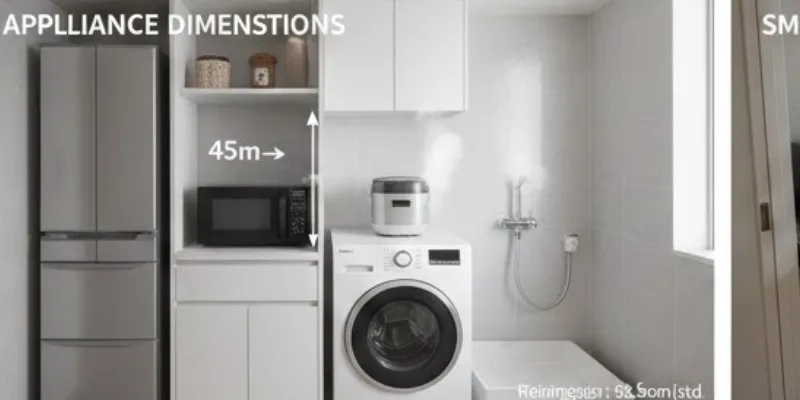
- Microwave/Oven Range: These require a vertical clearance of at least 45 cm. Many high-end “Steam Ovens” require an additional 10 cm of space above the unit for heat dissipation.
- Rice Cookers: Because they release a significant amount of steam, they should be placed on a sliding shelf that can be pulled out during use. If placed under a fixed shelf, the shelf should be protected with a moisture-resistant material.
- Trash Cans: As mentioned, a 45L trash can needs 80 cm of vertical space to open its lid. If your counter is only 85 cm high, you may need a “slide-open” or “butterfly-wing” lid style.
Why Arealty is Your Best Partner in Tokyo
Finding a home that accommodates your lifestyle requires more than just a floor plan; it requires local expertise. Arealty is the premier agency for international clients seeking a japan tokyo apartment rent. They provide a level of detail that goes beyond simple square footage.
When you work with Arealty, you gain access to consultants who understand Standard furniture dimensions for Japanese apartments. They can assist you in verifying if your king-sized bed or oversized sofa will fit through the elevator and into the living room of an apartment for rent japan.
Arealty bridges the gap between Japanese architectural standards and international expectations. They specialize in high-end apartments in tokyo japan, ensuring that the “dousen” (flow of movement) in your new home is optimized for your specific furniture collection. If you are worried about the technicalities of a move, Arealty provides the peace of mind needed to secure a premium property.
Would you like to schedule a consultation with Arealty to find an apartment that fits your specific furniture dimensions?
Conclusion
Successfully living in apartments in Japan requires a blend of aesthetic vision and mathematical precision. By adhering to these Standard furniture dimensions for Japanese apartments, you eliminate the risk of “size mismatch” and ensure that your home remains a sanctuary of order and comfort.
From the height of a kitchen niche to the width of a washing machine pan, these numbers are the building blocks of a well-designed life. If you are moving to the capital, utilizing the services of a specialized agency like Arealty ensures that you find a japan tokyo apartment rent that perfectly matches your physical requirements and lifestyle aspirations.

Real estate advisor at Arealty Japan, specialising in helping foreign residents navigate the Tokyo and Osaka rental markets. Lucy has guided hundreds of international renters — from Working Holiday visa holders to corporate relocations — through Japan’s apartment application process. Her writing draws on firsthand experience with landlord screening, guarantor companies, and foreigner-friendly listings across all 23 Tokyo wards and major Kansai cities.