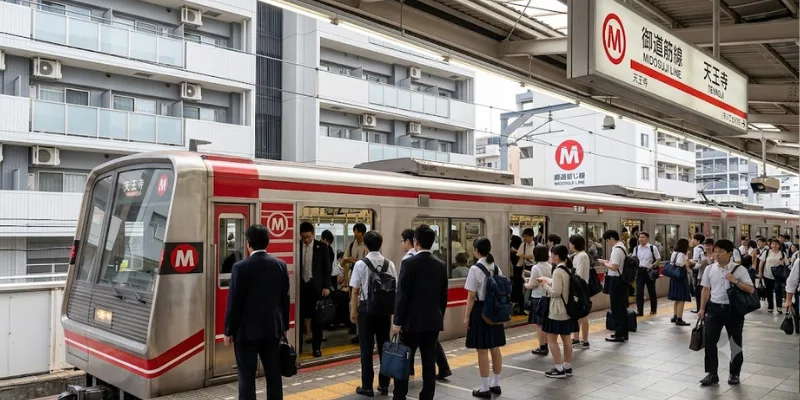

Finding a permanent residence in a foreign country is a significant milestone that requires meticulous planning and strategic execution. For expatriates, students, and professionals, a comprehensive Apartment hunting checklist Japan is an indispensable tool to navigate the unique complexities of the local real estate market. Whether you are looking for apartments in Japan for the first time or relocating within the metropolis, understanding the procedural nuances ensures a smooth transition into your new life.
The Japanese rental market operates on distinct traditions, specific terminology, and rigorous screening processes that differ significantly from Western standards. By following a structured approach, you can filter through thousands of apartments in Tokyo Japan to find a space that aligns with your lifestyle, professional needs, and budget. This guide provides an extensive framework to transform a potentially overwhelming search into a manageable and successful journey.
Defining Your Search Parameters for Apartments in Japan
Before browsing listings or contacting agents, you must establish clear criteria to narrow down the vast selection of apartments in Japan. Defining your “must-have” features versus “nice-to-have” amenities allows you to make objective decisions when comparing multiple properties in a fast-moving market.
Budgeting Beyond the Monthly Rent
When calculating your budget for a Japan Tokyo apartment rent, you should account for the substantial initial costs, often referred to as “Initial Costs” or Initia-kostu. In Japan, the move-in costs typically range from 4 to 6 times the monthly rent. These costs include:
- Reikin (Key Money): A non-refundable gratitude payment to the landlord, which is a traditional custom in Japan.
Example: The apartment DIPS Narimasu – 104 in Itabashi-ku, Tokyo, is a prime example of a “No Key Money” property. According to its initial cost breakdown, the Key Money (Reikin) is listed as ¥0. This allows the tenant to move in without the burden of paying the customary one or two months’ worth of rent as a gift to the landlord, significantly lowering the upfront costs. - Shikikin (Security Deposit): A refundable deposit used for repairs or cleaning upon moving out.
Example: The apartment S-RESIDENCE Takashimadaira asolea – 302 in Itabashi-ku, Tokyo, serves as an excellent example of a “No Security Deposit” listing. In the initial cost breakdown, the Security Deposit (Shikikin) is listed as ¥0. By choosing a property with no deposit, tenants can reduce their move-in costs, though they should remain aware that cleaning or repair fees may still be billed separately at the end of the lease. - Guarantor Company Fees: A fee paid to a company that acts as your financial co-signer, often required for foreigners.
- Brokerage Fee: A commission paid to the real estate agency, usually equivalent to one month’s rent plus tax.
Prioritizing Location and Transit
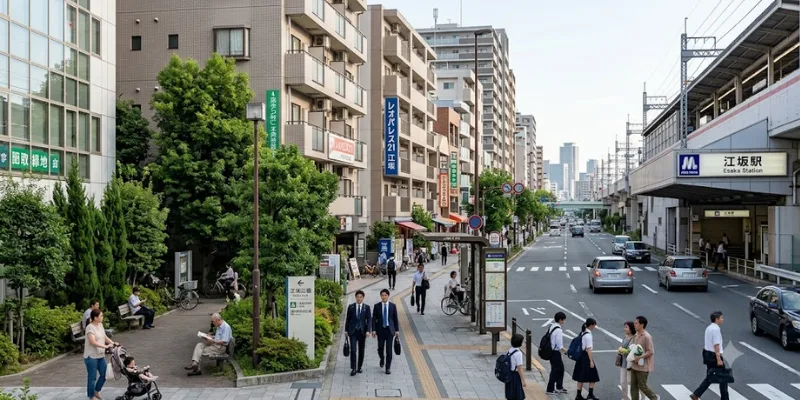
The convenience of your daily commute is the primary factor affecting property value in major cities. Living near major train lines, such as the Yamanote Line, Chuo Line, or Toyoko Line, increases accessibility but also raises the price of apartments in Tokyo Japan.
If you are looking for specific neighborhoods, exploring diverse residential hubs can help you find the best balance between cost and location. You can browse available listings in popular areas through the following links:
Apartments for rent in Chiba – A great option for those seeking more spacious and affordable housing within a manageable commute to central Tokyo.
Apartments for rent in Shinjuku – Stay in the heart of Tokyo’s most vibrant commercial and transport hub.
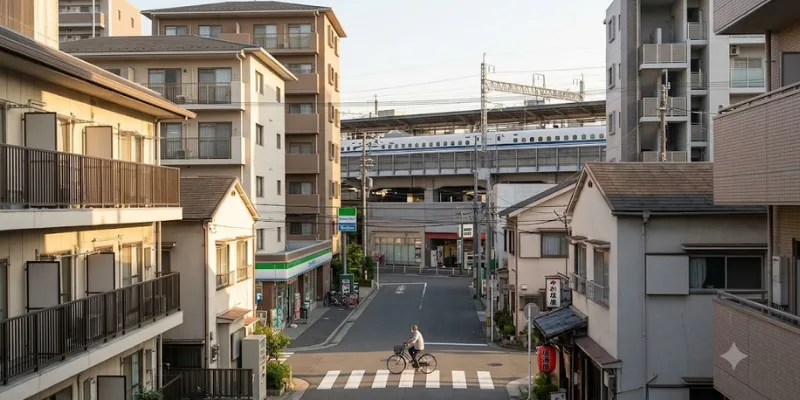
Consider the distance to the nearest station meticulously; a 5-minute walk versus a 15-minute walk can significantly impact your daily quality of life and the monthly rent. If you work in a central district like Shinjuku or Shibuya, searching two or three stations further away on a local line can often save you 10,000 to 20,000 Yen in monthly rent.
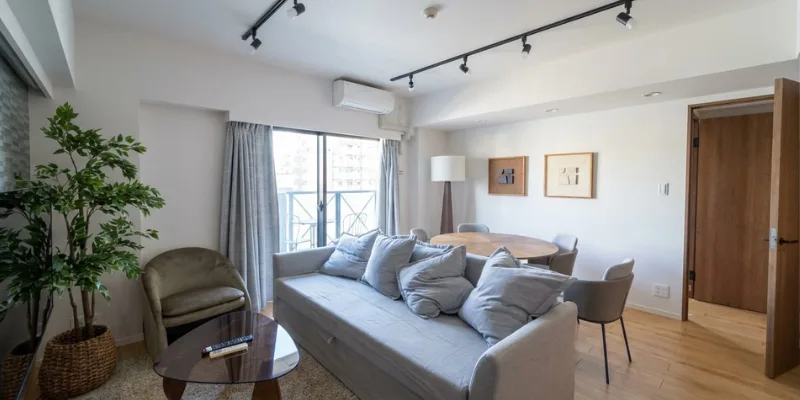
The Comprehensive Apartment Hunting Checklist Japan
A systematic checklist prevents oversight during the high-pressure environment of property viewings. Using a detailed Apartment hunting checklist Japan ensures that you evaluate every unit against the same high standards of safety, comfort, and legality.
Structural Integrity and Material Inspection
The type of construction directly affects your comfort and safety. You should always verify the building material listed on the property sheet:
- Mokuzou (Wood): Often the most affordable option, but provides less soundproofing and insulation.
- S (Steel): Better than wood, but may still allow some noise transfer between units.
- RC (Reinforced Concrete) or SRC (Steel Reinforced Concrete): Offers the highest level of earthquake resistance and superior soundproofing.
Essential Amenities and Utilities
Modern apartments in Japan offer various specialized features that cater to international residents. Ensure the following are present if they are vital to your routine:
- Washlet Toilets: High-tech toilets with bidet functions, heated seats, and water-saving features.
- Kitchen Setup: Check whether the unit uses IH (Induction Heating) or Gas Stoves. If it is a gas stove, identify if it requires City Gas (cheaper) or LP Gas (Propane, usually more expensive).
- Air Conditioning Units: Confirm that “Air-con” units are pre-installed in both the living area and the bedroom, as buying and installing them yourself is a significant expense.
Neighborhood Environment and Convenience
The surrounding area is just as important as the unit itself. Visit the property at different times of the day to assess:
- Proximity to Essentials: Locate the nearest supermarkets (e.g., Life, Aeon, Seiyu), convenience stores (e.g., 7-Eleven, Lawson, FamilyMart), and drugstores (e.g., Matsumoto Kiyoshi).
- Noise Levels: Identify nearby construction sites, schools, or busy intersections that might cause daytime disturbances, or “Snack Bars” that might be noisy at night.
- Safety Features: Check for street lighting on the path from the station to the apartment and the presence of a Koban (police box) in the vicinity.
Navigating the Rental Process for Apartments in Tokyo Japan
Securing an apartment for rent Japan involves a multi-step verification process. Landlords and management companies prioritize stability and reliability in their tenants, especially when dealing with foreign residents.
The Application and Screening Stage
Once you find a suitable unit, you must submit a formal application (Moushikomi). The “Shinsa” or screening process usually takes 3 to 7 business days. During this time, the management company will verify your employment status, income level, and visa validity. It is beneficial to have your documents ready in advance, including:
- Residence Card (Zairyu Card): Front and back copies.
- Passport: Photo page and visa page.
- Proof of Income: A Gensenshushu-hyo (annual tax statement) or the three most recent pay slips.
- Certificate of Eligibility or Employment: To prove you are legally allowed to work and stay in the country.
Understanding the Role of the Guarantor
Most landlords require a guarantor (Hoshonin) to ensure rent payments. Since many foreigners do not have a Japanese relative to fill this role, using a Guarantor Company (Hoshon-gaisha) is the standard practice. This service typically costs between 50% and 100% of one month’s rent for the initial contract, with a smaller annual renewal fee (usually 10,000 Yen) thereafter.
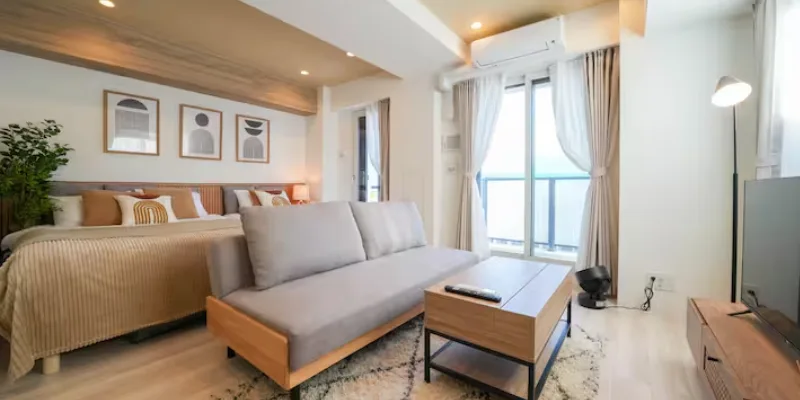
Arealty: Your Expert Partner in Japanese Real Estate
When searching for the perfect Japan Tokyo apartment rent, partnering with a specialized agency like Arealty provides a distinct competitive advantage. Arealty excels in bridging the gap between international residents and Japanese property owners, ensuring that language barriers or cultural differences do not hinder your housing search.
Arealty offers personalized consulting services that go beyond simple listings. Their experts understand every line item on the Apartment hunting checklist Japan, helping you identify properties that are officially “foreigner-friendly” and negotiating terms that suit your specific needs. By choosing Arealty, you gain access to:
- Exclusive Listings: Access to high-quality apartments in Tokyo Japan that may not be available on general public portals.
- Multilingual Support: Clear explanations of complex legal contracts, building rules, and “Set-up” procedures in English or other languages.
- Concierge Services: Guidance on setting up essential utilities such as electricity, water, and high-speed internet, which can be difficult for newcomers to navigate.
- Transparency: A commitment to explaining all hidden costs upfront, so you are never surprised by the final bill on contract day.
If you are ready to secure a premium living space without the stress and confusion of traditional hunting, contact Arealty today to begin your tailored property search with a team that puts your interests first.
Maximizing the Use of Real Estate Portals
In the digital age, utilizing platforms like LIFULL HOME’S, Suumo, or Homes is essential for monitoring the market. These portals allow you to apply filters that simplify the search for apartments in Japan.
Save Your Search Criteria
Setting up “New Arrival Notifications” ensures you are the first to know when a property matching your Apartment hunting checklist Japan becomes available. The market in Tokyo moves incredibly fast; highly desirable units are often rented within 24 to 48 hours of being listed.
Compare Multiple Listings via Data
Do not settle for the first “good” apartment you see. Use comparison tools to look at the price per square meter across different neighborhoods. This data-driven approach helps you identify if a Japan Tokyo apartment rent is priced fairly compared to the market average in areas like:
- Minato-ku: Premium pricing, high international presence, luxury high-rises.
- Setagaya-ku: Residential, family-friendly, more green spaces.
- Nakano-ku: Energetic, more affordable, popular with young professionals.
Long-term Considerations for Living in Japan
Selecting an apartment for rent Japan is not just about the four walls; it is about your long-term integration into the local community and understanding your legal rights as a tenant.
Trash Disposal and Community Rules
Every municipality (Ku or Shi) in Japan has strict rules regarding trash separation. You must learn the specific schedule for your neighborhood:
- Combustible waste: Generally collected twice a week (food scraps, paper).
- Non-combustible waste: Collected twice a month (metals, small plastics).
- Recyclables: Collected once a week (e.g., PET bottles, glass jars, aluminum cans, cardboard).
Failure to follow these rules can lead to friction with neighbors and formal warnings from the management company.
Renewal and Cancellation Policies
Most rental contracts in Japan are valid for 2 years (Futsu Chintai). Be aware of the Koushin-ryo (Renewal Fee), which is typically one month’s rent paid every two years to extend the lease. If you need to move out early, you must provide a “Cancellation Notice” (Kaiyaku Yokoku) at least 1 or 2 months in advance, depending on your contract. If you leave within the first year, some contracts may include an “Early Termination Penalty” equivalent to one month’s rent.
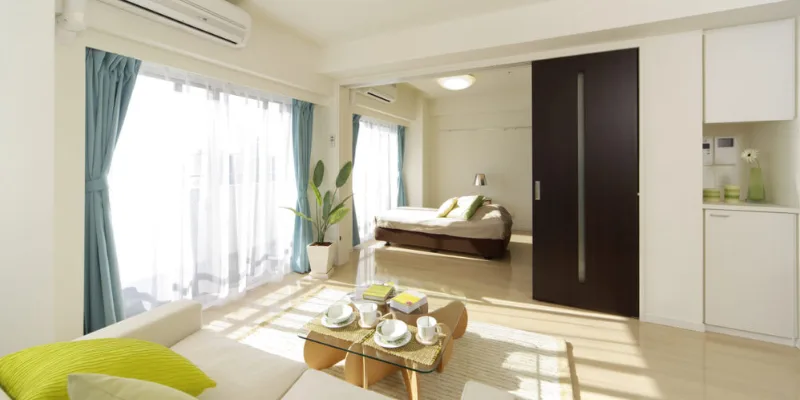
Professional Tips for a Successful Viewing
When you finally step inside a potential apartment for rent Japan, your observations should be sharp and focused. Use these professional tips to enhance your Apartment hunting checklist Japan:
- Check Cellular Reception: Walk around the room to ensure you have a strong mobile signal, especially if you plan to work from home.
- Measure Everything: Bring a tape measure to check if your existing furniture (like a Western-sized bed or refrigerator) will fit through the door and into the designated space.
- Smell and Sound: Be mindful of any lingering smells of tobacco or dampness, and listen for the sound of trains or neighbors while inside the unit with the windows closed.
- Water Pressure: With the agent’s permission, check the water pressure in the kitchen and bathroom sinks to ensure it meets your expectations.
Frequently Asked Questions (FAQ)
Q: Is it possible to rent apartments in Japan without a job? A: It is challenging but possible if you can show significant savings or have a scholarship. Some landlords may accept a “Pre-paid rent” arrangement where you pay six months to a year of rent upfront to prove financial stability.
Q: Are utilities included in the Japan Tokyo apartment rent? A: Generally, no. Tenants are responsible for setting up and paying for electricity, gas, and water separately. However, some modern “mansion” buildings or “Social Residences” may include high-speed internet or water in the management fee.
Q: Can I negotiate the rent or the Key Money? A: Negotiation is possible, especially during the “off-season” from May to August. You may have success asking for a reduction in Key Money or a “Free Rent” period of 15 to 30 days if the property has been vacant for an extended period.
Q: What is the difference between an “Aparto” and a “Mansion”? A: An Aparto is usually a two-story building made of wood or light steel. A Mansion refers to a multi-story building made of reinforced concrete, offering better security, elevators, and soundproofing.
Conclusion
Navigating the market for apartments in Tokyo Japan requires a blend of patience, local knowledge, and organizational skills. By utilizing a rigorous Apartment hunting checklist Japan, you protect yourself from making emotional decisions and ensure that your new home meets all safety, financial, and functional requirements.
The Japanese real estate market is highly rewarding for those who are prepared. The best deals disappear quickly, so having your documents organized, your budget finalized, and a trusted partner like Arealty by your side is vital for success. Start your search early, stay disciplined with your criteria, and you will find a space that truly feels like home in the Heart of Japan.

Real estate advisor at Arealty Japan, specialising in helping foreign residents navigate the Tokyo and Osaka rental markets. Lucy has guided hundreds of international renters — from Working Holiday visa holders to corporate relocations — through Japan’s apartment application process. Her writing draws on firsthand experience with landlord screening, guarantor companies, and foreigner-friendly listings across all 23 Tokyo wards and major Kansai cities.