
Disclosure: Arealty is a licensed real estate advisory service specializing in international student placements across Tokyo. Housing policy details in this guide are sourced directly from Temple University Japan’s official publications. Students should verify current requirements and deadlines at tuj.ac.jp before making housing decisions.
Temple University Japan (TUJ) is the oldest and largest American university campus in Japan, located in Setagaya Ward, Tokyo — with a satellite campus in Fushimi Ward, Kyoto, opened in Spring 2025. As of 2025, TUJ enrolled approximately 3,538 degree students from 67 countries.
Housing is one of the most pressing practical concerns for incoming TUJ students, particularly those arriving from overseas without prior Japan experience. This guide covers your options at every stage: first-semester requirements, what TUJ provides, and how to find independent housing after the mandatory dorm period ends.
Understanding TUJ’s Housing Requirements
Mandatory First-Semester Dorm Requirement
All students receiving a new student visa sponsored by TUJ are required to stay in TUJ dorms. Fall or spring start students must stay in TUJ dorms for two consecutive semesters. Fall start students may elect to stay for up to three semesters provided full-time class registration is confirmed. Spring start students are required to stay for two semesters unless they elect not to take summer courses and return home. Summer start students can only stay one semester.
This requirement exists primarily to help newly arrived international students settle into Japan before navigating the private rental market — which requires Japanese language skills, income documentation, and guarantor arrangements that most first-semester students do not yet have.
Who this requirement does not apply to:
- Students who receive an approved housing waiver
- Students who arrange a homestay through TUJ’s partner agency, Nextage
- Visa switchers (students who already have a valid Japanese visa from another source)
Starting Fall 2026: Multi-Semester Housing
Starting from the fall 2026 semester, TUJ is providing students with multi-semester housing, including a brand-new dorm option in nearby Yoga that is very convenient to campus. Visa-sponsored students entering TUJ in the fall or spring semesters need to stay in TUJ dorms for 2 consecutive semesters unless an exception applies.
The new Yoga Parkside Residence is particularly relevant for students who want to remain close to the Setagaya campus throughout their first year. Students should confirm availability and application deadlines directly with TUJ’s Office of Student Services and Engagement (OSSE).
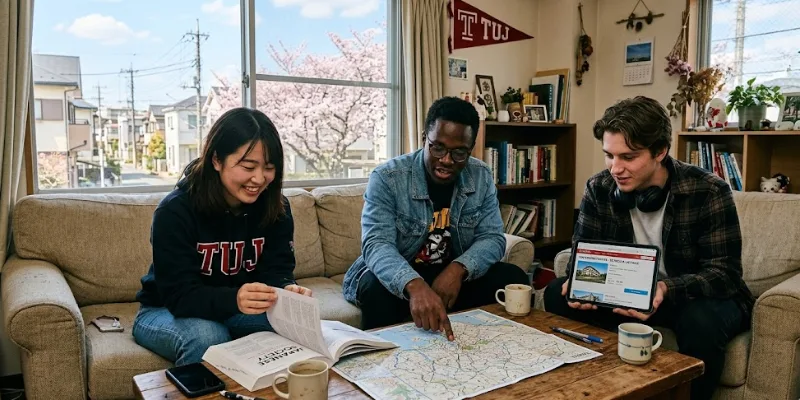
Option 1: TUJ Dorms (Tokyo Area)
TUJ uses dorm facilities in the greater Tokyo area and has a live-in dorm manager to support TUJ students. In accordance with Temple University policies, all TUJ facilities including the dorms are no-smoking and no-alcohol.
TUJ does not own its Tokyo dorm facilities — it contracts spaces in existing student housing buildings, which means inventory is limited and assigned on a first-come, first-served basis after the Housing Plan deadline.
Key practical points:
- Dorm costs include rent, utilities, internet, furnishings, and security — no hidden add-ons
- Students may stay between first and second semesters without additional fees
- After the required semester(s) of stay, students vacate the dorm and find independent housing such as private apartments or share houses.
- The Yoga Parkside Residence and Nogawadai Dorm do not offer direct private contract extensions — students wishing to remain must apply through TUJ’s allocation process
For the most current dorm costs, refer to TUJ’s tuition and fees page — costs are all-inclusive and subject to change.
Option 2: Homestay (via Nextage)
TUJ’s official homestay partner is Nextage (Homestay in Japan). This option places students with a Japanese host family, which provides:
- Japanese language immersion in a daily living context
- Breakfast and dinner included
- A more supported environment for students new to Japan
Homestays include breakfast and dinner. Visa-sponsored students choosing the homestay option provided by Nextage are required to stay for a minimum of one semester regardless of semester of entry.
Homestay is a good fit for students who want cultural immersion and additional language practice, and who are comfortable in a family-living environment. It is not ideal for students who prioritize independence or who have specific dietary or lifestyle requirements that may be difficult to communicate.
Option 3: Independent Housing (After Required Dorm Period)
This is where most TUJ students need the most guidance — and where the fewest resources exist.
After the first semester at TUJ dorms, newly arrived visa-sponsored students are responsible for finding their own housing. TUJ provides general information about alternative housing options, and mid-semester the university holds information sessions to provide housing-related information. Note that TUJ does not operate as a relocation service or real estate agency, and does not serve as a guarantor for housing.
In other words: TUJ will point you toward resources, but the search, application, and guarantor arrangement are entirely the student’s responsibility. This is where understanding the private rental market becomes critical.
What “Independent Housing” Actually Means in Japan
Japan’s private rental market involves several steps and costs that are unfamiliar to most international students:
Finding foreigner-friendly properties. Not all landlords in Tokyo accept foreign tenants, and not all will accept student visa holders specifically. TUJ recommends visiting foreigner-friendly real estate agents and specifying a preference for furnished apartments. Working with an agency that has existing relationships with foreigner-friendly landlords significantly reduces rejection rates.
Income and guarantor requirements. Most Japanese landlords require annual income of at least 36× monthly rent — which most students cannot document from their own income. For students whose parents are covering housing costs, a parental income guarantee letter is sometimes accepted as a substitute, though this varies by landlord and guarantor company.
Initial costs. Moving in Japan can be very expensive and there are many different fees real estate agencies charge. For private apartments you can expect to pay anywhere from 2 months rent up to 6 months rent for the entire move-in costs. For a ¥70,000/month apartment, that means ¥140,000–¥420,000 upfront before your first month of rent — a significant budget consideration for students.
For a full breakdown of what these initial costs include and which are negotiable, see our guide to renting in Japan as a foreigner.
Best Neighborhoods for TUJ Students in Tokyo
TUJ’s Tokyo campus is located in Setagaya Ward at Showa Women’s University’s campus. A second major facility near Mizonokuchi Station is scheduled to open in August 2026, which will expand the practical commute radius for students.
Neighborhoods Worth Considering
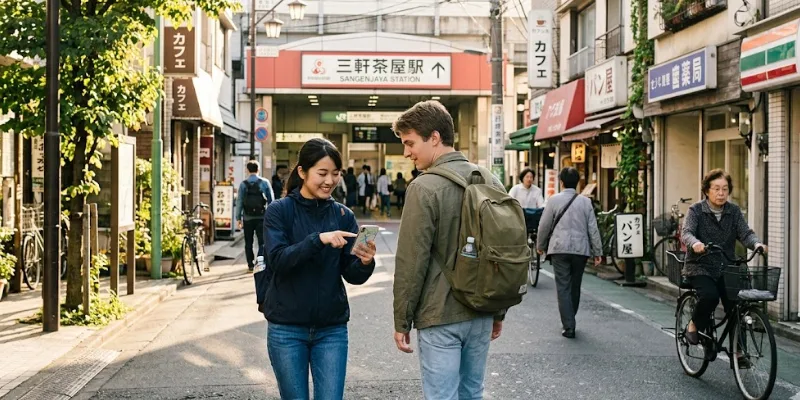
Sangenjaya (Setagaya Ward) Closest major neighborhood to TUJ Tokyo. Approximately 15–20 minutes from campus by bus and train combination. Dense with student-friendly cafés, restaurants, and convenience stores. Rent: 1K from ¥90,000/month. Strong expat community presence makes it one of the more foreigner-friendly rental markets in the area.
Shimokitazawa (Setagaya Ward) 15–20 minutes from TUJ campus. Popular with creative and internationally-minded students. One of the best rent-to-access ratios in the ward. Rent: 1K from ¥88,000/month.
Yoga (Setagaya Ward) Closest station to TUJ’s new Yoga Parkside dorm. For students transitioning from TUJ housing to independent apartments in the same neighborhood, Yoga offers a familiar environment with good access to campus. Rent: slightly higher than Shimokitazawa and Sangenjaya.
Mizonokuchi / Musashi-Kosugi area (Kanagawa) One to two stops from TUJ’s planned 2026 facility. Rents are significantly lower than central Setagaya — 1K from ¥70,000–¥85,000 — and the area is well-developed with student-friendly infrastructure. Worth considering for students on tighter budgets who are comfortable with a Kanagawa address.
Nakano / Suginami (western Tokyo) Further from TUJ campus (30–40 minutes) but meaningfully more affordable. 1K from ¥80,000–¥100,000. Good for students whose social life centers on Shinjuku or whose commute to campus is less frequent.
For a full comparison of these neighborhoods and rent ranges across all Tokyo wards, see our Tokyo 23 Wards apartment rental guide.
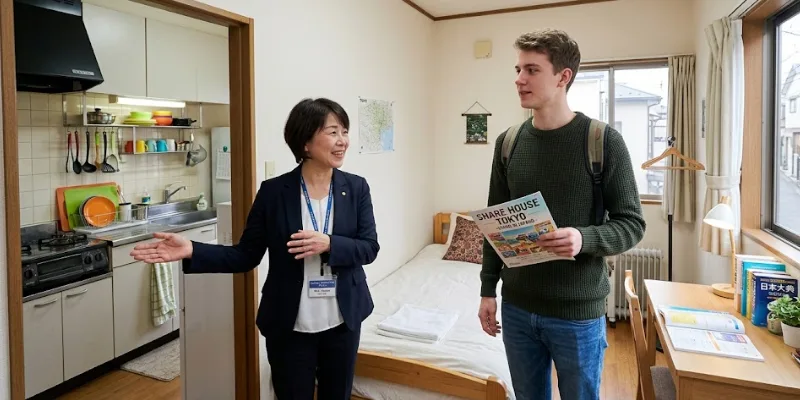
Share Houses: A Practical Middle Option
For students who do not qualify for TUJ dorms (or whose required dorm period has ended) and who are not yet ready to navigate the full private apartment application process, share houses are a genuinely viable option.
Share houses in Tokyo typically offer:
- No guarantor requirement (or lighter requirements than private apartments)
- Furnished rooms — no upfront furniture costs
- Flexible contract terms (1–3 months minimum, month-to-month renewal)
- All-inclusive bills in many cases
- Built-in social environment — useful for students new to Tokyo
Monthly costs for a share house room in Setagaya or adjacent areas typically run ¥50,000–¥80,000 all-inclusive — lower monthly cost than a private 1K apartment, with significantly lower initial costs.
The trade-off is privacy and space. A private room in a share house averages 10–16sqm, with shared kitchen and bathroom facilities. For students who need a quiet study environment, this can be a constraint.
For a full comparison of share house options versus private apartments for student renters, see our share house Japan guide.
Documents to Prepare Before Your Housing Search
Whether you are applying for a share house or a private apartment, having these documents ready before you begin viewing properties significantly speeds up the application process:
Always required:
- Residence card (在留カード) — issued on arrival in Japan, required for all rental applications
- Passport copy
- Student ID or enrollment certificate from TUJ (在学証明書)
Frequently required for private apartments:
- Proof of financial support: bank statements, scholarship documentation, or parental income guarantee letter
- Guarantor company application — the standard solution for student renters without a Japanese personal guarantor
Useful to have:
- Certificate of enrollment with expected graduation date — helps landlords assess lease duration compatibility with your student visa
- Contact details for TUJ’s Office of Student Services (for landlord reference requests)
For a complete document checklist and step-by-step application guide, see our student housing guide.
Understanding Lease Types for Student Visa Holders
One of the most common mistakes TUJ students make when searching for private housing is applying for a standard 2-year lease without considering whether their student visa timeline supports it.
Most student visas are renewed annually or bi-annually based on enrollment status. A 2-year lease is achievable for students enrolled in a 4-year degree program — but requires the landlord to be comfortable with annual visa renewals rather than a fixed long-term visa.
For students on shorter programs (1–2 year language courses or exchange semesters), a fixed-term lease (定期借家) set to match the program duration is usually more appropriate and more likely to be approved.
Our short-term vs 2-year lease guide explains how to match your lease type to your visa situation in detail — including what happens if your program extends or you decide to stay longer.
TUJ Kyoto Campus: Housing Overview
For students at TUJ’s Kyoto campus (established Spring 2025), housing options differ from Tokyo.
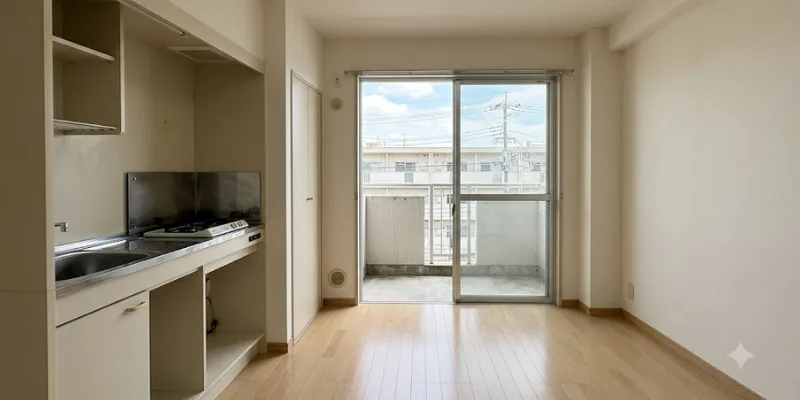
TUJ Kyoto’s International House (i-House) provides the perfect balance of convenience and tradition, surrounded by many local shops and historical sites. It is a brand-new building owned by TUJ opened in September 2025. Students can walk to Sumizome Station in under 5 minutes, one station away from Fujinomori Station — the nearest stop to TUJ Kyoto. All 19 units are approximately 23 sqm each, equipped with a bed, private bathroom, small kitchen, A/C, refrigerator, washing machine, microwave, and closet. High-speed Wi-Fi is provided.
Kyoto generally offers lower private rental costs than Tokyo — 1K apartments in student-accessible neighborhoods run ¥40,000–¥65,000/month, significantly below Tokyo equivalents. For students open to the Kyoto campus, the cost-of-living advantage is meaningful.
Timeline: Housing Planning for TUJ Students
3–4 months before arrival:
- Complete TUJ’s Housing Plan on the Application Hub by the deadline (mandatory for visa-sponsored students)
- Research independent housing options for after your required dorm period
- Open a Japanese bank account plan — most require a Japanese address (your dorm address will suffice initially)
During your first semester:
- Attend TUJ’s mid-semester housing information sessions
- Begin viewing apartments approximately 6–8 weeks before your dorm period ends
- Budget 2–6 weeks for the apartment search process, depending on availability and your specific requirements.
Before your dorm period ends:
- Confirm your chosen apartment, sign the lease, and arrange your move-in date
- Register your new address at the local ward office within 14 days of moving in
For guidance on address registration after moving — a legal requirement that many international students miss — see our Japan address registration guide.
Frequently Asked Questions
Do I have to live in a TUJ dorm as a new student?
All students receiving a new student visa sponsored by TUJ are required to stay in TUJ dorms. Fall or spring start students must stay for two consecutive semesters. Exceptions are limited — housing waivers are considered on a case-by-case basis, and the homestay option via Nextage satisfies the requirement as an alternative.
Can I stay in the TUJ dorm longer than the required period?
It might be possible to remain in the dorm through a private contract made directly with the dorm facility, except for Yoga Parkside Residence and the Nogawadai Dorm. Starting Fall 2026, multi-semester housing is available at TUJ.
What does the TUJ dorm cost?
Dorm costs are all-inclusive (rent, utilities, internet, furnishings, security). For current pricing, refer to TUJ’s tuition and fees page — costs are subject to change and are not reproduced here to avoid publishing outdated figures.
Does TUJ help with finding private apartments?
TUJ does not operate as a relocation service or real estate agency, and does not serve as a guarantor for housing. The university provides information sessions and a list of foreigner-friendly agencies, but students are responsible for their own search and application.
Can I rent a private apartment near TUJ campus as a first-semester student?
Students who receive a housing waiver may do so. Otherwise, the mandatory dorm requirement applies. For students who want to transition to a private apartment after their required dorm period, starting the search 6–8 weeks before the move-out date is recommended.
Further Reading
- Renting in Japan as a foreigner — step by step
- Student room sharing in Japan
- Share house Japan — complete guide
- Short-term vs 2-year lease Japan — which fits your visa?
- Tokyo 23 Wards apartment rental comparison 2026
- Setagaya apartment for rent — neighborhood guide
- Address registration in Japan after moving
Browse student-friendly apartments near TUJ’s Setagaya campus: arealty.mom/rent/tokyo
References
- Temple University Japan. Housing Requirements for Newly Accepted Visa Sponsored Students.
- Temple University Japan. Housing Options — Tokyo Area.
- Temple University Japan. Tuition and Fees — Housing.
- Temple University Japan. Finding Apartments in Tokyo and Surrounding Areas.
- Wikipedia. Temple University, Japan Campus.

Real estate advisor at Arealty Japan, specialising in helping foreign residents navigate the Tokyo and Osaka rental markets. Lucy has guided hundreds of international renters — from Working Holiday visa holders to corporate relocations — through Japan’s apartment application process. Her writing draws on firsthand experience with landlord screening, guarantor companies, and foreigner-friendly listings across all 23 Tokyo wards and major Kansai cities.