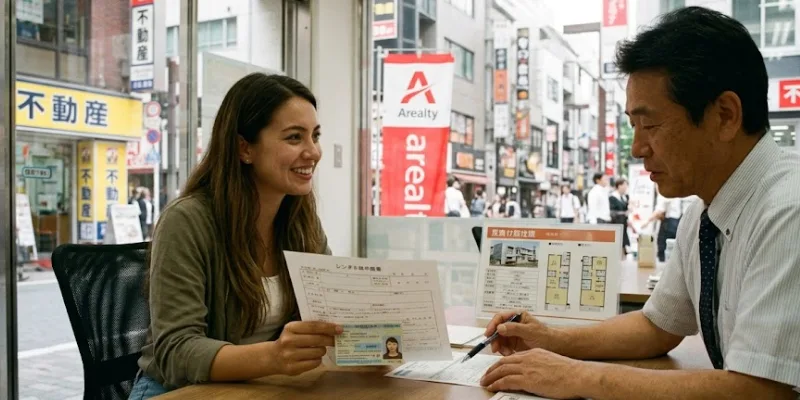

There are over 500,000 rental listings in Tokyo at any given time. The challenge for foreign renters is not finding apartments — it is knowing which ones you can actually apply for, what documents are required, and why applications get rejected even when the budget is right.
This guide focuses specifically on what is different about renting Tokyo apartments for rent as a non-Japanese national: visa requirements, guarantor rules, foreigner acceptance rates, and how to filter listings so you are not wasting time applying for units the landlord will not consider.
Not all Tokyo apartments accept foreign applicants
This is the first thing to understand. Japan has no law preventing landlords from refusing foreign tenants, and a portion of the private rental market still declines applicants without Japanese nationality — not because of formal policy, but because landlords are concerned about language barriers, lease enforcement, and cultural differences.
In practice, the acceptance rate depends heavily on the agency you use and which listings you target. Arealty pre-screens every listing on the platform for foreigner acceptance before it appears on arealty.mom/rent/tokyo — so every result you see is a unit where your application will be reviewed on merit, not filtered out at the landlord’s first glance.
The factors that most affect your chances:
- Visa type and remaining duration — most landlords want to see at least 6 months remaining on your Residence Card at the time of application
- Income stability — employment contracts, company payslips, or a Japan bank account with regular inflows are all accepted; cash income without documentation is not
- Guarantor company — almost all landlords now require a hosho gaisha (保証会社) rather than a personal guarantor; Arealty works with approved providers
The three things landlords check for foreigner applicants
When a Japanese landlord reviews a foreign applicant, the screening focuses on three areas that are different from how domestic applicants are evaluated.
1. Visa status and lease term alignment
A standard Tokyo lease runs two years. If your visa expires in eight months, most landlords will not approve the application — even if your income is strong — because they cannot legally bind you to a two-year contract you may not be able to fulfil.
Options if your visa has less than 12 months remaining:
- Apply for a short-term or monthly mansion option instead of a standard contract
- Time your apartment search to coincide with a visa renewal — many renters do this deliberately
- Some landlords will accept a 1-year contract for Working Holiday visa holders; your agent needs to specifically request this
2. Income verification without Japanese documentation
Japan’s standard income verification assumes Japanese payslips, a My Number card, and a tax certificate. Foreign nationals who are newly arrived, self-employed, or on a Working Holiday visa often do not have these documents yet.
What landlords accept as alternatives:
- Employment contract from a Japanese employer (even if just started)
- Last three months of payslips from your home country, with a Japanese translation
- Bank statements showing regular transfers from overseas
- Sponsor letter from an educational institution (for student visa holders)
- For Working Holiday: a deposit of 2–3 months rent as a substitute income buffer in some cases
For a complete checklist of documents by visa type, see our guide on what documents foreigners need to rent in Japan.
3. Guarantor company (hosho gaisha)
Japan moved away from personal guarantors toward professional guarantor companies over the past decade. For foreign renters, this is actually an advantage — you do not need to find a Japanese national willing to co-sign your lease.
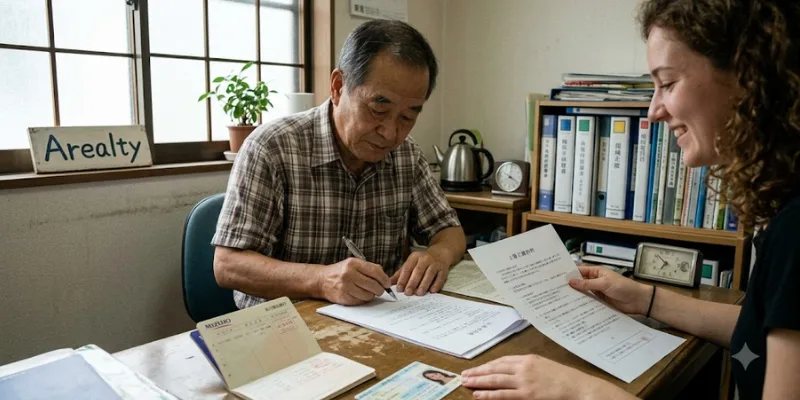
The hosho gaisha pays the landlord if you default, and you reimburse them. The typical cost is ¥30,000–¥60,000 as a one-time enrollment fee, plus an annual renewal fee of around ¥10,000–¥15,000. Arealty works with several approved hosho gaisha who have experience with foreign applicants across all visa types.
What “foreigner friendly” actually means on a listing
The phrase “foreigner friendly” on a Japanese rental listing can mean different things. Here is how to read it:
| What it says | What it means in practice |
| 外国人可 (foreigners accepted) | Landlord has pre-agreed to review foreign applicants |
| 英語対応 (English support) | Agency or management company has English-speaking staff |
| 礼金ゼロ (no key money) | Non-refundable reikin payment waived — reduces upfront cost by 1–2 months rent |
| 保証会社利用可 (guarantor company accepted) | No personal Japanese guarantor needed |
| Student friendly | Income requirements relaxed for enrolled students |
On Arealty’s Tokyo listings, you can filter directly for all of the above. The no key money and no deposit filter is particularly useful for foreigners who are managing upfront costs carefully — current listings with both conditions include units in Ota-ku (Asakusa Line) and Suginami-ku (Chuo-Sobu Line) starting from ¥156,000/month.
Which areas have the highest foreigner acceptance rates?
Without repeating the ward-by-ward price breakdown covered in our 23 wards comparison guide, here is the practical picture from an acceptance standpoint:
Highest foreigner acceptance rates tend to be in wards with large existing expat populations — Minato-ku (Roppongi, Azabu), Shinjuku-ku (Okubo, Takadanobaba), Toshima-ku (Ikebukuro), and Shibuya-ku. Landlords in these areas have more experience with foreign tenants and are less likely to decline on nationality grounds alone.
Middle-ring wards like Setagaya, Nakano, and Suginami have moderate acceptance rates — good inventory, more mixed depending on the specific building and management company.
Outer wards (Adachi, Katsushika, Edogawa) have lower foreigner acceptance rates despite having the cheapest rents. If budget is the priority, start with Nerima-ku and Itabashi-ku, which have better acceptance rates than the far-east wards while still offering rents under ¥80,000 for a 1K.
Browse directly by ward:
- Shinjuku apartments for rent — Yamanote & Chuo line
- Minato-ku apartments for rent — Hibiya line, expat hub
- Shibuya apartments for rent — Den-en-toshi & Ginza line
- Setagaya apartments for rent — Tokyu & Odakyu line
The foreigner rental timeline: what to expect
Many foreign renters underestimate how long the process takes in Japan. Here is a realistic timeline:
4–6 weeks before move-in: Begin your search. Share requirements with Arealty — area, budget, layout, visa type, move-in date. Our team shortlists foreigner-accepted units only.
3–4 weeks before: Start viewings (online or in person). For overseas applicants, video viewings are available and recommended before applying.
2–3 weeks before: Submit application. Screening typically takes 3–7 business days for approved hosho gaisha applicants.
1 week before: Sign contract, pay initial fees. Initial fees (deposit + agency fee + first month + hosho gaisha enrollment) are typically due in a lump sum at signing.
Move-in day: Keys handed over. Utilities activated same day in most cases.
One critical note: Japanese landlords cannot reserve a unit during the screening process. If you find a listing you want, apply quickly — particularly for no-key-money listings, which move faster than standard inventory.
Applying for a Tokyo apartment from overseas
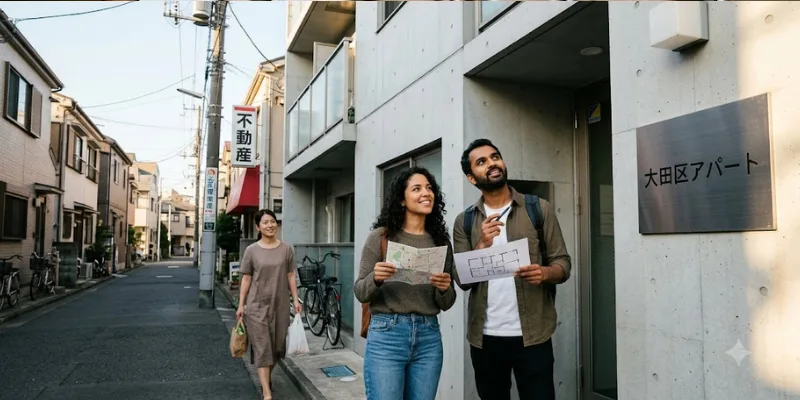
If you are planning to move to Japan and need to secure housing before arrival, this is possible but has specific constraints.
Landlords will not sign a contract with someone who has not entered Japan yet — so the contract cannot be completed until you have your Residence Card. What you can do before arriving:
- Shortlist units with Arealty — we hold informal reservations and prioritise your application once you arrive
- Complete a video viewing so you know exactly which unit you want to apply for
- Prepare all documents in advance (employment letter, bank statements, translated copies) so the application can be submitted within days of your arrival
- Plan your arrival date to align with your preferred move-in — most landlords offer a move-in window of 2–4 weeks after contract signing
For students arriving before their school’s intake date, our guides for Temple University Japan housing and ISI Language School July intake housing cover the specific timelines for each institution.
Frequently asked questions
Can foreigners rent apartments in Tokyo without a Japanese guarantor?
Yes. The vast majority of Tokyo landlords now work with hosho gaisha (guarantor companies) as a standard alternative. Arealty partners with approved providers who accept all major visa types, including Working Holiday and student visas. You do not need a Japanese contact to co-sign your lease.
What visa types are accepted for Tokyo apartment rentals?
Work visa, spouse visa, student visa, and Working Holiday visa are all accepted by landlords who work with Arealty. Tourist visa holders cannot enter into a standard 2-year rental contract — if you are on a tourist visa and need housing, a monthly mansion is the correct option.
How much does it cost to move into a Tokyo apartment?
Initial move-in costs typically total 3–5 months of your monthly rent. This includes: security deposit (1–2 months), agency fee (1 month + 10% tax), first month’s rent, and hosho gaisha fee (¥30,000–¥60,000 flat). For listings with no key money and no deposit, the total can come down to 2–3 months rent upfront.
How long does the application take?
Screening takes 3–7 business days after all documents are submitted. The full process from first viewing to keys typically runs 2–3 weeks.
Will I need to speak Japanese?
Not with Arealty. Our team handles all communication with landlords, management companies, and hosho gaisha in Japanese on your behalf. Contracts are provided with English summaries.

Browse Tokyo apartments for rent
Every listing on Arealty is foreigner-accepted, bilingual-supported, and filter-ready for no key money and no deposit options.
Browse all Tokyo apartments for rent → arealty.mom/rent/tokyo
Browse by ward:
- Shinjuku apartments for rent
- Minato-ku apartments for rent
- Shibuya apartments for rent
- Setagaya apartments for rent
Written by the Arealty editorial team. Arealty (株式会社A-Realty) is a licensed real estate agency (宅地建物取引業) registered in Tokyo. All information reflects current market conditions and active listings as of May 2026. Individual outcomes vary by building, landlord, and applicant profile.

Real estate advisor at Arealty Japan, specialising in helping foreign residents navigate the Tokyo and Osaka rental markets. Lucy has guided hundreds of international renters — from Working Holiday visa holders to corporate relocations — through Japan’s apartment application process. Her writing draws on firsthand experience with landlord screening, guarantor companies, and foreigner-friendly listings across all 23 Tokyo wards and major Kansai cities.