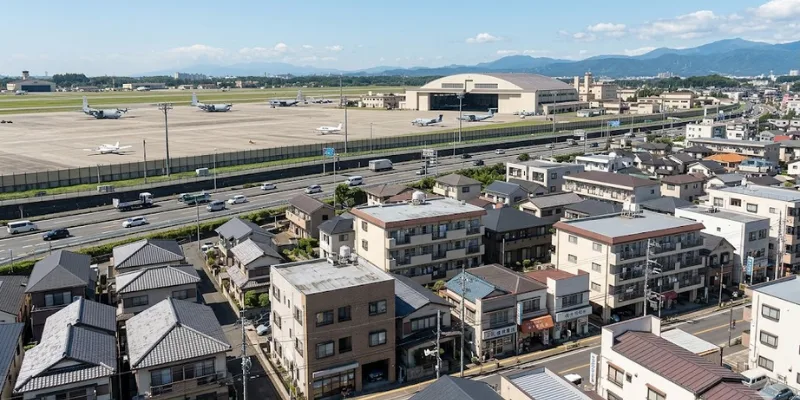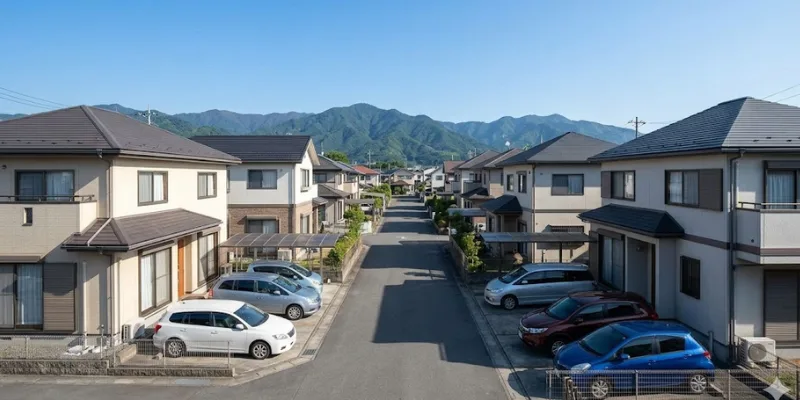

Mizuho Tokyo apartments for rent near Yokota Air Base sit in some of the least-covered territory in Japan rental guides — the Nishitama District towns of western Tokyo that function as the outer residential ring around the base. Mizuho town, along with Hamura city and Musashimurayama city, forms the northern arc of the Yokota commuter zone. These are not the areas you find in mainstream Tokyo rental searches. They are car-dependent, low-density, and almost entirely oriented around commuting to either Yokota Air Base or the industrial corridor along Route 16.
This guide covers what Mizuho, Hamura, and the Nishitama towns offer near Yokota. Topics include realistic rents, foreigner acceptance in practice, and commute times from each area. For the full Yokota housing overview, start with the Yokota Air Base apartments for rent guide before reading this area-specific guide.
Mizuho Tokyo Apartments for Rent Near Yokota: The Geography
Mizuho Tokyo apartments for rent are located in Mizuho-machi (瑞穂町) — a small town of approximately 32,000 residents in western Tokyo’s Nishitama District. The district sits between suburban Tokyo and the Okutama mountain foothills. It is bordered by Saitama to the north and connects to Yokota’s perimeter on its southern edge.
The Yokota commuter zone in Nishitama covers three main towns.
- Mizuho-machi (瑞穂町): directly adjacent to the northern fence line of Yokota Air Base
- Hamura-shi (羽村市): northwest of the base, along the Ome Line and Tama River
- Musashimurayama-shi (武蔵村山市): northeast of the base, less transit-connected but low rent
These towns share a common profile. All are car-dependent, low-rise, and residential. Each has a strong military community presence and a rental market built around Yokota families over decades. The northern Nishitama towns are quieter, more residential, and lower-cost than Fussa-shi. For the broader base housing landscape, see the Sagamihara apartment guide.
Mizuho Town (瑞穂町) — What to Expect
Mizuho-machi sits directly north of Yokota’s main installation perimeter. The base’s northern fence line runs along the town’s southern boundary. This makes Mizuho one of the few greater Tokyo communities where military jet noise is an occasional part of daily life. Most long-term residents habituate to this quickly; some do not. It is worth being honest about this before committing to a Mizuho apartment.
What Mizuho offers: very low rents by Tokyo standards, strong parking availability (almost all units include at least one space), low street density, and proximity to the base’s northern entry points. The Hakonegasaki area of Mizuho has a small commercial strip with supermarkets, convenience stores, and some military-oriented businesses.
Transit: Mizuho has no train station. Access to JR or Seibu lines requires driving or taking a community bus to Haijima (JR Ome Line) or Higashi-Tokorozawa. This is the most significant practical constraint in Mizuho for family members who need Tokyo access without a car.
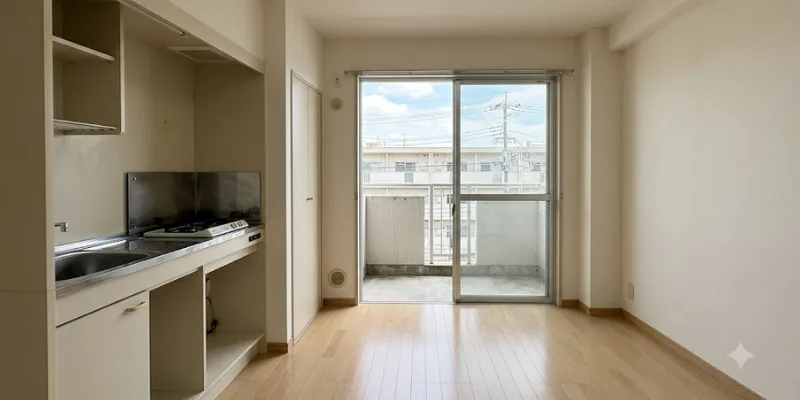
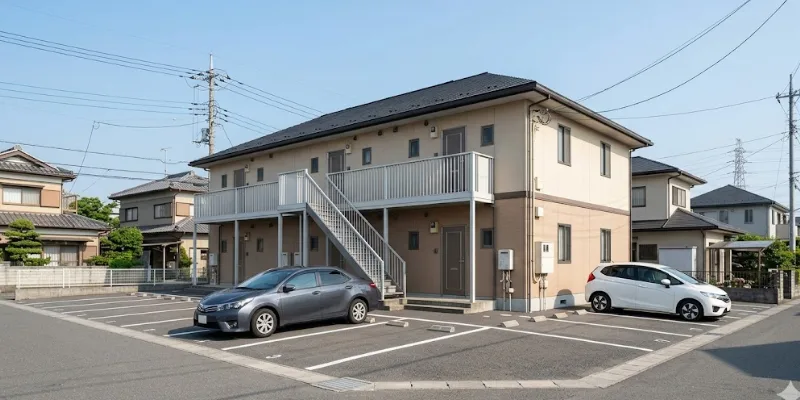
Apartments: predominantly 2LDK and 3LDK houses or low-rise apartment buildings at ¥70,000–¥110,000/month with parking included. 1LDK options exist for single service members at ¥55,000–¥75,000/month.
Hamura City (羽村市) — Space and Quiet
The city sits west of Mizuho along the Ome Line and Tama River. Hamura Station (JR Ome Line) gives it genuine train access that Mizuho lacks. This place is a quieter, more established residential city than Mizuho, with better daily infrastructure: a larger commercial core near the station, a local hospital, and parks along the Tama River.
For Yokota-area renters, Hamura offers lower rents than Fussa, genuine train access for rail commuters, and a quieter environment than the base perimeter. The drive to Yokota’s main gate from Hamura is approximately 10–15 minutes.
Transit: JR Ome Line to Haijima (5 minutes), then transfer to Haijima Station for JR connections. Total time to Shinjuku by train: approximately 60–70 minutes. Functional for commuters with flexible schedules; challenging for strict Tokyo business-hour commutes.
Apartments: 2LDK at ¥80,000–¥120,000/month with parking; 3LDK house-style at ¥95,000–¥145,000/month. Well-maintained older buildings dominate the stock; newer builds exist but are less common.
Musashimurayama City (武蔵村山市) — Value at the Edge
Musashimurayama sits northeast of Yokota. It is the lowest-rent of the three Nishitama towns. It has no train station — the planned Tama Intercity Monorail extension to Musashimurayama has been discussed for years but has not yet been completed as of 2026. Daily life is heavily car-dependent.
The rent advantage is real: 2LDK apartments in Musashimurayama at ¥65,000–¥90,000/month are common, and the town has a reasonable concentration of larger family-sized units. The drive to Yokota is approximately 15–20 minutes depending on the gate.
For single service members or families who own a car and do not need Tokyo train access, Musashimurayama offers the lowest rents in the Yokota commuter zone within Tokyo Metropolitan limits.
Rent by Area and Unit Type — 2026 Data
| Area | Transit access | 1LDK | 2LDK | 3LDK |
| Mizuho-machi | Car/bus only | ¥55,000–¥75,000 | ¥70,000–¥110,000 | ¥85,000–¥130,000 |
| Hamura-shi | JR Ome Line | ¥62,000–¥88,000 | ¥80,000–¥120,000 | ¥95,000–¥145,000 |
| Musashimurayama-shi | Car only | ¥50,000–¥70,000 | ¥65,000–¥90,000 | ¥80,000–¥115,000 |
| Fussa-shi (reference) | JR Hachiko Line | ¥65,000–¥90,000 | ¥85,000–¥130,000 | ¥105,000–¥155,000 |
| Tachikawa-shi (reference) | JR Chuo Line | ¥78,000–¥105,000 | ¥100,000–¥155,000 | ¥125,000–¥185,000 |
All prices include parking in Nishitama towns. Fussa and Tachikawa are included as reference points for the broader Yokota area. For full Tachikawa and Fussa area detail, the Yokota Air Base apartments for rent guide covers those areas specifically.
Commute to Yokota and Beyond
To Yokota Air Base main gate:
- Mizuho: 5–15 minutes by car depending on entry point
- Hamura: 10–18 minutes by car
- Musashimurayama: 15–25 minutes by car
To central Tokyo (Shinjuku/Shibuya) for family members:
- Mizuho: 60–80 minutes by car or bus + train via Haijima or Higashi-Yamato
- Hamura: 60–75 minutes by JR Ome Line to Haijima, then transfer
- Musashimurayama: 70–90 minutes by car + train; no direct rail option
The lack of direct train access from Mizuho and Musashimurayama is the most significant commute constraint. For family members who need Tokyo access regularly, Hamura’s JR Ome Line connection is the meaningful differentiator. For family members who primarily drive to the base and rarely need central Tokyo, Mizuho and Musashimurayama’s lower rents are straightforwardly better value.
Foreigner Acceptance for Mizuho Tokyo Apartments Near Yokota
Foreign acceptance in the Nishitama towns follows the military-adjacent pattern found across Japan. Landlords experienced with the Yokota community have higher acceptance rates than the general residential market.
The most important variable is not the foreign-friendly label. It is whether the specific landlord or management company has processed a military or SOFA-status application before. Landlords in Hakonegasaki (Mizuho) and the Route 16 corridor of Hamura have the most established military-tenant experience.
Documentation requirements mirror those at Yokota.
- Military CAC with ID number and barcode redacted
- Income verification via BAH/OHA or employment orders
- Invoice-based rent payment (no Japanese bank account required with the right management company)
For the full documentation breakdown for SOFA-status renters, see the Yokota Air Base apartments for rent guide. For the broader framework of renting in Japan as a foreigner, the foreigner rental guide covers each step.
What to Look for When Renting in Mizuho and Nishitama
Parking: non-negotiable in all three towns. Confirm spaces (plural for most families) and monthly cost before advancing. Most Nishitama rental contracts include at least one space; two spaces often require a separate agreement.
Noise: Mizuho specifically sits under the northern flight path for certain Yokota operations. The frequency and volume of jet noise varies by operation tempo. Ask specifically about typical weekly noise levels before committing. This is a meaningful quality-of-life variable that affects some residents more than others.
Building age: Nishitama towns have older average housing stock than inner Tokyo. Pre-1990 buildings are common in the ¥70,000–¥85,000/month range. Check heating and cooling systems — older electric baseboard heaters can produce high utility bills in Nishitama’s colder winters compared to the Tokyo ward average.
Management company English capacity: fewer management companies in Nishitama have English-language support than in the Fussa or Tachikawa areas. An agency intermediary that handles ongoing communication is more valuable here than in more established international areas.
Browse Mizuho and Nishitama apartments for rent near Yokota on Arealty — or contact Arealty to discuss your assignment timeline and Yokota-area housing options.
Further Reading
- Yokota Air Base apartments for rent — full base housing guide
- Sagamihara apartments for rent near Camp Zama
- Kanagawa apartments for rent for foreigners
- Renting in Japan as a foreigner — full process guide
- Why apartment listing photos in Japan can differ from the real room
- Average apartment rent in Tokyo — 2026 data

Real estate advisor at Arealty Japan, specialising in helping foreign residents navigate the Tokyo and Osaka rental markets. Lucy has guided hundreds of international renters — from Working Holiday visa holders to corporate relocations — through Japan’s apartment application process. Her writing draws on firsthand experience with landlord screening, guarantor companies, and foreigner-friendly listings across all 23 Tokyo wards and major Kansai cities.