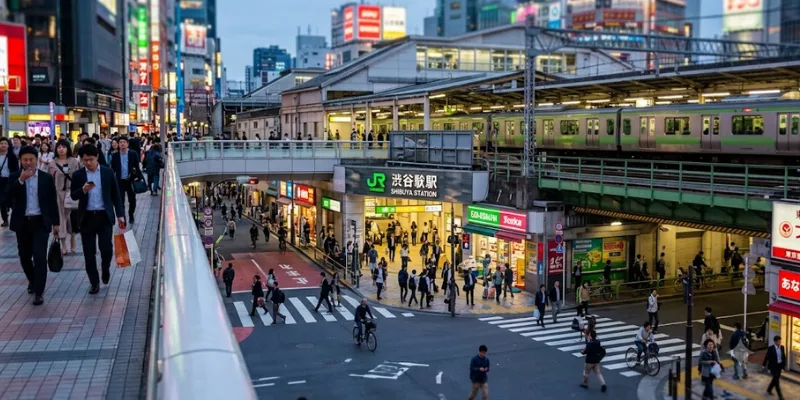

Quick answer: Shibuya Station is served by 9 train lines across 4 operators. JR East runs the Yamanote, Saikyo, and Shonan-Shinjuku Lines. Tokyo Metro runs the Ginza, Hanzomon, and Fukutoshin Lines. Tokyu Railways runs the Toyoko and Den-en-toshi Lines. Keio Railway runs the Inokashira Line. Which one matters most for your apartment search depends on where you work or study. The Yamanote Line covers central Tokyo. The Toyoko Line reaches Yokohama. The Den-en-toshi Line serves southwest suburbs. The Fukutoshin and Hanzomon Lines run through-service deep into Saitama and eastern Tokyo, no transfer needed.
Most guides to renting in Shibuya focus on neighbourhood vibe and rent prices. Fewer focus on the thing that actually shapes your daily life: which of the Shibuya Station train lines gets you to work without a transfer. This guide breaks down every line serving Shibuya Station, plus how that access shapes what you’ll pay in rent. The goal is simple — pick an apartment based on your actual commute, not guesswork.
All 9 Shibuya Station Train Lines
| Line | Operator | Key destinations | Best for |
|---|---|---|---|
| JR Yamanote Line | JR East | Shinjuku, Ikebukuro, Tokyo, Shinagawa | Central Tokyo loop, most versatile |
| JR Saikyo Line | JR East | Ikebukuro, Omiya, Osaki | Saitama commuters |
| JR Shonan-Shinjuku Line | JR East | Shinjuku, Omiya, Yokohama, Ofuna | Long-distance north-south travel |
| Tokyo Metro Ginza Line | Tokyo Metro | Omotesando, Ginza, Asakusa | Central shopping/business districts |
| Tokyo Metro Hanzomon Line | Tokyo Metro | Otemachi, Oshiage, Kuki | East Tokyo, direct to Skytree area |
| Tokyo Metro Fukutoshin Line | Tokyo Metro | Shinjuku-sanchome, Ikebukuro, Wakoshi | Saitama via through-service, no transfer |
| Tokyu Toyoko Line | Tokyu Railways | Daikanyama, Nakameguro, Jiyugaoka, Yokohama | Yokohama commuters, southwest lifestyle areas |
| Tokyu Den-en-toshi Line | Tokyu Railways | Sangenjaya, Futako-Tamagawa, Chuo-Rinkan | Southwest suburbs, family-friendly areas |
| Keio Inokashira Line | Keio Railway | Shimo-Kitazawa, Kichijoji, Meidaimae | West Tokyo creative neighbourhoods |
For the official platform map and real-time operational status, JR East’s Shibuya Station page is the authoritative source. Worth bookmarking once you’ve picked a line.
JR Lines: Your Default for Central Tokyo
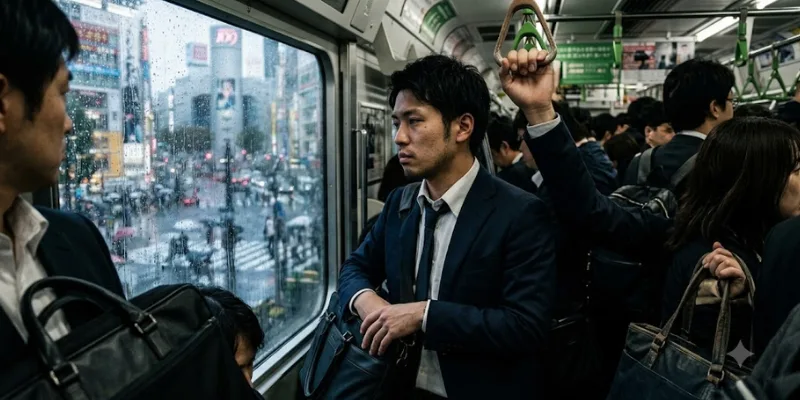
The JR Yamanote Line is the one every Shibuya renter ends up using. It forms the loop connecting all of central Tokyo’s major hubs — Shinjuku, Ikebukuro, Tokyo Station, and Shinagawa, all without a transfer. Trains run every 3–4 minutes at peak times, so waiting is rarely the issue. Crowding is. If your workplace or university sits anywhere near another Yamanote station, this line alone may justify a Shibuya apartment. It’s the single biggest reason Shibuya Station train lines dominate so many rental searches in the first place.
The JR Saikyo Line and JR Shonan-Shinjuku Line both run north-south through Shibuya. Both extend well beyond the 23 wards. Saikyo reaches Omiya in Saitama. Shonan-Shinjuku continues south to Yokohama and Ofuna. These matter less for daily Tokyo commuting. They matter more if you regularly travel outside the city, or if your workplace sits directly on one of these lines further out. Both share tracks and platforms with the Yamanote Line at Shibuya, so they add no extra walking inside the station.
Tokyo Metro Lines: Reaching Central Business Districts
The Ginza Line is Shibuya’s oldest subway connection. It runs through Omotesando and Ginza to Asakusa. This line suits renters whose work sits in one of Tokyo’s traditional business or shopping districts, rather than the newer commercial zones. Its platform sits above ground on the third floor of Shibuya Station — one of the few elevated subway platforms in the city.
The Hanzomon Line runs through-service with the Tokyu Den-en-toshi Line. One train can carry you from the southwest suburbs, through Shibuya, and out to Otemachi or Oshiage in the east. No transfer required. This matters if your commute spans both sides of the city.
The Fukutoshin Line is the newest and deepest of the three Metro lines at Shibuya. Its platforms sit roughly 27 metres underground — among the deepest in Tokyo. It runs through-service with the Tokyu Toyoko Line toward Yokohama on one end. On the other, it continues to Ikebukuro and Wakoshi in Saitama. That makes it one of the only ways to reach Saitama from Shibuya without a manual transfer.
Private Railways: The Lines That Shape Shibuya’s Character
The Tokyu Toyoko Line is arguably the most relevant line for renters who chose Shibuya for lifestyle reasons. It’s the direct connection to Daikanyama, Nakameguro, and Jiyugaoka — the café-and-boutique neighbourhoods that give the wider Shibuya area its reputation — before continuing to Yokohama. If your target apartment sits in Daikanyama or Nakameguro, this is the line you’ll use daily. It also determines which underground level you’ll walk to inside Shibuya Station, since the Toyoko platforms sit several floors down.
The Tokyu Den-en-toshi Line heads southwest through Sangenjaya and Futako-Tamagawa, terminating in Chuo-Rinkan. Sangenjaya is a popular lower-rent alternative for renters priced out of central Shibuya. This is generally the more residential, family-oriented of the two Tokyu lines. One thing to know: it gets severely crowded during morning rush hour, more so than the parallel Toyoko Line.
The Keio Inokashira Line connects Shibuya to Shimo-Kitazawa and Kichijoji — two of Tokyo’s most-loved creative and secondhand-shopping neighbourhoods to the west. If your social life or work centres on that side of the city, this line does more for you day-to-day than any of the JR lines. It’s also the line most renters overlook when apartment-hunting near Shibuya, mostly because it doesn’t show up as prominently in listing filters as the Yamanote or Toyoko Lines.
How Line Access Affects Rent
Which of the Shibuya Station train lines your building sits closest to has a real effect on rent — sometimes more than the sub-area label itself. A short walk to a Toyoko Line entrance in Daikanyama commands a premium. An equally-sized unit the same distance from a Den-en-toshi Line entrance nearby often costs less, since Toyoko access reads as more prestigious to the local rental market. Buildings directly above or adjacent to Shibuya Station’s Metro entrances also carry a noise premium, though older buildings sometimes discount for it. Worth checking during viewings either way.
As a rough rule: proximity to the Yamanote Line rarely comes cheap anywhere in Shibuya ward, since it’s the line every tenant wants. Proximity to the Keio Inokashira or Fukutoshin Lines tends to be better value. Fewer renters actively search by those lines, so demand — and price — runs lower. If your commute doesn’t strictly require Yamanote access, searching by the less-obvious lines can turn up better rent-to-commute trade-offs than searching by neighbourhood name alone.
Choosing an Apartment Based on Your Commute, Not Just the Ward
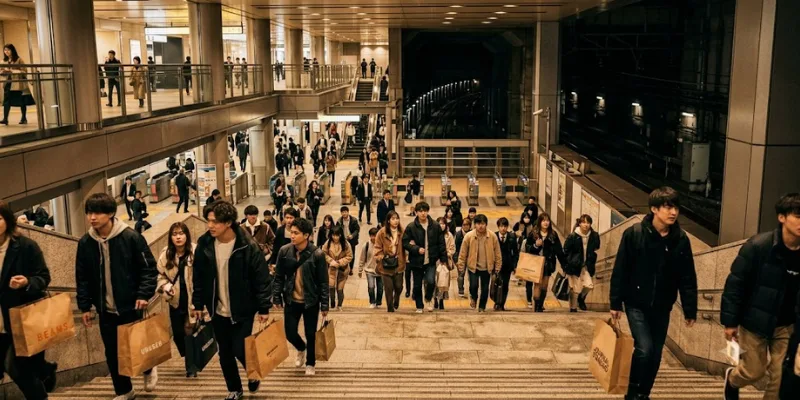
Because all 9 lines converge at one station, the more useful question for renters usually isn’t “should I live in Shibuya.” It’s “which line do I actually need.” A few practical patterns:
- Work near another Yamanote station (Shinjuku, Ebisu, Shinagawa): almost any Shibuya apartment works, since the Yamanote Line is a short walk from most of the ward.
- Work in Yokohama, or want easy access to Daikanyama/Nakameguro: prioritize proximity to a Toyoko Line entrance, or live directly along the line one or two stops out for lower rent.
- Work in Otemachi, Oshiage, or east Tokyo: the Hanzomon Line’s through-service saves a transfer that most other routes would require.
- Commuting from or to Saitama: the Fukutoshin Line is the only one-transfer option from Shibuya.
- Prioritizing value over line prestige: search along the Keio Inokashira or Tokyu Den-en-toshi Lines before defaulting to Yamanote-adjacent listings.
Sub-area choice inside Shibuya ward often matters more than the ward label alone. Our realistic guide to Shibuya’s sub-areas breaks down rent and commute trade-offs between Ebisu, Daikanyama, Yoyogi-Uehara, and Sasazuka in more depth.
First and Last Train Times: What Renters Should Know
Tokyo’s trains stop running overnight, and the exact cutoff varies by line — this catches many new renters off guard during their first few months. On most Shibuya Station train lines, last departures run between 12:20 AM and 1:00 AM, and first trains resume around 4:50–5:00 AM. The Yamanote Line’s last trains run slightly later than most private lines. If your work or social life regularly runs past midnight, this gap matters more than any other factor on this list — it’s worth checking the specific last-train time for your target line before signing a lease, not after.
Missing the last train is a common enough experience in Tokyo that it has its own vocabulary — nomi-nige culture, all-night izakayas, and a healthy taxi and late-night bus network exist specifically because of it. Still, budgeting for the occasional ¥3,000–¥5,000 late-night taxi from Shibuya is very different from needing one every week. If your schedule regularly runs past the last train, weigh that into your choice of Shibuya Station train lines from the start, rather than discovering the gap after you’ve already signed.
Frequently Asked Questions
How many train lines run through Shibuya Station? Nine lines across four operators: JR East, Tokyo Metro, Tokyu Railways, and Keio Railway.
Which Shibuya train line is best for commuting to Yokohama? The Tokyu Toyoko Line runs directly to Yokohama, no transfer needed. The JR Shonan-Shinjuku Line also reaches Yokohama, via a different route.
Can I get to Saitama from Shibuya without transferring? Yes. The Tokyo Metro Fukutoshin Line runs through-service toward Wakoshi and connects further into Saitama.
Does Shibuya Station connect to the Shinkansen? Not directly. Take the JR Yamanote Line to Tokyo Station for Tohoku, Yamagata, Akita, Joetsu, Hokuriku, and Hokkaido Shinkansen connections.
Is the Yamanote Line enough for most Shibuya residents? For commuting within central Tokyo, often yes. It connects to nearly every other major hub in the city without a transfer.
Does train line access change how much rent I pay in Shibuya? Yes. Proximity to the Yamanote Line or the Toyoko Line toward Daikanyama tends to command a premium. Apartments near the Keio Inokashira or Den-en-toshi Line entrances often offer better value for a comparable commute.
Which Shibuya Station train line is most crowded at rush hour? The Tokyu Den-en-toshi Line is known for especially heavy rush-hour crowding on the Shibuya-bound stretch, more so than the parallel Toyoko Line.
Ready to find an apartment near the line you actually need? Browse current Shibuya apartments for rent on Arealty, filtered by station access and foreigner-friendly listings. Looking beyond Shibuya? See all Tokyo rentals or contact our team at arealty.mom.

Real estate advisor at Arealty Japan, specialising in helping foreign residents navigate the Tokyo and Osaka rental markets. Lucy has guided hundreds of international renters — from Working Holiday visa holders to corporate relocations — through Japan’s apartment application process. Her writing draws on firsthand experience with landlord screening, guarantor companies, and foreigner-friendly listings across all 23 Tokyo wards and major Kansai cities.