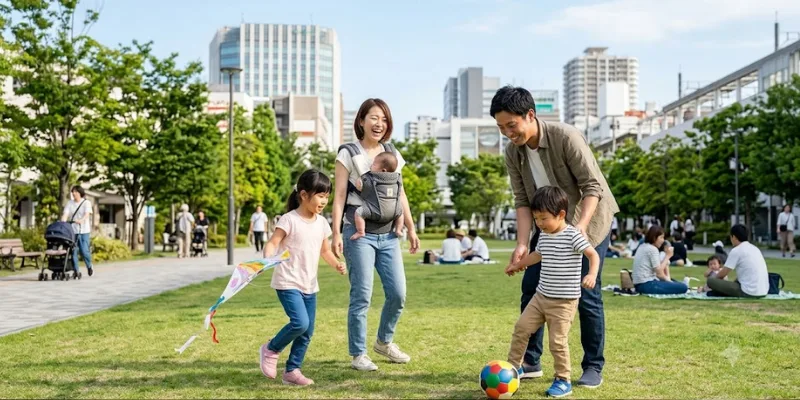

Quick answer: Family life in Nakano works well for parents who want central Tokyo access without Shinjuku or Shibuya-level rent, thanks to genuine parks, a manageable international-school commute, and a safe, walkable ward — though families wanting maximum green space typically look toward Nakano’s quieter western pockets or neighboring Suginami.
Most Nakano content targets students and young professionals. This guide is for parents evaluating Nakano apartments for rent with kids in mind.
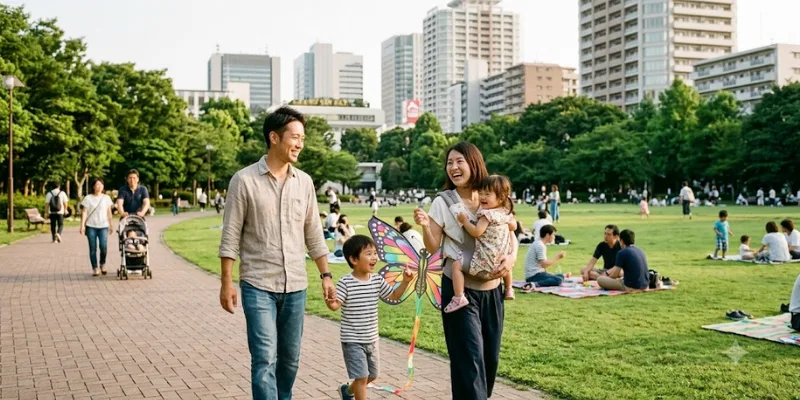
Is Nakano a good ward for families?
Nakano is a reasonable, underrated choice for families rather than an obvious top pick. It doesn’t have the manicured, embassy-district feel of Setagaya or Minato, but it offers something families often undervalue early in their search: genuinely central access at a rent level that leaves room in the budget for childcare, schooling, or savings. Families who prioritize commute time and cost over maximum quiet tend to do well here; families who want sprawling parks and low density as a top priority usually look further out.
Parks and outdoor space
Nakano Central Park, near the redeveloped area south of Nakano Station, is the ward’s largest and most modern green space, with open lawns and family-friendly design that reflects the area’s recent redevelopment. Tetsugaku-do Park, further from the station, is smaller but well-established, with playground equipment and quieter surroundings. Neither matches the scale of parks in greener wards, but between the two, plus smaller neighborhood playgrounds scattered through residential blocks, most families find enough outdoor space for daily use, especially combined with the Zenpukuji River green corridor just over the Suginami border.
Schools and childcare
Nakano ward runs standard Japanese public elementary and junior high schools, and — like most of Tokyo — nursery (hoikuen) and kindergarten (youchien) availability varies by neighborhood and requires early application. For families needing international schooling, Nakano’s central position keeps commute times to international schools in Shinjuku, Minato, or Shibuya manageable, typically 20-30 minutes, which is a meaningful advantage over families based further out in Tokyo’s suburbs.
Foreign parents should register with the Nakano Ward Office early for nursery placement guidance, since availability in central, station-adjacent neighborhoods is more competitive than in the ward’s quieter western areas.
Safety
Nakano is considered a safe ward by Tokyo standards, with low overall crime rates typical of central Tokyo residential areas. The streets immediately around Nakano Station and Nakano Broadway are busy well into the evening, which in practice makes them well-trafficked and well-lit rather than risky. Families prioritizing the calmest possible streets tend to look toward the residential blocks around Shin-Nakano, Nakano-Fujimicho, or just over the border into Suginami — a trade-off covered in more depth in the Nakano vs Suginami comparison.
Choosing the right part of Nakano for a family
- Near Nakano Station / Broadway: Maximum convenience and shortest commute, but busier streets and smaller typical unit sizes — better for families prioritizing access over space.
- Shin-Nakano / Nakano-Fujimicho: Quieter, more residential, still on the Marunouchi or Chuo line, generally the better fit for families wanting calmer daily life without leaving the ward.
- Western Nakano (toward Suginami border): More space for the budget, closer to the Zenpukuji River parks, at the cost of a few extra transit minutes.
Healthcare and pediatric care
Nakano ward has a reasonable density of pediatric clinics and general hospitals, typical of central Tokyo wards, with several clinics offering some English-language support given the ward’s growing international resident population. For anything beyond routine care, larger hospitals with more robust international patient services are accessible within Nakano’s typical 20-30 minute commute range to Shinjuku or Shibuya, similar to the international-school commute pattern described above. Families should register with a local pediatrician early rather than waiting for a first health issue, since building a relationship with a regular clinic makes follow-up care and vaccination scheduling considerably smoother.
Extracurricular activities and community life
Beyond schools and parks, day-to-day family life in Nakano benefits from the ward’s general density: swimming schools, martial arts dojos, and children’s English conversation schools are all reasonably easy to find within a short walk or train ride, a byproduct of Nakano’s large population relative to its size. The ward and city offices also run community centers with family-oriented programming, including seasonal events that are a good low-pressure way for both parents and kids to meet neighbors. Families who lean toward more structured, embassy-adjacent international community life tend to find that easier in Minato or Setagaya, but for a mixed, mostly-local community with some international presence woven in, Nakano works well.
Getting around with kids
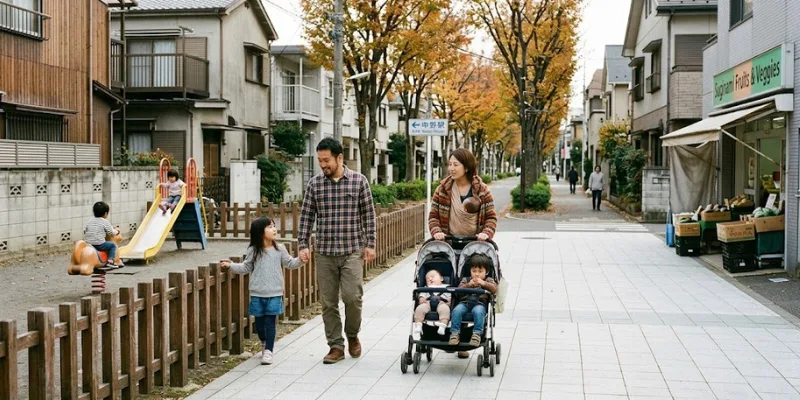
Nakano Station and its immediate surroundings are stroller-manageable but genuinely busy, especially on weekends near the Broadway and Sun Mall arcade — a factor worth weighing alongside the ward’s other conveniences, and one covered from a different angle in the Nakano Broadway neighborhood guide. Quieter stations like Shin-Nakano and Nakano-Fujimicho are noticeably easier for daily stroller use, with less foot traffic and more predictable pavement space. Elevators are available at Nakano’s main stations, but checking specific station accessibility in advance is worth doing if mobility or stroller access is a daily concern rather than an occasional one.
Nakano vs other family-friendly Tokyo wards
Families evaluating Nakano usually have it on a shortlist alongside Suginami, Setagaya, or occasionally Nerima. Setagaya is Tokyo’s most popular long-term expat family ward, with more embassy and international-school infrastructure, but at a meaningfully higher rent than Nakano for comparable space. Suginami offers more green space and a quieter daily rhythm than Nakano at a similar or slightly lower price point, making it the closest direct alternative — the full comparison is in the Nakano vs Suginami guide. Nerima, further out, offers more space again but at the cost of a longer commute into central Tokyo. Nakano’s niche in this comparison is central access at a mid-range rent, which makes it a strong fit for families where a shorter commute matters as much as maximum living space.
Ward government support for families
Like most Tokyo wards, Nakano Ward Office runs a range of family support programs worth knowing about before or shortly after moving: childcare subsidies, child medical expense support (typically covering a significant share of pediatric costs for residents), and maternal/child health consultation services, some of which now offer multilingual support given the ward’s growing foreign resident population. New residents should register at the Nakano Ward Office early after moving in, since several of these programs — nursery placement in particular — run on annual or seasonal application cycles rather than rolling admission. Families relocating from other Tokyo wards should also confirm which support programs transfer automatically and which require a fresh application under Nakano’s system.
What a typical family apartment in Nakano looks like
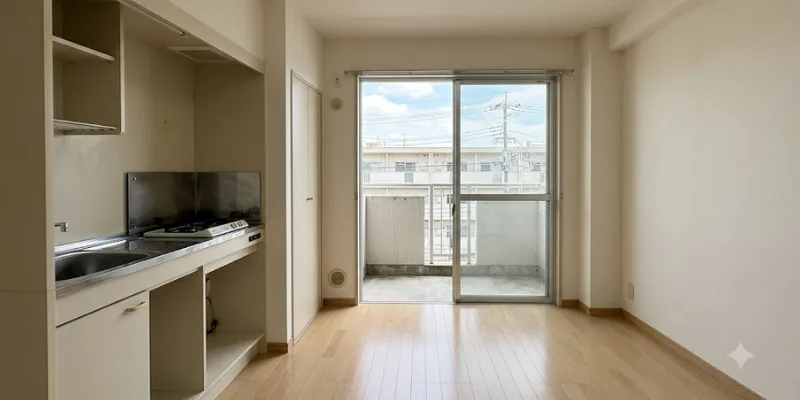
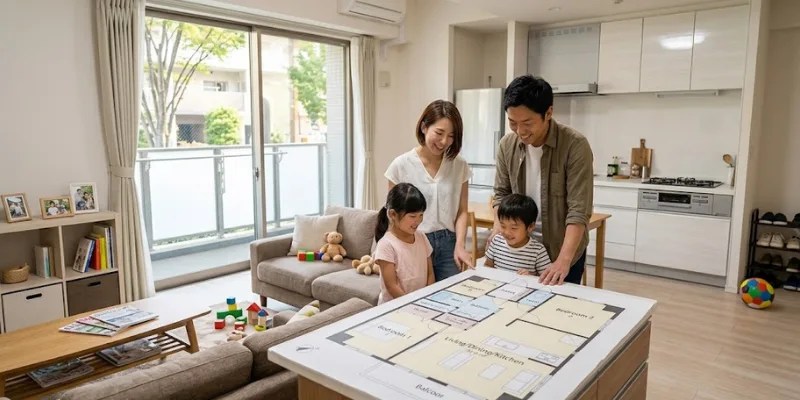
Family-sized units in Nakano — 2LDK and up — are less common near the station core, where older buildings skew toward smaller 1K and 1DK layouts built for single renters. The better supply of family-sized apartments sits a bit further out: Shin-Nakano, Nakano-Fujimicho, and the western blocks toward the Suginami border all have a higher share of 2LDK and 3LDK units, often in slightly newer buildings than the station-adjacent stock. Floor plans in this size range typically include a separate toilet and bath (standard in Japan rather than a premium feature), and increasingly include a small storage room or closet space that older single-occupant units often lack. Families should expect to trade a few minutes of walking distance from the station for meaningfully better layouts and natural light, which is generally a good trade for day-to-day family life even if it adds a short walk to the morning commute.
Practical moving tips for families
- Start nursery/school applications early — Tokyo ward nursery placement is competitive, and Nakano’s central stations are among the more sought-after zones.
- Prioritize floor plans over floor level — a 2LDK or larger away from the busiest streets often matters more for daily family life than proximity to the station itself.
- Visit at different times of day before signing — Nakano’s character shifts noticeably between a quiet weekday morning and a busy Saturday evening near the Broadway.
- Check building rules on child noise and stroller storage — older buildings near the station core vary widely on this, more so than in newer developments south of the station.
A realistic timeline for moving a family to Nakano
Families relocating to Nakano generally do better spreading the process over two to three months rather than compressing it. Start nursery or school research and, where relevant, applications as early as possible, since placement cycles in Tokyo wards run well ahead of the actual move-in date. Begin apartment searching six to eight weeks out, prioritizing 2LDK-and-up layouts in the areas noted above rather than station-adjacent units built for single renters. Register with the Nakano Ward Office and a local pediatrician within the first two weeks of moving in, while the paperwork and orientation process is still fresh. Give the family a few weeks to test the neighborhood at different times — weekday mornings, weekend afternoons near the Broadway, evenings — before assuming the first impression from a single viewing tells the whole story.
FAQ
Yes, with realistic expectations — it offers central access and reasonable rent, though families wanting maximum park space typically prefer quieter western Nakano or neighboring Suginami.
Not directly within the ward, but Nakano’s central position keeps commute times to international schools in Shinjuku, Shibuya, and Minato within a manageable 20-30 minutes.
Yes — it’s the ward’s largest and most modern green space, with open lawns and family-friendly design from the area’s recent redevelopment.
Central, station-adjacent neighborhoods are more competitive than the ward’s quieter western areas, so early application through the Nakano Ward Office is recommended.
Some clinics in the ward offer English-language support given the growing international resident population, though availability varies, and it’s worth confirming with a specific clinic before registering.
Both work well; Suginami generally offers more green space and quieter streets, while Nakano offers a shorter, more central commute — the fuller trade-off is covered in the Nakano vs Suginami comparison above.
Looking for a family-sized apartment in Nakano? Browse current Nakano apartments for rent on Arealty, or explore all Tokyo listings. For more on the ward’s daily life and budget, see cost of living in Nakano and the Nakano vs Suginami comparison.

Real estate advisor at Arealty Japan, specialising in helping foreign residents navigate the Tokyo and Osaka rental markets. Lucy has guided hundreds of international renters — from Working Holiday visa holders to corporate relocations — through Japan’s apartment application process. Her writing draws on firsthand experience with landlord screening, guarantor companies, and foreigner-friendly listings across all 23 Tokyo wards and major Kansai cities.