
Navigating the real estate landscape in Japan requires a clear and comprehensive understanding of legal frameworks, especially for expatriates looking for an apartment for rent japan. One of the most critical distinctions you will encounter during your search is the difference between a standard lease and a Fixed-term lease contract, known locally as Teiki Shakka Keiyaku.
Established under the Act on Special Measures for Promotion of Supply of Quality Home Ownership in March 2000, this system was specifically designed to encourage property owners to offer high-quality housing without the legal risks associated with indefinite tenancy. For international residents searching for apartments in tokyo japan, understanding this contract type is essential for long-term financial planning and residential stability.
What is a Fixed-term Lease Contract?
A Fixed-term lease contract is a rental agreement that terminates strictly at the end of a predefined period. Unlike a standard lease, there is no localized right to automatic renewal. Once the duration expires, the tenant must vacate the premises unless both parties mutually agree to sign a completely new contract. This system provides landlords with the absolute security that they can reclaim their property for personal use, sale, or redevelopment on a specific date.
For the tenant, this model often serves as a gateway to premium properties that would otherwise not be available on the open market. These include apartments in japan owned by individuals who are temporarily working abroad, families who have inherited a property but are undecided on its long-term use, or developers waiting for a specific date to begin construction.
Key Characteristics of Fixed-term Leases
- Non-Renewable Nature: The contract does not renew automatically; it expires on the exact date specified in the agreement.
- Written Requirement: The agreement must be made in writing. Oral agreements, which are technically possible for standard leases, are strictly prohibited here.
- Mandatory Explanation: The landlord must provide a separate explanatory document before the contract is signed to ensure the tenant understands they must vacate.
- Flexible Duration: These contracts can be shorter than one year, which is a significant departure from standard lease laws that treat any lease under one year as “indefinite.”
Fixed-term vs. Standard Lease: Primary Differences
When searching for a japan tokyo apartment rent, you will notice that most listings are standard leases (Futsu Shakka Keiyaku). However, a Fixed-term lease contract offers a different legal structure that impacts your stability, costs, and rights as a resident.
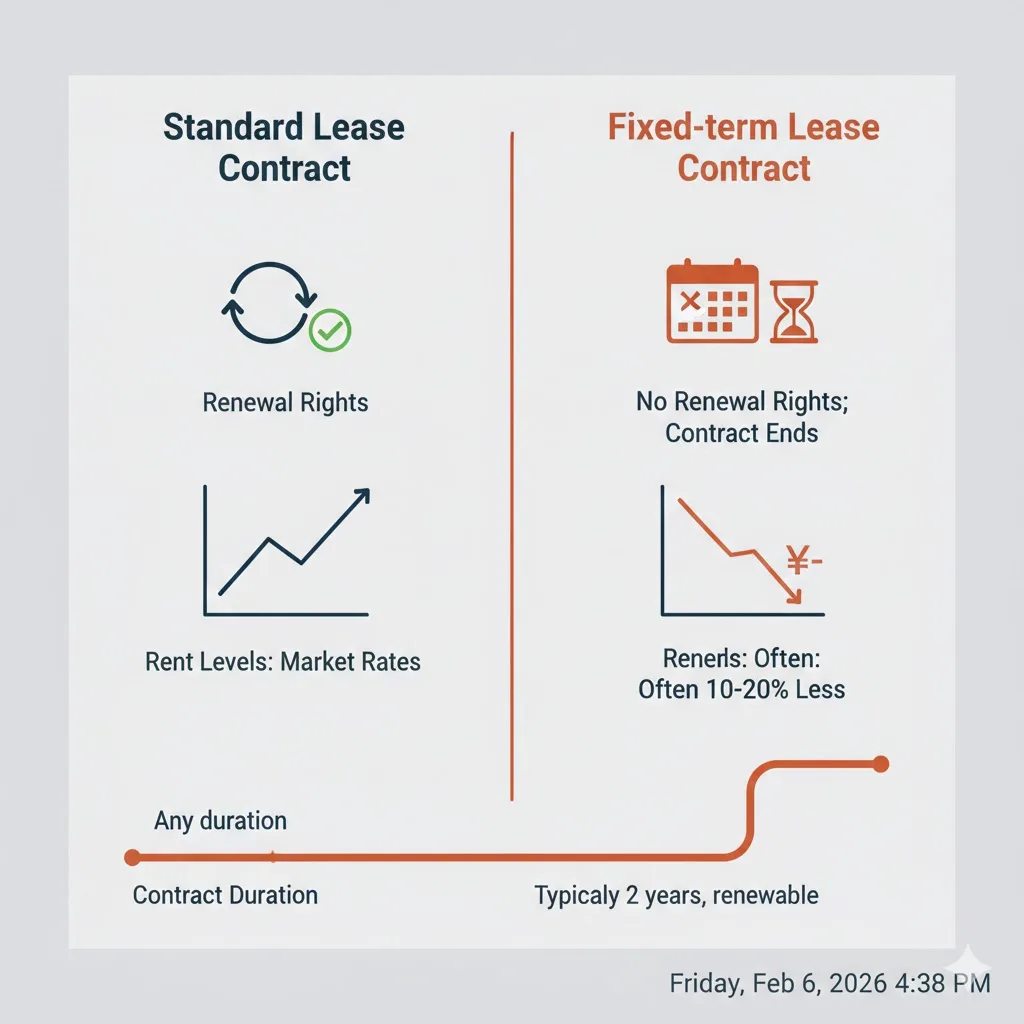
| Feature | Standard Lease Contract | Fixed-term Lease Contract |
| Renewal Rights | Tenant has the legal right to renew. | No right to renew; the contract ends. |
| Landlord Refusal | Landlord needs “just cause” to refuse. | No reason is needed to end the lease. |
| Rent Levels | Usually follows standard market rates. | Often lower than market rates (10-20% less). |
| Contract Duration | Typically 2 years, renewable. | Any duration (from weeks to many years). |
| Notice Period | Typically 1-2 months for the tenant. | Landlord must notify 6-12 months before expiry. |
Standard leases in Japan prioritize tenant protection, making it exceptionally difficult for a landlord to ask a tenant to leave without providing significant compensation. In contrast, the fixed-term model offers more control to the property owner. Because of this shift in power, apartments in tokyo japan under fixed-term agreements are often priced more competitively to attract residents who are willing to accept the lack of renewal rights.
Detailed Advantages of Choosing a Fixed-term Lease
Choosing a Fixed-term lease contract can be a strategic move for foreigners and professionals living in Japan. Because these contracts offer less long-term security, landlords often provide significant incentives to make the listing more attractive to potential renters.
Significant Financial Savings and Incentives
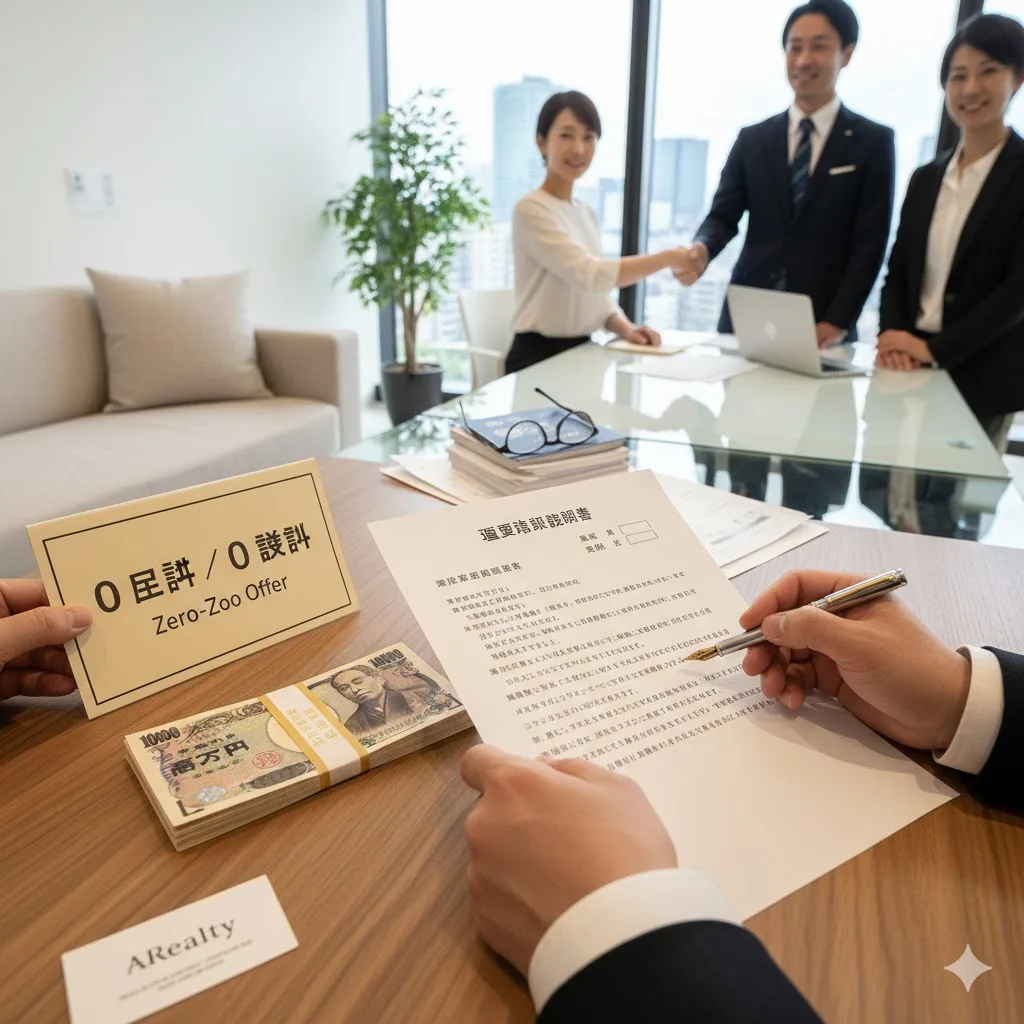
Landlords frequently lower the monthly rent to compensate for the fixed duration. It is also common to see “Zero-Zero” offers, where the landlord waives the Reikin (key money) and Shikikin (deposit). These savings are highly beneficial for those looking for an apartment for rent japan while managing a strict budget.
Access to High-Quality Housing and Unique Locations
Many high-end apartments in japan are offered under fixed-term agreements because the owners are away on temporary assignments but intend to return. This allows tenants to live in luxury condominiums, spacious suburban houses, or renovated traditional homes that are rarely available as standard rentals.
Flexibility for Specialized Stays
If you are in Japan for a specific project, such as a 15-month research fellowship or a short-term corporate relocation, a fixed-term contract is ideal. You can negotiate a duration that matches your visa or work contract exactly, avoiding the complexities and “renewal fees” typical of the 2-year cycle found in standard leases.
Better Building Maintenance and Neighborhood Quality
Since these properties are often the primary residences of the owners, they tend to be better maintained than “investment-only” rental units. You may find higher-quality kitchen appliances, better insulation, and more attentive building management in these apartments in tokyo japan.
Note on Plural Assets: Fixed-term systems are frequently applied to various high-value property types, such as luxury penthouses in Minato, traditional garden houses in Kamakura, and modern studio units in Shibuya.
Disadvantages and Important Considerations for Foreigners
While the benefits are clear, a Fixed-term lease contract carries specific risks and legal nuances that you must evaluate before signing any documents. The trade-off for lower rent is often a reduction in your flexibility as a tenant.
Mandatory Vacation of the Premises
The most significant drawback is the lack of a “Right to Stay.” Even if you are a perfect tenant who pays rent on time and maintains the property flawlessly, you must leave the apartment when the contract ends if the landlord decides not to offer a new agreement. This can be highly disruptive if you have children enrolled in local schools or if your professional life is tied to a specific neighborhood.
Stringent Early Termination Restrictions
In a standard lease, you can usually leave by giving 30 to 60 days’ notice with minimal penalty. In a Fixed-term lease contract, you are generally legally committed to paying for the full duration of the contract. Mid-term cancellation is only legally protected for residential units under 200 square meters if the tenant faces specific, unavoidable circumstances.
Examples of Unavoidable Circumstances for Early Termination:
- An unexpected job transfer to a different city or country ordered by your employer.
- A medical emergency requiring long-term hospitalization or specialized care in your home country.
- The sudden necessity to move to provide urgent nursing care for an immediate family member.
Navigating the Market with ARealty
Finding the right japan tokyo apartment rent involves more than just picking a building on a map; it requires a partner who understands the deep legal nuances of Japanese real estate law. ARealty specializes in assisting international clients with complex lease structures, ensuring that every Fixed-term lease contract is transparent, fair, and legally sound.
If you are concerned about the “non-renewal” clause or need help negotiating a lower rent for a fixed-term property, ARealty provides the expertise needed to secure your ideal home. Their team can identify high-quality apartments in japan that fit your specific timeline, whether you need a residence for six months or five years. They act as a bridge between international tenants and Japanese landlords, smoothing over communication hurdles and cultural differences.
Would you like ARealty to provide a curated list of Fixed-term properties in Tokyo that match your budget and duration requirements?

Why Landlords and the Government Support This System
The Japanese government, specifically the Ministry of Land, Infrastructure, Transport and Tourism (MLIT), promoted this system to solve the “Empty House” (Akiya) crisis. According to the Reiwa 6 Housing Market Trend Survey, many owners are hesitant to rent out their homes because they fear they cannot evict problematic tenants under standard laws.
By using a Fixed-term lease contract, owners can lease their property while they are temporarily relocated for work or family reasons, ensuring they have a guaranteed home to return to. This increases the overall supply of apartments in tokyo japan, providing more diverse and high-quality options for the international community. It turns stagnant assets into active housing, benefiting the economy and the rental market simultaneously.
Detailed Step-by-Step: Signing a Fixed-term Lease
To protect your interests, you should follow a strict verification process when entering a Fixed-term lease contract. Because the law is very specific about the “termination” aspect, any procedural error by the landlord could potentially turn the contract into a standard lease, which is a detail your agent should watch closely.
Verification of the Separate Explanatory Document
Before signing the main contract, the landlord or real estate agent must provide a separate document stating that the lease cannot be renewed and will terminate on a specific date. If they fail to provide this “Notice of Non-Renewal” and simply include the clause in the main contract, the fixed-term status may be legally invalid.
Checking the Notification Period for Expiry
For any contract lasting one year or longer, the landlord is legally required to send a written notice 6 to 12 months before the expiration date. This notice serves as a formal reminder that you must vacate. If the landlord forgets to send this, you may have the right to stay an additional six months from the day they finally notify you.
Negotiating Re-contracting (Saikeiyaku) Terms
While there is no legal “renewal,” you can discuss the possibility of a “re-contract” upfront. If you are looking at apartments in japan for a 3-year stay but the contract is for 2 years, ask if the landlord is open to signing a second fixed-term lease later. Many landlords are happy to do this if the tenant is reliable, though they may adjust the rent to reflect current market prices.
Understanding the Restoration Obligations
Just like any apartment for rent japan, you are responsible for returning the property to its original state, minus natural wear and tear. However, in fixed-term contracts for high-end homes, these expectations can be stricter. Ensure you take photos of the property on the day you move in to avoid disputes over the security deposit.
Impact on the Tokyo Rental Market
The prevalence of the Fixed-term lease contract in Tokyo has changed how foreigners approach the city. In neighborhoods like Minato, Shibuya, and Setagaya, a significant portion of family-sized housing is now fixed-term. This is because these areas have high rates of homeowners who are corporate professionals subject to overseas transfers.
For those looking for japan tokyo apartment rent, this means that if you see a beautiful, large house at a surprisingly low price, it is almost certainly a fixed-term lease. Understanding this allows you to set realistic expectations about your long-term residency in a specific building.
Examples of Fixed-term Success Stories:
- An MBA student who rented a high-rise apartment in Shinjuku for exactly 18 months at 20% below market rate.
- A diplomatic family who secured a spacious detached house in Azabu while the owner was stationed in Europe for three years.
- A digital nomad who utilized a 6-month fixed-term lease in a renovated warehouse in Sumida to experience old-town Tokyo without a long-term commitment.
Final Checklist Before You Sign
Before committing to a Fixed-term lease contract, run through this final list to ensure the property meets your needs:
- Timeline Alignment: Does the contract end date match your visa or work contract?
- Total Costs: Even if the rent is low, check for “move-out cleaning fees” which can be higher in these types of contracts.
- Re-contracting Possibility: Is the landlord willing to put in writing that they might consider a new contract if their plans change?
- Property Condition: Since you will likely move again soon, is the apartment in a condition that makes a short stay worthwhile?
- Legal Compliance: Did the agent provide the separate “Explanation of Fixed-term Lease” document?
Conclusion
The Fixed-term lease contract is a powerful and flexible tool for those who prioritize lower monthly costs and access to high-quality living spaces over the right to indefinite tenure. It is particularly suited for corporate expats, researchers, and students who have a clearly defined departure date from Japan.
By understanding the legal obligations and the financial benefits, you can navigate the market for apartments in tokyo japan with total confidence. Always ensure you have professional representation, such as the team at ARealty, to review the specific clauses of your agreement to avoid any surprises at the end of your stay.
Contact ARealty today to explore exclusive fixed-term listings that offer premium features at exceptional prices, and let us help you find your perfect home in Japan.

Real estate advisor at Arealty Japan, specialising in helping foreign residents navigate the Tokyo and Osaka rental markets. Lucy has guided hundreds of international renters — from Working Holiday visa holders to corporate relocations — through Japan’s apartment application process. Her writing draws on firsthand experience with landlord screening, guarantor companies, and foreigner-friendly listings across all 23 Tokyo wards and major Kansai cities.