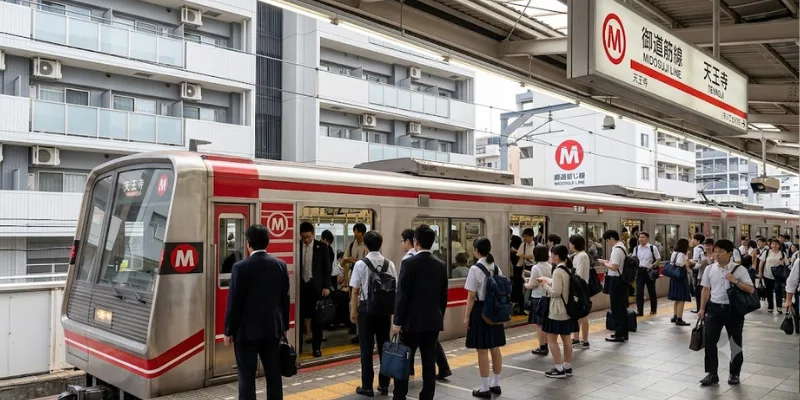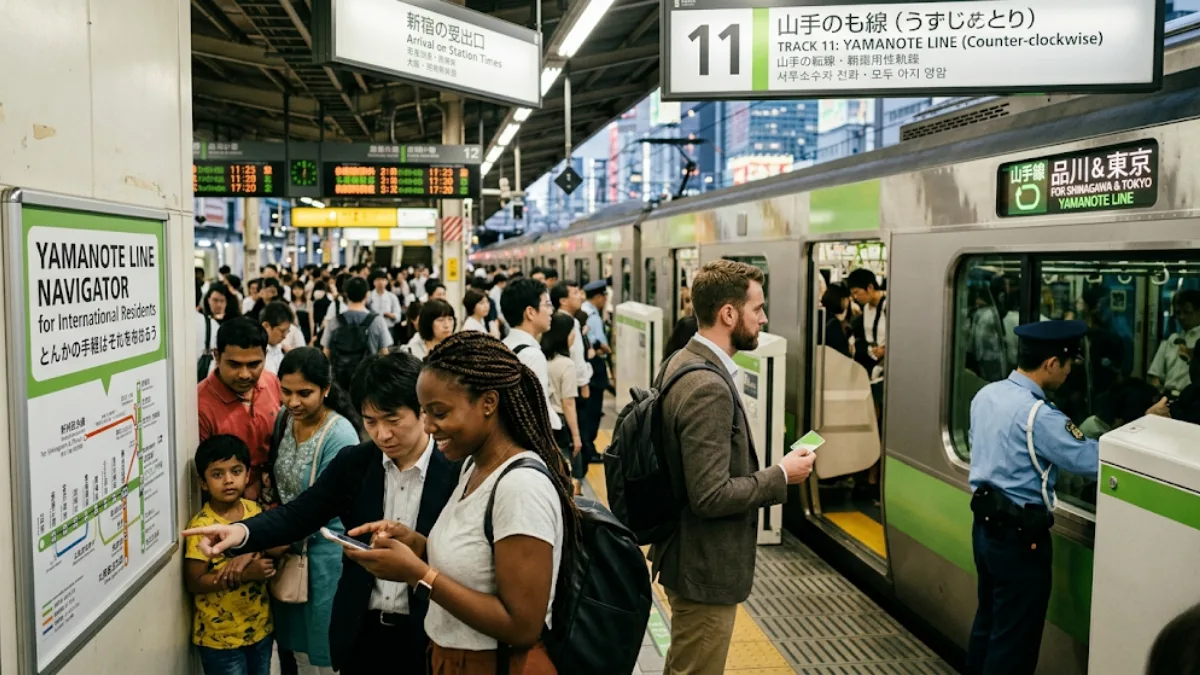

Finding the perfect apartment for rent in Tokyo, Japan has become a sophisticated endeavor in 2026. As the city continues to evolve into a global hub for tech, education, and culture, the demand for housing along the JR Yamanote Line—Tokyo’s circular lifeline—has reached new heights.
Whether you are an international student seeking a cozy studio or a professional looking for a luxury 2LDK in Tokyo, understanding the 2026 market dynamics is crucial. In this comprehensive 2000-word guide, we analyze the current rental landscape and provide an in-depth look at five premier properties curated by ARealty.
The Tokyo Rental Market Outlook in 2026
The year 2026 marks a significant shift in the Japanese real estate sector. Following the digital transformation of the early 2020s, “Smart Housing” and “Foreigner-Friendly” services have become the industry standard.
Why the Yamanote Line?
The JR Yamanote Line connects 30 major stations, including Shinjuku, Shibuya, Tokyo, and Ueno. Living within a 10-minute walk of a Yamanote station ensures:
- Zero-Transfer Commutes: Access to most major universities and business districts without changing lines.
- High Resale and Rental Value: Properties here maintain their prestige, ensuring better building maintenance.
- 24/7 Lifestyle: Immediate access to international clinics, 24-hour supermarkets, and diverse entertainment.
Market Trends in 2026
In 2026, we see a “Bifurcation” of the market. While prices in central hubs like Minato and Shibuya remain high, the Northern and Eastern arcs of the Yamanote Line (Taito-ku, Arakawa-ku, Kita-ku) have seen massive redevelopment, offering high-tech apartments at more accessible price points. Additionally, more landlords are now accepting credit card payments for initial costs, a trend led by agencies like ARealty.
Understanding Japanese Apartment Layouts (Madori)
Before diving into the listings, it is essential to understand the terminology used in 2026 Japanese real estate listings.
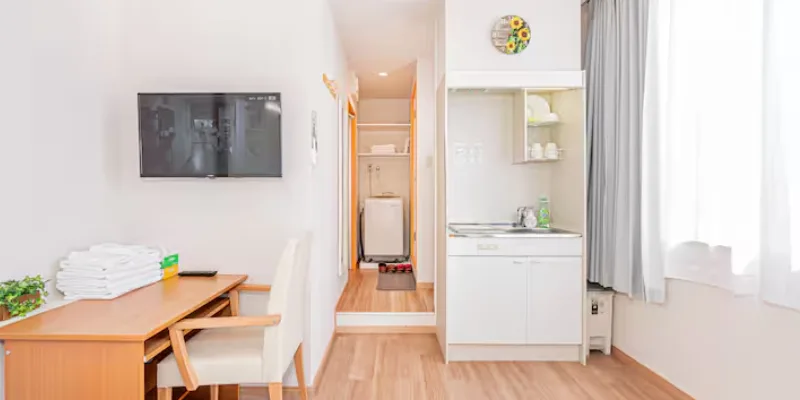
- 1K: One room with a kitchen separated by a wall or door. Best for privacy and keeping cooking smells away from the bed.
- 1DK: One room plus a Dining/Kitchen area. Usually between 25-35 $m^2$.
- 2LDK: Two bedrooms plus a Living/Dining/Kitchen area. The “Gold Standard” for couples and professionals in 2026.
- RC (Reinforced Concrete): The preferred building structure for its fire resistance and superior soundproofing between units.
Top 5 Apartment Picks for 2026
We have selected five properties that represent the best value, location, and lifestyle across different price points.
Case Study 1: Rb Main Stage Aoyama – 106 (The Elite Student Choice)
Located in the heart of Shibuya-ku, this property is the definition of “Prime Location.”
- Location: Hiro, Shibuya-ku. 7-minute walk to Hiroo Station; 10-minute walk to Ebisu (Yamanote).
- Layout: 1K (23.11 $m^2$)
- Monthly Total: 128,000 ¥ (Rent: 120k + Management: 8k)
- Initial Cost: ~801,000 ¥
Life in Hiroo/Ebisu:
Living here puts you at the crossroads of Tokyo’s international culture. Ebisu is consistently voted one of the most desirable places to live. For a student, this means being walking distance to high-end cafes, the Yebisu Garden Place, and several language schools.
Expert Analysis:
The inclusion of an Auto-lock system and Separate Toilet makes it a highly secure choice. The 1K layout is efficient, and the “System Kitchen” allows for full-scale cooking in a compact space.
Case Study 2: Duo Maison Shibuya – 304 (The “Newly Built” Luxury)
For those who refuse to compromise on modern technology, this 2026-built apartment is a masterpiece.
- Location: Shinsencho, Shibuya-ku. 1-minute walk to Shinsen Station; 10-minute walk to Shibuya.
- Layout: 1DK (25.55 $m^2$)
- Monthly Total: 198,970 ¥
- Initial Cost: ~706,720 ¥ (Featuring Zero Key Money)
The Shinsen Advantage:
Shinsen is known as “Oku-Shibuya” (Inner Shibuya). It is quiet and sophisticated, yet only a 10-minute stroll from the world-famous Shibuya Crossing.
Expert Analysis:
The Zero Key Money (No Reikin) policy is a major financial advantage. In 2026, finding a brand-new building in Shibuya without Key Money is nearly impossible, making this a high-demand unit. It also features Pet Allowed policies, which is increasingly rare for central Tokyo 1DKs.
Case Study 3: Residia Iriya (The Space-to-Value King)
If you prioritize living space and a quiet environment, the northern arc of the Yamanote Line is where you should look.
- Location: Kitaueno, Taito-ku. 4-minute walk to Uguisudani (Yamanote).
- Layout: 1DK (32.52 $m^2$)
- Monthly Total: 159,000 ¥
- Initial Cost: ~628,500 ¥
Exploring Taito-ku:
Taito-ku is the cultural heart of Tokyo, housing Ueno Park and the historic Senso-ji temple. Uguisudani station provides direct Yamanote access without the massive crowds of Shinjuku.
Expert Analysis:
At over 32 m^2, this is significantly larger than typical studios. It features a Bathroom Dryer, an essential tool for drying clothes indoors during the humid Tokyo summers. This unit is perfect for someone who works from home and needs space for a large desk and a sofa.
Case Study 4: Crevia Rigze Nippori (The Executive 2LDK)
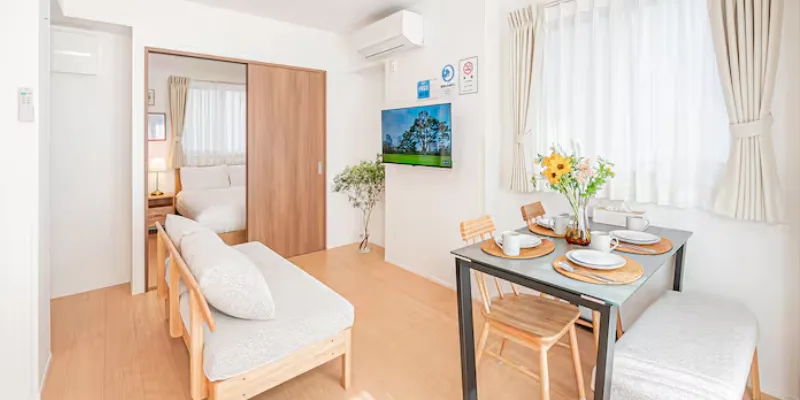
As remote and hybrid work becomes permanent in 2026, the 2LDK in Tokyo has become the most sought-after layout.
- Location: Higashinippori, Arakawa-ku. 5-minute walk to Nippori Station.
- Layout: 2LDK (50.01 $m^2$)
- Monthly Total: 249,000 ¥ (Rent: 234k + Management: 15k)
- Initial Cost: ~1,089,500 ¥
The Connectivity of Nippori:
Nippori is the only station where the Yamanote Line meets the Keisei Skyliner. You can reach Narita Airport in 36 minutes.
Expert Analysis:
Built in 2018 with Reinforced Concrete, this unit offers superior insulation. The 2LDK layout allows for a master bedroom and a second room—ideal for a couple where one person needs a quiet office space. The North-facing view ensures consistent lighting throughout the day without the intense heat of direct summer sun.
Case Study 5: Residia Tower Kamiikebukuro (The Tower Mansion Experience)
The “Tower Mansion” lifestyle is a status symbol in Tokyo, and this property delivers on every front.
- Location: Kitaotsuka, Toshima-ku. 9-minute walk to Otsuka (Yamanote).
- Layout: 2LDK (65.45 $m^2$)
- Monthly Total: 329,650 ¥ (Rent: 303k + Management: 25k)
- Initial Cost: ~1,114,150 ¥ (Featuring Zero Key Money)
Life in Toshima-ku:
Otsuka is a rising star. It maintains a nostalgic “tram-town” feel (Toden Arakawa Line) but has seen massive modern investment. It is one stop away from Ikebukuro.
Expert Analysis:
Located on the 10th floor, this unit is massive by Tokyo standards. With nearly 66 $m^2$, it is a true luxury home. The Southwest facing windows provide stunning sunset views. Like the Shibuya unit, this tower mansion offers Zero Key Money, which is a significant saving of over 300,000 ¥ compared to traditional tower contracts.
Understanding the “Initial Cost” (Shoki Hiyou) in 2026
One of the biggest hurdles for international residents is the upfront payment. In 2026, while some landlords are moving toward “Zero-Zero” models, prime Yamanote properties still require a significant investment.
Breakdown of Costs:
- Shikikin (Security Deposit): Usually 1-2 months’ rent. This is held by the landlord to cover potential damages or unpaid rent. In 2026, cleaning fees are often deducted from this upfront.
- Reikin (Key Money): A non-refundable “gift” to the landlord. (Prioritize ARealty listings with 0 Reikin to save money).
- Agency Fee: Standardly 1 month’s rent + 10% tax. This covers the cost of the agent finding the property and negotiating the contract.
- Guarantor Fee: Since most expats lack a Japanese relative, a guarantor company charges an initial fee (usually 50%–100% of one month’s rent) and a yearly renewal fee.
- Lock Exchange & Insurance: Security is paramount. Expect to pay around 22,000 ¥ for a new lock and 20,000 ¥ for a 2-year fire insurance policy.
Living Standards and Responsibilities in 2026
Living in a high-density city like Tokyo requires adhering to local customs (the “Wa” or harmony).
Garbage Disposal
Each ward (Shibuya, Taito, Arakawa) has its own strict schedule. In 2026, many “Residia” and “Crevia” brand buildings have 24-hour garbage rooms, allowing you to dispose of trash at your convenience—a massive luxury in Tokyo.
Noise Management
Japanese apartments, even RC structures, require mindfulness. It is common etiquette to avoid loud music, laundry, or vacuuming after 9:00 PM. In 2026, many modern units come with built-in sound-dampening flooring to help mitigate this.
Smart Home Integration
By 2026, most 1DK and 2LDK units include:
- Internet-ready (Hikari): High-speed fiber optic is often included in the management fee or provided at a discount.
- Video Intercom: Essential for safety and for receiving the high volume of deliveries in the e-commerce era.
- Delivery Boxes (Takuhaibin): Secure lockers in the lobby that allow you to receive packages while you are at work or university.
Tips for a Successful Rental Application in Japan
The screening process (Shinsa) can be rigorous for foreigners. To ensure your application for a japan tokyo apartment rent is successful:
- Document Readiness: Have your Residence Card (Zairyu Card), Passport, and Letter of Intent or Employment Contract ready.
- Financial Stability: Landlords usually require your monthly income to be at least 3 times the monthly rent. If you are a student, you may need a co-signer or proof of a substantial bank balance.
- The “Gaijin-Friendly” Filter: Save time by working with an agency that pre-screens landlords. ARealty has a database of landlords who actively welcome international residents.
Budgeting for Monthly Overhead in Tokyo
Beyond the base rent, you must account for “Running Costs”:
- Utilities (Electricity/Gas/Water): For a 1K, expect 10,000–15,000 ¥. For a 2LDK, expect 20,000–30,000 ¥.
- Mobile & Home Internet: 2026 plans average around 8,000 ¥ for a combined high-speed bundle.
- Ward Tax & Health Insurance: If you are working, remember that these are separate from your rent but vital for your legal residency.
Why ARealty is Your Best Partner in 2026
Navigating the Tokyo real estate market as a foreigner can be daunting. ARealty bridges this gap by providing:
- Zero Language Barrier: We provide contract explanations in Vietnamese, English, ensuring you never sign a document you don’t fully understand.
- No Hidden Fees: We provide a transparent “Estimate of Initial Costs” before you even visit the property.
- After-Care: From setting up your electricity (TEPCO) to explaining how to use your Japanese washing machine, our team is with you after the keys are handed over.
- Strategic Network: We have exclusive access to “Zero Key Money” and “Free Rent” campaigns that are not listed on public sites like Suumo or Homes.
Conclusion
Selecting an apartment on the Yamanote Line is more than a housing choice; it is a strategic investment in your Tokyo lifestyle. From the energetic hubs of Shibuya to the spacious, modern towers of Toshima, the 2026 market offers incredible opportunities for those who know where to look.
Whether you are looking for an apartment for rent in Japan for the first time or upgrading to a luxury 2LDK, professional guidance is the key to a stress-free move.
Ready to start your journey? Don’t let the best units get taken. Contact ARealty today for a personalized consultation and let our experts find the perfect Tokyo home tailored to your 2026 goals.

Real estate advisor at Arealty Japan, specialising in helping foreign residents navigate the Tokyo and Osaka rental markets. Lucy has guided hundreds of international renters — from Working Holiday visa holders to corporate relocations — through Japan’s apartment application process. Her writing draws on firsthand experience with landlord screening, guarantor companies, and foreigner-friendly listings across all 23 Tokyo wards and major Kansai cities.