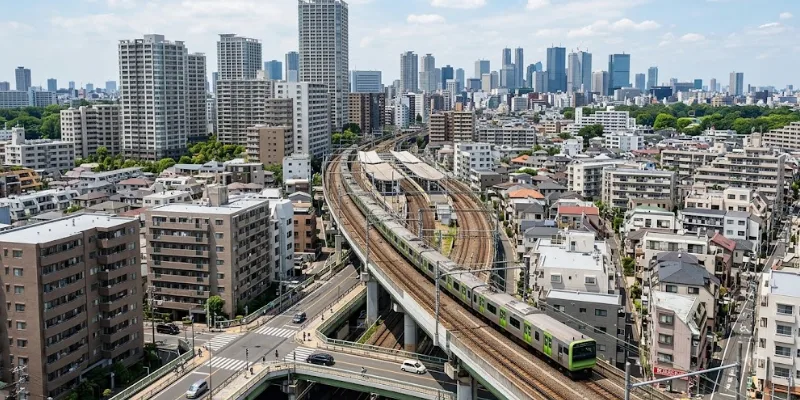

The Yamanote Line is the backbone of Tokyo — a 34.5km loop connecting 30 stations, running every 2–3 minutes during peak hours, and touching almost every major business, cultural, and entertainment district in the city. For foreign renters, it is the single most useful piece of infrastructure to understand before choosing where to live.
The challenge: apartments near Yamanote Line stations are not all equal. The same ¥120,000/month budget puts you in a very different apartment depending on which of the 30 stations you choose — and not all stations are equally accessible or foreigner-friendly from a rental market perspective.
This guide breaks down the Yamanote Line into four segments by rent level and character, then gives a station-level recommendation for each major renter profile: budget-conscious, central access, expat community, and family/long-term.
How the Yamanote Line shapes Tokyo’s rental market
The Yamanote Line runs in a near-perfect loop around central Tokyo. Stations on the western arc — Shinjuku, Shibuya, Ebisu, Meguro — are consistently among the most expensive rental locations in the city. The eastern arc — Nippori, Uguisudani, Ueno, Akihabara — offers substantially lower rents for the same access to the loop.
This asymmetry is predictable and useful. If your workplace is on the Yamanote Line itself, or easily reached by one connecting line, you have genuine flexibility in where you live along the loop — and the rent differential between the west and east arcs can be ¥30,000–¥60,000/month for the same layout.
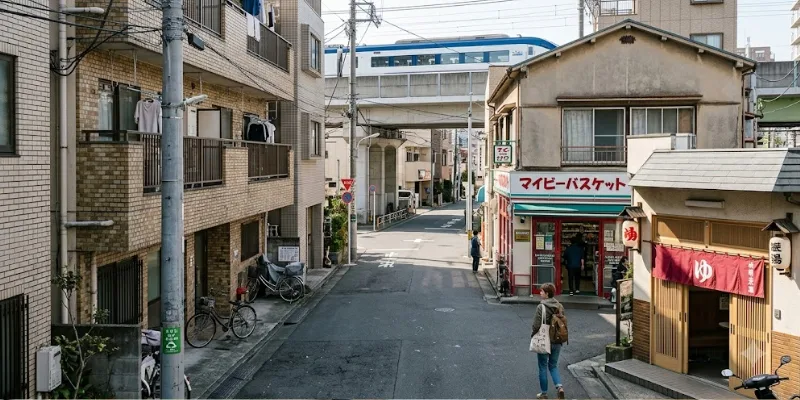
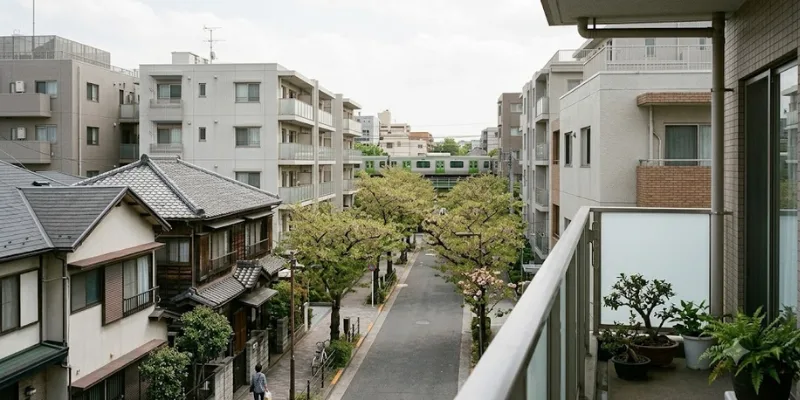
One important practical note: living near a Yamanote Line station does not always mean living directly at it. Many of Tokyo’s most liveable residential pockets are 5–15 minutes’ walk from a Yamanote station, or served by connecting private lines (Tokyu, Odakyu, Keio) that feed into the loop. The rent is typically lower at 8–12 minutes’ walk than at 3–5 minutes’ walk from the same station.
For current listings filtered by train line and station, use the Tokyo apartment search on Arealty — the platform allows you to filter directly by station and walking time.
The four segments: rent, character, and best for
Segment 1 — West arc: Shinjuku to Shibuya (premium, high foreigner acceptance)
Stations: Shinjuku → Yoyogi → Harajuku → Shibuya
1K average rent: ¥100,000–¥160,000/month
Foreigner acceptance: ★★★★★
This is the most competitive and most foreigner-accessible segment of the Yamanote Line. Shinjuku and Shibuya are two of the largest transport hubs in the world, and the areas surrounding them have the highest concentration of international residents, bilingual agencies, and landlords with experience renting to foreign nationals.
Shinjuku connects to the Chuo, Sobu, Oedo, Odakyu, and Keio lines — meaning you can reach almost anywhere in Tokyo without changing at a secondary hub. The Kabukicho and Okubo areas within Shinjuku-ku have a particularly high foreigner acceptance rate, and 1K units start from around ¥95,000 near the eastern exits. Browse Shinjuku apartments for rent.
Shibuya is the junction for the Tokyu Den-en-toshi Line, Ginza Line, Hanzomon Line, and Tokyu Toyoko Line — making it the access point for a large swath of southwest Tokyo. The station area itself is expensive, but the surrounding neighborhoods of Daikanyama and Nakameguro (both within 15 minutes on foot or one stop by Tokyu) offer a slightly lower price point with the same core access. Browse Shibuya apartments for rent.
Best for: Foreign professionals working in Shinjuku or Shibuya, international students at universities in the area, anyone who needs access to multiple private lines.
Segment 2 — South arc: Ebisu to Shinagawa (expat hub, corporate)
Stations: Ebisu → Meguro → Gotanda → Osaki → Shinagawa
1K average rent: ¥100,000–¥165,000/month
Foreigner acceptance: ★★★★
The south arc is the corporate and diplomatic corridor of the Yamanote Line. Shinagawa connects directly to Narita and Haneda airports, to the Shinkansen, and to the Keikyu Line toward Yokohama. Meguro and Ebisu are well-established expat residential areas with a strong international school presence and bilingual services.
Meguro (Meguro-ku) sits at the junction of the Yamanote Line, Tokyu Meguro Line, Namboku Line, and Mita Line. It is one of the most connected stations on the entire loop relative to its residential character — relatively quiet streets, good grocery infrastructure, and a strong reputation among long-term foreign residents. A 1LDK near Meguro runs ¥150,000–¥200,000/month. Browse Minato-ku apartments for units served by the Mita and Hibiya lines feeding into this corridor.
Shinagawa (Minato-ku and Shinagawa-ku boundary) is the preferred location for foreign professionals with frequent business travel or Yokohama commutes. The rental market here skews toward larger modern buildings — 1K units are relatively rare, with most inventory being 1LDK and above at ¥150,000–¥220,000/month.
Best for: Expats with corporate relocation packages, professionals traveling frequently, families near international schools (British School Tokyo is nearby), anyone commuting to Yokohama.
Segment 3 — Northwest arc: Ikebukuro to Nippori (value, good access)
Stations: Ikebukuro → Otsuka → Sugamo → Komagome → Tabata → Nippori
1K average rent: ¥75,000–¥120,000/month
Foreigner acceptance: ★★★
This segment is consistently underrated by foreign renters who focus on the west and south arcs. Ikebukuro is the third-busiest station in Japan, connecting to the Marunouchi Line, Fukutoshin Line, Yurakucho Line, Seibu Ikebukuro Line, and Tobu Tojo Line. It is substantially cheaper than Shinjuku for similar access.
Ikebukuro (Toshima-ku) has a large Chinese and Korean expat community and a well-established infrastructure for foreign residents including bilingual supermarkets and international restaurants. A 1K near Ikebukuro runs ¥85,000–¥115,000/month — approximately ¥20,000–¥30,000/month cheaper than equivalent units near Shinjuku. Browse Shinjuku-ku apartments for listings accessible via the Fukutoshin Line connection between Ikebukuro and Shinjuku.
Nippori (Arakawa-ku / Taito-ku boundary) is one of the most practical stations on the entire Yamanote Line that most foreign renters overlook. It connects to the Keisei Line (direct to Narita in 36 minutes via Skyliner), the Nippori-Toneri Liner, and is a 10-minute ride from Ueno. Rent here is 30–40% lower than Shibuya for the same layout. The neighbourhood is quiet and residential with a strong local market character.
Best for: Budget-conscious foreign renters who need Yamanote access without the premium, anyone with frequent Narita trips, students at universities in northern Tokyo.
Segment 4 — East arc: Ueno to Osaki via Akihabara (cheapest, selective)
Stations: Ueno → Okachimachi → Akihabara → Kanda → Tokyo → Yurakucho → Shimbashi → Hamamatsucho → Tamachi → Shinagawa
1K average rent: ¥80,000–¥130,000/month (varies widely by exact station)
Foreigner acceptance: ★★★ (higher near Ueno and Akihabara, lower near central business district stations)
The eastern arc includes both some of the cheapest Yamanote-adjacent rents (near Okachimachi and Akihabara) and some of the most expensive (Tokyo Station and Shimbashi, which are primarily commercial rather than residential). Most foreign renters on this arc live in Taito-ku or Chiyoda-ku, targeting the Ueno-Akihabara corridor.
Ueno is the junction for the Ginza Line, Hibiya Line, and Keisei Line — and the gateway to both Asakusa (10 minutes by Ginza Line) and Narita. The neighbourhoods around Ueno (Yanaka, Nezu, Yanesen area) are among the most characterful in Tokyo and have seen increasing foreigner interest over the past three years. A 1K near Ueno runs ¥75,000–¥105,000/month.
Akihabara sits at the junction of the Sobu Line and Hibiya Line and is a 4-minute ride to Tokyo Station. Rents here are lower than the business-district stations to the south, and the area has a growing residential population. A 1K near Akihabara runs ¥85,000–¥115,000/month.
Best for: Renters who want central access at mid-range budget, anyone commuting to eastern business districts (Chiyoda, Chuo), those who value easy access to Asakusa and historic Tokyo.
Station-by-station rent summary: Yamanote Line 2026
| Station | Ward | 1K avg/month | Access highlights | Foreigner ★ |
| Shinjuku | Shinjuku-ku | ¥100,000–¥140,000 | Chuo, Oedo, Odakyu, Keio | ★★★★★ |
| Shibuya | Shibuya-ku | ¥120,000–¥160,000 | Den-en-toshi, Ginza, Hanzomon | ★★★★★ |
| Ikebukuro | Toshima-ku | ¥85,000–¥115,000 | Marunouchi, Fukutoshin, Seibu | ★★★★ |
| Meguro | Meguro-ku | ¥105,000–¥145,000 | Tokyu Meguro, Namboku, Mita | ★★★★ |
| Shinagawa | Minato/Shinagawa | ¥130,000–¥180,000 | Keikyu, Tokaido, airports | ★★★★ |
| Nippori | Arakawa-ku | ¥72,000–¥100,000 | Keisei Skyliner, Narita | ★★★ |
| Ueno | Taito-ku | ¥75,000–¥105,000 | Ginza, Hibiya, Keisei | ★★★ |
| Otsuka | Toshima-ku | ¥80,000–¥110,000 | Toden Arakawa streetcar | ★★★ |
| Akihabara | Chiyoda-ku | ¥85,000–¥115,000 | Sobu, Hibiya, Tokyo Stn 4 min | ★★★ |
| Harajuku | Shibuya-ku | ¥115,000–¥155,000 | Chiyoda Line via Meiji-jingumae | ★★★★ |
Rent ranges based on active Arealty listings, May 2026. 1K/1R, within 10 minutes’ walk of station.
Which station is right for you?
If your workplace is in Shinjuku, Shibuya, or connects via private lines (Odakyu, Keio, Tokyu):
Live at Shinjuku or Ikebukuro. Ikebukuro gives you a ¥20,000–¥30,000/month discount for nearly identical commute times on the Fukutoshin Line connection.
If your workplace is in Minato-ku, Shinagawa, or Yokohama:
Meguro or Osaki. Both give you Yamanote Line access plus direct Mita/Tokyu line connections southward, at 15–20% lower rent than Shinagawa itself.
If you travel internationally frequently:
Nippori (Narita via Keisei Skyliner, 36 min) or Shinagawa (Narita Express, Haneda direct). The rent difference is roughly ¥50,000–¥70,000/month — worth calculating against your travel frequency.
If budget is the priority and the commute is under 35 minutes:
Nippori, Ueno, or Otsuka. All three are on the Yamanote Line proper, all have connecting lines, and all offer 1K rents under ¥110,000/month with reasonable foreigner acceptance rates.
For a full foreigner-specific rental checklist including visa requirements and guarantor options, see our Tokyo apartments for rent foreigner guide. For price data across all 23 wards, see the average Tokyo apartment rent analysis.
Browse listings by Yamanote Line corridor
- Shinjuku apartments for rent — west arc, Chuo & Oedo line access
- Shibuya apartments for rent — south-west arc, Den-en-toshi & Ginza
- Minato-ku apartments for rent — south arc, Hibiya & Mita line
- Setagaya apartments for rent — off-loop via Tokyu, feeds into Shibuya/Meguro
- All Tokyo apartments for rent — filter by train line and station
Frequently asked questions
Which Yamanote Line station has the cheapest apartments for foreigners?
Nippori, Ueno, and Otsuka consistently offer the lowest rents on the line for 1K apartments — ranging from ¥72,000–¥110,000/month — while maintaining reasonable foreigner acceptance rates. Adachi-ku and Arakawa-ku wards are even cheaper but have lower acceptance rates.
Is it better to live directly on the Yamanote Line or use a connecting private line?
For most renters, a connecting private line is better value. Living 2–3 stops from a Yamanote junction on the Tokyu, Odakyu, or Keio lines typically cuts rent by ¥15,000–¥30,000/month while adding only 6–12 minutes to commute time. The Den-en-toshi Line into Shibuya is the most popular example of this trade-off.
Do Yamanote Line apartments have higher foreigner acceptance rates?
Generally yes — wards served by the Yamanote Line have larger existing expat populations and more landlords experienced with foreign applicants. The west arc (Shinjuku, Shibuya) and south arc (Meguro, Shinagawa) have the highest acceptance rates. The east arc is more mixed, with Ueno and Akihabara performing better than the purely commercial stations.
How far in advance should I search for an apartment near Yamanote Line stations?
4–6 weeks before your move-in date is standard. No-key-money listings near popular stations like Shinjuku and Shibuya move fast — often within days of listing. Nippori and Ueno listings move more slowly and allow more time to compare.
Browse apartments near Yamanote Line stations
Every listing on Arealty is pre-screened for foreigner acceptance. Filter by station and walking time directly on the search page.
Browse Tokyo apartments for rent → arealty.mom/rent/tokyo
Written by the Arealty editorial team. Arealty (株式会社A-Realty) is a licensed real estate agency (宅地建物取引業) registered in Tokyo. Rent data reflects active listings as of May 2026. Station commute data sourced from Jorudan route search.

Real estate advisor at Arealty Japan, specialising in helping foreign residents navigate the Tokyo and Osaka rental markets. Lucy has guided hundreds of international renters — from Working Holiday visa holders to corporate relocations — through Japan’s apartment application process. Her writing draws on firsthand experience with landlord screening, guarantor companies, and foreigner-friendly listings across all 23 Tokyo wards and major Kansai cities.