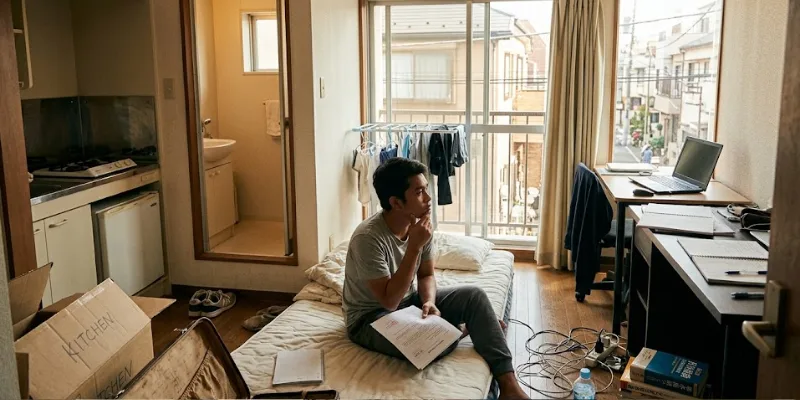

Why July Intake Students Face a Tighter Housing Window
ISI Japanese Language School runs four intakes per year — January, April, July, and October. Of the four, July is the most time-pressured for housing.
Here is why: the July intake falls in the middle of Japan’s peak moving season. University students and new graduates who moved in April are already settled. Landlords who list units in late May and June expect tenants in July — which aligns with your arrival, but only if you act fast. Properties at the right price and in the right commute range from ISI campuses in Shinjuku, Takadanobaba, Shibuya, and Ikebukuro fill within days during this window.
On top of that, ISI’s own school-managed dormitories cap stays at 11 weeks maximum for most Tokyo dorm options. Students on a full-term or multi-term program need a private apartment from day one, not just for semester two.
This checklist organises everything you need to do — and when — so you arrive with keys in hand.
ISI July Intake: Key Dates and Housing Timeline
Use this timeline backwards from your class start date, which for ISI’s July 2026 intake falls in the week of 7 July 2026.
| Weeks before start | Action |
| 14–16 weeks out (late March) | Apply to ISI, receive conditional acceptance |
| 12–14 weeks out (April) | COE (Certificate of Eligibility) application submitted by school |
| 10–12 weeks out (April–May) | Begin apartment search remotely; shortlist 3–5 properties |
| 8–10 weeks out (May) | Sign lease remotely or confirm with agent; pay deposit |
| 6–8 weeks out (May–June) | Receive student visa; confirm move-in date with landlord |
| 2–4 weeks out (June) | Arrange shipping, SIM card, airport transfer |
| Move-in day | Collect keys, register at local ward office within 14 days |
July intake note: COE processing typically takes 1–3 months from submission. If your COE is delayed, you may need a bridging accommodation option (monthly mansion or ISI dorm) for the first 2–4 weeks. Budget for this possibility when planning.
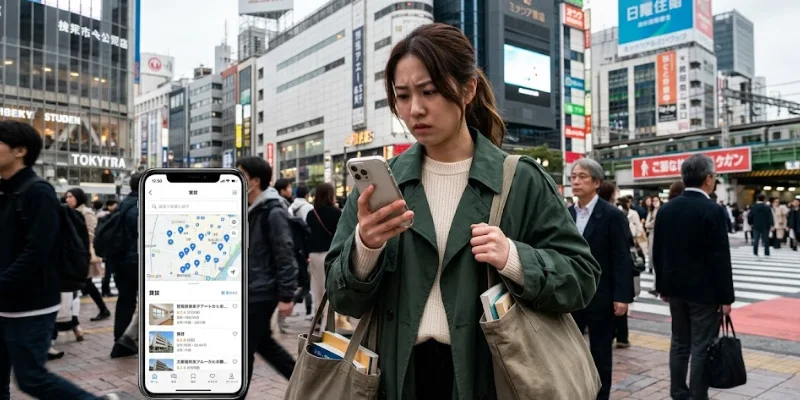
The Housing Checklist: 7 Things to Confirm Before Signing
1. Confirm the apartment accepts your visa status
Japan’s rental market has changed significantly. Most landlords near ISI campuses now accept foreign tenants, but not all accept student visa applicants without additional documentation. Before spending time on any listing, confirm:
- Student visa accepted (not just work or spouse visa)
- No requirement for a Japanese national guarantor — a hosho gaisha (guarantor company) is the standard alternative and Arealty works with approved providers
- Lease term compatible with your program length — a 1-year program supports a standard 2-year lease if a parent or scholarship letter supplements your income documentation
For a full explanation of how lease length intersects with visa type, see Short-term vs 2-year Lease in Japan: Which One Fits Your Visa?
2. Calculate your total move-in cost
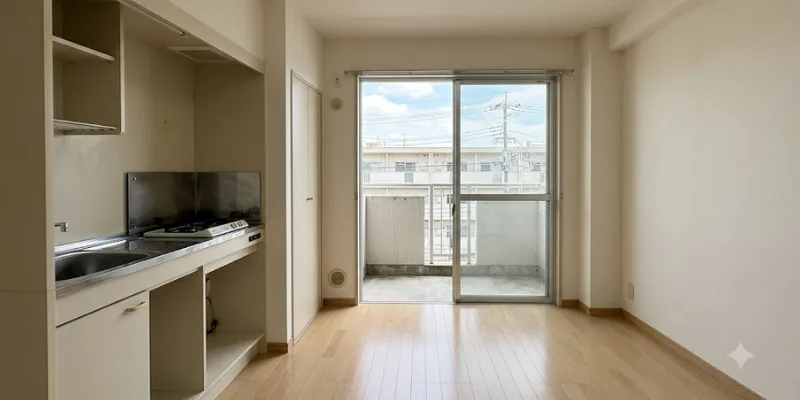
Japan’s rental system requires upfront fees that often surprise first-time renters. For a 1K or 1DK apartment near ISI campuses, budget for:
| Fee | Typical amount |
| First month’s rent | ¥60,000–¥90,000 |
| Security deposit (shikikin) | 1–2 months’ rent |
| Agency fee (chukai tesuryo) | 1 month’s rent + tax |
| Key money (reikin) | 0–1 month (many foreigner-friendly buildings have eliminated this) |
| Guarantor company fee | ¥10,000–¥30,000 one-time |
| Lock replacement fee | ¥10,000–¥20,000 |
| Estimated total upfront | ¥250,000–¥400,000 |
Monthly rent near ISI’s Shinjuku campus typically ranges from ¥65,000–¥95,000 for a 1K (20–25m²). For a full breakdown of living costs as a student, see Cost of Living in Japan: Student Guide.
3. Check commute time to your specific ISI campus
ISI operates several Tokyo campuses. Commute benchmarks to aim for:
- ISI Shinjuku Prime (Nishi-Shinjuku): target apartments within 25 minutes by train — Shibuya, Nakameguro, Sangenjaya on the Tokyu Den-en-toshi/Setagaya lines all fit
- ISI Takadanobaba: direct lines from Ikebukuro, Mejiro, Shiinjuku; walking distance from Takadanobaba Station makes Waseda and Okubo neighborhoods ideal
- ISI Shibuya / Harajuku: Yamanote Line access from Ebisu, Meguro, Yoyogi, Harajuku
Browse available listings near each campus at Arealty Tokyo rentals — filter by station and commute time.
4. Confirm furnished vs unfurnished
Most standard Japanese apartments come unfurnished — no washing machine, refrigerator, curtains, or bed frame. For a July intake student arriving from abroad, there are two practical options:
Option A — Unfurnished apartment + appliance rental:
Cheaper monthly rent. Buy appliances secondhand from Mercari or Hard-Off, or rent a starter appliance set (¥3,000–¥8,000/month) from a furniture rental service. Best for stays of 1 year or more.
Option B — Monthly mansion or furnished apartment:
Slightly higher monthly cost but zero setup hassle. Ideal for students arriving on short notice or staying under 6 months. ISI’s own school dormitories are the most affordable furnished option (up to 11 weeks); after that, a furnished monthly mansion makes sense.
For students unsure of their stay duration before the July start, a furnished short-term option for the first 1–2 months while you settle in is a legitimate strategy. See Short-term vs 2-year Lease in Japan for cost comparison.
5. Prepare your application documents in advance
Japanese landlords require a documentation package. Have these ready before you start viewing:
Required:
- Passport (copy)
- Student visa (or COE if visa not yet issued)
- ISI enrollment confirmation letter
- Proof of funds — bank statement showing at least ¥500,000, or scholarship documentation
- Emergency contact information (parent or guardian outside Japan)
Helpful to have:
- Guarantor company approval pre-arranged — Arealty can process this before you arrive
- Letter from ISI confirming enrollment duration and program details
- Japanese phone number — even a prepaid SIM is acceptable
If your visa is not yet issued: Some landlords will accept a signed lease contingent on COE/visa issuance. Your agent needs to manage this explicitly. Arealty regularly handles COE-pending applications for July intake students.
6. Verify the building rules (kanri kisoku)
Building rules in Japan can affect daily life significantly. For student renters, the most important to check:
- Noise curfew — some buildings enforce quiet hours from 10pm. Not unusual, but worth knowing if you plan to study late with classmates
- Guests policy — overnight guests are restricted in some buildings, particularly older properties
- Musical instruments — prohibited in most standard apartments; mention this upfront if relevant
- Garbage rules — Japan has strict sorting and collection day rules; your agent should explain these at contract signing
- Renewal fees — many leases charge a koshinryo (renewal fee) of 1 month’s rent at the 2-year mark. Confirm this before signing
7. Understand the ward registration requirement
Within 14 days of moving in, you are legally required to register your address at the local ward office (kuyakusho). This is not optional and has downstream effects:
- Health insurance (kokumin kenko hoken) cannot be enrolled without it
- Bank account opening requires a registered address
- ISI may request proof of residence address within the first week of classes
Your ward office registration requires your residence card (zairyu card), passport, and lease contract. Arealty agents provide a step-by-step guide with each tenancy.
Neighborhoods That Work Well for ISI July Intake Students
Based on commute access and budget for 2026, these areas offer the best combination for ISI students:
Shinjuku / Okubo area (1K: ¥65,000–¥80,000)
Walking distance to ISI Shinjuku Prime and Takadanobaba. High concentration of international residents means landlords are experienced with foreign tenants. Haggle-friendly due to supply.
Nakano / Higashi-Nakano (1K: ¥60,000–¥75,000)
One stop from Shinjuku on the Chuo Line. Quieter than central Shinjuku, better value, strong community of language school students.
Ikebukuro (1K: ¥65,000–¥85,000)
Excellent for ISI Takadanobaba students. Direct access, convenience stores, cheap dining options, and several large foreigner-friendly buildings managed by agencies familiar with student leases.
Sangenjaya / Shimokitazawa (1K: ¥70,000–¥90,000)
Better suited for ISI Shibuya/Harajuku students. Higher quality of life, active nightlife and music scene, slightly higher rent offset by the lifestyle.
For a deeper guide to choosing a neighbourhood by budget and lifestyle, see Best Residential Areas for Students in Tokyo and Affordable Neighborhoods in Tokyo 2026.

ISI Dormitory vs Private Apartment: Which Is Right for July?
| ISI School Dormitory | Private Apartment via Arealty | |
| Max stay | 11 weeks | Flexible (6 months to 2+ years) |
| Setup required | None — move in ready | Requires appliances if unfurnished |
| Monthly cost | ¥45,000–¥80,000 (all-in) | ¥65,000–¥95,000 rent + utilities |
| Upfront cost | Low (¥30,000 facility fee) | ¥250,000–¥400,000 |
| Privacy | Shared facilities | Private |
| Contract flexibility | Fixed to school term | Can adjust with notice period |
| Best for | Short-term / first 1–2 months | Full program / 1 year+ stays |
Students on programs longer than 3 months are typically better served by a private apartment from the start — the higher upfront cost pays off quickly compared to dormitory fees over a full year.
How to Start Your Search Before You Leave Home
You do not need to be in Tokyo to secure an apartment for the July intake. Arealty’s remote leasing process works as follows:
- Submit your details — program length, budget, campus location, move-in date
- Receive a curated shortlist — 3–5 properties pre-screened for foreigner-friendliness and commute
- Virtual tour — video walkthrough with an English-speaking agent
- Remote application — documents submitted digitally; guarantor company approval processed in parallel
- Lease signed before departure — keys ready on your move-in date
Browse available listings now at Arealty Tokyo rentals or contact the team for a free initial consultation.
Frequently Asked Questions
Can I rent an apartment in Japan before my student visa is issued?
Yes, with conditions. Some landlords accept a conditional lease pending COE issuance. Your agent needs to manage this explicitly with the landlord. Arealty handles COE-pending applications regularly for intake students.
Do I need a Japanese guarantor?
No. All foreigner-friendly properties listed by Arealty use a hosho gaisha (guarantor company) instead. Arealty coordinates the guarantor application as part of the standard process.
What happens if my July start is delayed?
If your visa or COE is delayed, a short-term furnished option (ISI dorm, weekly mansion, or monthly apartment) can bridge the gap. Arealty can arrange this without affecting your main lease.
Is it cheaper to live in a share house near ISI?
Share houses near Shinjuku start from around ¥45,000–¥60,000 per month all-inclusive and are an option for students on tight budgets. The trade-off is shared kitchen/bathroom and less privacy. If this format interests you, see Student Housing Japan guide for a full comparison.
How early should I start looking for July intake housing?
10–12 weeks before your start date is the optimal window — early enough to have good availability, late enough that listings for July move-in dates are actually live. Starting earlier than 14 weeks means most listed units will be rented before your move-in date.
Published by the Arealty editorial team. Last updated May 2026.
Arealty specialises in foreigner-friendly apartment rentals across Japan. All rental data reflects market conditions as of Q2 2026.

Real estate advisor at Arealty Japan, specialising in helping foreign residents navigate the Tokyo and Osaka rental markets. Lucy has guided hundreds of international renters — from Working Holiday visa holders to corporate relocations — through Japan’s apartment application process. Her writing draws on firsthand experience with landlord screening, guarantor companies, and foreigner-friendly listings across all 23 Tokyo wards and major Kansai cities.