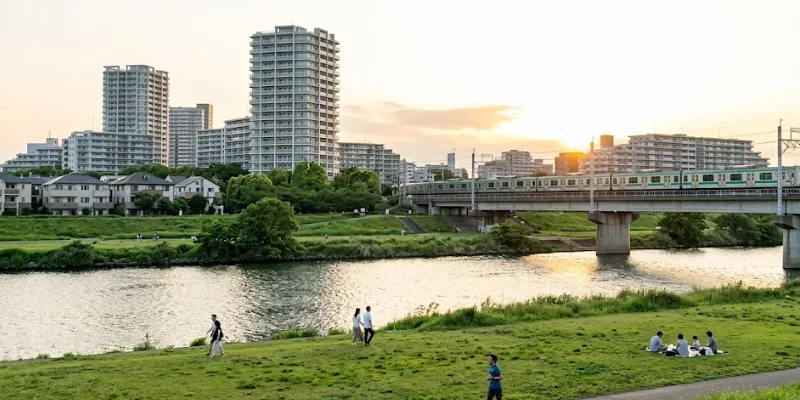

Finding a Den-en-toshi Line apartment for rent puts you in some of Tokyo’s most consistently popular residential neighbourhoods — Sangenjaya, Komazawa-daigaku, Yoga, Futako-tamagawa — running southwest from Shibuya and continuing into Kanagawa through Miyazaki-dai, Azamino, and eventually Chuo-rinkan. For foreign renters, it represents a specific kind of trade-off: you give up some proximity to central Tokyo, and in return you get noticeably more space, quieter streets, and a residential character that sits in sharp contrast to the Yamanote Line wards.
This guide covers the Den-en-toshi Line station by station for renters — what each neighbourhood is actually like to live in, what apartments cost, and what the application process involves for foreigners. If you want to browse current listings while you read, see Den-en-toshi Line apartments on Arealty filtered by station and foreigner acceptance.
Why the Den-en-toshi Line Attracts Foreign Residents
Three things consistently come up when foreign residents describe why they chose the Den-en-toshi Line: the residential quality is noticeably higher than inner-Tokyo wards at comparable prices, the line runs directly into Shibuya without transfers, and the international school access from the Yoga-Futako-tamagawa section is strong.
The line is also home to one of the longest-established expat communities in Tokyo. Setagaya ward, through which the inner portion of the line runs, has had a significant international resident population since the 1970s — which means landlord familiarity with foreign tenants, English-speaking medical and retail infrastructure, and a rental market with established processes for foreign applications. For context on how Setagaya ward sits within the broader Tokyo rental market, the Setagaya apartment rental guide covers the ward in full.
Station Guide: Sangenjaya to Futako-tamagawa
Sangenjaya (三軒茶屋) — 3 minutes from Shibuya
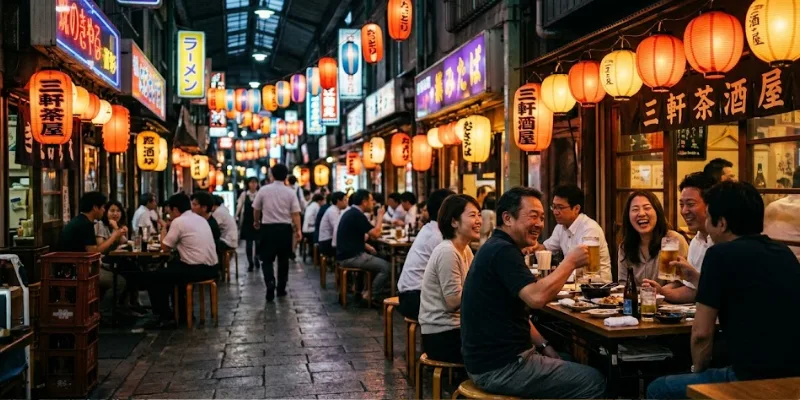
Sangenjaya is the first major residential station on the line and the one with the highest demand from young foreign professionals. The neighbourhood around the station is a dense mix of cafés, izakayas, independent restaurants, and a covered shotengai (shopping arcade) that gives the area a distinctly local character despite its proximity to Shibuya. Low-rise residential streets begin within 5–10 minutes’ walk of the exits.
Foreigner acceptance rate is high here — landlords in Sangenjaya deal with international applicants regularly, and the area has a well-established bilingual real estate presence. 1K units run ¥88,000–¥115,000/month. This is the right station if you want fast Shibuya access and a social neighbourhood with genuine character.
Komazawa-daigaku (駒沢大学) — 6 minutes from Shibuya
One stop past Sangenjaya, Komazawa-daigaku is named for Komazawa University but is not a student-dominated neighbourhood — it is one of the more genuinely residential stations on the line. Komazawa Olympic Park is within walking distance, providing green space and running paths that are unusually generous by Tokyo standards.
Rents are marginally lower than Sangenjaya: 1K units at ¥85,000–¥108,000/month. The station has good supermarket access and a quieter street character than Sangenjaya, which makes it a more common choice for foreign renters who want the line’s benefits without the izakaya density.
Ikejiri-ohashi (池尻大橋) — 2 minutes from Shibuya
Ikejiri-ohashi sits one stop from Shibuya on the Den-en-toshi Line and is served simultaneously by the Shin-Yutenji area of Meguro ward. The neighbourhood character is calmer and more design-oriented than Sangenjaya — a small cluster of independent design studios, architecture offices, and food businesses has grown up around the area, making it a common choice among creative-industry foreign residents.
1K units start at ¥92,000–¥120,000/month — slightly higher than Komazawa-daigaku, reflecting the proximity premium. Worth considering if working in Shibuya or the adjacent creative corridor between Daikanyama and Nakameguro.
Yoga (用賀) — 12 minutes from Shibuya
Yoga is the transition point between the inner neighbourhood character of the line and the more spacious family residential area beyond it. The station sits adjacent to the Tomei Expressway junction — not visible or audible from most residential streets, but geographically relevant for renters who own cars, as parking is more available and less expensive than inner Tokyo.
Yoga is a common choice for families with children enrolled at international schools in Setagaya, and for tech professionals working at Rakuten’s headquartered campus nearby. 1K units at ¥82,000–¥105,000/month; 2LDK family units at ¥160,000–¥220,000/month.
Futako-tamagawa (二子玉川) — 18 minutes from Shibuya
Futako-tamagawa is the landmark station of the Den-en-toshi Line’s inner section — the large Tamagawa Takashimaya shopping complex and the Tama River riverside park have made this area one of the most photographed and frequently discussed residential destinations in southwest Tokyo. The riverside provides cycling paths, open parkland, and a spatial openness that is genuinely unusual within Tokyo’s commuting radius.
Futako-tamagawa is also where Rakuten’s main campus is located, making it a natural base for tech industry employees. International school access — Seisen International School, Tokyo International School — is strong from here. 2LDK family units are significantly more common here than in inner stations; single-occupant 1K units are less dominant. 2LDK units run ¥170,000–¥250,000/month.
Station Guide: Yoga to Chuo-rinkan (Kanagawa)
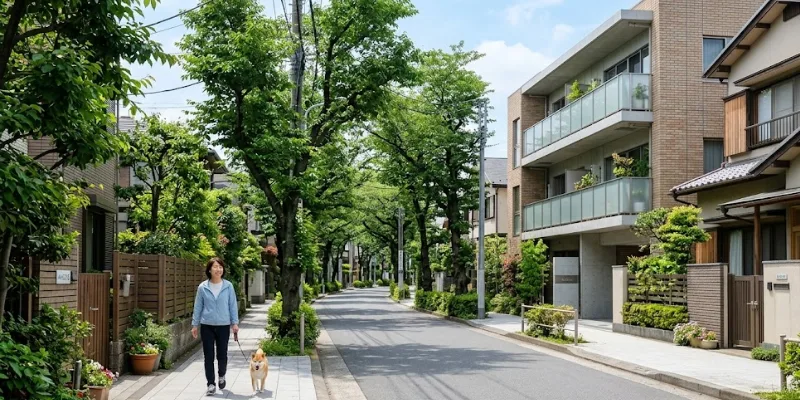
Past Futako-tamagawa, the line crosses into Kanagawa prefecture and the residential character shifts further toward suburban family-oriented housing. Rents drop noticeably — 1K units in Miyazaki-dai and Tama-plaza range from ¥65,000–¥85,000/month — and apartment sizes increase. Commute times to Shibuya range from 22–40 minutes.
Tama-plaza (たまプラーザ): One of the most consistently recommended stations for family relocation on the Den-en-toshi Line. The neighbourhood was developed in the 1960s and 1970s as a planned residential area and retains its broad streets, good school access, and park-heavy layout. 2LDK units at ¥140,000–¥195,000/month. Commute to Shibuya: approximately 27 minutes.
Azamino (あざみ野): Served by both the Den-en-toshi Line and the Yokohama Municipal Subway Blue Line, giving direct access to Yokohama in addition to Shibuya. A practical choice for renters commuting to Yokohama. 2LDK units at ¥130,000–¥180,000/month.
Chuo-rinkan (中央林間): The terminus of the Den-en-toshi Line and the access point for the Odakyu Enoshima Line. Commute to Shibuya: approximately 40 minutes. The area is genuinely suburban, with house-style living and larger apartment units at significantly lower rent. 2LDK units at ¥110,000–¥155,000/month.
Rent by Station and Unit Type — 2026 Data
| Station | Shibuya (min) | 1K range | 1LDK range | 2LDK range |
| Sangenjaya | 3 | ¥88,000–¥115,000 | ¥130,000–¥175,000 | ¥170,000–¥240,000 |
| Ikejiri-ohashi | 2 | ¥92,000–¥120,000 | ¥135,000–¥180,000 | ¥175,000–¥250,000 |
| Komazawa-daigaku | 6 | ¥85,000–¥108,000 | ¥125,000–¥165,000 | ¥165,000–¥225,000 |
| Yoga | 12 | ¥82,000–¥105,000 | ¥120,000–¥160,000 | ¥160,000–¥220,000 |
| Futako-tamagawa | 18 | ¥85,000–¥112,000 | ¥130,000–¥175,000 | ¥170,000–¥250,000 |
| Tama-plaza | 27 | ¥70,000–¥90,000 | ¥105,000–¥140,000 | ¥140,000–¥195,000 |
| Azamino | 32 | ¥65,000–¥85,000 | ¥95,000–¥130,000 | ¥130,000–¥180,000 |
| Chuo-rinkan | 40 | ¥58,000–¥78,000 | ¥85,000–¥115,000 | ¥110,000–¥155,000 |
For broader Tokyo pricing context and how Den-en-toshi Line rents compare to other lines and wards, the average rent by ward guide for 2026 has full ward-level data. For a Yamanote Line comparison of stations closer to central Tokyo, see the Yamanote Line station rental guide.
Commute Reality: What the Times Actually Mean
The Den-en-toshi Line commute times above are station-to-Shibuya figures for standard services. A few factors that affect the real-world commute:
Peak-hour crowding: The Den-en-toshi Line is consistently ranked among the most crowded commuter lines in Tokyo during morning rush (7:30–9:00am). The inner stations — Sangenjaya, Komazawa-daigaku, Ikejiri-ohashi — are the most congested. Renters who can avoid peak hours or use the Shin-Tamagawa Line express services significantly reduce this problem.
Onward connection from Shibuya: Shibuya is a transfer hub for the Yamanote Line, Ginza Line, Hanzomon Line, and Tokyu Toyoko Line. From Shibuya, most major Tokyo business districts are within 15–20 minutes. The Den-en-toshi Line’s main limitation is that Shibuya is not always the final destination — renters commuting to Marunouchi or Otemachi may find the Hanzomon Line (which shares Den-en-toshi Line tracks between Shibuya and Oshiage) useful for direct access.
Car access: Past Yoga, parking becomes significantly more available and less expensive. For families or renters with cars, the Kanagawa stations have a genuine lifestyle advantage that the inner-Tokyo stations do not.
Renting as a Foreigner on the Den-en-toshi Line
The Den-en-toshi Line corridor — particularly Setagaya ward — has one of the higher foreigner acceptance rates in the greater Tokyo area. Landlords in Sangenjaya, Komazawa-daigaku, and Yoga have decades of experience with international tenants, and the guarantor company system (保証会社, hoshō gaisha) is well-established as a standard for foreign applicants.
Documents you will need: residence card (在留カード), income proof, 2–3 months bank statements, and guarantor company application. For the full application process, see the step-by-step guide to renting in Japan as a foreigner.
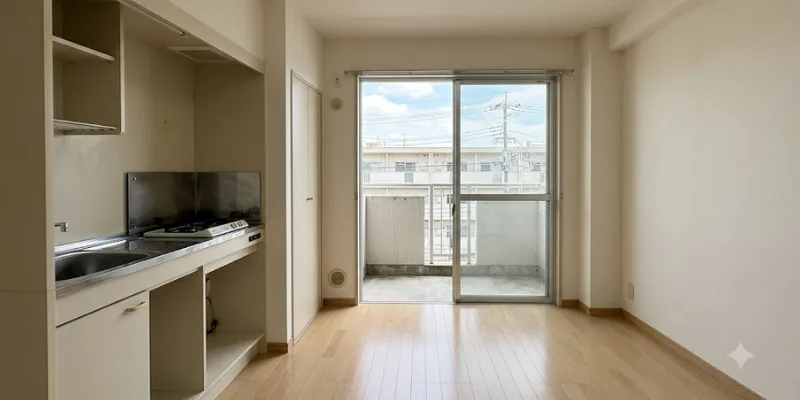
Viewing: listing photos along the Den-en-toshi corridor — like most Tokyo listings — frequently use sample unit images rather than photos of the specific apartment. Confirm whether photos show the actual unit, and request a video walk-through if you are searching from overseas. More on this: why apartment photos in Japan often differ from the real room.
Visa considerations: work visa and spouse visa holders have the widest access. Working Holiday and student visa holders should confirm with their agency which specific landlords along the line have accepted their visa type before applying — pre-filtering eliminates the most common source of rejected applications. For WH-specific strategy, see the Working Holiday rental guide.
Who the Den-en-toshi Line Is Right For
Strong fit:
- Families needing 2LDK+ with international school access (Yoga, Futako-tamagawa, Tama-plaza)
- Young professionals wanting Shibuya access with a residential neighbourhood feel (Sangenjaya, Komazawa-daigaku)
- Tech industry employees at Rakuten, DeNA, or other Shibuya-adjacent employers
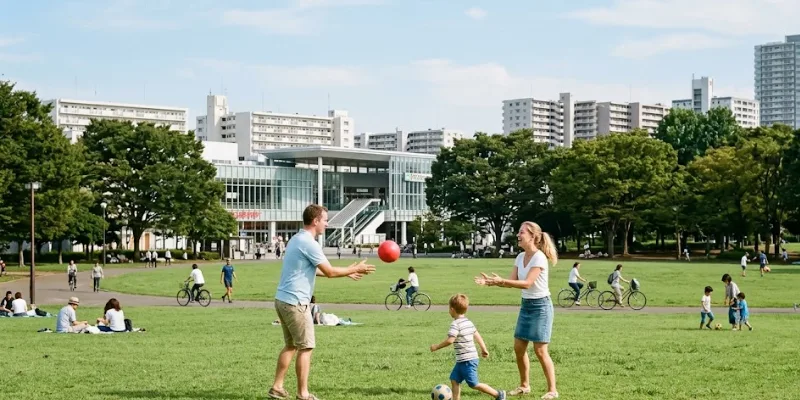
- Renters prioritising park access and outdoor lifestyle (Futako-tamagawa riverside, Komazawa Olympic Park)
Consider alternatives if:
- You need frequent access to Tokyo Station or Otemachi — Hanzomon Line access helps, but total commute time is longer than from central wards
- Your budget is under ¥80,000/month for inner stations — cheap apartment options in outer Tokyo may better fit
- You prefer nightlife and social density over residential quiet — Sangenjaya is the exception; elsewhere on the line, evenings are noticeably quieter than Shinjuku or Shibuya-adjacent wards
Browse current Den-en-toshi Line apartments on Arealty, filtered by station and foreigner acceptance — or contact Arealty to discuss which station fits your commute and lifestyle before beginning your search.
Further Reading
- Setagaya apartments for rent — full ward guide
- Yamanote Line station rental guide 2026
- Average apartment rent in Tokyo — 2026 ward data
- Renting in Japan as a foreigner — full process guide
- Why apartment listing photos in Japan can differ from the real room
- Working Holiday visa rental guide
- Cheap apartments in Tokyo under ¥70,000

Real estate advisor at Arealty Japan, specialising in helping foreign residents navigate the Tokyo and Osaka rental markets. Lucy has guided hundreds of international renters — from Working Holiday visa holders to corporate relocations — through Japan’s apartment application process. Her writing draws on firsthand experience with landlord screening, guarantor companies, and foreigner-friendly listings across all 23 Tokyo wards and major Kansai cities.