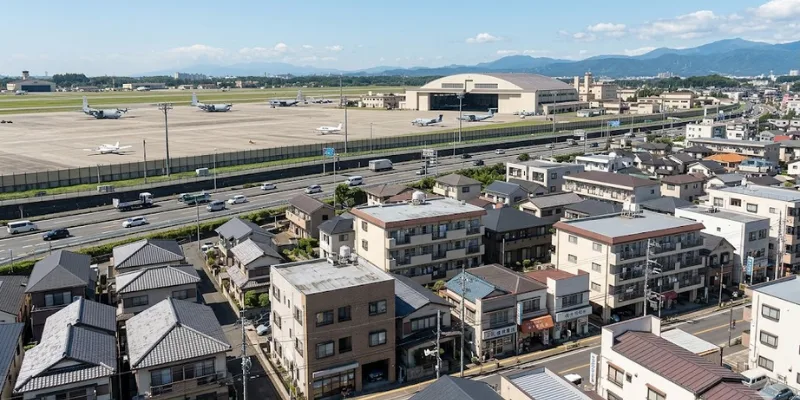
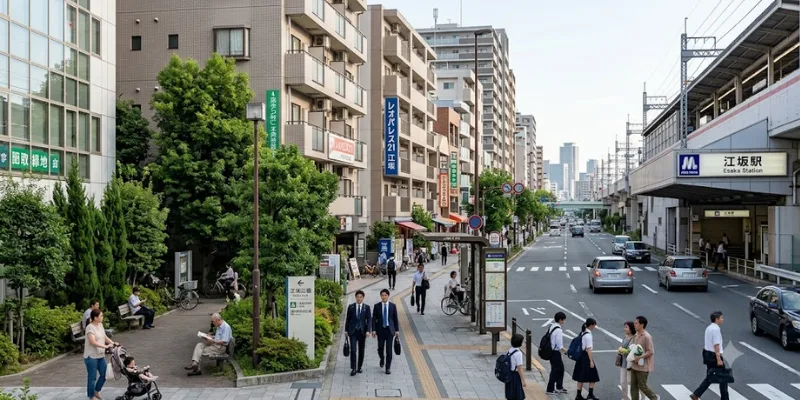
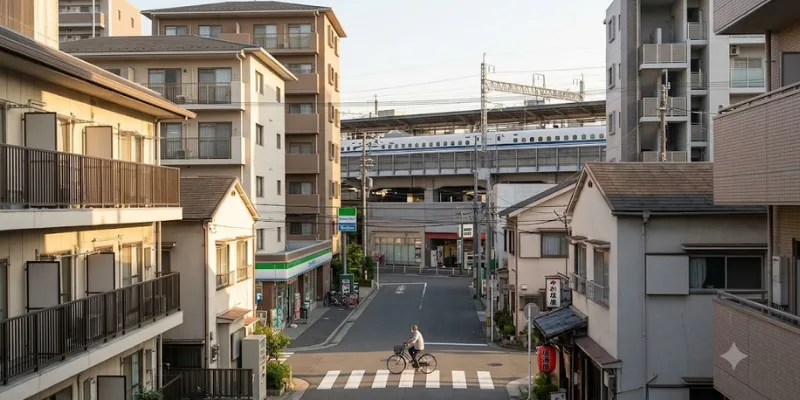
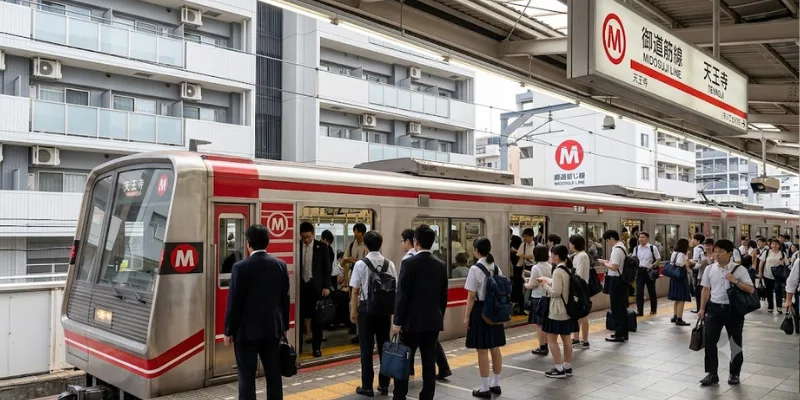
Umeda apartments for rent average about ¥75,000 a month for a studio and ¥94,000 for a 1K or 1DK, the highest ward average in Osaka. Prices drop to ¥58,000 to ¥80,000 for a 1K one stop away in Tenma or Nakatsu. Umeda sits in Kita Ward (Kita-ku), the transit and business center of Osaka, and it has more foreigner-accepted listings than any other part of the city.
This guide covers where to search inside Osaka Kita, rent by layout, how renting in Osaka differs from Tokyo, upfront costs, and cheaper areas nearby. If you want to know what daily life is like, read our guide to living in Umeda.
| Key fact | Umeda and Osaka Kita |
|---|---|
| Ward | Kita Ward (Kita-ku), Osaka City |
| Studio (1R) ward average | ~¥75,400 / month |
| 1K / 1DK ward average | ~¥94,000 / month |
| Cheapest 1K areas in the ward | Tenma, Tenjinbashi (~¥58,000 to ¥80,000) |
| Key money (reikin) | ¥0 on most Kita listings |
| Rail lines | JR, Hankyu, Hanshin, Midosuji, Tanimachi, Yotsubashi, JR Tozai |
| To Shin-Osaka | ~4 min by JR |
| To Kyoto / Kobe | ~29 min / ~21 min by JR special rapid |
Ready to browse? See current apartments for rent in Kita Ward with foreigner acceptance confirmed and English support.
Where Should You Search for Umeda Apartments for Rent?
The best value inside Osaka Kita is usually one stop from Umeda, not next to Osaka Station. Rent changes more by sub-area than by building age, so pick the area first.
| Sub-area | Typical 1K rent | Time to Umeda | Best for |
|---|---|---|---|
| Umeda core (Nishi-Umeda, Umekita, Chayamachi) | ¥85,000 to ¥110,000 | Walk | Maximum access, new towers |
| Higashi-Umeda, Sonezaki, Toyosaki | ¥75,000 to ¥95,000 | 5 to 10 min walk | Umeda address for a little less |
| Nakatsu | ¥70,000 to ¥95,000 | 1 stop, Midosuji Line | Quiet streets, newer buildings |
| Tenma, Tenjinbashi, Ogimachi | ¥58,000 to ¥80,000 | 1 stop, JR Loop or Tanimachi | Budget and local Osaka life |
Umeda Core: Maximum Access, Premium Price
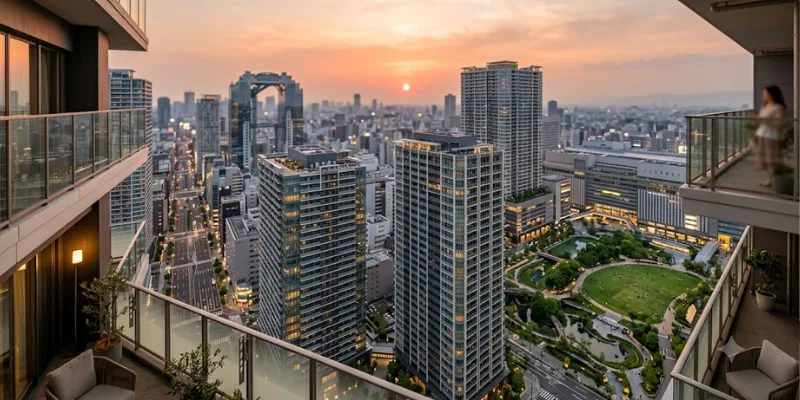
The blocks around Osaka Station are mostly commercial, so apartments sit above shops or in mid-rise buildings behind the main avenues. Everything is 2 to 5 minutes from your door, but you pay for it. The Umekita side is changing fastest: Grand Green Osaka opened in 2024, and according to the Osaka Convention & Tourism Bureau its park covers about 45,000 m² next to the station. New towers here rent well above the ward average.
Higashi-Umeda, Sonezaki and Toyosaki: Umeda for a Little Less
The east and north edges of Umeda have older mid-rise buildings that still advertise “Umeda” in their names. You walk 5 to 10 minutes to the station and save around ¥10,000 a month compared with the core. Streets near Ohatsutenjin get noisy at night, so choose a side street if you sleep early.
Nakatsu: The Residential Sweet Spot
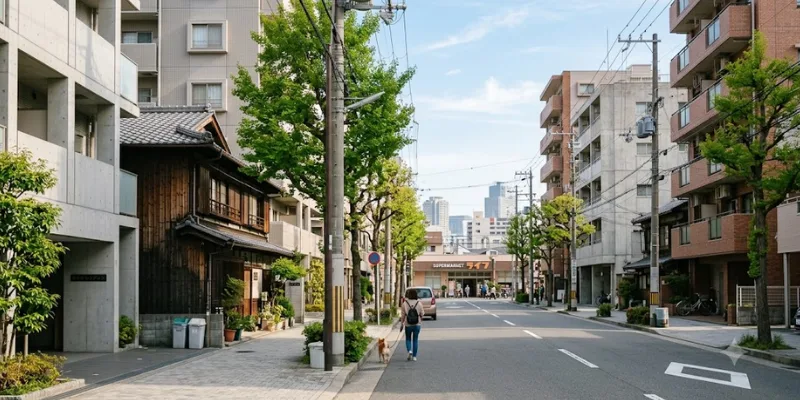
Nakatsu is one stop north of Umeda on the Midosuji Line and is also walkable to Umekita. It has good supermarkets, less street noise and a lot of new-build stock from the last five years. This is the area Arealty advisors recommend most often to single foreign renters who want a Kita-ku address on a realistic budget.
Tenma and Tenjinbashi: Local Osaka at Lower Rent
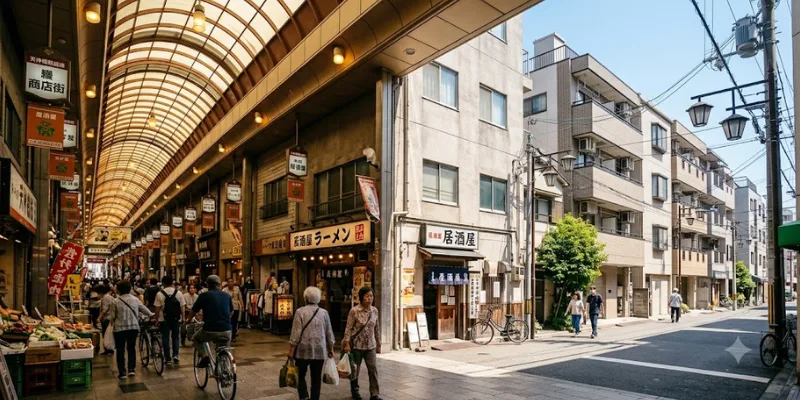
Tenjinbashisuji, Japan’s longest covered shopping street at about 2.6 km, anchors this area. Groceries and food are cheap, and 1K units start around ¥58,000. Foreigner acceptance is lower here than near the station, so work with an agency that confirms acceptance before you apply.
Fukushima (Fukushima Ward) and Juso (Yodogawa Ward) are just outside Kita-ku but one stop from Umeda. They are covered in the alternatives section below.
How Much Is Rent in Osaka Kita by Layout?
A 1K in Kita Ward averages about ¥94,000, about ¥18,000 more than Chuo Ward and almost double Yodogawa Ward. The table uses Arealty ward data, the same figures as our Osaka City guide.
| Layout | Kita Ward (Umeda) | Chuo Ward (Namba, Shinsaibashi) | Yodogawa Ward (Juso, Shin-Osaka) |
|---|---|---|---|
| Studio (1R) | ¥75,400 | ¥60,273 | ¥62,667 |
| 1 Bedroom (1K / 1DK) | ¥94,033 | ¥76,012 | ¥51,267 |
| 2 Bedrooms (2K / 2DK) | ¥240,000 | ¥202,000 | ¥91,000 |
Couples looking at a 1LDK (35 to 50 m²) usually see ¥90,000 to ¥165,000 in Kita Ward, with the top of that range in Umekita and Nishi-Umeda towers. Family-size units are scarce near the station, which is why 2-bedroom prices jump so sharply.
Under ¥70,000 for a 1K is possible in Tenma and Tenjinbashi, but those buildings are usually older (pre-2000). Confirm foreigner acceptance before you apply at that price. Osaka rents are also clearly lower than central Tokyo; compare ward by ward with our average apartment rent in Tokyo guide.
How Is Renting in Osaka Different From Tokyo?
The basic steps are the same as in Tokyo: view, apply, pass screening with a guarantor company, sign and pay. Four local differences change your budget and your paperwork.
- Key money is rare. Most Kita listings in 2026 ask for no reikin, which cuts upfront costs compared with a similar Tokyo apartment.
- Watch for shikibiki. Some older Kansai leases keep a fixed part of the deposit no matter the condition of the room. Ask about it before signing.
- Negotiation is more common. Landlords of older or long-vacant units sometimes accept a lower deposit or a free first month. It is not guaranteed, but an agency with local relationships can ask.
- English lease support is thinner. Fewer Osaka management companies offer English lease summaries, so a bilingual agency matters more. Arealty explains every Japanese lease in English before you sign.
If you have no Japanese guarantor, see how to rent an apartment in Japan without a guarantor.
Which Visas Can Rent Umeda Apartments?
| Visa type | Access to Kita listings | What helps |
|---|---|---|
| Work or spouse visa | Most landlords accept | Employment certificate, recent payslips |
| Student visa | Most areas accept | Enrollment proof; parent’s income guarantee if no Japanese income |
| Working holiday | Narrower pool than Tokyo | Savings proof; Nakatsu has more accepting landlords than the core |
| Tourist visa | Cannot sign a standard lease | Use a monthly apartment instead |
Working holiday renters can find the full document checklist in our working holiday rental guide.
What Are the Move-In Costs for an Umeda Apartment?
For a ¥90,000 a month apartment in Kita Ward, expect about ¥255,000 to ¥405,000 upfront when renting through Arealty. That is roughly 3 to 4.5 months of rent.
| Cost | Typical amount (¥90,000 rent) |
|---|---|
| Deposit (shikikin), 1 to 2 months | ¥90,000 to ¥180,000 |
| Key money (reikin) | ¥0 on most listings, up to ¥90,000 |
| First month’s rent | ¥90,000 |
| Guarantor company, 50% to 100% of one month | ¥45,000 to ¥90,000 |
| Fire insurance (2 years) | ¥15,000 to ¥20,000 |
| Key exchange | ¥15,000 to ¥25,000 |
| Agency fee | ¥0 with Arealty (usually up to 1 month + tax, ¥99,000) |
| Total upfront | ¥255,000 to ¥405,000 |
The low end assumes 1 month deposit, no key money and the cheapest guarantor plan. Some listings add a cleaning fee or a support service fee, so read the estimate line by line. For a full breakdown, see our guide to apartment move-in costs in Japan.
Who Should Rent in Umeda, and What Are the Alternatives?
Umeda is worth the premium if you work in north Osaka or travel often by Shinkansen. If you need space or a budget under ¥70,000, look one stop away.
Strong fit: professionals in Umeda or Nishi-Umeda offices, people commuting across Kansai, renters moving from Tokyo who want similar access for less, and singles or couples with a ¥70,000 to ¥100,000 budget for a 1K or 1DK.
Consider alternatives if you need a 2LDK for a family, want a budget under ¥60,000, or prefer a quiet residential street.
| Alternative | Ward | Time to Umeda | Why choose it |
|---|---|---|---|
| Fukushima | Fukushima | 1 stop, JR Loop Line | Good food scene, 1K around ¥65,000 to ¥88,000 |
| Juso | Yodogawa | 1 stop, Hankyu | Lowest rent near Umeda, 1K average ~¥51,000 |
| Nishi-Nakajima | Yodogawa | 2 stops, Midosuji Line | Close to Shin-Osaka, many newer studios |
| Namba | Chuo | ~8 min, Midosuji Line | Nightlife and slightly lower rent |
| Suita, Toyonaka | Outside Osaka City | 10 to 20 min | Larger family units at lower prices |
Browse rentals in Yodogawa Ward or apartments in Namba, or compare every area in our overview of Osaka’s 24 wards.
FAQ: Umeda Apartments for Rent
What is the average rent for an apartment in Umeda? The Kita Ward average is about ¥75,400 for a studio and ¥94,000 for a 1K or 1DK. Units next to Osaka Station or in new Umekita towers cost more.
Can foreigners rent apartments in Umeda? Yes. Kita Ward has the most foreigner-accepted listings in Osaka. You need a residence card, proof of income or enrollment, and a guarantor company.
Is Umeda the same as Osaka Kita? Not exactly. Umeda is the district around Osaka Station, and Kita Ward is the larger ward that also includes Nakatsu, Tenma and Tenjinbashi.
Do I need to pay key money in Osaka? Usually not. Most Kita Ward listings in 2026 have no reikin, but some older leases use shikibiki, which keeps part of the deposit.
What is the cheapest area near Umeda? Juso in Yodogawa Ward, one stop on the Hankyu lines, where a 1K averages about ¥51,000. Inside Kita Ward, Tenma and Tenjinbashi are the cheapest.
Can I rent in Umeda on a working holiday visa? Yes, but fewer landlords accept it than in Tokyo. Nakatsu usually has more options than the Umeda core.
Find Umeda Apartments for Rent With Arealty
Umeda gives you Osaka’s best rail access at the city’s highest rents, and one stop away the same budget goes much further. The fastest way to decide is to compare live listings.
Arealty lists foreigner-friendly apartments across Kita Ward and all of Osaka, with English support from viewing to contract and no agency fee. Start at arealty.mom or go straight to our rental search to filter by station, budget and layout.
Further Reading
- Living in Umeda: trains, daily life and local tips
- Apartments for rent in Osaka for foreigners
- Osaka City guide
- All apartments in Osaka City

Real estate advisor at Arealty Japan, specialising in helping foreign residents navigate the Tokyo and Osaka rental markets. Lucy has guided hundreds of international renters — from Working Holiday visa holders to corporate relocations — through Japan’s apartment application process. Her writing draws on firsthand experience with landlord screening, guarantor companies, and foreigner-friendly listings across all 23 Tokyo wards and major Kansai cities.