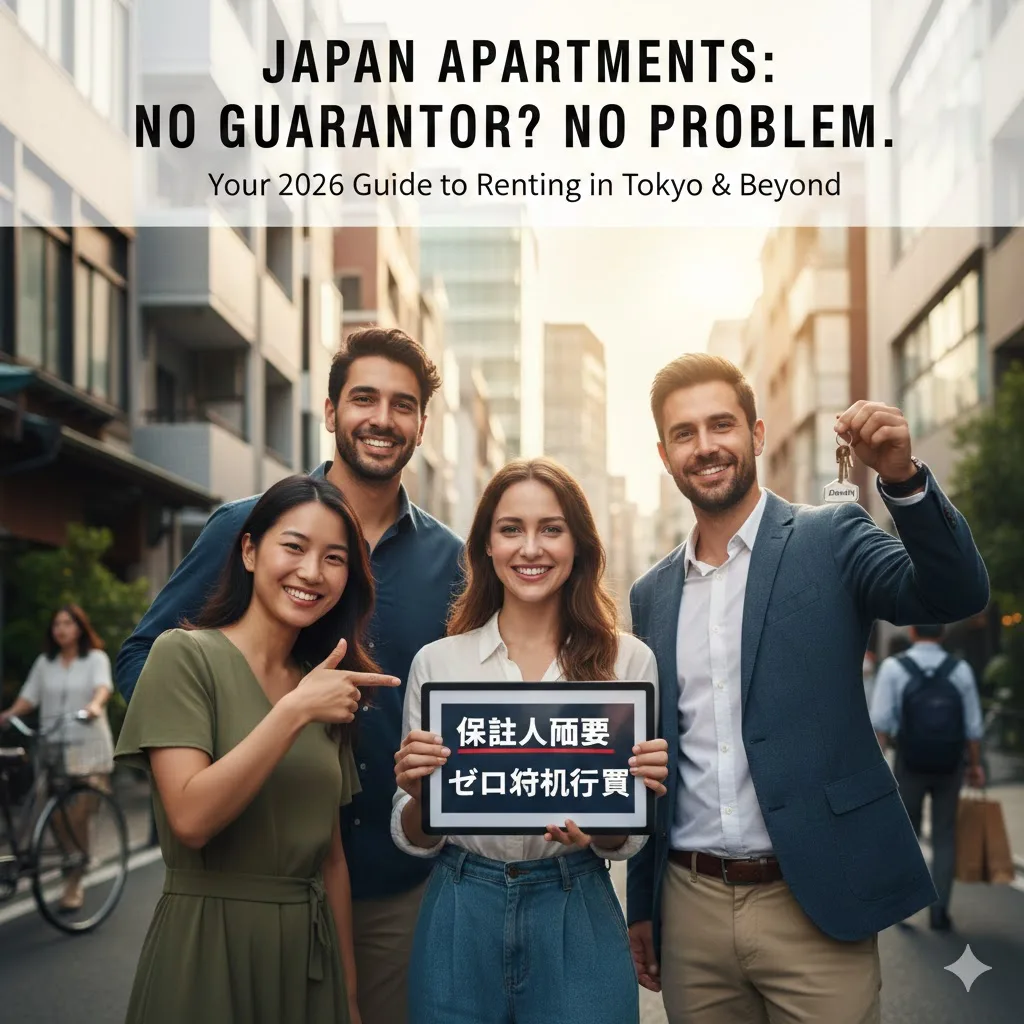

Finding apartments in Japan with no guarantor is a primary objective for many expatriates, digital nomads, and international students arriving in 2026. In the traditional Japanese rental market, landlords strictly require a “Hoshonin” (joint guarantor)—a Japanese citizen with a stable income who legally assumes your debt if you fail to pay rent. For most foreigners, securing such an individual is often a significant barrier, leading many to believe that high fees for guarantor companies are an unavoidable burden of living in East Asia.
However, the market has evolved significantly due to demographic shifts and a surplus of housing in certain sectors. Today, you can successfully secure an apartment for rent in Japan without a personal guarantor or a third-party guarantee company by targeting specific types of housing and specialized agencies. This guide provides a deep dive into the strategies, costs, and professional services available to help you navigate the Japanese real estate landscape with confidence and financial efficiency.
Understanding the Guarantor System in Japan
The requirement for a guarantor is a risk-mitigation strategy deeply rooted in Japanese legal culture. Historically, the “Hoshonin” system relied on family ties to ensure that landlords would never lose money on unpaid rent or property damage. Following the 2020 revision of the Civil Code, the legal liabilities of personal guarantors were capped, making landlords even more cautious and structured in their approach to risk.
Why Do Landlords Demand Guarantors?
Landlords view the guarantor as a safety net that covers more than just the monthly rent. The presence of a guarantor or a guarantor company ensures:
- Financial Recovery: Full coverage of unpaid rent, utility bills, and late fees if the tenant vacates unexpectedly.
- Property Restoration: Funding for repairs, cleaning, and the restoration of the unit to its original state after a tenant moves out.
- Legal Representation: A local point of contact who can facilitate legal communication or emergency responses in the event of a fire, earthquake, or medical emergency.
The Rise of Rental Guarantor Companies
Because modern Japanese families are smaller and older, many Japanese citizens also struggle to find a joint guarantor. This led to the rise of rental guarantor companies (Hoshonin Kaisha). While these companies allow you to rent without a personal contact, they charge a “guarantee fee” which is typically 50% to 100% of one month’s rent for the first year, followed by an annual renewal fee of approximately ¥10,000 to ¥20,000. For many, this is an unnecessary cost that adds to the already high initial move-in expenses in cities like Tokyo.
Strategic Ways to Find Apartments in Japan with No Guarantor
Securing apartments in Tokyo Japan or other major hubs without a guarantor requires focusing on specific providers that have removed this barrier to attract a more diverse and international resident base. If you prioritize “Guarantor Unnecessary” (Hoshonin-fuyo) listings, you can save hundreds of thousands of yen in initial costs.
1. Urban Renaissance (UR) Housing
UR Housing is a semi-public housing agency managed by the Japanese government. It is the most reliable source for apartments in Japan with no guarantor requirements. UR was designed to provide high-quality housing to the public without the predatory fees often found in the private sector.
- No Guarantor Needed: You do not need a personal guarantor or a guarantor company. Your “guarantor” is your proven income.
- Zero Key Money and Agency Fees: In a typical rental, you might pay two months’ rent as “gift money” (Reikin) and one month as an agency fee. UR eliminates these entirely.
- High Maintenance Standards: UR buildings are famous for being well-maintained and seismically reinforced.
- Examples of UR Locations: * Hikarigaoka Park Town (Nerima, Tokyo): A massive complex with green spaces and excellent subway access.
- Nagoya Port Area (Aichi): Modern high-rise units overlooking the bay with competitive pricing.
- Chibakita Housing (Chiba): Spacious 3LDK apartments perfect for families or those working remotely.
2. Village House Properties
Village House is a private provider that specializes in revitalizing former government-worker housing. They offer some of the most affordable japan tokyo apartment rent options available, specifically targeting individuals who want to minimize upfront investments.
- Simplified Approval: Their screening process is significantly more lenient than traditional real estate agencies.
- No Renewal Fees: Unlike most Japanese apartments that charge a “renewal fee” (Koushinryo) every two years, Village House often waives this.
- Examples of Village House Units: * Sagamihara (Kanagawa): Renovated units near major commuter lines into Tokyo.
- Kasugai (Aichi): Quiet residential blocks with easy access to shopping and schools.
- Higashiosaka (Osaka): Compact but efficient studio apartments for solo professionals.
3. Share Houses and Serviced Apartments
For those who are new to Japan or prefer a social environment, share houses are the most flexible apartments in Japan. They function on a membership or guest-house model rather than a strict long-term lease.
- Minimal Documentation: Usually, only a valid passport, residence card, and an emergency contact are required.
- Fully Furnished: These units come with beds, desks, and kitchen appliances, reducing your move-in costs further.
- Examples of Share House Providers: * Oakhouse: Operates high-end “Social Residences” in districts like Shibuya and Shinjuku.
- Social Apartment: Modern buildings featuring luxury lounges and co-working spaces in Ebisu.
- Hmlet: Targeted at international professionals, offering high-spec studios in Setagaya and Minato.
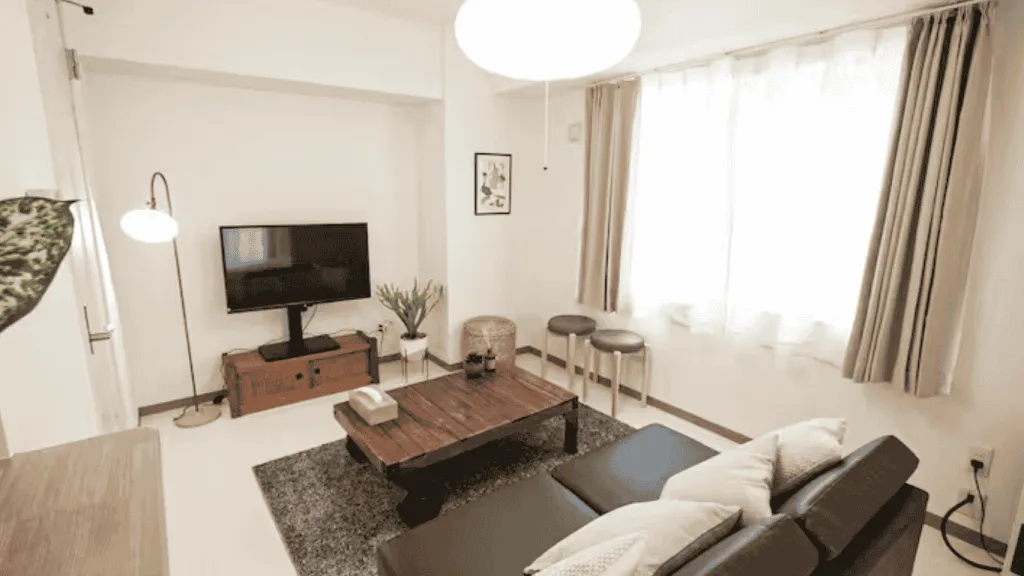
ARealty: Your Specialist in Foreign-Friendly Housing
When navigating the complex landscape of apartments in Tokyo Japan, working with a dedicated agency like ARealty is essential for a stress-free experience. ARealty specializes in bridge-building between international tenants and Japanese landlords who are open to “no guarantor” arrangements. They understand that international residents bring stability and diversity to Japanese neighborhoods, yet often face systemic barriers.
ARealty provides professional consulting to ensure you do not face hidden fees or discriminatory practices. They curate a portfolio of apartments in Japan with no guarantor requirements, specifically focusing on modern residences in high-demand areas. Whether you are looking for a luxury studio in Minato or a budget-friendly flat in Adachi, their multilingual staff handles the negotiations so you don’t have to.
The advantage of using ARealty is their ability to negotiate “no-guarantor” terms even for properties that usually require them. By presenting a strong financial profile or suggesting an “Advance Rent Payment” plan (paying 6 to 12 months upfront), they can often waive the requirement entirely. Their expertise ensures that your contract is legally sound and translated clearly, so you know exactly what you are signing.
Key Benefit: ARealty maintains direct relationships with REITs (Real Estate Investment Trusts) and large-scale developers who prioritize occupancy rates over traditional guarantor hurdles.
Would you like ARealty to send you a curated list of current “no guarantor” listings in your preferred Tokyo neighborhood?
Essential Requirements for “No Guarantor” Contracts
While you may avoid the physical person of a guarantor, landlords for an apartment for rent in Japan still require proof of your “creditworthiness.” You must demonstrate that you are a responsible resident who will respect the building’s rules and pay rent on time.
Financial Solvency
You must generally prove that your monthly income is at least three times the rent amount. For example, if the rent is ¥100,000, your monthly gross salary should be at least ¥300,000.
- Proof of Income Examples:
- A formal employment contract or “Letter of Intent” from your Japanese employer.
- Bank statements from the last three months (if you are a freelancer or business owner).
- Tax withholding slips (Gensen Choushuu Hyou) from the previous fiscal year.
Legal Status in Japan
A valid visa is non-negotiable for a standard rental contract. Landlords prefer visas with at least one year of validity remaining.
- Required Documents:
- Zairyu Card (Residence Card): The most important identification for foreigners in Japan.
- Passport: A clear copy of your photo and visa pages.
- Juminhyo (Certificate of Residence): Obtainable at your local city hall after you have registered your address.
The Emergency Contact
Even in a “no guarantor” setup, you will almost always be asked for an “Emergency Contact” (Kinkyu Renrakusaki). Unlike a guarantor, this person is not financially liable for your rent. They simply need to be someone the landlord can call if they cannot reach you.
- Eligible Contacts:
- A colleague or manager at your workplace in Japan.
- A friend or relative living in Japan (regardless of nationality, as long as they speak Japanese).
- A school administrator (for international students).
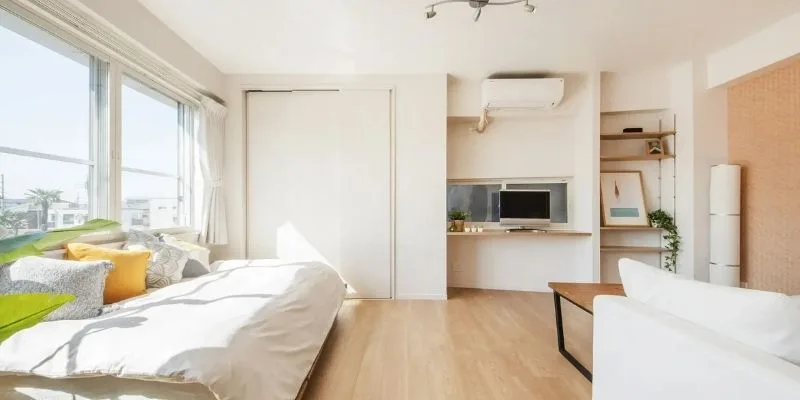
Analyzing Costs: Traditional vs. No-Guarantor Apartments
To understand why searching for apartments in Japan with no guarantor is financially beneficial, we must compare the typical initial costs. For a standard apartment in Tokyo with a monthly rent of ¥100,000, the breakdown often looks like this:
| Fee Category | Traditional Rental Cost | No-Guarantor (UR/Village/ARealty) |
| First Month’s Rent | ¥100,000 | ¥100,000 |
| Security Deposit | ¥100,000 | ¥100,000 – ¥200,000 (Refundable) |
| Key Money (Reikin) | ¥100,000 | ¥0 |
| Guarantor Company Fee | ¥50,000 – ¥100,000 | ¥0 |
| Agency Fee | ¥110,000 (Inc. Tax) | ¥0 – ¥55,000 |
| Lock Exchange Fee | ¥22,000 | ¥0 – ¥22,000 |
| Total Upfront Cost | ¥482,000 – ¥532,000 | ¥200,000 – ¥377,000 |
By eliminating the guarantor fee and key money, you effectively save the equivalent of 2 to 3 months of rent before you even move in. These savings can then be used to furnish your new home or explore the vibrant culinary scene in Shibuya or Osaka.
Expert Tips for a Successful Search
Finding the perfect japan tokyo apartment rent requires a proactive approach. Because “no guarantor” properties are highly sought after, they often disappear from the market within days of being listed.
Start Your Search Early
The peak moving seasons in Japan are February-March (start of the fiscal year) and September-October. If you are looking for apartments in Tokyo Japan, start browsing listings at least 60 days before your intended move-in date.
Prepare a “Profile Sheet”
When you visit an agency like ARealty, bring a printed summary of your profile. Include your job title, length of stay in Japan, Japanese language level, and your specific reasons for wanting to live in a certain area. This professional presentation builds trust with landlords who may be hesitant to rent to foreigners.
Consider Location vs. Commute
You can find significantly cheaper apartments in Japan if you are willing to live 15-20 minutes away from a major station.
- Examples of Commuter Hubs:
- Kawasaki: Only 18 minutes to Tokyo Station but with lower rent prices.
- Nishi-Funabashi: Provides direct access to both the Tozai and Chuo-Sobu lines.
- Itabashi: A traditional residential area with excellent local supermarkets and lower “no-guarantor” hurdles.
Frequently Asked Questions
Can I rent an apartment in Japan while still overseas?
Yes, but it is challenging. Serviced apartments and agencies like ARealty can facilitate remote applications. However, for UR Housing or traditional apartments, you usually need to be in the country to provide your Residence Card and sign the physical contract.
Does “No Guarantor” mean “No Screening”?
No. Every legitimate apartment for rent in Japan involves a background check. The landlord or management company will verify your employment and check if you have a history of rent arrears in Japan.
What happens if I cannot find an emergency contact?
Some companies offer “Emergency Contact Services” for a fee, but it is always better to ask a colleague or your HR department first. Most Japanese companies are used to this request and will support their international employees.
Conclusion
Securing apartments in Japan with no guarantor is a highly effective way to reduce the financial stress of relocating to one of the world’s most organized housing markets. By leveraging government-backed options like UR Housing, affordable private networks like Village House, or the expert negotiation skills of ARealty, you can find a home that fits your lifestyle without the need for a Japanese co-signer.
Whether you are looking for apartments in Tokyo Japan with panoramic city views or a quiet apartment for rent in Japan‘s countryside, the options are more accessible than ever before. Focus on properties with “zero key money” and “no guarantor fees” to maximize your budget and start your life in Japan on solid financial footing.

Real estate advisor at Arealty Japan, specialising in helping foreign residents navigate the Tokyo and Osaka rental markets. Lucy has guided hundreds of international renters — from Working Holiday visa holders to corporate relocations — through Japan’s apartment application process. Her writing draws on firsthand experience with landlord screening, guarantor companies, and foreigner-friendly listings across all 23 Tokyo wards and major Kansai cities.