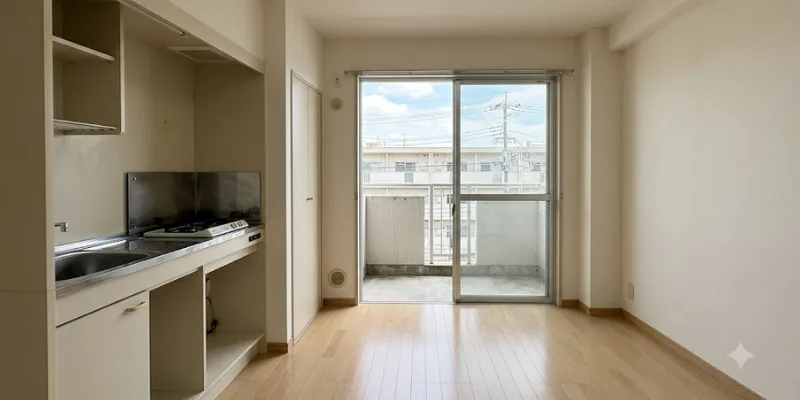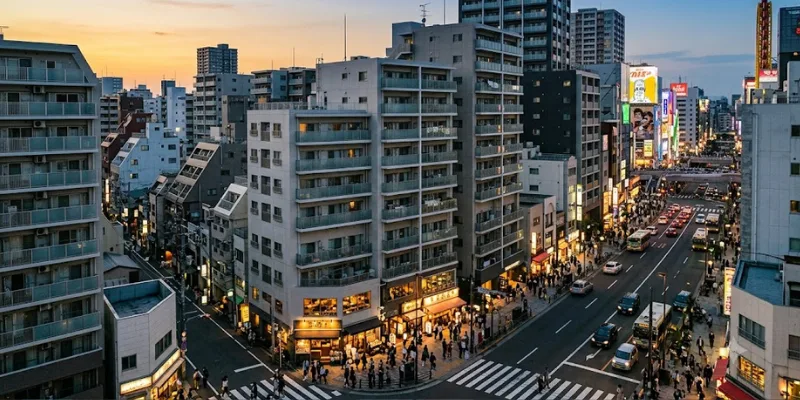

Osaka Namba apartments for rent for foreigners start from around ¥55,000 per month for a 1K unit in the immediately adjacent residential streets — a competitive price point for one of Japan’s most internationally vibrant and centrally located urban districts, where Dotonbori’s entertainment corridor, the Shinsaibashi shopping district, and Namba Station’s multi-line transit hub sit within walking distance of most apartment addresses. For foreigners living in or relocating to the Kansai region, Osaka Namba apartments for rent for foreigners represent a different lifestyle proposition than the quieter, more residential options elsewhere in the city: dense, walkable, consistently lively, and requiring no car or extensive train use for most daily activities.
This guide covers Osaka Namba apartment geography, realistic rental prices, commute times, and how foreigners apply for Osaka Namba apartments for rent in this central district.
Osaka Namba Apartments for Rent: Neighborhood Geography
“Namba” as a residential search area extends beyond the famous Dotonbori tourist strip into several distinct sub-neighborhoods, each with different rent levels and residential character:
Namba / Dotonbori area (Chuo-ku)
The immediate tourist and entertainment core. Residential apartments here tend to be above commercial establishments, in high-rise towers, or on the narrower residential streets one or two blocks back from the main tourist corridors.
- 1K: ¥62,000–¥78,000/month
- Character: Maximum convenience, maximum noise, highest density
- Best for: Foreigners who specifically want urban Osaka immersion
Shinsaibashi / Horie (Chuo-ku, west of Namba)
One street west of the main Namba commercial zone, Horie has a distinct café, fashion boutique, and vintage shop culture popular with young Osaka residents. Generally quieter than central Namba while remaining extremely walkable to it.
- 1K: ¥60,000–¥75,000/month
- Character: Creative, younger demographic, better residential feel
- Best for: Those who want Namba access with a more livable daily environment
Nippombashi / Den-Den Town (east of Namba)
Known for electronics and anime/manga retail (Osaka’s equivalent of Akihabara), Nippombashi sits directly east of Namba with overlapping train access. Residential streets here offer slightly lower rents than the central Namba zone.
- 1K: ¥55,000–¥68,000/month
- Character: Electronics/subculture commercial, quieter residential
Imamiya / Ebisucho (south of Namba, Naniwa-ku)
Further south and slightly less central, these areas offer genuinely affordable Osaka rents while remaining within reasonable walking or single-stop train distance of Namba Station’s full transit options.
- 1K: ¥48,000–¥60,000/month
- Character: More traditional Osaka working-class residential
Osaka Namba Apartments for Rent for Foreigners: Prices by Unit Type (2026)
| Type | Size | Avg. monthly rent (Namba area) |
| 1R | 18–22㎡ | ¥45,000–¥58,000 |
| 1K | 20–28㎡ | ¥55,000–¥75,000 |
| 1LDK | 35–50㎡ | ¥75,000–¥100,000 |
| 2LDK | 50–70㎡ | ¥100,000–¥140,000 |
Source: Osaka rental market listings, Q1 2026. Note: Osaka-specific ward-level data from government-recognized sources covers Osaka-shi broadly; the figures above reflect the central Namba/Chuo-ku submarket specifically.
Commute Times from Namba to Key Osaka and Kansai Destinations
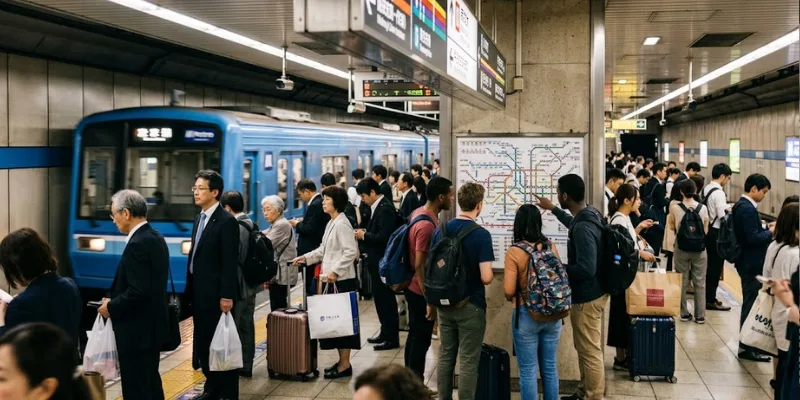
Namba Station sits at the junction of three major Osaka Metro lines (Midosuji, Sennichimae, and Yotsubashi), plus the private Kintetsu Namba Line — one of the best-connected residential locations in western Japan:
| From Namba | To | Line | Time |
| Namba | Umeda (Kita) | Osaka Metro Midosuji | 7 min |
| Namba | Shin-Osaka (Shinkansen) | Osaka Metro Midosuji | 12 min |
| Namba | Kyoto Station | JR (via Osaka/Tennozu) | 55–75 min |
| Namba | Kansai Airport | Nankai Airport Express | 38 min |
| Namba | Kobe Sannomiya | JR Kobe Line (via Osaka) | 35 min |
Source: Osaka Metro and Nankai Railway timetable data, 2026.
This transit connectivity is one of Namba’s defining advantages as a residential base — Kansai Airport access in 38 minutes and Shin-Osaka in 12 minutes means residents can travel across Japan and internationally with minimal logistics overhead.
How Foreigners Apply for Osaka Namba Apartments for Rent
The application process for Osaka Namba apartments for rent follows standard Japanese rental procedure, mirroring what’s required across the Kansai region:
Documents required:
- Residence Card (在留カード) + passport copy
- Proof of income — employment contract, 3 months’ payslips, or financial proof equivalent
- Guarantor — rental guarantee company (保証会社) accepted at most Namba listings
- Emergency contact in Japan
Namba-specific notes:
- Central Namba buildings often have more management company involvement than outlying residential areas, which can mean more standardized (and sometimes faster) screening processes
- Some buildings in the Dotonbori tourist core may have additional restrictions related to short-term subletting or guest policies — clarify this if you travel frequently or expect regular guests
- Osaka City’s international resident support services provide multilingual housing consultation, useful if the standard process creates friction
For comparison with other Osaka areas, see our Osaka Kita apartments guide and our foreign-friendly apartments in Osaka guide.
Namba vs Kita (Umeda): Which Side of Osaka Fits Better?
| Namba (Chuo-ku) | Kita/Umeda (Kita-ku) | |
| Avg. 1K rent | ¥55,000–¥75,000 | ¥60,000–¥80,000 |
| Character | Entertainment, tourism, nightlife | Business, shopping, office |
| Best for | Hospitality/service workers, creatives, international lifestyle | Office workers, business district commuters |
| Airport access | 38 min (Nankai to KIX) | 55 min (JR to KIX) |
| Tourist density | Very high | High |
Neither is objectively better — the right choice depends primarily on where you work and what kind of daily environment you prefer. Many foreigners in hospitality, food and beverage, or tourism-adjacent industries specifically choose Namba for its proximity to their workplace and social ecosystem.
Daily Life Around Namba for Foreign Residents
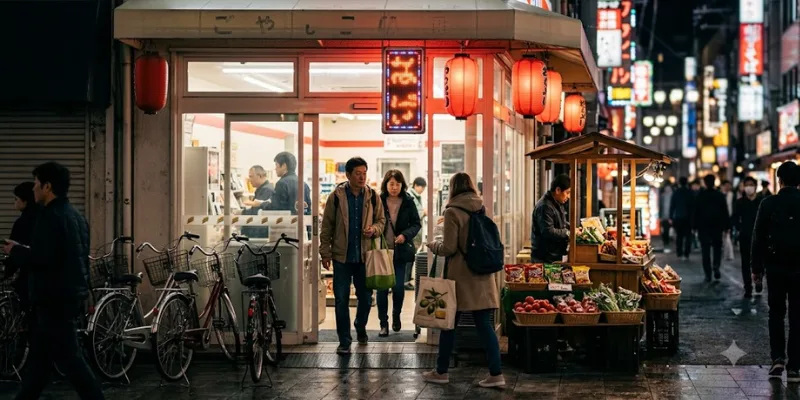
Grocery and daily shopping. Several major supermarket chains operate within and adjacent to the Namba commercial zone, including 24-hour options well-suited to the area’s shift-work population in hospitality and entertainment. International ingredients are better represented here than in most Tokyo outer wards.
Language environment. Namba’s dense tourism ecosystem means more daily English-language presence in cafes, restaurants, and retail than most Japanese residential neighborhoods — a meaningful practical advantage for foreigners still developing Japanese ability.
Noise management. Weekend nights in central Namba can be genuinely loud. Apartments above the third floor in buildings set back from the main entertainment streets manage this better than ground-level units facing Dotonbori or Shinsaibashi-suji directly — factor this into your viewing assessment.
International food access. The diversity of cuisines available within walking distance of Namba — Korean (via Tsuruhashi), Chinese, Southeast Asian, Middle Eastern, and Western — gives it a practical everyday multiculturalism that residents from outside Japan tend to appreciate, especially in the first months of adjustment.
Frequently Asked Questions: Osaka Namba Apartments for Rent for Foreigners
Is Namba a good residential area or just for tourists? Both. The tourist core (Dotonbori street itself) is not really where people live — but the surrounding residential streets one or two blocks back are genuinely inhabited by working Osaka residents, including a significant foreign population, and offer a livable urban environment rather than just a tourist amenity zone.
Are Namba apartments generally noisy? Central-facing units can be. Building selection and floor level matter significantly — a third-floor or higher unit on a quieter residential street parallel to the main strips is very different from a ground-floor unit facing a nightlife alley directly.
Do Namba landlords accept foreign nationals? Yes, more readily than many outer Osaka areas — the central Namba area’s long history of international visitors and residents has made most professional landlords and management companies accustomed to foreign applications.
How does Namba compare to living in Tennoji? Tennoji offers a similar central-Osaka price point with a quieter, more historically rooted character. Namba offers more nightlife and entertainment density, better airport access, and higher tourism presence. See our Tennoji Osaka apartments guide for a direct comparison.
External reference: Osaka City International Affairs Bureau — official resource for foreign residents in Osaka, including housing-related guidance.
→ Browse Osaka and Kansai apartments for foreigners
Renting Long-Term in Namba: Stability Considerations
For foreigners planning a multi-year stay in Namba, a few factors affecting long-term stability are worth understanding:
Tourism-driven redevelopment. Namba’s commercial core continues to attract investment driven by inbound tourism, which periodically displaces residential stock — older apartment buildings occasionally get converted to hotel use when leases expire. This risk is lower for purpose-built residential towers than for converted shophouses or mixed-use buildings. Asking your agent about the building’s rental history and whether it’s residential-purpose provides useful reassurance.
Night economy impact on lease terms. Some Namba-area landlords include explicit quiet-hours or guest restrictions in their leases, particularly for buildings close to the entertainment district, in response to noise complaints from other residents. Review these clauses carefully before signing — they’re more common in central Namba than in Horie or Nippombashi.
Rent trajectory. Central Osaka rents, including the Namba area, have increased modestly over the past several years driven by inbound tourism and growing foreign resident demand. Renewal-period rent negotiations (typically at the 2-year mark) occasionally involve landlord requests for modest increases in high-demand areas — building this contingency into your multi-year budget planning is advisable.
Community and Social Life for Foreign Residents in Namba
Namba’s foreign resident population is sizable and diverse, drawn by the area’s entertainment industry, hospitality sector employment, and its status as the most internationally branded part of Osaka:
Expat social networks. Facebook groups, Meetup.com events, and international bars in the Shinsaibashi and Horie area provide relatively easy access to English-language social environments compared to more residential-only districts elsewhere in Osaka.
Japanese language learning context. Counterintuitively, Namba’s heavy tourist infrastructure can actually slow Japanese language development for new residents who can rely too heavily on English-language services. Those specifically trying to immerse in Japanese daily life sometimes find slightly less central Osaka neighborhoods — Tennoji, Nakamichi, or the residential parts of Fukushima — more conducive to language practice.
International food options. Namba’s food scene is arguably one of the most internationally diverse in western Japan, with excellent Korean (Tsuruhashi is immediately adjacent by Kintetsu), Chinese, Southeast Asian, and a growing array of other international cuisines available within easy walking or short train distance.
Schools and Family Life in the Namba Area
For families considering Osaka Namba apartments, the Chuo-ku area where most Namba addresses fall has limited international school options within the immediate walking vicinity. However:
- Osaka YMCA International School operates in the broader Osaka area and is accessible by transit from Namba
- Canadian Academy and Osaka International School are in the western Osaka/Kobe corridor, a 30–40 minute commute from Namba by rail
Local public schools in Chuo-ku have some experience with foreign students given the ward’s international character, though language support programs vary by individual school.
Internal Resources for Osaka and Kansai Renters
- Tennoji Osaka apartments for rent for foreigners — south Osaka alternative, quieter character, similar price range
- Cheap apartments in Osaka under ¥70,000 — budget-priority comparison across all Osaka wards
- Foreign-friendly apartments Osaka: what it means — how to identify genuinely foreigner-ready listings
- Best areas to live in Kansai for foreign renters — broader regional comparison including Kyoto and Kobe

Real estate advisor at Arealty Japan, specialising in helping foreign residents navigate the Tokyo and Osaka rental markets. Lucy has guided hundreds of international renters — from Working Holiday visa holders to corporate relocations — through Japan’s apartment application process. Her writing draws on firsthand experience with landlord screening, guarantor companies, and foreigner-friendly listings across all 23 Tokyo wards and major Kansai cities.