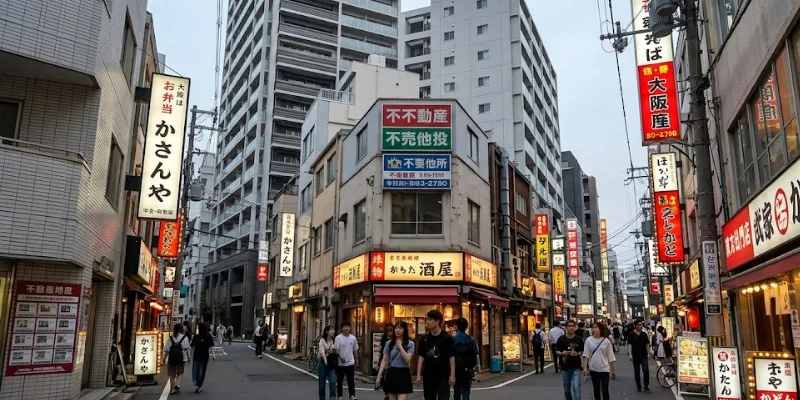

Foreign-friendly apartments in Osaka appear on portals with labels like 外国人OK (gaikokujin OK) or 外国籍可 (gaikokuseki ka). What those labels actually cover varies significantly from building to building. Understanding what “foreign-friendly” means in practice changes your search approach and improves your approval rate.
This guide explains the foreign-friendly apartment label in Osaka specifically. It covers what landlords mean by the label, which wards have the highest acceptance, what still causes rejections, and how to read a listing accurately. Browse current foreign-friendly apartments in Osaka on Arealty — all listings are pre-confirmed with landlords on foreigner acceptance status, with bilingual support throughout.
What “Foreign-Friendly” Actually Means in Osaka
Foreign-friendly apartments in Osaka carry a label that means something specific at the landlord or management company level. The label is not standardised. Two buildings in the same Osaka ward, both labelled 外国人OK, can have very different interpretations of what that means.
At its most straightforward, 外国人OK means the landlord has agreed in principle to accept applications from non-Japanese residents. It does not mean the application will be approved, that all visa types are accepted, or that the guarantor company the landlord uses will underwrite your specific situation.
In Osaka, the foreign-friendly label developed earlier than in many Tokyo wards. Osaka’s tourism and international commerce infrastructure, combined with its tenant-friendly rental culture, created a more experienced landlord pool. Osaka landlords — particularly in Kita-ku, Namba-adjacent wards, and Tennoji — have more experience with foreign tenants than equivalent areas of most other Japanese cities. That experience shows in lower documentation rigidity, more willingness to accept parental income guarantees or home-country bank statements, and fewer blanket rejections.
A foreign-friendly label in Osaka is a more reliable signal than the same label in outer Tokyo wards. Landlord experience is more consistent here. But it is still a starting point, not a guarantee.
The Three Levels of Foreign Acceptance in Practice
Foreign acceptance at the landlord level falls into three practical categories. This holds regardless of what the listing label says:
Level 1 — Full acceptance, experienced landlord The landlord or management company has processed multiple foreign tenant applications. They understand residence card requirements, accept guarantor company underwriting as standard, and do not require a Japanese personal guarantor. The application process for a qualified foreign renter is materially the same as for a Japanese applicant. Most foreign-friendly apartments in Osaka Kita-ku, central Chuo-ku, and established expat pockets of Tennoji-ku fall here.
Level 2 — Conditional acceptance, limited experience The landlord has accepted foreign tenants before but has specific requirements — nationality, visa type, Japanese language ability, or a Japanese emergency contact. Applications from foreign renters require additional explanation or documentation. Labels here are technically accurate but create more friction in practice.
Level 3 — Label present, rejection likely for certain profiles The listing carries a foreign-friendly label but the guarantor company does not underwrite certain visa types. Working Holiday, student, or specific nationalities may still be declined. Personal landlord requirements can also conflict with the listed acceptance. This category is less common in Osaka than in outer Tokyo areas. It exists mainly in outer wards and older buildings where the label was added by a listing aggregator rather than confirmed with the landlord.
Arealty confirms the actual level before showing a listing to applicants. This is the practical value of working with an agency rather than applying directly from a portal.
Which Osaka Wards Have the Highest Foreign Acceptance Rates
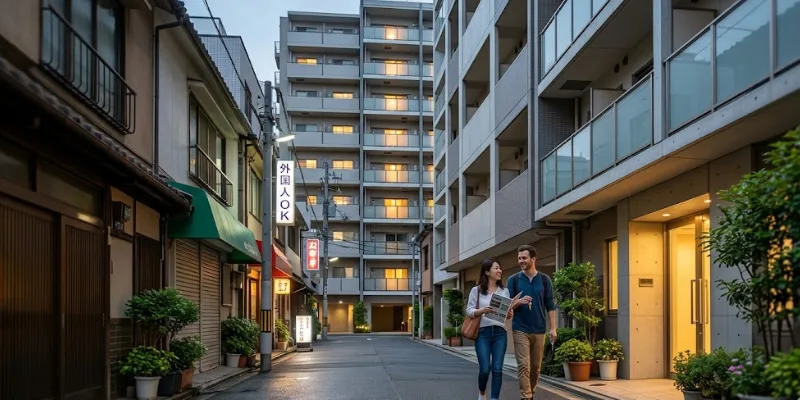
Foreign acceptance in Osaka is not uniform across the city. These wards have the highest genuine acceptance rates for foreign applicants in 2026.
Kita-ku (北区 — Umeda/Nakatsu area) The highest foreigner acceptance rate in Osaka, driven by the ward’s international commerce infrastructure and the long presence of foreign professionals connected to Osaka Station business districts. Both the landlord pool and the guarantor companies operating in this ward have substantial foreign tenant experience. For a full breakdown of Kita-ku’s sub-areas and rent ranges, see the Osaka Kita apartments for rent guide.
Chuo-ku (中央区 — Namba/Shinsaibashi/Honmachi) Chuo-ku’s mix of tourism, international business, and entertainment infrastructure has produced a landlord pool experienced with short-term and long-term foreign residents. Acceptance rates are high, particularly in the Honmachi and Yodoyabashi business corridor sub-areas. Note that Namba-adjacent residential streets have higher acceptance rates than the immediate station-front area, which is mostly commercial.
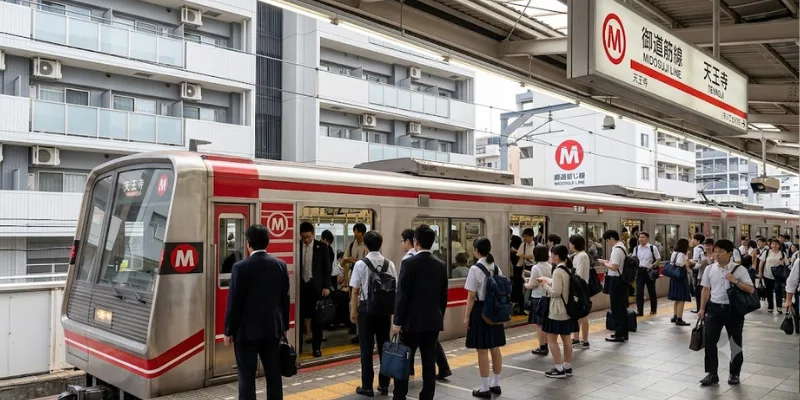
Tennoji-ku (天王寺区) Tennoji has seen significant foreign resident growth over the last five years, partly driven by Osaka’s tourism infrastructure expansion and proximity to the Shinsekai and Abeno areas. Landlords here have growing experience with international applicants. Rents are lower than Kita-ku and Chuo-ku — 1K units at ¥55,000–¥80,000/month — making Tennoji one of the better value foreign-friendly areas in central Osaka.
Fukushima-ku (福島区) Adjacent to Kita-ku and walkable from Umeda, Fukushima has a strong foreigner acceptance rate at lower rents than the Kita-ku core. Particularly suitable for foreign renters with a ¥65,000–¥90,000/month budget who want Kita-ku access without Kita-ku prices.
Naniwa-ku (浪速区 — Namba-adjacent) Naniwa-ku’s foreigner acceptance has increased significantly with Osaka’s inbound tourism growth. Landlords near Namba Station and Dotonbori have adapted to international tenants. Acceptance is stronger for work visa and student visa holders than for Working Holiday applicants.
What the Label Does Not Guarantee
Even on listings explicitly marked as foreign-friendly apartments in Osaka, these situations can still result in rejection:
Visa type mismatch with guarantor company. A landlord may be personally willing to accept foreign tenants but use a guarantor company (保証会社, hoshō gaisha) that does not underwrite Working Holiday or short-stay visas. The label reflects the landlord’s intent; the guarantor company’s policies are separate. This is the most common cause of rejection on foreign-friendly labelled listings.
Insufficient income documentation. A foreign-friendly label does not change the income threshold. Most Osaka landlords still apply the 3x monthly rent income rule. A foreign renter with variable or undocumented income — common among Working Holiday holders and newly arrived students — may still be declined on a labelled property.
Nationality-specific restrictions. Some Osaka landlords have informal restrictions on specific nationalities based on prior tenant experience. These are not advertised on listings and only surface during the application review. Working with an agency that pre-screens for this before submission prevents wasted applications.
Lease length mismatch. A two-year lease on a Working Holiday visa still creates landlord concern even on a foreign-friendly property. The foreign-friendly label makes the conversation easier — it does not eliminate the concern.
For visa-specific application strategy, see the Working Holiday rental guide and the student visa screening guide.
Visa Type and Foreign-Friendly Status in Osaka
Foreign-friendly apartments in Osaka vary in their effective visa acceptance as follows:
| Visa type | Osaka acceptance landscape |
| Work visa / Spouse visa | Accepted widely across all foreign-friendly wards |
| Student visa | Accepted in most central Osaka wards with enrollment docs + parental guarantee |
| Working Holiday visa | Accepted in Kita-ku and Chuo-ku at Level 1 properties; narrower pool than work visa |
| Engineer / Highly Skilled Professional | Strong acceptance; income documentation is straightforward |
| Tourist visa | Cannot sign standard lease — monthly mansion or short-stay only |
Osaka’s Working Holiday acceptance rate is lower than Tokyo’s Shinjuku or Shibuya wards but higher than most outer Tokyo or non-major city markets. The key factor is the guarantor company. Arealty works with hoshō gaisha in Osaka that specifically accept Working Holiday visa holders — which is the variable that most determines approval on this visa type.
The Guarantor Company Variable — Why It Matters More Than the Label
The practical determinant of a successful application is not the listing label. It is the guarantor company the landlord uses.
Osaka has a more competitive guarantor company market than most other Japanese cities, partly because of the city’s higher-than-average foreign resident population. Several major hoshō gaisha in Osaka have built specific frameworks for foreign applicants. These include:
- Acceptance of residence cards with under 1 year remaining validity (subject to renewal docs)
- Acceptance of home-country income documentation when Japanese income is not yet established
- Acceptance of parental income guarantees from overseas parents
- Working Holiday visa acceptance with employment contract or offer letter
A property using an experienced guarantor company produces a straightforward application. One using a hoshō gaisha with no foreign tenant framework produces an unnecessary rejection. This is the primary reason to work with an agency that knows which guarantor companies are being used on specific properties — not just which properties carry a label.

How to Read an Osaka Listing Accurately
Before advancing any application on a foreign-friendly Osaka listing, ask these questions:
1. Was the foreign-friendly status confirmed directly with the landlord or management company? Portal labels are sometimes added by the listing aggregator based on general building history. Arealty confirms directly with the landlord before showing a listing to a foreign applicant.
2. Which guarantor company does this property use? Ask explicitly. A guarantor company name tells you a great deal about what visa types and income profiles will be accepted.
3. What does “foreign-friendly” mean specifically for this property? Is it all nationalities, all visa types, or specific profiles? The answer shapes how much time to invest in the application.
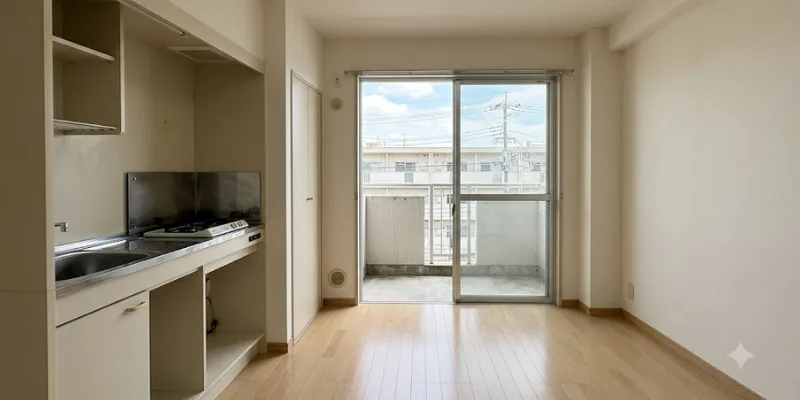
4. Are the listing photos of the actual unit? Osaka listings use sample unit photography as commonly as Tokyo listings. Confirm before applying. For why this matters, see why apartment listing photos in Japan can look different from the real room.
5. Has the building been through foreigner applications recently? A management company that processed a foreign application in the last 12 months is meaningfully more equipped than one processing their first. Ask your agency.
Browse current foreign-friendly apartments in Osaka on Arealty — all listings are verified for genuine acceptance status, and our bilingual team confirms the specific guarantor company and visa type acceptance before your application is submitted. Or contact Arealty to discuss your specific visa type and budget before searching.
Further Reading
- Osaka Kita apartments for rent — foreigner guide with sub-area breakdown
- Cheap apartments in Osaka under ¥70,000 — realistic budget guide
- Working Holiday rental guide — Osaka-specific application notes
- Student visa Japan — landlord screening explained
- Why apartment listing photos in Japan can differ from the real room
- Osaka’s 24 wards — lifestyle and neighbourhood overview
- No key money apartments in Osaka

Real estate advisor at Arealty Japan, specialising in helping foreign residents navigate the Tokyo and Osaka rental markets. Lucy has guided hundreds of international renters — from Working Holiday visa holders to corporate relocations — through Japan’s apartment application process. Her writing draws on firsthand experience with landlord screening, guarantor companies, and foreigner-friendly listings across all 23 Tokyo wards and major Kansai cities.