
Sophia University student housing centers almost entirely around one location: the Yotsuya Campus in Chiyoda-ku, right on the border with Shinjuku-ku. Unlike the University of Tokyo’s three-campus split, Sophia keeps nearly all undergraduate and graduate programs at this single site. That makes the housing search considerably simpler. You’re choosing a neighborhood around one train station, not weighing trade-offs between separate campuses.
This guide covers Sophia University student housing options for 2026. We look at the best areas near Yotsuya, realistic rent ranges, and how dormitories compare to off-campus apartments for international students. For a broader look at student housing across Tokyo’s universities generally, see our student housing near Tokyo universities guide. You can confirm current program details directly through Sophia University’s official international student office.
Why Sophia’s single-campus layout simplifies student housing
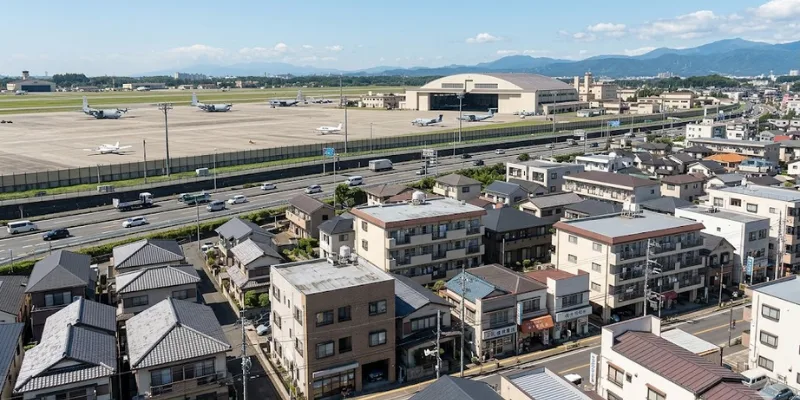
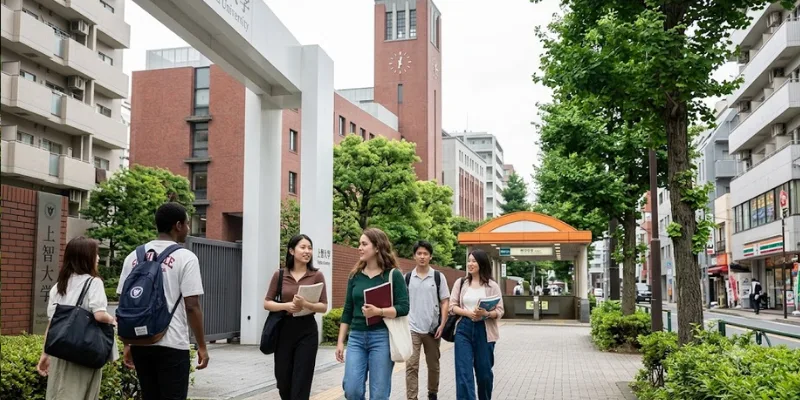
Sophia University’s Yotsuya Campus sits directly on the Chiyoda-Shinjuku ward border. It’s one stop from Shinjuku on the JR Chuo-Sobu Line, and directly served by the Marunouchi and Namboku subway lines. Nearly every faculty operates from this one site. Only a small number of graduate programs and research facilities sit elsewhere. For Sophia University student housing purposes, this means renters can commit to one neighborhood for their entire degree, without the mid-program relocation some Tokyo universities require.
The campus sits within Chiyoda-ku, one of Tokyo’s most historic and centrally located wards. For general context on the ward, see our guide to Chiyoda City living and real estate.
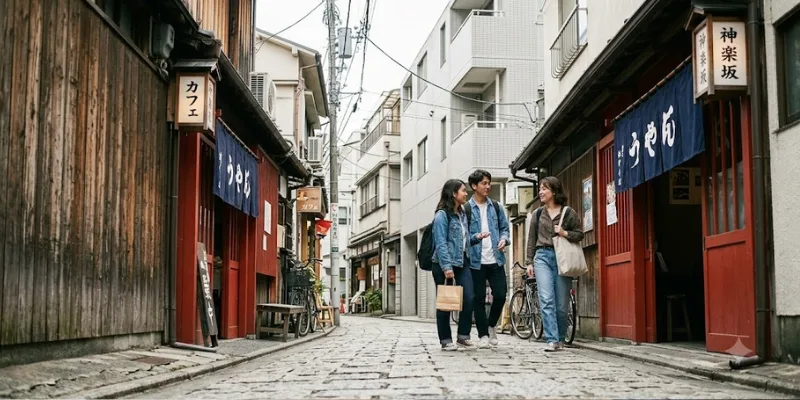
Sophia University student housing near Yotsuya Station
Yotsuya Station itself offers the shortest possible commute — a five-minute walk or less to campus for most buildings in the immediate area. This convenience carries a price premium, since Yotsuya sits at the intersection of three well-connected wards.
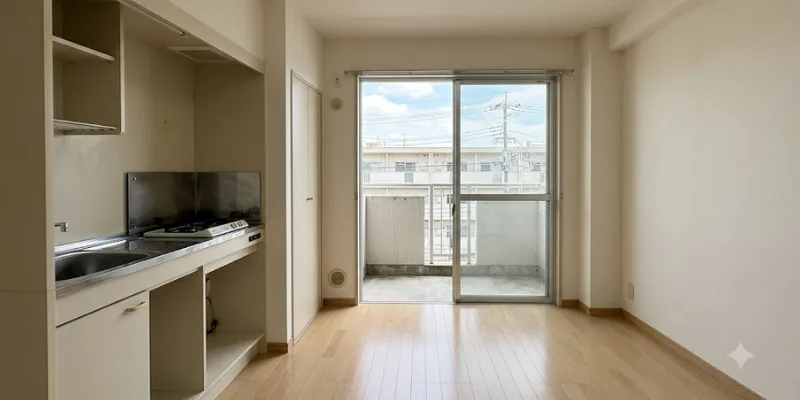
Typical 1K units within a five-minute walk of Yotsuya Station run ¥90,000–¥120,000/month. This reflects the area’s central location and strong transit connections in every direction.
Sophia University student housing near Ichigaya and Kagurazaka
One stop from Yotsuya, Ichigaya and the adjoining Kagurazaka district offer a meaningfully cheaper alternative without adding real commute time. Kagurazaka in particular carries a distinct character. It’s a former geisha district turned popular dining and nightlife neighborhood. Today it’s also home to a significant French expatriate community and several French-affiliated schools.
Typical 1K units here run ¥78,000–¥100,000/month. Students who want walkable access to a lively, character-filled neighborhood while staying close to campus tend to prefer this area over Yotsuya itself.
Sophia University student housing near Shinjuku
Shinjuku Station sits one stop from Yotsuya on the JR line. The areas immediately around it — particularly Shinjuku-gyoemmae and the quieter residential streets south of the station — offer a genuine cost trade-off. The commute stays slightly longer, but still short.
Typical 1K units run ¥75,000–¥95,000/month. The exact figure depends heavily on proximity to Shinjuku Station’s busiest exits versus the quieter surrounding blocks.
Sophia University student housing further out: Nakano and Koenji
Students prioritizing budget over commute time often look two or three stops further along the Chuo-Sobu Line, toward Nakano and Koenji. Both areas carry a strong young-resident and creative-community character. Expect considerably more nightlife and secondhand shopping than the immediate Yotsuya area.
Typical 1K units run ¥65,000–¥85,000/month. Commute time to Yotsuya Campus runs roughly 10–15 minutes door to door.
Dormitory vs. off-campus apartment for Sophia students
Sophia University operates a limited number of dormitory facilities. Priority generally goes to first-year international students and short-term exchange participants, similar to the pattern at most Tokyo universities. Dormitory costs typically undercut market rent substantially. Availability stays limited, though, relative to the size of Sophia’s international student population — a notably large cohort, given the university’s historic emphasis on international and exchange programs.
Off-campus apartments give students full control over move-in timing, budget, and layout. The trade-off is navigating the standard Japanese rental application. That means a residence card, proof of enrollment, and in most cases a guarantor company rather than a personal Japanese guarantor. You can review current dormitory eligibility rules directly through Sophia University’s student housing office page. Given Sophia’s compact single-campus geography, most students who choose off-campus housing settle within a 15-minute commute radius without much difficulty.
Documents and application timeline
International students applying for off-campus housing near Sophia should prepare:
- Residence card, or an embassy-issued Certificate of Eligibility if applying before arrival in Japan
- Passport
- Certificate of enrollment or admission letter from Sophia University
- Proof of financial support — a scholarship award letter, bank statements, or a guarantor’s income documentation
- Guarantor company application (most foreigner-friendly listings in the Yotsuya area include this by default)
Start apartment hunting 4–6 weeks before your intended move-in date. Competition for units near Yotsuya peaks around the April academic year start, consistent with the citywide pattern. For a full walkthrough of the process, see our apartment hunting checklist for students in Japan and our guide to how the guarantor system works.
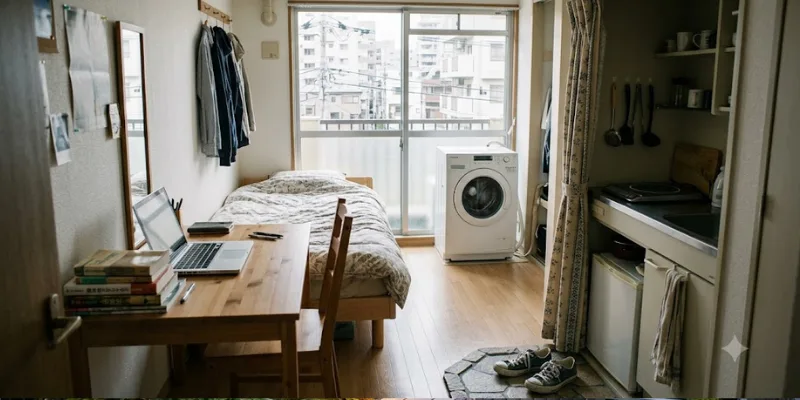
Cost of living around Yotsuya beyond rent
Utilities, internet, and mobile costs around Yotsuya and Kagurazaka run close to the Tokyo average, at roughly ¥15,000–¥25,000/month combined. Food costs vary considerably by area. Kagurazaka’s dining scene skews toward mid-range restaurants and cafés. The streets immediately around Yotsuya Station carry a denser concentration of student-priced set-meal restaurants (定食屋) instead. These keep daily costs manageable for students eating out regularly.
Sophia’s own student services offer some cost relief. Subsidized cafeteria meals and a university co-op stocking daily essentials, textbooks, and basic supplies at reduced prices both help. This is worth factoring into any monthly budget comparison between neighborhoods.
Sophia’s international student population and what it means for housing
Sophia University holds one of the highest proportions of international students among Japanese private universities. This traces back to its founding by the Society of Jesus and its long-standing focus on foreign language and international studies programs. This large, established international community shapes the surrounding rental market in a real way. Landlords and agencies near Yotsuya, Ichigaya, and Kagurazaka have decades of experience with Sophia’s international students specifically. This generally translates into smoother applications and less friction than a first-time foreign renter might face in a less university-adjacent neighborhood.
This track record also means informal information networks run deep. Current and former Sophia students, alumni groups, and the university’s own community boards often share listings and landlord recommendations before they reach general platforms. New students should ask the international student office or their program coordinator about these informal channels. They can surface options with an already-established landlord relationship.
Choosing between Yotsuya’s surrounding areas
With Sophia’s single-campus geography, the housing decision comes down mostly to budget versus commute time. Multi-campus universities force a harder choice between genuinely different transit lines — Sophia students skip that entirely. A student prioritizing the shortest possible walk to class should look at Yotsuya itself. One who wants a distinct neighborhood identity alongside a still-short commute should consider Kagurazaka. A student optimizing purely for budget should look toward Nakano or Koenji. The commute runs slightly longer but stays very manageable, in exchange for meaningfully lower rent.
Visa and enrollment timing for Sophia University student housing
Students applying to Sophia from outside Japan typically receive their Certificate of Eligibility through the university’s international office rather than an embassy directly. Processing timelines tie closely to the academic calendar, and April intake applications generally need finalizing well before the preceding autumn ends. This timeline matters directly for Sophia University student housing: you cannot secure most off-campus apartments until your Certificate of Eligibility and subsequent visa get confirmed. Serious apartment hunting for new international students typically starts only 1–2 months before arrival. That’s shorter than the 4–6 weeks recommended for renters already living in Japan.
Students transferring into Sophia from another Japanese institution, or switching visa status while already resident in Japan, have more flexibility. They can start their housing search earlier, since they don’t face the same visa-confirmation bottleneck that incoming students from abroad do. If you fall into this category, use the extra lead time wisely. Widen your search beyond the immediate Yotsuya area and compare more options before committing.
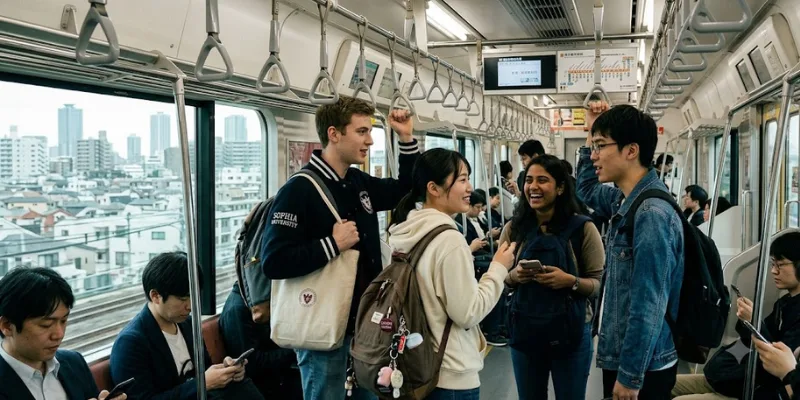
Sharing an apartment near Sophia: what to know
Given Yotsuya’s rent premium, some Sophia students choose to share a larger unit rather than rent a solo 1K. Share houses and larger apartments split between two or three students bring the effective per-person cost down considerably. Sometimes it drops to levels comparable with a solo unit in Nakano or Koenji, while keeping the short Yotsuya commute. The trade-off is less privacy and a more involved search. Not every landlord accepts multiple unrelated tenants on a single lease, and guarantor company requirements sometimes apply per tenant rather than per unit.
Students considering this route should raise it directly with their agent early in the search. Share-friendly listings don’t always get flagged clearly on general platforms, and an agent familiar with the Yotsuya student market can point toward buildings with a track record of accepting shared tenancies.
Frequently Asked Questions
The majority live within a 15-minute commute of Yotsuya Campus, spread across Ichigaya, Kagurazaka, Shinjuku, Nakano, and Koenji, depending on budget and lifestyle preference.
Rents near Yotsuya run on the higher end for Tokyo student housing, reflecting the campus’s central, multi-ward location. Students willing to commute 10–15 minutes to Nakano or Koenji can find meaningfully cheaper options.
Yes. Guarantor companies serve as the standard workaround, and most foreigner-friendly listings in the Yotsuya area include this option by default.
No. Dormitory space stays limited relative to Sophia’s large international student population, and priority typically goes to first-year students and short-term exchange participants. Most students eventually move to off-campus housing.
About a 10–15 minute walk, or one train stop, making it a popular choice for students who want a distinct neighborhood character without adding meaningful commute time.
Yes. Sophia’s alumni networks, current-student community boards, and the international student office sometimes share listings and landlord recommendations before they reach general rental platforms — worth asking about alongside a standard search.
Browse current apartments near Sophia University’s Yotsuya Campus on Arealty — foreigner acceptance pre-confirmed, guarantor company support included.

Real estate advisor at Arealty Japan, specialising in helping foreign residents navigate the Tokyo and Osaka rental markets. Lucy has guided hundreds of international renters — from Working Holiday visa holders to corporate relocations — through Japan’s apartment application process. Her writing draws on firsthand experience with landlord screening, guarantor companies, and foreigner-friendly listings across all 23 Tokyo wards and major Kansai cities.