
A spouse visa apartment rental in Japan generally moves through the standard application process. The visa itself changes your standing with landlords and guarantor companies, though. It’s worth understanding this before you start viewing apartments. This guide covers Japan’s “Spouse or Child of Japanese National” visa specifically — the true spouse visa, granted to foreign spouses of Japanese citizens. We also cover how it differs from the more general Dependent visa many foreign residents confuse it with.
This distinction matters for housing. This guide walks through what changes for renters. We cover how guarantor companies typically assess spouse visa applications, and what documents you’ll need. For a comparison with other visa categories, see our guide to the best visas for renting in Japan and our Highly Skilled Professional visa housing guide if you or your spouse hold HSP status instead. For official rules on the visa category itself, see the Ministry of Foreign Affairs of Japan’s visa guidance.
Spouse visa vs. dependent visa: the distinction that matters for housing
Japan issues two commonly confused visa categories to foreign family members. The Spouse or Child of Japanese National visa — the genuine spouse visa — goes to foreign nationals married to a Japanese citizen. It carries full, unrestricted work rights, just like a Japanese citizen’s own employment freedom. The Dependent (Family Stay) visa goes to the spouse or children of a foreign resident on a work or student visa. It caps work at 28 hours per week and requires separate permission to work at all.
This distinction directly shapes a spouse visa apartment rental Japan application. A true spouse visa holder can work full-time immediately, without the income ceiling that limits Dependent visa holders. For a rental application assessed on household income, that difference matters. It can determine whether you qualify for a larger unit or a better location.
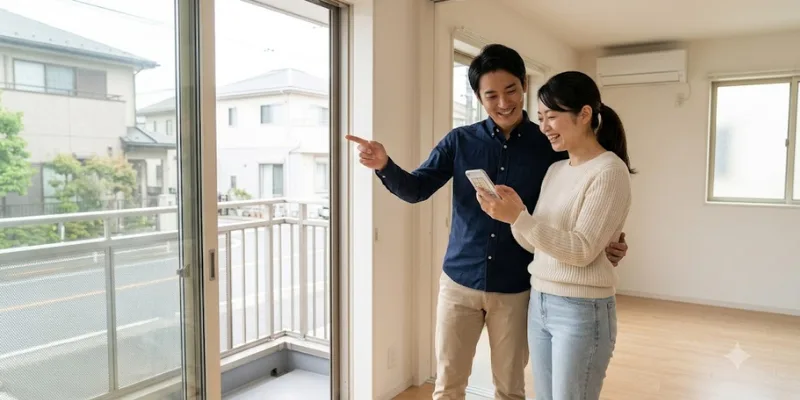
How a spouse visa apartment rental application differs from a dependent visa application
1. Full work rights strengthen your income case immediately. A spouse visa carries no work-hour cap. Your income counts on a rental application exactly the way a Japanese citizen’s would. There’s no need to explain part-time restrictions or provide a separate work permit alongside your application.
2. Marriage to a Japanese national often satisfies guarantor concerns directly. Some landlords and guarantor companies view marriage to a Japanese citizen as a stabilizing factor. It signals a long-term commitment to residing in Japan rather than a temporary work assignment. This isn’t universal, and shouldn’t be assumed. Still, it does show up in practice more often than with other visa categories.
3. A Japanese spouse can serve as a co-applicant or personal guarantor. Even where a landlord still requests a guarantor, having a Japanese national spouse on the lease — or as a personal guarantor rather than routing entirely through a guarantor company — remains a genuine option. This isn’t available to renters without a Japanese family connection. Many households still choose a guarantor company anyway, for speed and to keep the process separate from family finances. But the option exists.
4. Visa renewal periods run longer than many work visas. Spouse visas are typically granted for one, three, or five years, similar to work visas. Renewal tends to run smoothly for couples who can demonstrate an ongoing, genuine marriage — a more straightforward renewal case than some employment-based categories that depend on continued employer sponsorship.
What doesn’t change with a spouse visa apartment rental application
A spouse visa doesn’t waive the standard Japanese rental process. You still need a residence card. Most landlords will still ask for a guarantor company (保証会社) or a personal guarantor. This applies even to landlords comfortable with your visa status. The visa improves your standing in that process. It doesn’t remove the process itself.
If you’re considering buying rather than renting, see our guide to how visa status affects your home loan application. Mortgage lenders weigh visa category differently than landlords do, and a spouse visa carries its own specific considerations there too.
A note on 2026 scrutiny changes affecting family-based visas
Japan has tightened enforcement around family-based residence statuses in 2026, with increased scrutiny of income thresholds and documentation for Dependent visa holders specifically. This tightening targets the Dependent category rather than the genuine Spouse or Child of Japanese National visa. Couples applying under either category should still expect changes. Processing times run somewhat longer, and documentation review goes more thorough than in previous years. Build this into your apartment-hunting timeline. Don’t assume visa confirmation will arrive as quickly as it might have a year or two ago.
What guarantor companies actually check for spouse visa applicants
Guarantor companies evaluate every applicant on a combination of income stability, visa duration, and household composition, regardless of visa category. For a spouse visa applicant, the marriage certificate and koseki tohon (family register extract, if your spouse is Japanese) typically form part of the standard document package alongside income proof. Some guarantor companies run a slightly faster or lighter review for applicants married to a Japanese national, since the marriage itself functions as an informal stability signal. This varies by company, though, and isn’t something you should count on as a guarantee.
Where a Japanese spouse holds an established credit history, a long employment record, or homeownership elsewhere in Japan, mention these details explicitly on the application. Guarantor companies weigh household-level financial stability broadly, not just the individual renter’s own income and visa status.
What happens to your housing situation if the marriage ends
This is a sensitive but practical question worth understanding before you sign a long lease. If a marriage ends in divorce, spouse visa status doesn’t automatically transfer or extend. Visa continuation after divorce depends on separate immigration rules, generally tied to length of marriage and other factors reviewed case by case. From a purely housing perspective, a lease signed jointly with a Japanese spouse — or one where the spouse serves as guarantor — may need restructuring if the relationship ends. That can include finding a new guarantor arrangement. This isn’t a reason to avoid joint leasing. It’s worth discussing with your agent when the lease is first signed, so you understand what a future restructuring would involve if circumstances change.
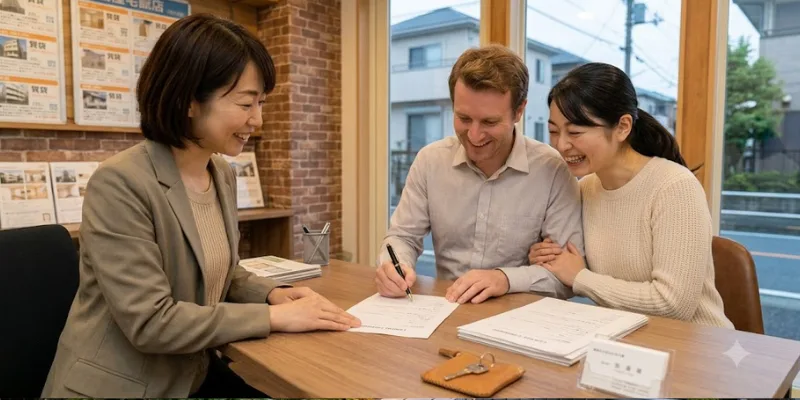
Practical tips for a spouse visa apartment rental search
- Bring your marriage certificate and residence card to viewings. Some agents and smaller landlords aren’t familiar with the distinction between spouse and dependent visas. Having documentation on hand speeds up explaining your status accurately.
- Decide upfront whether your Japanese spouse will serve as guarantor or co-applicant, or whether you’ll route through a guarantor company. Discuss this with your agent early, since it changes which paperwork you’ll need to gather.
- List full household income on the application, since a spouse visa carries no work-hour restriction limiting how much of that income counts.
- If your Japanese spouse already has an established residence or credit history in the area, mention it. Some landlords weigh this favorably even beyond the standard guarantor screening.
Where a spouse visa apartment rental search typically starts
Most spouse visa apartment rental Japan searches begin the same way any rental search does. You decide on area, budget, and unit size before contacting agents. The visa-specific considerations covered above layer on top of that standard process rather than replacing it. Couples where one partner is Japanese often have an advantage here too. Local knowledge of neighborhoods, school districts if children are involved, and commute patterns can shape the search meaningfully — access a newly arrived renter without local ties wouldn’t have.
Some couples face a specific timing challenge: the Japanese spouse already lives elsewhere in Japan, and the foreign spouse is relocating to join them. In this case, timing the spouse visa apartment rental search around the visa processing timeline matters. Processing for the Certificate of Eligibility and subsequent visa can take several months, particularly given the increased 2026 scrutiny on family-based statuses. Start researching neighborhoods and rough budget ranges during this waiting period. You can’t finalize an application until the visa itself is confirmed, but early research saves meaningful time once you’re ready to view properties in person.
Combining a spouse visa with other household circumstances
Some spouse visa apartment rental Japan applications involve additional complexity. A self-employed Japanese spouse, a foreign applicant who also works, or a household bringing children or elderly parents into the new home can all add layers. Guarantor companies generally handle these situations through standard household-income assessment. This works similarly to how they’d evaluate any multi-income or multi-generation household, regardless of visa category. If your situation includes self-employment income specifically, expect to provide additional documentation. Tax filing records replace a standard Certificate of Employment, since self-employed income verification runs through a different process than salaried income.
Families bringing children into a new rental should factor unit size into the search from the start. Finding a larger family-appropriate unit on short notice runs harder than finding a compact one-bedroom. This mirrors the same planning consideration that applies to other visa categories bringing dependents, covered in our guide to bringing family on a working visa.
Frequently Asked Questions
Is a spouse visa the same as a dependent visa in Japan? No. A spouse visa (Spouse or Child of Japanese National) goes to foreign nationals married to a Japanese citizen and carries full work rights. A dependent visa goes to the family of a foreign resident on a work or student visa. It caps work at 28 hours per week.
Do I need a guarantor company if I hold a spouse visa? In most cases, yes. The visa improves how your application gets viewed, but doesn’t eliminate the standard requirement. Some households use a Japanese spouse as a personal guarantor instead, where the landlord allows it.
Can my income be counted fully on a rental application with a spouse visa? Yes. A spouse visa carries no work-hour cap. Your income counts the same way a Japanese citizen’s would on a household income assessment.
Does marriage to a Japanese national guarantee landlord approval? No. It can improve how an application gets perceived. Individual landlord discretion still remains a real factor in Japan’s rental market, regardless of visa category.
Are 2026’s visa scrutiny changes relevant to spouse visa holders? The tightened scrutiny in 2026 targets Dependent visa holders specifically, around income thresholds and documentation. Genuine spouse visa applicants should still expect somewhat longer processing times, but face less direct impact than the Dependent category.
What happens to my lease if my marriage ends while I hold a spouse visa? Your visa status doesn’t automatically change, but continuation depends on separate immigration rules reviewed case by case. If your lease was jointly signed or your spouse served as guarantor, you may need to restructure the arrangement — worth discussing with your agent when you first sign.
Arealty works with international couples across Tokyo and Osaka to find apartments matched to household size and income. Browse current listings or contact our team for guidance specific to your visa category.

Real estate advisor at Arealty Japan, specialising in helping foreign residents navigate the Tokyo and Osaka rental markets. Lucy has guided hundreds of international renters — from Working Holiday visa holders to corporate relocations — through Japan’s apartment application process. Her writing draws on firsthand experience with landlord screening, guarantor companies, and foreigner-friendly listings across all 23 Tokyo wards and major Kansai cities.