
The new build vs resale apartment Tokyo decision usually comes down to one core trade-off. New condominiums (shinchiku, 新築) in Tokyo’s 23 wards now average roughly ¥1.7 million per square meter. Comparable used units (chuko, 中古) typically sell for 40–60% less. That gap runs larger in Japan than in most housing markets worldwide. A cultural preference for new construction has historically pushed resale values down faster than in the West.
This guide breaks down what actually separates a new build from a resale apartment in Tokyo. We cover price, depreciation, earthquake standards, and renovation costs, so you can weigh the trade-off against your own budget and timeline. For general pricing context, see our guide to Japan’s average house price and how to price a second-hand house in Japan. For current construction and seismic standards data, see MLIT’s official building statistics.
Why the new build vs resale apartment Tokyo price gap runs so wide
Japan’s building depreciation framework sits at the heart of this gap. Under Japanese tax law, structures carry a statutory useful life used for accounting and depreciation purposes. For a standard reinforced-concrete condominium, that period runs around 47 years. A decades-old cultural preference for new construction compounds this effect. It traces partly to the 1990s real estate crash, which left a generation of buyers wary of used property. Japanese resale apartments depreciate in building value far faster than in markets like the US or UK. In those markets, location tends to matter more than the age of the structure.
New condominiums launched in Tokyo’s 23 wards have averaged above ¥100 million for two consecutive years. Per-square-meter prices in premium central wards — Minato, Chiyoda, Shibuya, Shinjuku — frequently exceed ¥150 million for larger units. A secondhand 70-square-meter apartment in the same 23 wards averages closer to ¥55–70 million. That’s a substantial discount for a comparable footprint, though location and building age within that resale figure vary enormously.
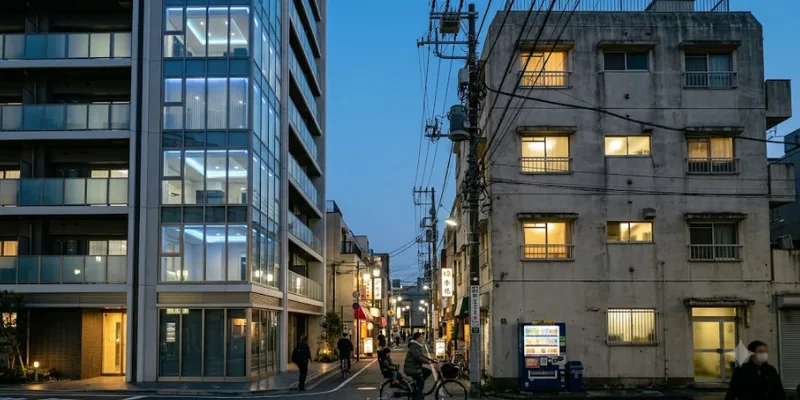
What you actually get with a new build apartment in Tokyo
New construction comes with several concrete advantages beyond the finish quality:
- Current earthquake resistance standards. All new construction meets Japan’s post-1981 seismic code (shin-taishin). Many newer buildings meet even stricter voluntary standards adopted after the 2011 Tohoku earthquake.
- Manufacturer and structural warranties, typically covering structural elements for 10 years as required by law. Some developers extend warranties further as a selling point.
- Better resale value retention, at least relative to older resale stock. Japan’s cultural preference for new construction means today’s new build becomes tomorrow’s more desirable “recent” resale. It holds value better than an already-aging unit.
- Modern layouts and energy efficiency, including better insulation, updated plumbing and electrical systems, and floor plans designed around contemporary household needs rather than decades-old space standards.
What you actually get with a resale apartment in Tokyo
The case for resale isn’t just about price. It comes with real advantages of its own:
- Established buildings with known track records. You can review the building’s management association records, repair reserve fund balance, and history of major works before buying. That information stays simply unavailable for a building that doesn’t exist yet.
- Often better locations. Tokyo’s most desirable, centrally located plots were mostly built out decades ago. New construction increasingly pushes toward less central sites. Resale inventory, by contrast, includes buildings in locations no longer available for new development.
- Renovation flexibility. A comprehensive renovation of a 70-square-meter apartment typically costs ¥10.5–14 million in regional cities and ¥14–20 million in Tokyo. That’s a genuine cost. It lets you customize a resale unit to modern standards, though, while still landing well below new-build pricing in most cases.
- Faster move-in. Resale purchases close in weeks rather than the months or years required for new construction pre-sales. This matters if your timeline runs tight.
Building resilience: what to check regardless of age
Seismic safety deserves attention whichever way you lean. The 1981 building code update (shin-taishin) significantly strengthened earthquake resistance requirements. Properties built after that date meet meaningfully stronger standards than older construction. Always confirm a resale building’s construction year and, ideally, request seismic diagnostic reports if the building predates 1981.
Condominium-specific due diligence for resale purchases
Buying a resale mansion — Japan’s term for a concrete condominium building, not a large detached home — adds a layer of due diligence beyond the unit itself. Review the building’s management bylaws, current repair reserve fund balance, any planned major works, and whether other owners carry arrears. All of this affects both your monthly costs and the building’s long-term maintenance trajectory. A building with a healthy, well-funded repair reserve tends to hold its value and livability better. A building with underfunded reserves runs the opposite risk.
New build vs resale apartment Tokyo: which fits your situation
Choose new build if earthquake safety headlines your priority list, you want manufacturer warranties and modern efficiency without a renovation project, or you’re planning to hold the property long enough that today’s new-build premium evens out over decades of lower maintenance costs. Choose resale if budget efficiency matters most, or you want a specific central location unavailable in new development. Resale also fits buyers comfortable managing a renovation to bring an older unit up to their standards. Neither option carries a universally correct answer. The right choice depends on your budget and timeline. It also comes down to how much value you place on a building’s established track record versus a blank slate.
Financing differences between new build and resale purchases
Mortgage financing for new construction, particularly pre-sale units purchased before completion, often follows a different payment structure than resale. Buyers may pay in installments tied to construction milestones, rather than a single lump sum at closing. Lenders also sometimes apply different qualification criteria to pre-sale financing than to a standard resale purchase, where the property already exists and can be inspected in full before the loan is finalized. Resale purchases, by contrast, let a lender assess the exact property being financed immediately, which can simplify and speed up the approval process for some buyers.
Foreign buyers financing a purchase should also factor in that Japanese lenders typically require permanent residency or a long-term visa status with documented Japanese income, regardless of whether the property is new build or resale. This requirement doesn’t shift based on construction type, but it’s worth confirming mortgage pre-qualification early in your search either way, since financing eligibility shapes which price range you can realistically consider.
How location interacts with the new build vs resale decision
Because Tokyo’s most desirable, centrally located land was largely built out decades ago, new construction increasingly appears on redeveloped or peripheral sites — former industrial land, station-area redevelopment projects, or wards further from the traditional central core. Buyers who prioritize a specific, already-established neighborhood — particularly the older, most walkable parts of wards like Meguro, Setagaya, or Bunkyo — often find resale the only realistic path to that location, simply because little new construction happens there. This geographic reality shapes the new build vs resale apartment Tokyo decision as much as price does for buyers with a strong location preference, and it’s worth weighing before assuming a slightly cheaper new-build unit further out delivers the same lifestyle as an established central neighborhood.
Regional price variation within the new build vs resale apartment Tokyo decision
The price gap between new build and resale doesn’t stay uniform across Tokyo. In premium central wards, the absolute yen gap runs largest — a new build premium of tens of millions of yen on a comparable unit. In outer wards and Tokyo-adjacent cities, the same percentage gap translates to a smaller absolute difference, which sometimes makes new construction a more realistic option for buyers who’d otherwise rule it out in central Tokyo entirely. If your budget sits at the edge of what new construction allows, widening your search to slightly less central wards can bring new build back into range without abandoning the new-build advantages you’re after.
This regional variation also affects resale strategy. A resale unit in a well-located but currently unfashionable ward can offer better long-term value than a new build in a currently trendy but potentially overpriced area, since Japanese property values do shift with changing neighborhood popularity over a multi-decade holding period, even if building depreciation runs in the opposite direction.
Frequently Asked Questions
Resale apartments in Tokyo’s 23 wards typically run 40–60% less than comparable new construction, though the exact gap depends heavily on building age, location, and condition.
Not automatically. Buildings constructed after the 1981 code update (shin-taishin) meet significantly stronger seismic requirements than older construction. Always confirm a specific building’s construction year before buying.
Often, yes. A comprehensive renovation of a 70-square-meter apartment typically costs ¥14–20 million in Tokyo, which combined with a discounted resale purchase price frequently still lands below new-build equivalent pricing.
Generally yes, at least relative to already-aging resale stock, given Japan’s strong cultural preference for new construction. This dynamic differs from many Western housing markets, where age matters less than location.
Review the management association’s bylaws, current repair reserve fund balance, any planned major works, and whether other unit owners carry payment arrears — all of this affects your ongoing costs and the building’s maintenance trajectory.
Yes, in some cases. Pre-sale new construction sometimes involves installment payments tied to construction milestones, while resale financing lets a lender assess the completed property immediately, which can simplify approval.
Resale, in most cases. Tokyo’s most desirable central plots were largely built out decades ago, so new construction increasingly appears on redeveloped or peripheral sites rather than in the most established, walkable neighborhoods buyers often want most.
Arealty helps foreign buyers weigh new build and resale options across Tokyo’s wards, from central Minato and Chiyoda listings to emerging redevelopment areas further out, and can connect you with lenders experienced in foreign-buyer mortgage applications. Contact our team to discuss your budget and priorities before you begin your search.

Real estate advisor at Arealty Japan, specialising in helping foreign residents navigate the Tokyo and Osaka rental markets. Lucy has guided hundreds of international renters — from Working Holiday visa holders to corporate relocations — through Japan’s apartment application process. Her writing draws on firsthand experience with landlord screening, guarantor companies, and foreigner-friendly listings across all 23 Tokyo wards and major Kansai cities.