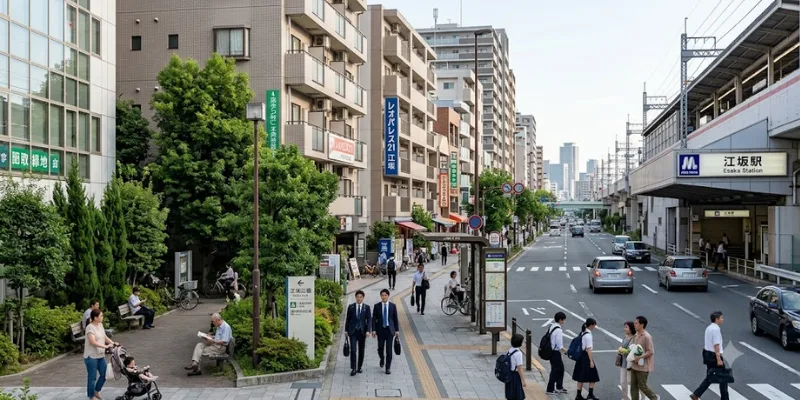
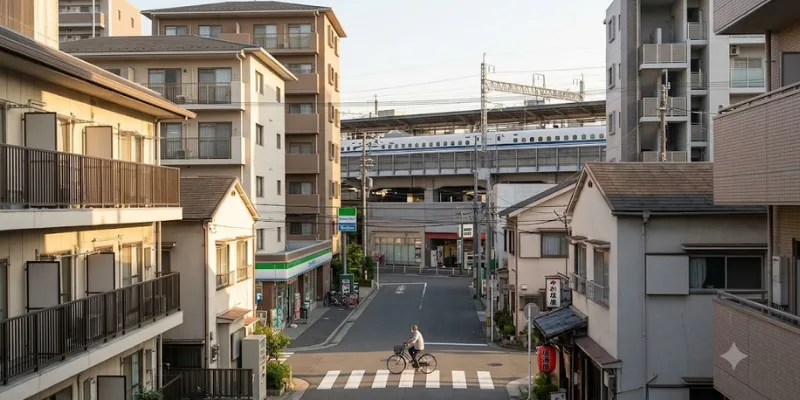
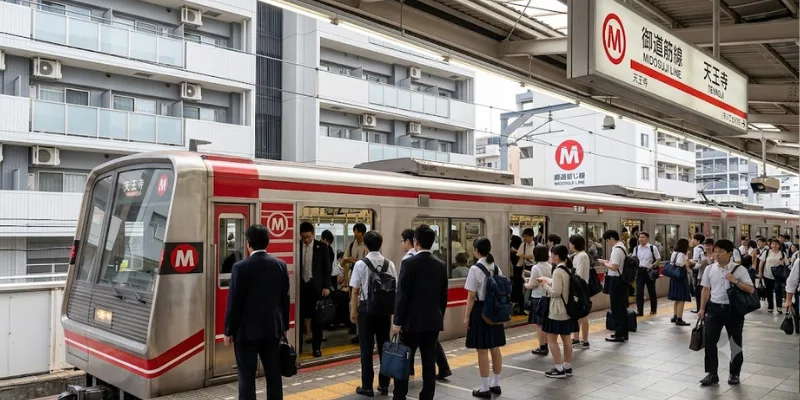
Quick answer: Most Gakushuin University students live within a 15-20 minute commute of the Mejiro campus, either walking distance in Toshima/Bunkyo wards or one to two stops away via the Yamanote Line — including Shinjuku, just one stop from Mejiro, which offers a much wider range of listings at a similar price point. Budget ¥65,000-95,000/month for a 1R/1K near campus, or ¥70,000-110,000/month in Shinjuku for more choice and better access to shopping and transit.
| Quick Facts | Details |
|---|---|
| Campus station | Mejiro (JR Yamanote Line) |
| Typical commute | 0-20 minutes from most off-campus housing |
| Nearest major hub | Shinjuku — 1 stop, ~5 minutes |
| Starting rent (1R/1K) | ¥65,000-110,000/month |
| Guarantor required | Yes, for nearly all listings |
Gakushuin University’s Mejiro campus sits directly on the Yamanote Line, Tokyo’s central loop — which means Gakushuin University student housing doesn’t have to mean living right next to campus. A short, direct train ride opens up several ward options without adding real commute time, and understanding those trade-offs early saves a lot of wasted apartment viewings later
Where Do Gakushuin Students Actually Live?
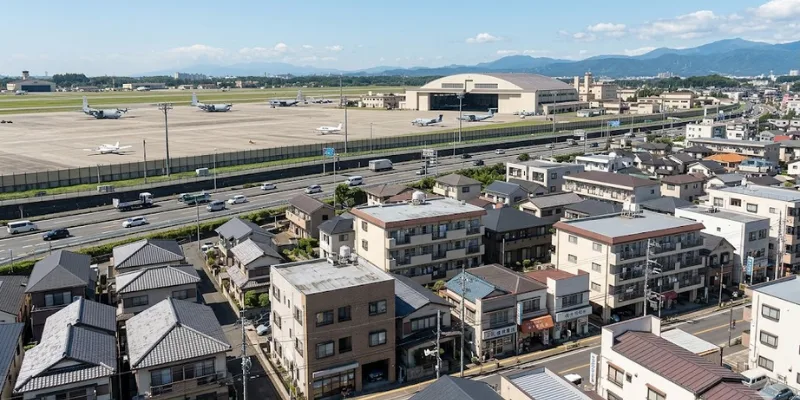
Gakushuin’s campus is in Toshima-ku, directly served by Mejiro Station. Students commuting from off-campus housing typically cluster into one of a few distinct areas, each with a different trade-off between cost, quiet, and convenience:
- Mejiro and Ikebukuro (Toshima-ku) — Walking distance to campus, or one stop away by train. The most convenient option in terms of commute time, with rents that reflect that convenience. Ikebukuro in particular offers a much larger station and shopping complex than Mejiro itself.
- Bunkyo-ku (Otsuka, Sugamo) — One to two stops via the Yamanote Line, quieter and generally a little cheaper than Mejiro proper. Sugamo especially has a reputation as an affordable, low-key residential area.
- Shinjuku-ku — Just one stop from Mejiro on the Yamanote Line. Slightly more expensive on average than Otsuka or Sugamo, but with far more listings, restaurants, and nightlife, plus fast onward transit to almost anywhere in Tokyo.
For students who want more than a quiet, campus-adjacent neighborhood, Shinjuku is worth serious consideration — the one-stop commute barely adds to your total travel time compared to living right next to Mejiro Station itself, while opening up a rental market many times larger.
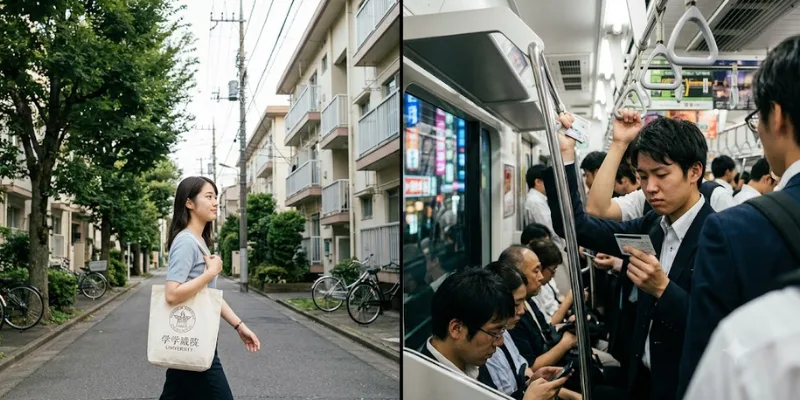
Mejiro or Shinjuku: Which Fits Your Budget and Lifestyle?
| Mejiro (on-campus area) | Shinjuku (1 stop away) | |
|---|---|---|
| Commute to Gakushuin | 0-10 min walk / 1 stop | 1 stop, ~5 min ride |
| 1R/1K monthly rent | ¥65,000-95,000 | ¥70,000-110,000 |
| Listing volume | Limited — small, residential area | Very high — one of Tokyo’s largest rental markets |
| Lifestyle | Quiet, residential, campus-focused | Major transit hub, shopping, restaurants, nightlife |
| Best for | Students who want minimal commute and a calm environment | Students who want more apartment choice and an active neighborhood outside class hours |
If your priority is minimizing commute time and cost, Mejiro, Otsuka, or Sugamo make the most sense. If you want more apartment options to compare directly and a livelier neighborhood after class, browse current listings in Shinjuku ward — the one-stop commute is a small trade-off for significantly more choice.
How Much Does Gakushuin University Student Housing Cost?
Budget for these ranges as a starting point for 2026:
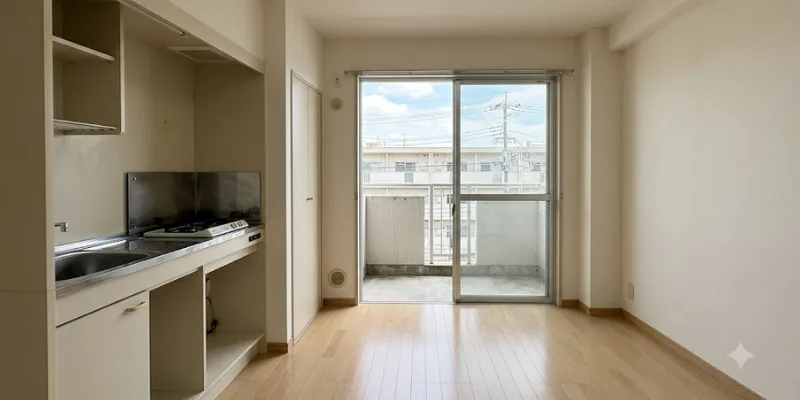
- 1R/1K (solo student): ¥65,000-95,000/month near Mejiro; ¥70,000-110,000/month in Shinjuku
- 1K with separate kitchen: add roughly ¥5,000-10,000/month over a basic 1R in the same area
- Furnished monthly options: higher nightly-equivalent cost, but useful for a first semester before committing to a long-term lease — see our short-term rental guide if you’re arriving before finding permanent housing
- Upfront costs: budget three to five months’ rent for deposit, agency commission, and — where still charged — key money, on top of your first month’s rent
These figures track closely with citywide 1R averages — for the full ward-by-ward comparison across Tokyo, see our Japan real estate market trends 2026 guide.
What Should You Look for in a Neighborhood Near Mejiro?
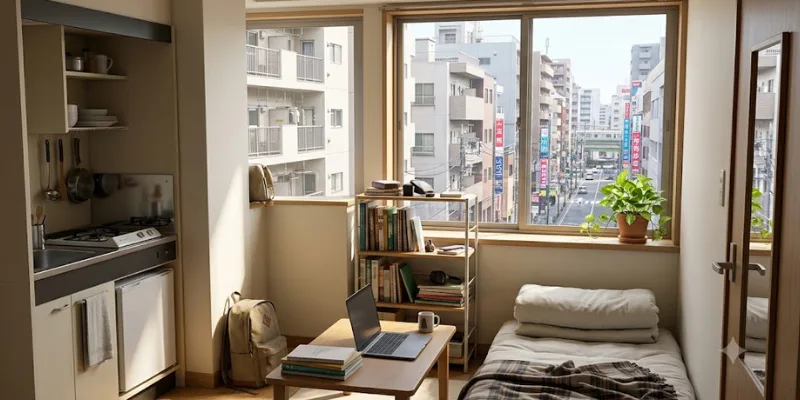
Beyond rent and commute time, a few practical factors are worth weighing when comparing Mejiro-area neighborhoods against Shinjuku:
- Grocery and daily errands — Sugamo and Otsuka have a more traditional shopping-street feel with smaller, cheaper grocery options; Shinjuku has larger supermarkets but at slightly higher prices.
- Noise levels — Mejiro and Sugamo are noticeably quieter at night than Shinjuku, which matters if you’re a light sleeper or study late at home.
- Late-night transit — Shinjuku’s status as a major hub means more late-night train and bus options if you’re out late; Mejiro-area stations have more limited late service.
- Building age and condition — Older neighborhoods like Sugamo tend to have older building stock at lower rents; Shinjuku has a wider mix of both older and newer buildings across a bigger price range.
When Should You Start Looking for Gakushuin University Student Housing?
Timing your search matters more in Tokyo than in many other cities, because the rental market moves in sharp seasonal waves tied to the Japanese academic calendar:
- January to March is the busiest period, as most Japanese universities and companies start their fiscal/academic year in April. Listings near Mejiro and Shinjuku move quickly during this window, and the best-value units are often gone within days of being posted.
- Starting your search 6-8 weeks before move-in is the practical sweet spot — early enough to view multiple units, late enough that landlords are willing to hold a unit for your actual move-in date.
- If your semester starts outside the April cycle, you’ll generally face less competition, but also fewer new listings coming onto the market at once, so patience and flexibility on unit type may be needed.
Gakushuin’s international student support office can typically advise on this timing relative to your specific program’s start date, and coordinating your housing search around that calendar avoids the worst of the peak-season competition.
How Do Foreign Students Apply for Housing Near Gakushuin?
International students face a few extra steps compared to Japanese applicants, largely centered on documentation and screening rather than anything fundamentally different about the apartment search itself. Working with an agency that regularly handles foreign applicants — rather than a purely Japanese-language local office — tends to shorten this process considerably, since they already know which landlords and buildings are comfortable renting to non-Japanese tenants and which guarantor companies process student applications quickly.
The core steps are:
- Confirm your student visa status — most agencies, including Arealty, require your Certificate of Eligibility or valid student visa before processing an application.
- Arrange a guarantor company — nearly all landlords require one. This is standard practice now and rarely a real obstacle; see our guarantor system in Japan guide for how it works and what it costs.
- Prepare proof of enrollment — Gakushuin’s admissions and international student support offices can provide this; landlords and guarantor companies use it to confirm your student status. For official information on international student support, see Gakushuin University’s International Centre.
- Decide on furnished vs. unfurnished — unfurnished is cheaper monthly but requires upfront furniture costs; furnished units cost more but let you move in immediately.
For a full walkthrough of the application process from document prep to signing, see our apartment hunting for students in Japan guide.
What Mistakes Do New Students Make When Searching?
A few recurring mistakes are worth avoiding:
- Underestimating upfront costs. Many first-time renters budget only for monthly rent and are caught off guard by the three-to-five-months’-rent upfront requirement.
- Skipping the guarantor conversation until late. Lining up a guarantor company early avoids delays once you’ve found a unit you like.
- Only looking within walking distance of campus. As shown above, a one-stop commute to Shinjuku can dramatically widen your options without meaningfully increasing travel time.
- Not confirming furnished vs. unfurnished before applying. This affects your total moving budget significantly and is worth settling before you start touring apartments.
FAQ: Gakushuin University Student Housing
Is it worth living in Shinjuku instead of near Mejiro campus? For many students, yes — the commute is only one stop, but Shinjuku offers dramatically more listing choice, shopping, and nightlife than the smaller, quieter area right around campus.
How much should I budget monthly for Gakushuin University student housing? Plan for ¥65,000-110,000/month depending on area and unit type, plus upfront costs of three to five months’ rent when you sign.
Do I need a guarantor as an international student? Yes, in almost all cases — but guarantor companies handle this routinely for foreign students now, so it’s rarely a real barrier.
Can I find furnished apartments near Gakushuin University? Yes, particularly in Shinjuku, where furnished and monthly-rental options are far more common than in the smaller residential pockets right around Mejiro Station.
Is Sugamo a good alternative to Mejiro or Shinjuku? It can be — Sugamo tends to be cheaper and quieter than both, at the cost of fewer listings and a longer walk from the station to some buildings.
When is the best time to search for Gakushuin University student housing? Start 6-8 weeks before your move-in date. If your program begins in April, expect to compete with the citywide peak season and start looking as early in that window as possible.
Can I switch neighborhoods after my first semester if Mejiro feels too quiet? Yes — many students start near campus for the easy commute during their first term, then move closer to Shinjuku once they’re more familiar with the city and want more to do outside class.
Ready to start your search? Browse current listings in Shinjuku ward or get in touch with our team for help finding student housing near Gakushuin University.

Real estate advisor at Arealty Japan, specialising in helping foreign residents navigate the Tokyo and Osaka rental markets. Lucy has guided hundreds of international renters — from Working Holiday visa holders to corporate relocations — through Japan’s apartment application process. Her writing draws on firsthand experience with landlord screening, guarantor companies, and foreigner-friendly listings across all 23 Tokyo wards and major Kansai cities.