
Quick answer: As of October 16, 2025, the Business Manager Visa Japan requires a minimum capital investment of ¥30 million — six times the previous ¥5 million threshold — plus at least one full-time employee, three years of management experience (or a master’s degree or higher), Japanese language proficiency (JLPT N2 or equivalent, held by the applicant or a qualifying employee), and a business office fully separate from your personal residence. A home office is, in principle, no longer permitted. This means most applicants now need to budget for two leases — a commercial office and a residential apartment — which changes both the cost and the location strategy for your housing search.
| Quick Facts | Details |
|---|---|
| Minimum capital (from Oct 16, 2025) | ¥30 million (up from ¥5 million) |
| Full-time employee | At least 1 required |
| Management experience | 3+ years, or a master’s degree or higher |
| Japanese language | JLPT N2 or equivalent (applicant or employee) |
| Office requirement | Must be fully separate from residence |
| Typical housing setup | Two leases — commercial office + residential apartment |
| Popular business districts | Minato, Chiyoda, Shibuya, Shinjuku |
| Residential guarantor required | Yes, for nearly all listings |
If you’re applying for a Business Manager Visa Japan to start or run a company, the biggest housing-related change to know about in 2026 is that the office-residence separation rule is now strictly enforced under the revised Ministerial Ordinance, which took effect October 16, 2025. Planning your housing search around this from day one saves significant time and avoids application delays.
What Changed for the Business Manager Visa in 2025?
The Ministry of Justice promulgated an amended Ministerial Ordinance on October 10, 2025, with the new rules taking effect October 16, 2025. The reforms replaced the old either/or structure — previously ¥5 million in capital OR two full-time employees was enough — with a cumulative set of requirements that must all be satisfied together:
- Minimum capital raised to ¥30 million — six times the previous ¥5 million threshold, a change directly affecting the overall budget available for office and residential leasing.
- At least one full-time employee, in addition to meeting the capital requirement (previously, sufficient staffing could substitute for capital — that trade-off no longer applies).
- Three years of management experience, or a master’s degree or higher.
- Japanese language proficiency at JLPT N2 level or equivalent — this can be satisfied by the applicant personally or by a qualifying employee.
- A business plan certified by a professional expert before submission.
- Office must be fully separate from residence — immigration authorities no longer accept a home office as qualifying business premises in principle.
- Stricter scrutiny at renewal, including closer review of tax and social insurance compliance.
The office-residence separation point is the one that most directly changes how applicants should approach their housing search: you’re now planning two separate leases from the start, not one combined home-office arrangement, and both need to hold up to scrutiny during the visa application and any renewal.
For applicants who started planning before October 2025, it’s worth explicitly re-checking every figure above — the capital requirement, staffing rule, and office rule have all changed together, and assumptions based on older information can derail an otherwise well-prepared application. Existing visa holders aren’t immediately forced to comply — renewals filed between October 16, 2025 and October 16, 2028 may still be assessed under more flexible transitional standards that account for the business’s existing scale.
Why Does Office-Residence Separation Matter for Your Housing Search?
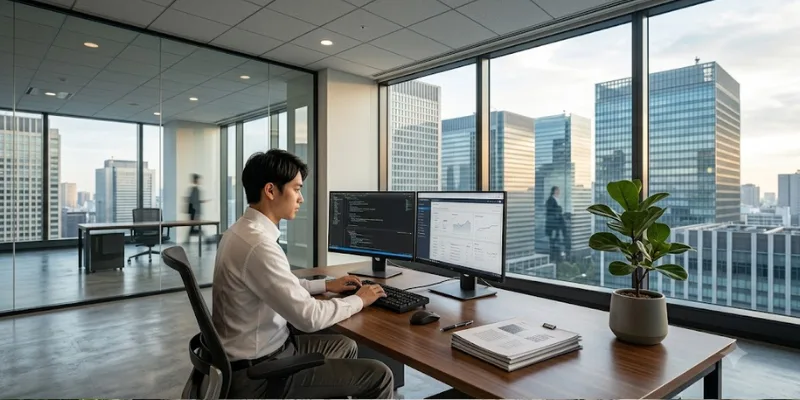
Before the 2025 change, some applicants tried to minimize costs by working from a residential apartment registered as their business address. That approach is no longer viable for a successful Business Manager Visa Japan application. In practice, this means:
- You’ll need a commercial-zoned office lease, typically in a business district with appropriate zoning and a registered business address that immigration can verify.
- Your residential apartment can be chosen more freely, based on commute, budget, and lifestyle — it no longer has to double as your registered business address, which actually gives you more flexibility on where you live.
- Budgeting separately for both from the outset avoids the common mistake of underestimating total setup costs, since many first-time applicants only plan around the ¥30 million capital figure without factoring in ongoing lease commitments.
Where Should You Look: Business Districts vs. Residential Areas?
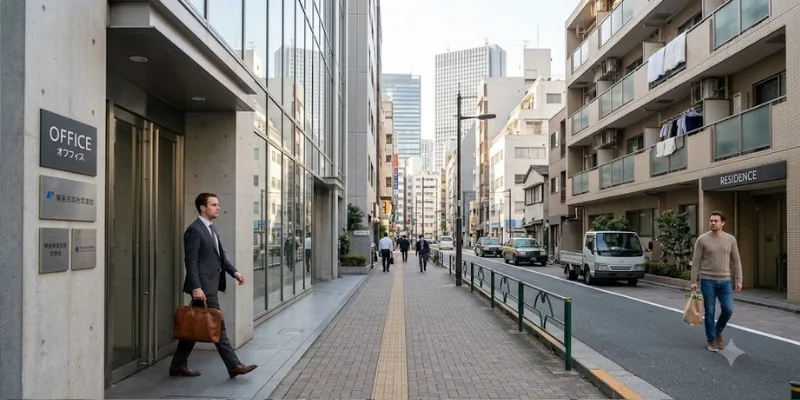
Tokyo’s major business districts each have a different character worth matching to your business type:
- Minato and Chiyoda — Traditional corporate hubs, higher office rents, strong prestige value for client-facing businesses that regularly host visitors or investors.
- Shibuya — Popular for tech and creative-industry startups, with a younger business culture and strong concentration of similar companies nearby.
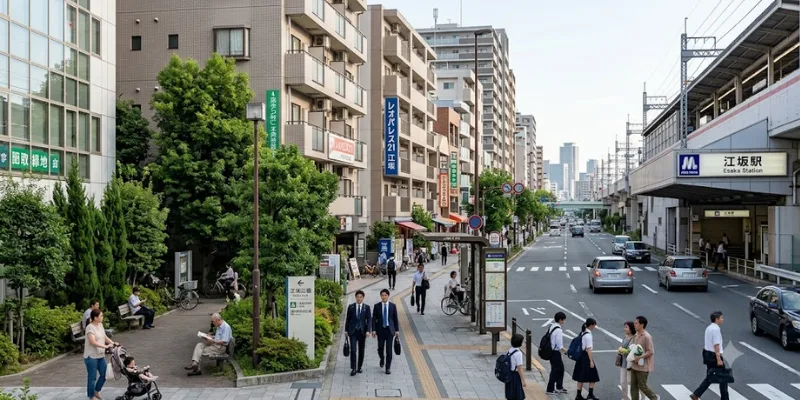
- Shinjuku — One of Tokyo’s largest business districts, with a strong concentration of small and mid-size company offices, plus excellent transit connections to the rest of the city — making it a practical choice if you want your office reasonably close to your residence without paying Minato-level rents.
If you’re setting up an office in or near Shinjuku, it’s often practical to look for residential apartments in the same area to minimize your commute between the two addresses. Browse current listings in Shinjuku ward if this fits your plan — living and working in the same ward also simplifies day-to-day logistics considerably compared to commuting across the city between two very different districts. It also makes it easier to attend to both addresses in person if immigration authorities ever request a site visit or additional documentation during your application or renewal.
How Much Should You Budget for a Business Manager Visa Setup?
Budget planning should account for both leases separately, on top of the ¥30 million minimum capital requirement itself:
- Commercial office space: varies widely by district and size, but small offices for a new company typically start in the low hundreds of thousands of yen per month in secondary business districts like Shinjuku, rising sharply in Minato or Chiyoda.
- Residential apartment (1LDK, solo or with family): ¥150,000-220,000/month in central wards; ¥90,000-150,000/month in outer wards, per current 2026 market data — see our Japan real estate market trends 2026 guide for the full ward breakdown.
- Upfront costs on both leases: expect three to five months’ rent upfront on the residential side, and commercial leases often require a comparable or larger deposit depending on the landlord and building.
Because you’re managing two leases and typically higher upfront costs on the commercial side, building slack into your budget beyond the ¥30 million minimum capital requirement is worth doing before you start signing leases — many applicants underestimate combined setup costs by focusing only on the headline capital figure.
What Office Type Fits Your Business Manager Visa Application?
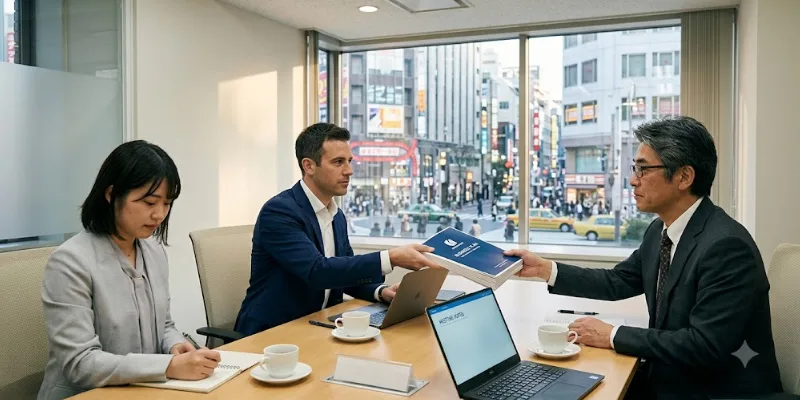
Not all commercial spaces satisfy the office-residence separation requirement equally well. A few practical considerations:
- Serviced/shared offices — Often the fastest way to establish a compliant registered address quickly, though immigration scrutiny of shared-office arrangements has increased alongside the 2025 rule change, so confirm the specific provider’s track record with visa applications.
- Traditional leased office space — Generally the safest option for demonstrating a genuine, separate business premises, though it involves a longer lease commitment and higher upfront cost.
- Location relative to your residence — Choosing an office within the same ward as your planned residence, such as Shinjuku, keeps your daily commute short even though the two addresses must now be legally and physically distinct.
How Do You Rent an Apartment in Japan on a Business Manager Visa?
The residential side of the process follows standard foreign-resident rental steps, with a couple of visa-specific points worth flagging in advance:
- Confirm your visa status and documentation — landlords and guarantor companies will want to see your visa category clearly, since Business Manager Visa applicants are sometimes screened differently than standard work-visa employees. See our guide to how visa status affects home loan applications for related screening considerations on the ownership side.
- Arrange a guarantor company for your residential lease — this is separate from any guarantor or lease arrangement for your commercial office. See our guarantor system in Japan guide.
- Keep your residential and commercial paperwork clearly separated — since the visa rule change specifically requires this distinction, mixing the two in your documentation can create unnecessary friction during screening or renewal.
- Compare visa categories if you’re not yet committed — if the ¥30 million capital requirement doesn’t fit your situation, see our best visas for renting in Japan guide for how other visa categories affect your housing options.
For the official government position on Business Manager Visa Japan requirements, see the Immigration Services Agency of Japan — the revised Ministerial Ordinance was promulgated October 10, 2025 and took effect October 16, 2025. Always confirm current requirements directly with immigration authorities or a licensed administrative scrivener (gyoseishoshi) before finalizing your application, since visa requirements can be updated further.
What Mistakes Do Applicants Make?
A few recurring mistakes are worth avoiding when planning housing around this visa application:
- Underestimating total setup costs. Many applicants budget precisely to the ¥30 million capital minimum without factoring in the ongoing cost of two separate leases.
- Trying to reuse a residential address for the office. This directly conflicts with the 2025 rule change and will likely delay or derail the application.
- Choosing an office location without considering the residential commute. Picking business districts far from where you’d prefer to live adds unnecessary daily friction once you’re actually operating the business.
- Finalizing leases before confirming current visa requirements. Rules have changed once already in recent years — confirming current requirements before signing either lease avoids costly mistakes.
FAQ: Business Manager Visa Japan Housing
Can I still use my apartment as my business office on a Business Manager Visa? No — as of the October 2025 rule change, your business office must be fully separate from your residence. A home office no longer satisfies the requirement.
How much capital do I need for a Business Manager Visa in 2026? The minimum capital requirement was raised to ¥30 million as of October 2025.
Is Shinjuku a good area to base a small company office? It can be — Shinjuku is one of Tokyo’s largest business districts, with strong transit access and generally lower rents than Minato or Chiyoda, making it practical for smaller companies.
Do I need a separate guarantor for my office lease and my apartment lease? Typically yes — these are two distinct leases, usually with different landlords, and each will have its own screening and guarantor requirements.
Can a serviced office satisfy the Business Manager Visa office requirement? Often yes, but scrutiny of shared-office arrangements has increased since the 2025 rule change — confirm the specific provider’s experience with visa applications before committing.
Should I confirm the current rules before finalizing my application? Yes — immigration requirements for the Business Manager Visa Japan have changed before and can change again, so verify current figures directly with the Immigration Services Agency or a licensed administrative scrivener before signing either lease.
Ready to start your residential search while you set up your business address? Browse current listings in Shinjuku ward or get in touch with our team for help finding an apartment that fits your Business Manager Visa timeline.

Real estate advisor at Arealty Japan, specialising in helping foreign residents navigate the Tokyo and Osaka rental markets. Lucy has guided hundreds of international renters — from Working Holiday visa holders to corporate relocations — through Japan’s apartment application process. Her writing draws on firsthand experience with landlord screening, guarantor companies, and foreigner-friendly listings across all 23 Tokyo wards and major Kansai cities.