Quick answer: Studios in Tokyo start around ¥50,000/month in outer wards like Adachi and Itabashi and climb past ¥140,000/month in central wards like Minato and Shibuya. Most apartments in Tokyo for rent require a security deposit, agency fee, and sometimes key money — budget three to five months’ rent upfront. Foreigners can rent without a Japan-based guarantor by using a guarantor company, which most agencies, including Arealty, arrange as standard.
Tokyo’s rental market remains one of the most dynamic in Asia, and 2026 has brought real changes worth knowing before you start your search: central-ward rents at record highs, key money disappearing in competitive areas, and guarantor companies making the process far easier for foreign applicants than it was five years ago.
Why Living in a Tokyo Rental Makes Sense
Tokyo is renowned for its exceptional public transportation network, diverse living environments across various districts, and consistently high standards of cleanliness and safety. These qualities contribute to the city’s appeal for both locals and newcomers seeking a convenient urban lifestyle.
For many young professionals and international residents, renting remains the preferred option. The cost of purchasing property in central Tokyo can be prohibitive, so leasing offers a far more accessible alternative, especially for those planning short- to medium-term stays.
Additionally, Tokyo’s dynamic job market often requires individuals to commute across multiple wards, making flexible living arrangements more practical. Standardized lease agreements, which are widely accepted even by foreigners, further simplify the rental process.
If you’re exploring how to rent an apartment in Tokyo, the good news is that the steps involved, though influenced by some distinct cultural practices, are generally straightforward when handled through reputable agencies or with proper local support. With the right preparation, finding a place to live in Tokyo can be efficient, even if it’s your first time navigating the Japanese housing system.

Renting made easy in Tokyo
Types of Apartments in Tokyo
Japanese rental listings use a shorthand that’s worth learning before you browse apartments in Tokyo for rent:
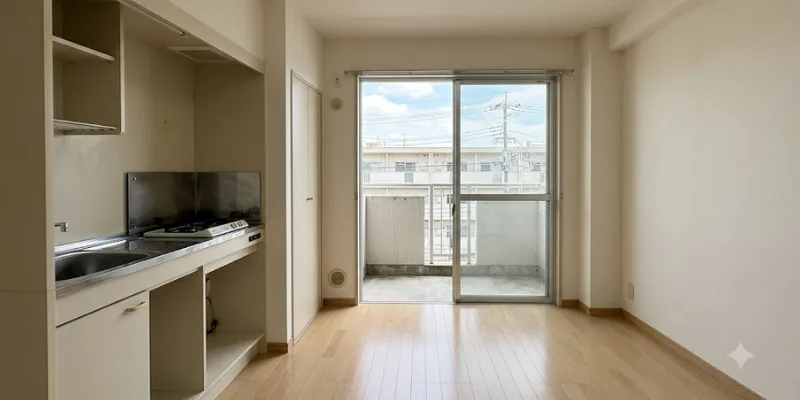
- 1R / 1K — A single room (1R), or a room with a separated kitchen (1K). Best for solo renters: students, early-career professionals, or anyone on a tight budget.
- 1LDK / 2LDK — A living-dining-kitchen area plus one or two bedrooms. The standard choice for couples or small households who want separated living and sleeping space.
- 3LDK and larger — Family-sized units with multiple bedrooms, often including a balcony and extra storage.
On top of layout, you’ll also choose between:
- Furnished units — Move-in ready with basic appliances and furniture, popular with expats and short-term tenants.
- Unfurnished units — Usually cheaper monthly, better suited to long-term residents who want to furnish their own space.
- Monthly (weekly/monthly) rentals — Furnished, all-inclusive, no long-term lease — a good bridge option while you search for a permanent place. See our short-term rental guide if flexibility matters more than price right now.
Most Popular Districts to Rent Apartments in Tokyo
Tokyo is Tokyo’s 23 wards each have a distinct character, so the right area depends on your budget and lifestyle as much as your commute:
- Shibuya and Shinjuku — High energy, nightlife, and some of the best train access in the city. Popular with young professionals and creatives.
- Minato and Roppongi — Home to embassies, multinational offices, and luxury towers. The default choice for executives and diplomats, at a price.
- Setagaya and Meguro — Quieter, leafier, and family-friendly, without sacrificing convenience.
- Adachi, Itabashi, and Nerima — Further from the center but significantly cheaper, popular with budget-conscious renters and families who want more space per yen.
For a full ward-by-ward comparison, see our best areas to live in Tokyo for foreigners guide.
How Much Do Apartments in Tokyo Cost in 2026?
Rent for apartments in Tokyo for rent varies enormously by ward. Based on 2026 Hato Mark Site (Zentakuren) data, a 1R runs from around ¥61,200/month in Katsushika-ku on the low end to ¥146,600/month in Minato-ku at the top of the market — more than double for the same unit type, depending purely on location:
| Apartment Type | Central Tokyo (Minato, Shibuya) | Outer Tokyo (Adachi, Itabashi, Nerima) |
|---|---|---|
| Studio / 1R | ¥120,000 – ¥146,600 | ¥50,000 – ¥85,000 |
| 1LDK | ¥150,000 – ¥220,000 | ¥90,000 – ¥150,000 |
| 2LDK / 3LDK | ¥200,000 – ¥350,000+ | ¥130,000 – ¥250,000 |
Central-ward rents have been climbing through 2026, while outer-ward rents have stayed comparatively stable — which means the value gap between the two keeps widening. If your job or lifestyle doesn’t require you to be in Minato or Shibuya specifically, outer wards now offer meaningfully better value than they did a few years ago. For the full current ward-by-ward breakdown, see our Japan real estate market trends 2026 guide.
What Salary Do You Need to Rent in Tokyo?
Japanese landlords typically screen applicants using a 36x rule: your annual income should be at least 36 times the monthly rent. For a ¥100,000/month apartment, that means roughly ¥3.6 million in documented annual income; for ¥150,000/month, closer to ¥5.4 million.
For context, average monthly wages in Tokyo run around ¥403,700 (roughly ¥4.8 million/year) — noticeably higher than the national average, which helps explain why Tokyo rents sit well above the rest of the country. For a full breakdown of salary benchmarks and how they map to rent affordability, see our average salary in Japan 2026 guide.
Upfront Costs When Renting an Apartment in Tokyo
Monthly rent is only part of the picture. Budget for these initial costs before you sign:
- Security deposit (敷金 / shikikin) — Typically one to two months’ rent, refundable at move-out if the unit is undamaged.
- Key money (礼金 / reikin) — A non-refundable, one-time payment to the landlord, traditionally one month’s rent — though this is increasingly waived in competitive markets. See our no-key-money apartments guide if minimizing upfront cost is a priority.
- Agency commission — Usually one month’s rent, paid to the agency that arranges the lease.
- Building maintenance fee — ¥5,000–¥15,000/month on top of rent, common in manshon-style buildings.
Altogether, expect three to five months’ rent before you move in. For a full line-by-line breakdown, see our apartment move-in cost guide.

Average income in Tokyo 2026
What Additional Costs Should You Expect?
Renting an apartment in Tokyo involves more than just paying the monthly rent. Tenants should be prepared for several initial fees that can significantly increase upfront costs:
- Security deposit: Typically equivalent to one or two months’ rent, this amount is held as a safeguard against damage and is usually refunded when the lease ends, provided the property is left in good condition.
- Key money: A unique aspect of Japanese rentals, this is a one-time, non-refundable payment made to the landlord as a gesture of appreciation. This fee is generally set at the value of one month’s payment.
- Agent commission: Most real estate agencies charge a fee for their services, which is commonly set at one full month of rent.
- Building maintenance fees: In apartment complexes (especially manshon or condominium-style units), tenants are responsible for shared upkeep costs, usually ranging between ¥5,000 and ¥15,000 monthly.
Altogether, these preliminary charges can amount to three to five months’ worth of rent before you even move in. Planning for these expenses in advance is essential to avoid financial strain during the relocation process.
How to Rent an Apartment in Tokyo as a Foreigner
Renting apartments in Tokyo for rent as a foreigner is more straightforward than it used to be, but a few steps are specific to non-Japanese applicants:
- Prepare your documents — Residence card, passport, and proof of income (recent pay slips or an employment contract).
- Line up a guarantor — Almost no one uses a personal guarantor anymore. Guarantor companies like GTN, Roommate, and Sire now process foreign applications routinely, and most agencies, including Arealty, arrange this for you as a standard part of the process.
- Work with an English-speaking agency — This alone eliminates most of the friction foreigners run into with Japanese-only paperwork and landlord communication.
- Review the lease carefully — Standard leases run two years, with a renewal fee around one month’s rent. Pay close attention to move-out notice periods and deposit-return conditions.
Landlord attitudes toward foreign tenants have also shifted: as Tokyo’s foreign resident population has grown, more landlords explicitly list as “外国人可” (foreigner OK), and consumer-protection attention on discriminatory practices has pushed the market to become more inclusive than it was even five years ago.
Buying vs. Renting in Tokyo
If you’re planning a longer stay, it’s worth weighing renting against buying. Renting keeps upfront costs low and gives you flexibility to change wards or leave Japan without selling a property. Buying builds equity and removes monthly rent entirely, but a typical 2LDK in central Tokyo now runs ¥40–60 million, plus property taxes, maintenance fees, and a loan process that’s more involved for foreign buyers. For current purchase pricing, see our how much does a house in Japan cost guide, and for financing specifics, our Japan mortgage rates 2026 guide.
For most renters on short-term contracts, uncertain timelines, or tighter budgets, renting remains the more practical option — buying tends to make sense once you have stable, long-term plans in Japan.

Tokyo rental process for foreigners
FAQ: Apartments in Tokyo for Rent
Yes. Guarantor companies (GTN, Roommate, Sire, and others) now handle this for the large majority of foreign renters — a personal guarantor is rarely required anymore.
Budget three to five months’ rent total upfront, covering the security deposit, agency commission, and — where still charged — key money.
It’s declining. Competitive-market landlords, especially in outer wards, increasingly advertise 礼金なし (no key money) to attract tenants faster.
Outer wards like Katsushika, Nerima, and Itabashi offer the lowest 1R rents in the city, with a straightforward trade-off of a longer commute to central Tokyo.
Two years is standard, with a renewal fee of roughly one month’s rent if you stay past the initial term.
Ready to start your search? Browse current listings across Tokyo or get in touch with our team for personalized support finding apartments in Tokyo for rent.
Conclusion
Tokyo is a vibrant, modern city with excellent infrastructure, diverse housing, and strong job prospects. Whether you’re a student, expat, or part of the Japanese middle class, there are apartments to suit every lifestyle and budget.
To get started smoothly, it’s important to understand the Japan median salary, explore your rental options, and pick the right neighborhood. For reliable support, Arealty offers bilingual real estate services to help you find the ideal place in Tokyo.

Real estate advisor at Arealty Japan, specialising in helping foreign residents navigate the Tokyo and Osaka rental markets. Lucy has guided hundreds of international renters — from Working Holiday visa holders to corporate relocations — through Japan’s apartment application process. Her writing draws on firsthand experience with landlord screening, guarantor companies, and foreigner-friendly listings across all 23 Tokyo wards and major Kansai cities.