
Looking for a home in Japan can feel harder than expected, even when plenty of listings are available. For many foreign renters, the challenge is not only finding an apartment. It is understanding a rental system with guarantors, high move-in costs, Japanese contracts, and rules that are easy to miss until it is too late.
That is why good preparation matters as much as the listing itself. If you are searching for an apartment for rent tokyo, comparing foreigner friendly apartments tokyo, or trying to rent apartment tokyo foreigner style listings more efficiently, the goal is not to browse more. The goal is to remove friction before you apply.
This guide explains the most useful apartment hunting tips for foreigners, how to shortlist easier-to-rent properties, what documents to prepare, how to think about cost, and when a monthly apartment may be a smarter option than a standard lease.
Why apartment hunting in Japan feels harder for foreigners
The guarantor problem is often the first barrier
One of the biggest obstacles is the guarantor requirement. In many Japanese leases, a guarantor or guarantor company is still expected. For someone who has just arrived, finding a suitable person in Japan can be difficult, especially if the landlord expects a resident with stable income and Japanese communication ability. Even when a guarantor company is available, it may add extra cost and stricter screening around residence status or employment length.
Initial costs are much higher than many renters expect
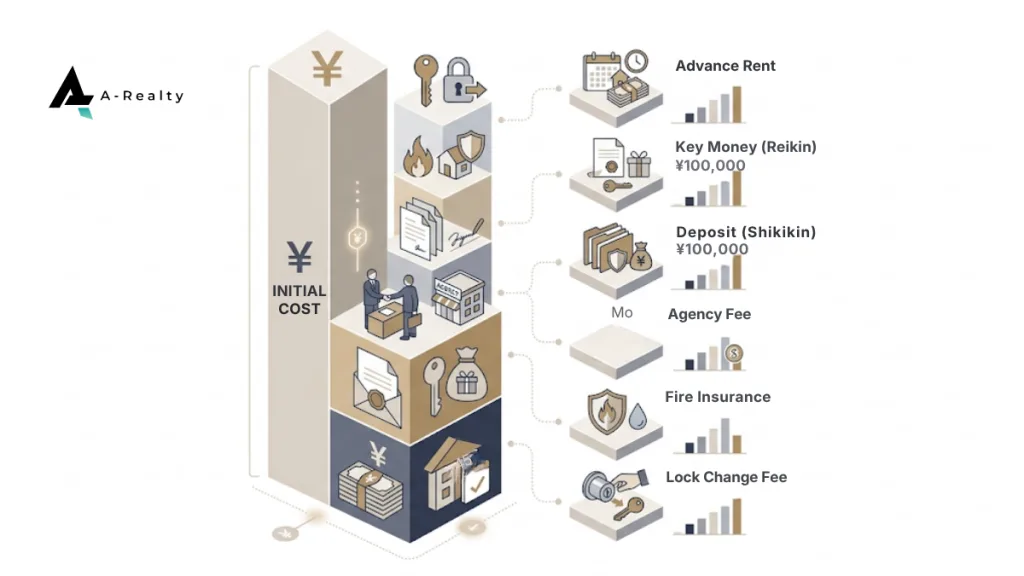
A second surprise is the move-in budget. In a standard lease, the total upfront payment can reach around four to six months of rent once deposit, key money, agency fee, advance rent, fire insurance, and lock-change costs are included. This is one of the main reasons foreign renters feel overwhelmed early in the process.
Contracts and move-out rules are easy to underestimate
Most contracts and important explanations are still handled in Japanese. That creates risk because the hardest parts are often not the rent amount, but the conditions around cancellation, notice period, penalties, and restoration costs when you leave. If you sign too quickly, the real problem often appears later, not at move-in.
What makes a property easier for foreign renters to secure
Not every listing is equally realistic. Some properties are much easier for foreign renters to move on because the screening path is lighter and the setup burden is lower.
Look for foreigner-friendly, guarantor-free conditions first
A property marked as foreigner-friendly or guarantor-not-required is often more realistic than a cheaper listing with stricter conditions. These properties are usually managed by owners or agencies already used to foreign tenants, which means residence card issues, Japanese ability, and contract support are more likely to be handled flexibly.
Multilingual support changes the whole process
The property matters, but the agency matters just as much. A multilingual real estate company can explain the contract more clearly, prepare you for screening, and help you avoid mistakes before they become expensive. This is one reason foreigner friendly apartments tokyo often feel easier to secure when they come through an agency already used to foreign renters.
Flexible contracts, furniture, and internet reduce early stress
If your stay length is unclear, a flexible lease can be more valuable than a slightly better location. Furnished apartments also remove the pressure of buying appliances right after arrival. Internet-ready properties matter for the same reason. Without them, you may need a Japanese bank account, card, and installation wait time before you can even get online.
Apartment hunting tips for foreigners before you start applying
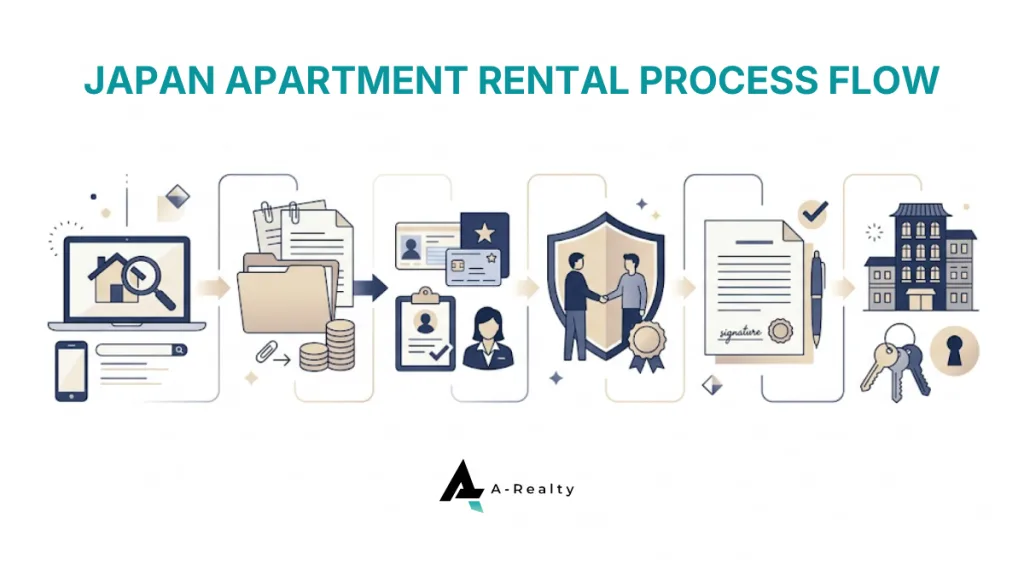
Preparation changes the speed of the whole process. In Japan, a strong application is often less about persuasion and more about completeness.
Prepare your documents early
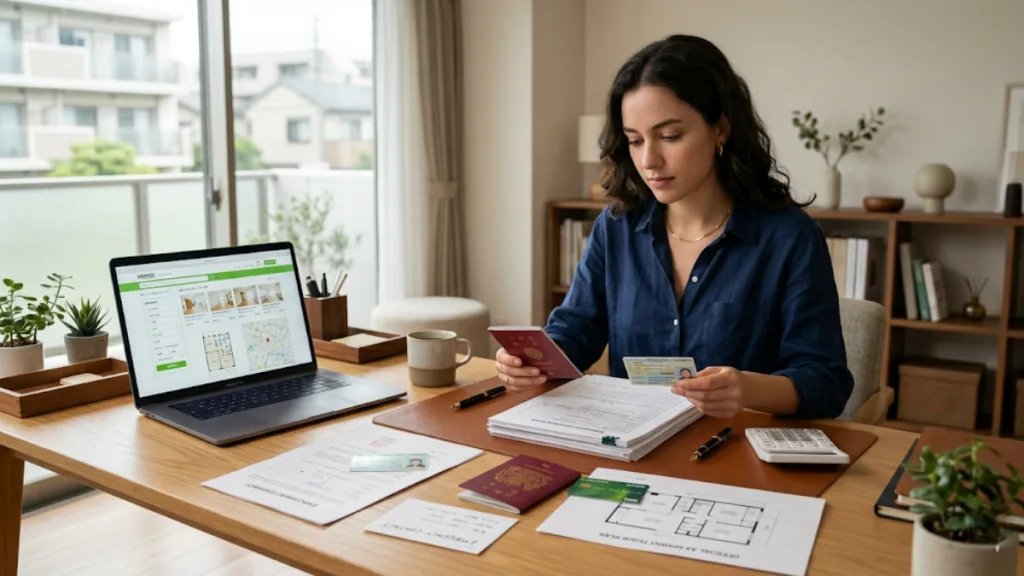
Most renters will need a passport, residence card, and proof of income or enrollment. Workers may be asked for an employment contract, payslips, or a certificate of employment. Students may need enrollment proof, student ID, scholarship evidence, or evidence of family support. If your documents are in another language, translation may also be needed. Missing paperwork can slow the process enough for you to lose the apartment.
Arrange an emergency contact before your search gets serious
Emergency contact details are commonly required. The most practical choice is someone in Japan who can be reached reliably and who can communicate in Japanese if needed. This can be a colleague, manager, professor, school staff member, or trusted friend. The key point is not status. It is reliability and clarity.
Open a Japanese bank account as early as possible
Many leases expect rent to be paid by domestic transfer or auto-debit. That is why opening a Japanese bank account early can make apartment hunting smoother. Some renters also keep several months of rent in the account because it can help show payment stability during screening.
A simple real-life example helps here. An international student arriving for a one-year program may lose time if they search first and open a bank account later. A worker relocating on a company contract usually does better when documents, emergency contact, and banking are ready before viewings begin.
How to search smarter and avoid weak listings
The best search strategy is not to look at everything. It is to rule out unrealistic options early.
Use foreigner-focused portals and multilingual agencies
Start where the filtering is better. Portals or agencies that specialize in foreign renters often surface more realistic listings, including furnished units, guarantor-free properties, and apartments with multilingual support. This is especially useful if you are trying to rent apartment tokyo foreigner style listings without wasting time on apartments that are technically available but practically difficult.
Learn the local rent level before you shortlist
If you do not know the area range, you will struggle to spot a good listing. This is where searches like average salary in japan and average income for japan become useful, not because they tell you what you should earn, but because they help frame what rent level may feel sustainable. A national average is only a benchmark. It is not a personal budget. The more useful rule is to compare rent against your own cash flow, move-in costs, and visa or job stability.
Check the neighborhood, not just the room
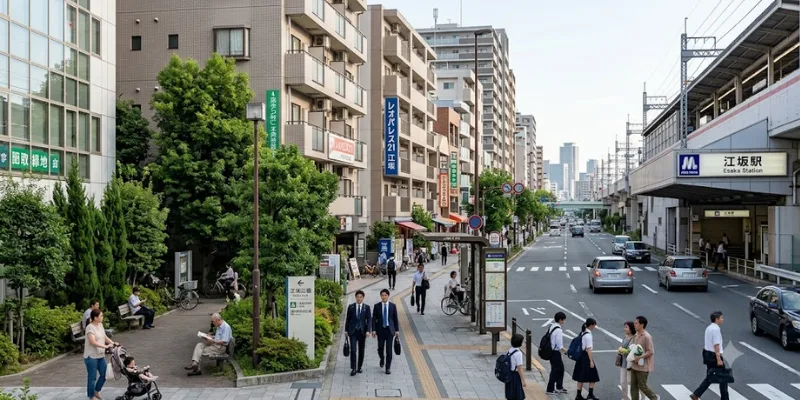
A lower-rent unit loses value quickly if it creates stress every day. Before you get attached, check station access, supermarkets, hospitals, noise level, and the daily route to work or school. If you rely on specific foods or communities, nearby international groceries or familiar restaurants may matter more than a newer building.
Read the contract conditions before you commit emotionally
Before you apply seriously, confirm the notice period, renewal fee, early cancellation penalties, pet rules, guest rules, and restoration policy. Cheap listings often become expensive when one or two contract terms are ignored.
Budgeting for rent: use salary averages as context, not as your plan
Many renters search average salary in japan or average income for japan because they want a simple answer to one question: can I afford this? The problem is that national averages do not reflect your visa type, household size, school support, industry, or move-in burden.
A better framework is this:
| Budget question | Better way to judge it |
| Monthly rent | Compare it to your real monthly income, not a national average |
| Move-in cost | Prepare for multiple months of rent upfront |
| Apartment type | Choose layout after checking what you can pay at move-in |
| Daily living cost | Include commute, groceries, internet, furniture, and utilities |
For example, a foreign professional may comfortably handle a standard lease because income is stable and the stay is long enough to justify setup costs. A six-month researcher or exchange student may find the same lease financially inefficient because so much money is tied up before move-in.
Standard lease vs monthly apartment: which fits your stay better?
If your stay is short or uncertain, a monthly apartment can sometimes solve more problems than a standard lease.
When a standard lease makes more sense
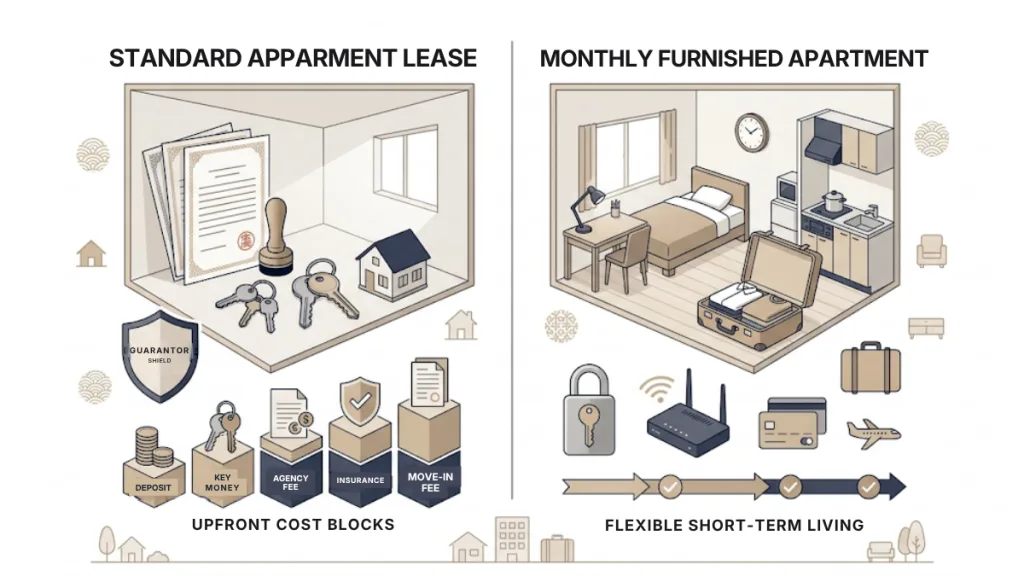
A normal lease usually works better when you plan to stay one to two years or more, want more housing choice, and can absorb the upfront costs. It is also more suitable if you want a wider range of areas and layouts, especially beyond short-term inventory.
When a monthly apartment is the smarter option
If your stay is a few months to under a year, a monthly apartment can remove many of the hardest barriers. These properties often skip deposit, key money, agency fee, and guarantor requirements. They are usually furnished, easier to contract online, and better suited to unclear timelines.
That makes them useful for exchange students, short-term corporate assignees, researchers, working holiday visitors, or anyone who wants to arrive first and commit later. A furnished monthly unit may look expensive in monthly rent, but still save money overall once furniture, setup time, and standard move-in costs are counted.
Common apartment hunting mistakes foreign renters make
- Focusing only on monthly rent. In Japan, upfront cost can be the real budget problem.
- Underestimating the contract. Renters often ask about size and station distance first, but ignore notice period, penalty clauses, or restoration costs.
- Preparing too late. Documents, banking, and emergency contact are not side tasks. They are part of the apartment search itself.
- Choosing the wrong lease type for the stay length. A one-year plan and a three-month plan should not be searched the same way.
How Arealty helps foreigners rent more smoothly in Japan
Arealty helps foreign renters move from browsing to realistic decision-making. That means more than showing listings. It means helping you narrow the market to homes that actually match your visa timeline, document readiness, budget, and move-in plan.
If you are comparing foreigner friendly apartments tokyo, looking for a practical apartment for rent tokyo, or deciding between a standard lease and a more flexible option, Arealty can help you avoid time-wasting listings and focus on properties you can realistically secure.
Need help finding a rental that fits your documents, budget, and stay length?
Arealty helps foreign renters compare listings, understand costs, and shortlist apartments that are practical to secure.
Final checklist: apartment hunting tips for foreigners moving to Japan
Before you search seriously, make sure you can answer these questions clearly:
| Question | Why it matters |
| Do I want a standard lease or a monthly apartment? | This changes the whole search strategy |
| Are my documents ready now? | Delays cost listings |
| Can I cover the real move-in cost, not just rent? | Upfront burden is the main surprise |
| Do I have an emergency contact and bank plan? | These often affect approval speed |
| Have I checked the area, not just the room? | Daily life depends on more than the layout |
The best apartment hunting tips for foreigners are not complicated. Prepare earlier, compare smarter, and choose a lease type that actually matches your stay.
Conclusion
Renting in Japan becomes much easier once you understand where the real friction sits. The hardest parts are usually not the search filters. They are the guarantor issue, the move-in budget, the Japanese paperwork, and the contract rules that are easy to miss at first.
But there are more workable paths than many renters expect. Guarantor-free listings, multilingual agencies, furnished properties, internet-ready homes, and monthly apartments all reduce friction in different ways. If you choose based on your stay length, budget, and setup reality, you are much more likely to find a home that works well from day one.

As a real estate professional with 10 years of living and working in Japan, I write from the intersection of property expertise and lived experience. My perspective is rooted not only in an understanding of the Japanese rental market, but also in the nuances of building a life here as a foreigner, where practical decisions often carry personal meaning.
I see a home as more than a place to stay. It is part of how we move through the city, shape our routines, and create a sense of ease in everyday life. That is why my writing goes beyond surface-level advice, offering guidance that is informed, considered, and attuned to both lifestyle and reality. My goal is to make renting in Japan feel less overwhelming, more intentional, and ultimately more human.