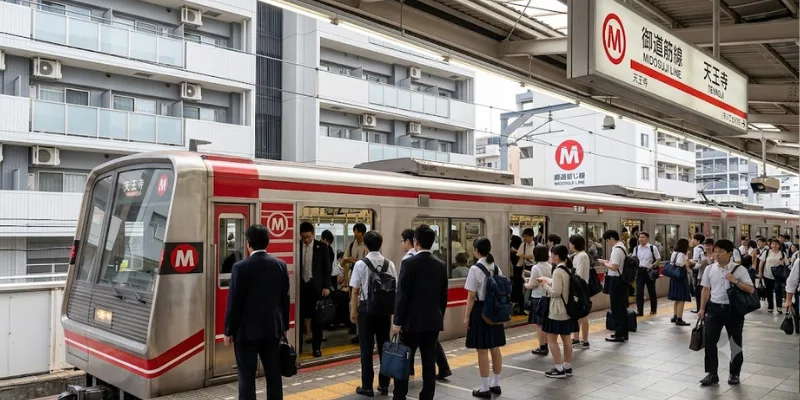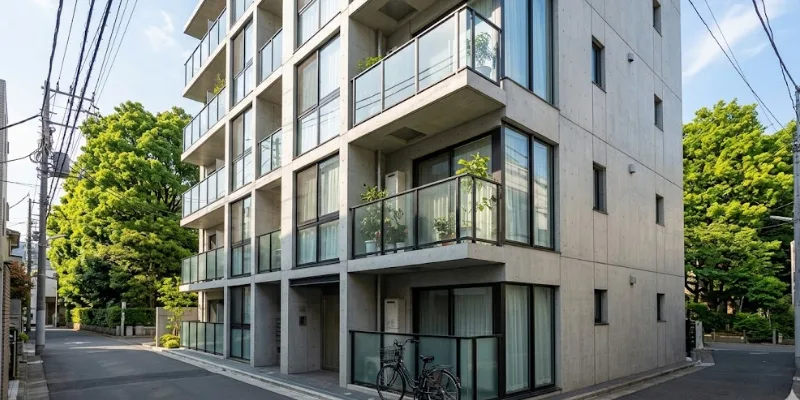

Bunkyo apartments for rent are one of Tokyo’s most consistently overlooked options for foreign renters. The ward sits north-central, adjacent to Shinjuku-ku and Chiyoda-ku, served by three Tokyo Metro lines and the Toei Mita Line. Rents average 18–22% below Shinjuku-ku for comparable units. The gap is name recognition — Bunkyo-ku is not the ward most foreign renters consider first. That makes it worth examining.
This guide covers Bunkyo specifically as a rental destination for foreign residents in 2026. For the ward’s lifestyle character, see the existing Bunkyo city guide. For comparative ward data across all 23 wards, see the average rent in Tokyo guide. Ready to search now? Browse Bunkyo apartments for rent on Arealty.
Why Bunkyo Apartments for Rent Are Undervalued for Foreigners
Three facts about Bunkyo-ku that most foreign renters do not know before starting a Tokyo apartment search:
It has the lowest crime rate of all 23 Tokyo special wards — consistently, across multiple years of Metropolitan Police data. For families with children or renters who prioritise neighbourhood safety, this is a meaningful differentiator.
It is home to the University of Tokyo (Hongo campus) and Tokyo Medical and Dental University, which means the ward has been managing international student and researcher housing for decades. Landlords near Hongo-sanchome station have institutional experience with foreign applicants that many other wards’ landlords lack.
The Oedo and Marunouchi lines run through Bunkyo-ku, giving direct access to Shinjuku, Shibuya, and the central business districts without transfer complexity. Korakuen Station (Marunouchi and Namboku lines) is one of the more useful subway junctions in the city.
Despite all three of these, Bunkyo-ku’s median 1K rent is approximately ¥88,000/month — below Shinjuku (¥100,000), Shibuya (¥115,000), and Minato (¥119,000), and comparable to outer residential wards that lack Bunkyo’s central access.
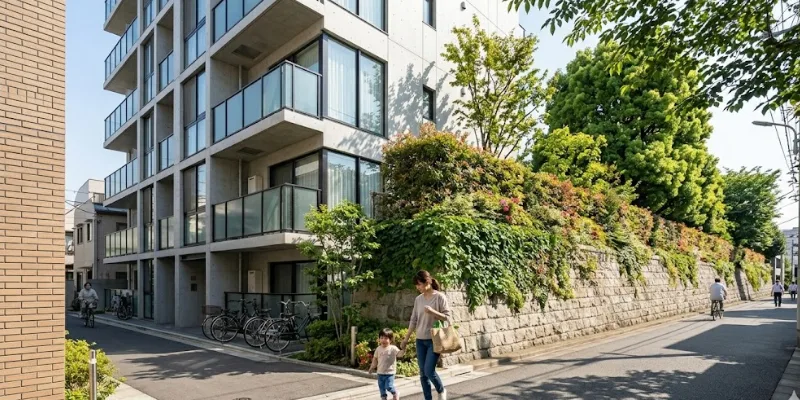
Bunkyo Apartments for Rent: Hongo, Korakuen, Nezu Sub-Areas
Hongo — Academic Core, Practical Infrastructure
Hongo is the area surrounding the University of Tokyo’s main campus and is the most student-oriented part of the ward. Residential streets extend in all directions from Hongo-sanchome Station, with a dense mix of student apartments, local restaurants, and daily convenience infrastructure. 1K units here run ¥82,000–¥105,000/month. The area has strong English-language support from several agencies and property management companies that deal regularly with international researchers and students.
Korakuen — Best Transit Access
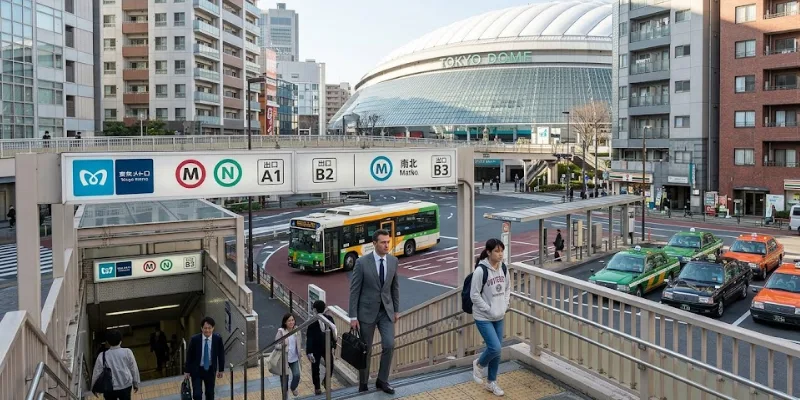
Korakuen and its immediate surroundings offer the best transit connectivity in the ward — Marunouchi Line, Namboku Line, and proximity to JR Suidobashi Station. Tokyo Dome City is adjacent, giving the neighbourhood a slightly more commercial character at street level. Residential streets one to two blocks from the stations are genuinely quiet. 1K units: ¥85,000–¥108,000/month. This sub-area suits foreign renters whose commute goes south or west — Shinjuku via Marunouchi Line is 10 minutes, Shibuya via transfer is around 20 minutes.
Nezu and Yanaka — Traditional Shitamachi Character
Nezu and the adjacent Yanaka area sit at the eastern edge of Bunkyo-ku, bordering Taito-ku. These are among Tokyo’s most genuinely preserved traditional neighbourhoods — low-rise, narrow streets, independent shotengai, temples and shrines integrated into residential blocks. Yanaka Cemetery and Nezu Shrine are local landmarks that give the area strong seasonal character.
Rents here are slightly lower than Hongo: 1K from ¥78,000–¥98,000/month. The sub-area is popular with long-term foreign residents who have moved beyond the “convenient and modern” phase of Tokyo life and want something with more local character.
Kasuga and Hakusan — Quiet Residential Value
Kasuga and Hakusan sit in the western part of Bunkyo-ku, served by the Mita Line and the Marunouchi Line extension. These are quieter, more residential sub-areas than the Hongo core. 1K units: ¥80,000–¥100,000/month. Good park access (Koishikawa Botanical Garden is within walking distance) and a genuinely residential street character.
Bunkyo Apartments for Rent Tokyo: 2026 Rent Data for Foreigners
| Unit type | Hongo/Korakuen | Nezu/Yanaka | Kasuga/Hakusan |
| 1K (18–25 sqm) | ¥82,000–¥108,000 | ¥78,000–¥98,000 | ¥80,000–¥100,000 |
| 1DK (25–35 sqm) | ¥95,000–¥125,000 | ¥88,000–¥115,000 | ¥90,000–¥118,000 |
| 1LDK (35–50 sqm) | ¥118,000–¥158,000 | ¥110,000–¥148,000 | ¥112,000–¥152,000 |
| 2LDK (50–70 sqm) | ¥155,000–¥215,000 | ¥145,000–¥200,000 | ¥148,000–¥205,000 |
Bunkyo-ku 1K median: ¥88,000/month. This sits between the Suginami/Nakano range (¥78,000–¥82,000) and the Shinjuku premium (¥100,000). For the full 23-ward comparison, see the Tokyo rent guide. For units below ¥70,000/month, the cheap apartments Tokyo guide covers outer ward options.
Foreigner Acceptance in Bunkyo
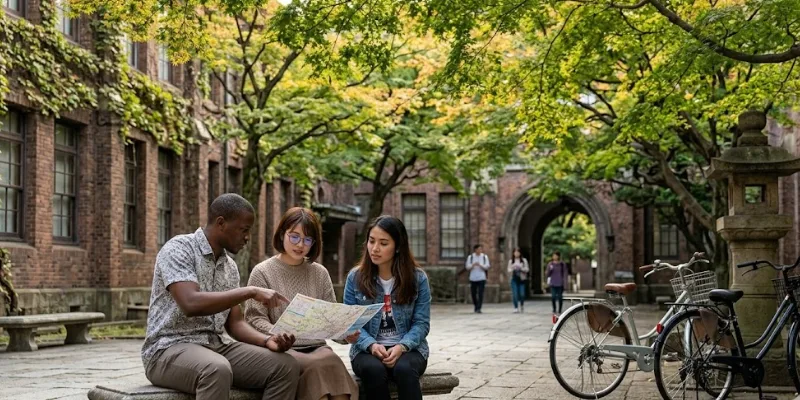
Bunkyo-ku has above-average foreigner acceptance rates for a non-premium ward. The University of Tokyo’s long history of international students and researchers has created a landlord pool — particularly in Hongo and Kasuga — that is genuinely experienced with foreign applicants.
- Work visa / Spouse visa: accepted widely, low friction
- Student visa: strong acceptance in Hongo and Korakuen — these sub-areas have the highest student visa acceptance rate in the ward. Enrollment documentation and parental income guarantee are the key requirements. See the student visa screening guide
- Working Holiday visa: moderate acceptance — better than outer wards, below Shinjuku and Shibuya. The WH rental guide covers Bunkyo-compatible application strategy
- Tourist visa: monthly mansion or short-stay only
The guarantor company used remains the most important variable. Arealty pre-confirms which hoshō gaisha a property uses before listing it to foreign applicants. Browse Bunkyo apartments for rent on Arealty — foreigner acceptance pre-verified.
Commute from Bunkyo
| Destination | From Hongo-sanchome | From Korakuen | Notes |
| Shinjuku | 10 min (Marunouchi Line) | 10 min | Direct |
| Otemachi/Marunouchi | 8 min (Marunouchi Line) | 7 min | Direct, no transfer |
| Shibuya | 18 min (transfer at Shinjuku) | 18 min | Via Marunouchi Line |
| Akihabara | 12 min (Oedo Line to Ueno transfer) | 10 min | Multiple routes |
| Ikebukuro | 12 min (Marunouchi Line) | 12 min | Direct |
| Tokyo Station | 10 min (Marunouchi Line) | 9 min | Direct |
Bunkyo-ku’s Marunouchi Line access is its defining transit advantage — direct service to Shinjuku and Tokyo Station without transfers. For renters whose commute targets either of these hubs, Bunkyo’s commute efficiency matches or exceeds many wards charging significantly higher rents.
The Rental Process for Foreign Renters
The rental process in Bunkyo follows the standard Tokyo sequence. Documents needed: residence card (在留カード), income proof, 2–3 months of bank statements, and guarantor company application.
Move-in costs for a ¥90,000/month Bunkyo apartment:
| Fee | Typical amount |
| Security deposit | ¥90,000–¥180,000 (1–2 months) |
| Agency fee | ¥99,000 incl. tax — Arealty charges zero |
| First month’s rent | ¥90,000 |
| Guarantor fee | ¥30,000–¥50,000 |
| Fire insurance | ¥15,000–¥18,000 |
| Total upfront | ¥324,000–¥437,000 |
Key money appears infrequently in Bunkyo-ku listings — less so than in Shinjuku or Minato. For a full breakdown of what key money is and when it applies, see the Tokyo no key money apartments guide. For the full application process, see the foreigner rental guide.
Who Bunkyo Is Right For
Strong fit for Bunkyo apartments for rent:
- International researchers and academics at the University of Tokyo or associated institutions
- Students at Meiji University (Surugadai campus), Tokyo Medical and Dental, or other Bunkyo institutions
- Foreign professionals commuting to Shinjuku, Otemachi, or Tokyo Station who want sub-Shinjuku rents
- Renters who prioritise safety — lowest crime ward in Tokyo is a genuine differentiator for families
- Long-term foreign residents drawn to the Nezu/Yanaka traditional neighbourhood character
Consider alternatives if:
- Budget is under ¥78,000/month — cheap apartments Tokyo covers outer wards
- Primary access need is Shibuya rather than Shinjuku — Setagaya or Nakano are more efficient
- You want a large expat community and social infrastructure — Minato or Shibuya wards have higher foreign resident concentration
Browse Bunkyo-ku apartments for rent on Arealty — all listings pre-confirmed for foreigner acceptance, zero agency fees, bilingual support.
Further Reading
- Bunkyo city guide — neighbourhood character and lifestyle
- Average apartment rent in Tokyo — full 23-ward comparison
- 1K apartments in Tokyo — ward-by-ward 2026 data
- Student visa Japan — landlord screening explained
- Nakano apartments for rent — comparable ward, Chuo Line
- Renting in Japan as a foreigner — full step-by-step process
- Why apartment listing photos in Japan can differ from the real room

Real estate advisor at Arealty Japan, specialising in helping foreign residents navigate the Tokyo and Osaka rental markets. Lucy has guided hundreds of international renters — from Working Holiday visa holders to corporate relocations — through Japan’s apartment application process. Her writing draws on firsthand experience with landlord screening, guarantor companies, and foreigner-friendly listings across all 23 Tokyo wards and major Kansai cities.