
Finding the ideal home in the world’s most populous metropolitan area is both an exciting adventure and a complex challenge. For those navigating the Japanese real estate market, the terminology can often feel like a cryptic code. Among the most popular choices for couples, small families, or professionals seeking extra space are the 2DK and 2LDK configurations.
While they may look similar on a floor plan, the lifestyle implications and financial requirements of each vary significantly. This guide provides an exhaustive analysis of the difference between 2DK and 2LDK Japan. It includes a detailed rent table across all 23 wards of Tokyo. The guide also covers spatial standards and offers expert advice for international residents.
Decoding the Alphanumeric System: What Do They Mean?
Before diving into the financial data, it is crucial to understand the building blocks of Japanese apartment labeling. The numbers and letters serve as a shorthand for the layout’s functional zones.
The Anatomy of 2DK
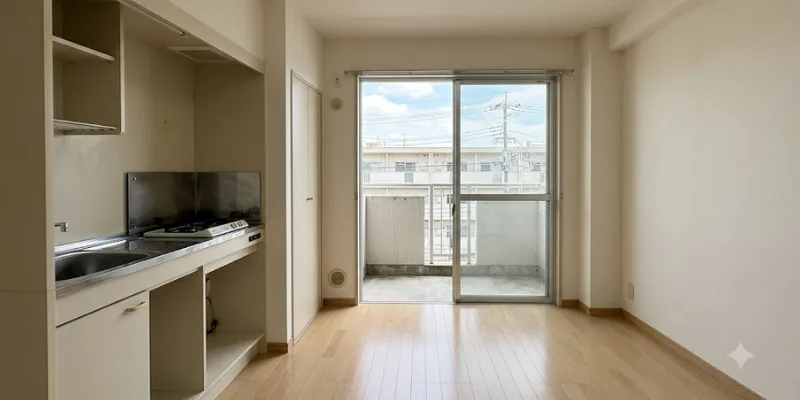
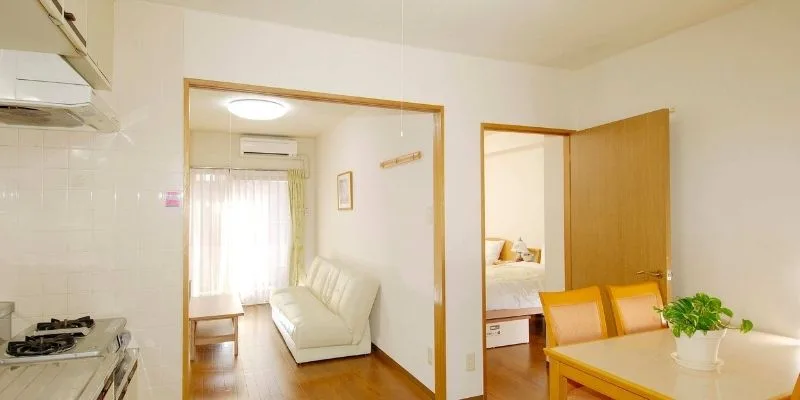
A 2DK apartment consists of two private rooms plus a Dining Kitchen (DK).
- The “2”: Refers to two separate private rooms, which can be used as bedrooms, a study, or a guest room. These rooms often feature different flooring types. One room might be a traditional Japanese room with tatami mats. The other is a Western-style room with wood flooring.
- The “DK”: This is the common area. Historically, the 2DK layout became the gold standard for Japanese urban housing in the 1960s and 70s. It is designed to be a functional space for cooking and eating. However, it lacks the floor area for a dedicated “living room” setup with a large sofa and entertainment center.
The Anatomy of 2LDK
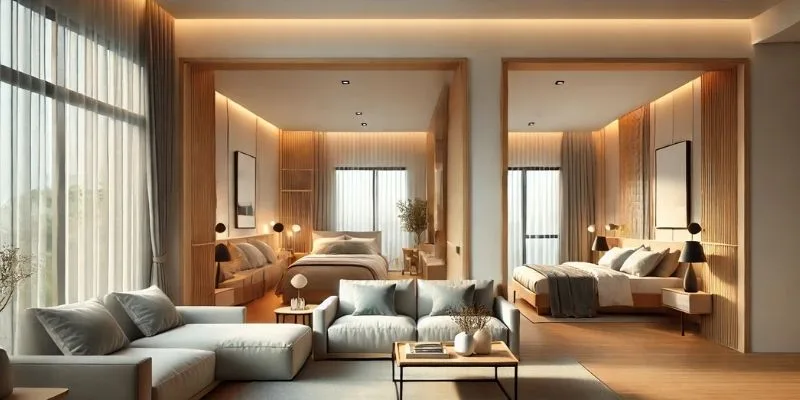
A 2LDK apartment offers two private rooms plus a Living, Dining, and Kitchen (LDK) area.
- The “2”: Similar to the 2DK, you have two private bedrooms. In modern 2LDKs, these are almost exclusively Western-style with hardwood or high-quality laminate flooring.
- The “LDK”: The addition of the “L” (Living) signifies a much larger common space. This area is the “heart of the home,” designed for relaxation, hosting guests, and multifaceted family life. It is the modern standard for comfort in Japan.
Spatial Standards: The “Jo” Measurement
In Japan, floor space is often measured in Jo (tatami mats). One standard Jo is approximately 1.62m^2. The Real Estate Fair Trade Council provides strict guidelines on how these rooms can be labeled based on the number of bedrooms:
- For a 2-bedroom unit to be called a 2DK: The common area must be at least 6 Jo. It should not exceed 10 Jo (≈ 9,72–16,2 m²).
- For a 2-bedroom unit to be called a 2LDK: The common area must be at least 10 Jo. This means it should be equal to or more than (≥ 16,2 m²).
While a difference of 1 or 2 Jo might seem negligible, it is substantial in Japanese urban living. It marks the difference between having a cramped dining table and having a spacious lounge area.
2025 Rent Comparison: 2DK vs. 2LDK Across Tokyo’s 23 Wards
When looking for an apartment for rent Japan, location is the primary driver of cost. The following table shows the average monthly rent for 2DK and 2LDK units in Tokyo’s 23 wards. This includes management fees and is accurate as of early 2025.
Note: Prices are estimates based on market trends for buildings less than 20 years old. Prices can fluctuate based on proximity to major stations like Shinjuku or Shibuya.
| Ward (Ku) | Average 2DK Rent (JPY) | Average 2LDK Rent (JPY) |
| Minato | ¥347,800 | ¥564,500 |
| Chiyoda | ¥256,200 | ¥430,000 |
| Shibuya | ¥250,300 | ¥549,300 |
| Chuo | ¥210,300 | ¥349,700 |
| Meguro | ¥181,300 | ¥289,300 |
| Shinjuku | ¥183,800 | ¥285,800 |
| Bunkyo | ¥140,900 | ¥225,800 |
| Shinagawa | ¥155,700 | ¥253,900 |
| Setagaya | ¥139,500 | ¥231,400 |
| Toshima | ¥140,600 | ¥215,800 |
| Taito | ¥146,600 | ¥214,300 |
| Koto | ¥109,100 | ¥173,000 |
| Nakano | ¥132,100 | ¥212,100 |
| Suginami | ¥110,300 | ¥226,200 |
| Sumida | ¥115,200 | ¥190,000 |
| Ota | ¥120,600 | ¥191,800 |
| Kita | ¥111,000 | ¥174,000 |
| Arakawa | ¥110,600 | ¥127,900 |
| Itabashi | ¥100,700 | ¥152,700 |
| Nerima | ¥99,000 | ¥158,300 |
| Edogawa | ¥114,900 | ¥193,400 |
| Adachi | ¥100,200 | ¥128,000 |
| Katsushika | ¥75,400 | ¥120,900 |
Analysis of the Rent Data
The japan tokyo apartment rent market is tiered. The “Central Five” wards (Minato, Chiyoda, Shibuya, Chuo, Shinjuku) command a massive premium for 2LDK units. These units are often found in “High-tower Mansions”. They come with concierge services and gym facilities.
In contrast, the 2DK units in these areas are often older “Apato” (wood-frame) buildings. This is why the price gap in Minato is nearly double. If you move toward the “Shitamachi” (low-lying) areas like Adachi or Katsushika, the 2LDK becomes highly affordable. It often costs less than a 2DK in the city center.
Privacy and the “Madori” (Room Arrangement)
In a 2-bedroom setup, privacy is crucial. This is true especially if you are sharing the space with a roommate. It is also important if you have growing children.
The Problem with “Connected” 2DKs
Many older 2DK designs feature rooms that are “connected” in a line. To get to the balcony or the second bedroom, you must walk through the first bedroom. In Japanese, this is sometimes called Tsunagari. This layout is often frustrating for roommates because it effectively turns one bedroom into a hallway.
The “Furikuri” (Independent) Layout
Modern 2LDKs typically have an independent layout. Each bedroom has its own door leading to the LDK or a small hallway. This ensures that even in a smaller apartment, residents can maintain their personal boundaries and privacy.
The Hidden Costs of Renting in Tokyo
When calculating your budget based on the difference between 2DK and 2LDK Japan, consider the initial move-in costs. These costs typically range from 4 to 6 months of rent.
- Shikikin (Security Deposit): Usually 1 month’s rent. This is used for repairs when you move out.
- Reikin (Key Money): A non-refundable “gift” to the landlord, usually 1 month’s rent. This is more common in popular 2LDK units than in older 2DKs.
- Chukai Tesuryo (Agency Fee): Standardly 1 month’s rent plus tax.
- Hoken (Insurance): Fire and earthquake insurance, typically ¥20,000 for 2 years.
- Guarantor Company Fee: Most foreigners do not have a Japanese relative to act as a guarantor. Therefore, you pay a company to fulfill this role. This costs 50% to 100% of one month’s rent.
Pro-Tip: Older 2DK apartments in wards like Nerima or Edogawa are more likely to offer “Zero-Zero” deals (No Shikikin, No Reikin). These deals attract tenants. In contrast, 2LDKs in Shibuya rarely offer such discounts.
Lifestyle Compatibility: Which Should You Choose?
The decision ultimately depends on your lifestyle priorities.
The Case for the 2DK
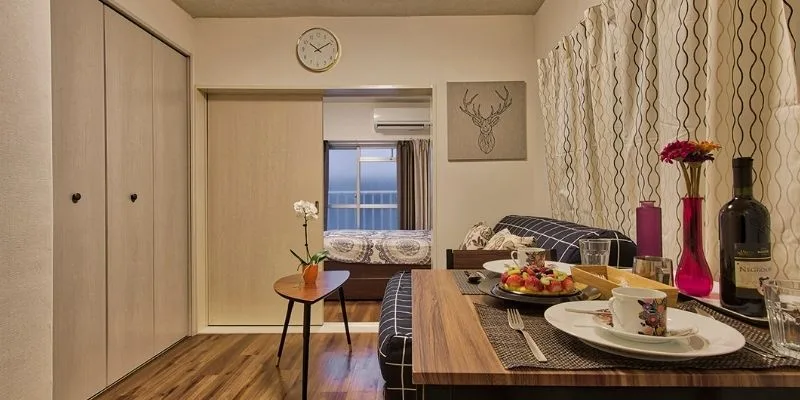
The 2DK is the “Smart Saver’s” choice.
- Who it’s for: Couples who spend most of their time working or exploring the city. They only need a functional space to sleep and eat.
- Primary Advantage: Location. You can afford to live in a premium ward like Minato or Meguro. A 2DK budget would only get you a 1K (studio) in a 2LDK building.
The Case for the 2LDK
The 2LDK is the “Sanctuary” choice.
- Who it’s for: Families with a child. Remote workers who need a distinct office space. Those who enjoy “Home Parties” and cooking.
- Primary Advantage: Quality of life. The large living area allows for a comfortable sofa. There is room for a large TV. It provides a sense of openness that is rare in Japanese cities.
Navigating the Market with AREALTY
As an international resident, renting an apartment for rent Japan involves navigating unique hurdles. These include language barriers and strict landlord requirements. AREALTY specializes in bridging this gap.
We provide a curated selection of both 2DK and 2LDK properties across all 23 wards. Our bilingual experts help you understand the fine print of your lease. They negotiate initial costs. They also ensure that the building’s “Management Rules” (such as pet policies or trash sorting) are clearly explained. Whether you are looking for a budget-friendly 2DK in Adachi, AREALTY is your trusted partner. If you are in the market for a luxury 2LDK in Roppongi, AREALTY is your trusted partner.
Detailed Comparison: Prime Urban Shinjuku Ochiai (2DK) vs. PROUD FLAT Mitsukoshi-mae East (2LDK)
Based on actual data from AREALTY‘s listings, the following table compares two specific properties to illustrate the real-world differences between 2DK and 2LDK configurations:
| Feature | Prime Urban Shinjuku Ochiai – 102 (2DK) | PROUD FLAT Mitsukoshi-mae East – 1002 (2LDK) |
| Layout | 2DK (2 Bedrooms + Dining Kitchen) | 2LDK (2 Bedrooms + Living/Dining/Kitchen) |
| Total Monthly Fee | ¥ 179,000 | ¥ 277.000 |
| Rent | ¥ 167,000 | ¥ 260,000 |
| Maintenance Fee | ¥ 10,000 | ¥ 15,000 |
| Size | 45.94 m^2 | 40.01 m^2 |
| Year Built | 1995 | 2025 (New Construction) |
| Floor Position | 1/5 | 10/10 (Top Floor) |
| Est. Initial Cost | ¥ 836,500~ | ¥ 973,000~ |
| Key Features | Larger floor space, cost-effective monthly rate. | Newly built, pet allowed, high-floor positioning. |
Although the PROUD FLAT (2LDK) has a slightly smaller floor area (40.01 m^2) compared to the Prime Urban (45.94 m^2)), the monthly rent is nearly ¥100,000 higher. This clearly reflects current market trends. Tenants are willing to pay a premium for newly constructed properties (2025). They also prefer high-floor positioning and an LDK space optimized for a modern lifestyle. In contrast, the 2DK in Shinjuku offers more actual living space at a more reasonable cost. It is ideal for those who prioritize the privacy of two spacious, separate bedrooms.
Would you like AREALTY to arrange a physical viewing? We can offer a detailed consultation. This will show you how to pay your initial move-in costs. Payment can be made via credit card for these two properties.
Final Checklist for Your Search
Before signing a lease for your apartments in Tokyo Japan, ensure you have checked the following:
- Sunlight (Nissho): In Japan, south-facing (Minami-muki) units are the most expensive. They provide the best natural light. They also help prevent mold in the humid summers.
- Walking Distance: Anything over a 10-minute walk from the station will significantly drop the rent. A 12-minute walk 2LDK might be the same price as an 8-minute walk 2DK.
- Utility Type: Check if the building uses City Gas (Toshi Gas) or Propane (LP Gas). Propane is significantly more expensive.
- The “Trash” Rules: Some modern 2LDK buildings have 24-hour trash rooms. In older 2DKs, you may have to wait for specific days to put your trash on the curb.
Conclusion
The difference between 2DK and 2LDK Japan is a reflection of Japan’s architectural evolution. The 2DK represents the efficiency of the past, offering a pathway to live in prestigious areas at a lower cost. The 2LDK represents the aspiration of the present, prioritizing comfort, technology, and social space.
By using the rent table provided, you can now narrow down your search by ward and budget. Remember that in the competitive Tokyo market, the best properties move fast. Having your documents (Passport, Residence Card, Employment Contract) ready is key to securing your preferred unit.
Would you like AREALTY to prepare a personalized list of 2DK and 2LDK properties? We can tailor this list to match your specific budget and preferred train line.

Real estate advisor at Arealty Japan, specialising in helping foreign residents navigate the Tokyo and Osaka rental markets. Lucy has guided hundreds of international renters — from Working Holiday visa holders to corporate relocations — through Japan’s apartment application process. Her writing draws on firsthand experience with landlord screening, guarantor companies, and foreigner-friendly listings across all 23 Tokyo wards and major Kansai cities.