
Relocating to a new home is a significant life milestone that requires meticulous organization, especially when navigating the administrative landscape of a foreign country. Completing your Post-move-in procedures promptly ensures that your transition into apartments in Japan is seamless, legal, and stress-free. In Japan, the process of changing your address involves more than just updating a delivery app; it is a structured legal requirement involving municipal offices, utility providers, and financial institutions.
By following a professional roadmap, you can secure your residency status and ensure all essential services are active from the moment you step into your new home. This guide provides an exhaustive breakdown of every step required to settle into your apartment for rent Japan with total confidence and efficiency.
Statutory Municipal Requirements and Legal Notifications
The most critical step in your Post-move-in procedures is the formal registration of your new address at the local ward or city office (Kuyakusho or Shiyakusho). This is a legal mandate under the Basic Resident Registration Act, and failure to comply within the stipulated timeframe can result in administrative fines or complications with your visa status.
Notification of Moving-in (Tennyu-todoke)
If you have moved from a different city or ward to an apartment for rent Japan, you must submit a “Moving-in Notification” within 14 days of your move-in date. This process officially records your residence in the new municipality, allowing you to access local services and receive official tax or pension documents.
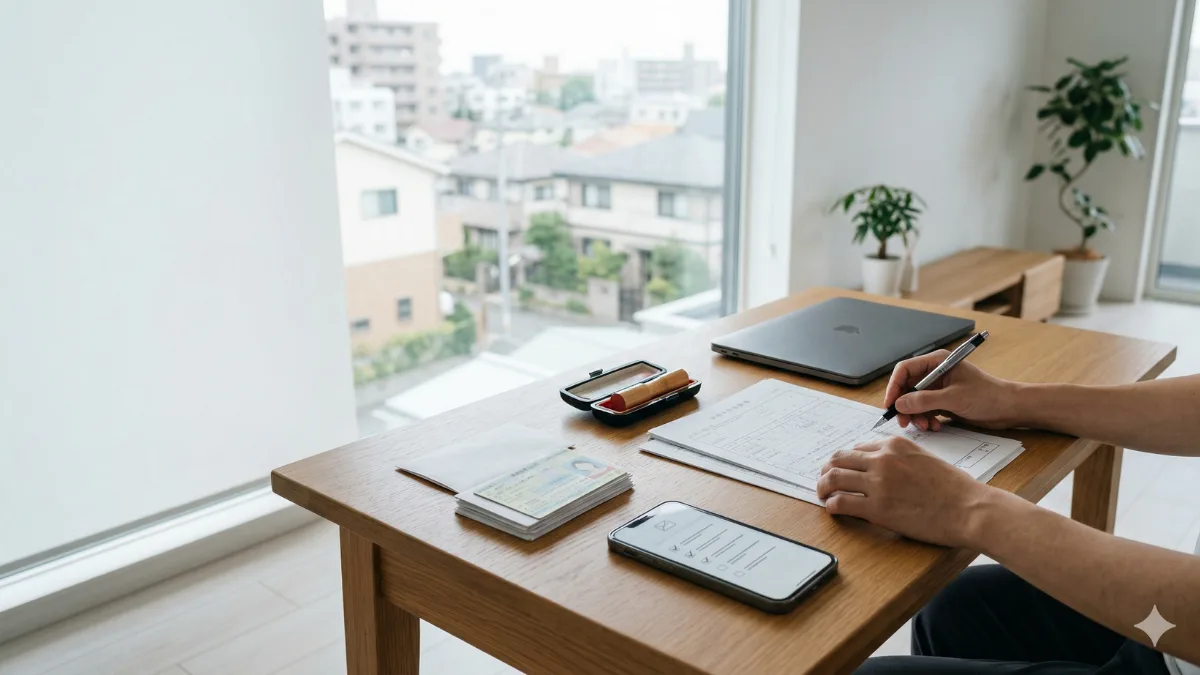
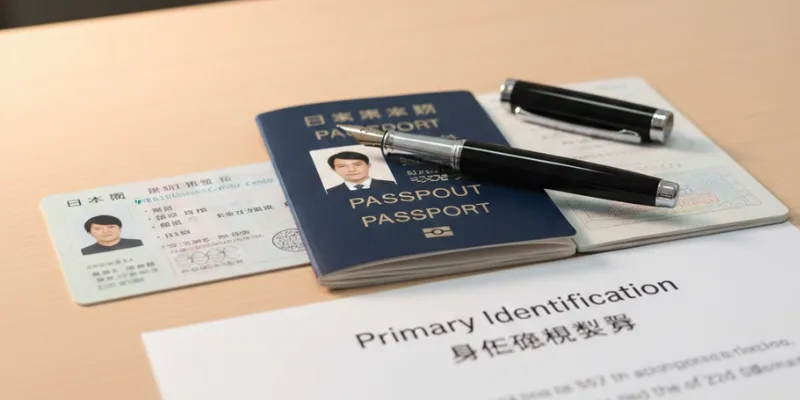
You must bring your Residence Card (Zairyu Card), your passport, and the “Moving-out Certificate” (Tenshutsu Shomeisho) obtained from your previous municipality. If you are moving within the same ward, you will instead file a “Change of Address Notice” (Tenkyo-todoke). These documents are essential for maintaining a valid legal status in the country. For the full step-by-step breakdown — including the two-step process when moving to a different city or ward, exact fees, and penalties for missing the 14-day deadline — see our complete guide to registering your address in Japan.
National Health Insurance and Pension Updates
Upon registering your address, you must also update your National Health Insurance (Kokumin Kenko Hoken) and National Pension records if you are not covered by an employer’s social insurance. This ensures that your medical coverage remains active and that your premium invoices are sent to the correct location.
For residents living in apartments in Tokyo Japan, the ward office typically handles these updates at the same counter as the residency registration. It is vital to carry your current insurance card and pension book during this visit to prevent multiple trips to the office. Consistent coverage is vital for your peace of mind and financial security.
Individual Number (My Number) Card Updates
The “My Number” system is integral to taxation and social security in Japan. When you change your address, you must bring your My Number Card (or the paper notification card) to the ward office to have the new address printed on the back. This update is necessary for various administrative tasks, such as filing taxes or applying for government subsidies.
Mandatory Documents for Ward Office Visit:
- Residence Card (Zairyu Card): The primary identification for all foreign residents.
- Moving-out Certificate (Tenshutsu Shomeisho): The paper issued by your previous municipality.
- My Number Card: Necessary for updating your social security and tax profile.

Activating Essential Utilities and Infrastructure
Ensuring that your living environment is functional depends on the successful activation of utilities. Unlike some countries where utilities may remain active between tenants, Japan often requires explicit “start” requests to avoid service interruptions.
Electricity and Water Services
Most utility companies allow you to schedule the start of service online or via telephone several days before your move. In many apartments in Japan, the electricity breaker might be turned off upon arrival; you simply need to flip the switches to the “on” position once you have registered your start date. Water service is usually managed by the municipal waterworks bureau and can be activated with a simple phone call or online form.
Gas Service and Safety Inspections
Unlike electricity, gas service requires an in-person appointment for safety reasons. A representative from the gas company must visit your japan tokyo apartment rent to perform a safety check and ignite the pilot light for your stove and water heater.
You should schedule this appointment at least one week in advance, particularly during the peak moving seasons of March and April. You must be present at the apartment during the appointment window to allow the technician entry and to sign the safety confirmation documents. Without this appointment, you will not have access to hot water for showers or cooking.
Internet and Connectivity Solutions
Confirming your internet setup is a priority for modern professionals and students. You must verify with your property management company whether your building provides a “mansion-type” fiber optic line or if you need to arrange a private installation.
If the building is “Internet Ready,” you may only need to sign a contract with a Provider (ISP). However, if construction is required, wait times can range from two to six weeks. For those renting apartments in Tokyo Japan, high-speed options like Nuro Hikari or NTT Flets are common, but they require early application to avoid a “blackout” period of connectivity.
Financial and Personal Documentation Updates
Your Post-move-in procedures extend to the private sector, where your address serves as the primary identifier for security and billing. Maintaining an outdated address can lead to missed credit card statements, lost bank cards, or the suspension of mobile services.
Banking and Credit Card Institutions
You are required to update your address with every financial institution where you hold an account. Banks in Japan are strict regarding “Know Your Customer” (KYC) regulations; if mail sent to you is returned to the bank, they may temporarily freeze your account for security purposes to prevent identity theft.
Most major banks allow address changes via their mobile apps or online banking portals, provided you have your updated Residence Card with the new address printed on the back. This applies to all apartments in Japan, whether you are in a small regional town or a central urban hub.
Mobile Phone and Subscription Services
Update your billing address with your mobile carrier (e.g., Docomo, SoftBank, or AU) and any online retailers or subscription services you use frequently. This ensures that physical goods and legal notices reach you without delay.
Detailed Examples of Private Entities to Notify:
- Financial Institutions: MUFG Bank, Mizuho Bank, Sumitomo Mitsui Banking Corporation (SMBC).
- Credit Card Issuers: Rakuten Card, American Express Japan, JCB Card.
- Service Subscriptions: Amazon Prime Japan, Netflix, gym memberships like Anytime Fitness.
Mail Forwarding and Logistics
The Japan Post “Tenkyo-todoke” (Relocation Office) is a vital service that redirects mail from your old address to your new apartment for rent Japan for a period of one year, free of charge.
Setting Up the Postal Forwarding Service
You can apply for this service at any local post office or through the Japan Post official website (e-Tenkyo). The process typically takes 3 to 7 business days to become active, so it is highly recommended to submit the request before you officially vacate your old residence.
This service acts as a safety net for any minor Post-move-in procedures you might have overlooked, ensuring that important correspondence—such as tax refunds, insurance notifications, or medical bills—is not lost or delivered to the new occupant of your previous home.
International Shipping Considerations
If you are expecting packages from overseas, ensure you update your address on global platforms. Since international shipping to apartments in Tokyo Japan often requires a signature or specific delivery instructions, having the correct address registered with customs-clearing couriers like DHL or FedEx is essential to avoid lengthy delays or return-to-sender scenarios.
AREALTY: Your Expert Partner for Apartments in Japan
Navigating the complexities of the Japanese real estate market requires a partner who understands the specific needs of international residents. AREALTY stands out as a premier agency specializing in high-quality apartments in Japan, offering tailored solutions for those seeking a home in the heart of the city.
Whether you are looking for a japan tokyo apartment rent or a long-term family residence, AREALTY provides comprehensive support that goes beyond simply signing a lease. Their team of professionals assists with the nuances of the Japanese rental system, ensuring that you understand every clause of your contract and every step of your Post-move-in procedures.
For those specifically targeting apartments in Tokyo Japan, AREALTY offers a curated portfolio of properties in desirable neighborhoods like Minato, Shibuya, and Shinjuku. Their expertise helps bridge the cultural and linguistic gap, making the process of finding and settling into a new home efficient and transparent.
Would you like to explore the latest listings for premium apartments in Tokyo? Contact AREALTY today to begin your personalized search for the perfect urban home and experience a seamless transition into Japanese life.
Living Essentials: Lighting, Privacy, and Furniture
A common surprise for those new to apartments in Japan is that many rental units do not come equipped with ceiling lights, window treatments, or major appliances. Addressing these needs is a functional part of your Post-move-in procedures that affects your immediate comfort and safety.
Installing Lighting Fixtures
Unless a property is advertised as “fully furnished,” you will likely find bare “shakedown” sockets on the ceilings. You should purchase LED ceiling lights from electronics retailers before your move-in date. Most modern Japanese apartments use a standardized “Easy-to-Mount” hook system, allowing you to install these fixtures yourself without the need for an electrician.
Securing Privacy with Curtains
Privacy is paramount in densely populated areas. You must measure your windows during the final viewing of your japan tokyo apartment rent to ensure you buy the correct size. Curtains in Japan often come in standard lengths, but many modern apartments in Tokyo Japan feature large floor-to-ceiling windows that require custom sizes. Having these ready on day one prevents your interior from being visible to neighbors at night.
Appliance Procurement and Installation
If your apartment does not include a refrigerator, washing machine, or microwave, you will need to coordinate their delivery. When purchasing from major retailers, you can usually schedule a delivery and installation service. It is critical to measure the “washing machine pan” (防水パン) in your new home to ensure the appliance fits perfectly.
Neighborhood Integration and Local Rules
Successful residency in apartments in Japan involves adhering to local community standards, particularly regarding waste management and noise levels. These rules are often stricter than in other countries and vary significantly by municipality.
Mastering Garbage Disposal Rules
Each ward has a specific calendar for combustible, non-combustible, and recyclable waste. You must obtain the “Garbage Collection Guide” from your ward office or building manager. Incorrectly sorted trash will not be collected and can lead to friction with your neighbors or the building management.
For residents of apartments in Tokyo Japan, many modern buildings offer a 24-hour trash room, which simplifies this process significantly. However, you must still sort your items correctly into categories such as PET bottles, glass, and cardboard to comply with local environmental regulations.
Registering Your Bicycle or Vehicle
If you own a bicycle, it must be registered for “Anti-Theft Registration” (Bohan Toroku) at a local bicycle shop. If you have moved and brought your bike to a new apartment for rent Japan, you should update your registered address. Similarly, if you own a car, you must secure a “Parking Space Certificate” (Shako Shomeisho) from the local police station to update your vehicle registration.
Noise Etiquette and Resident Relations
Japanese apartments often have thinner walls than those in Western countries. It is a standard courtesy to keep noise levels low, especially after 10:00 PM. In many apartments in Japan, it is also customary to provide a small “greeting gift” (aisatsu) to immediate neighbors, although this tradition is becoming less common in large urban centers like Tokyo.
Safety and Emergency Preparedness
Japan is a country prone to natural disasters, such as earthquakes and typhoons. Part of your Post-move-in procedures should include familiarizing yourself with local safety protocols and emergency exits within your building.
Identifying Evacuation Sites
Your ward office provides maps detailing the nearest evacuation sites, such as local schools or parks. You should locate these sites immediately after moving into your apartments in Tokyo Japan. Knowing the quickest route to safety is a fundamental responsibility for every resident.
Securing Furniture and Emergency Kits
To prevent injury during an earthquake, it is advisable to secure tall furniture to the walls using tension rods or adhesive pads. You should also prepare an emergency “go-bag” containing essential supplies.
Essential Items for a Home Emergency Kit:
- Water and Non-perishable Food: A 3-day supply for each member of the household.
- Portable Radio and Flashlight: With extra batteries to stay informed during power outages.
- First Aid Kit and Medications: Including copies of prescriptions and basic medical supplies.
Comprehensive Checklist of Post-Move-In Procedures
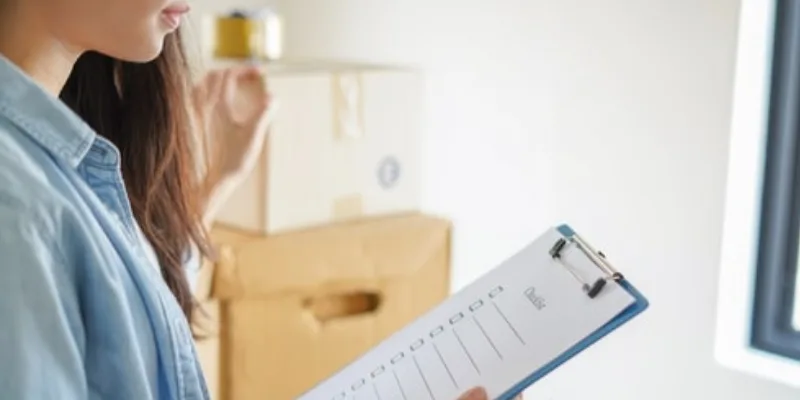
To ensure nothing is missed, refer to this professional checklist for your first 14 days in your new home. Methodical execution of these tasks will guarantee a stable start to your residency.
| Timeline | Action Item | Responsibility |
| Day 0 | Initial walkthrough and damage photos | Tenant |
| Day 1 | Activate electricity, water, and gas | Utility Providers |
| Day 1-3 | Register address at Ward Office (Tennyu-todoke) | Municipal Government |
| Day 1-3 | Update Health Insurance and Pension | Municipal Government |
| Day 1-5 | Update Bank and Credit Card addresses | Financial Institutions |
| Day 1-7 | Install lighting and curtains | Tenant |
| Day 1-10 | Set up Internet and Wi-Fi | ISP Provider |
| Day 1-14 | Notify Employer or School of new address | HR/Admin |
| Day 1-14 | Update Amazon/Rakuten shipping addresses | Online Retailers |
FREQUENTLY ASKED QUESTIONS
You have 14 days from your move-in date to file your Ten’nyū Todoke (or Tenkyo Todoke, if moving within the same ward) at your local Shiyakusho or Kuyakusho. This is the same legal deadline that governs the rest of your post-move-in procedures — health insurance, pension, and My Number updates are typically handled at the same visit. For the full legal detail, including fees and penalties for missing the deadline, see our complete guide to registering your address in Japan.
Yes. Update your billing address with your mobile carrier (Docomo, SoftBank, AU, or an MVNO like IIJmio) as soon as your registration is complete — most carriers require a registered Japanese address on file, and outdated billing details can delay service or renewal. The same applies to any subscription services tied to a physical address, such as Amazon Prime Japan deliveries.
Skipping gas activation means no hot water until you reschedule a technician visit, which can take another week during peak moving season. Skipping a bank address update carries more risk: if mail sent to your old address is returned, Japanese banks may temporarily freeze the account under KYC rules until you visit a branch in person to confirm your identity. None of these steps are optional in practice, even though only the municipal registration is a legal requirement.
Conclusion
Settling into apartments in Japan is a rewarding experience that marks the beginning of a new chapter. While the administrative burden of Post-move-in procedures may feel overwhelming at first, these steps are the foundation of a functional and legal life in Japanese society. By taking a proactive approach to your municipal registrations, utility setups, and neighborhood integration, you transition from being a visitor to a respected member of the local community.
Whether you are enjoying the vibrant energy of a japan tokyo apartment rent or the quiet charm of a residential suburb, being organized allows you to focus on what truly matters: exploring your new surroundings, advancing your career, and building lasting memories in the Land of the Rising Sun.

Real estate advisor at Arealty Japan, specialising in helping foreign residents navigate the Tokyo and Osaka rental markets. Lucy has guided hundreds of international renters — from Working Holiday visa holders to corporate relocations — through Japan’s apartment application process. Her writing draws on firsthand experience with landlord screening, guarantor companies, and foreigner-friendly listings across all 23 Tokyo wards and major Kansai cities.