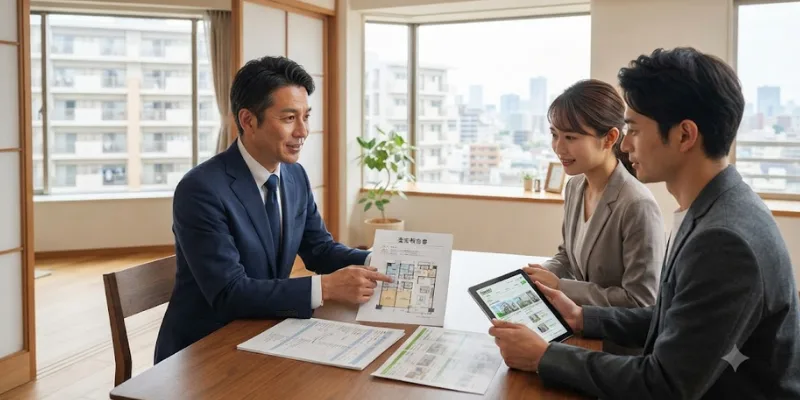

To price your home for sale in Japan, start with a real estate agent’s comparison-based market assessment (査定, satei). Don’t rely on an online estimate or your own sense of what the property should be worth. Japan’s property market runs almost entirely through licensed agents — direct owner-to-buyer sales stay rare. Getting an accurate assessment from someone actively working your local market matters more here than in many other countries.
This guide covers the three ways sellers price a home for sale in Japan, the specific factors that move your number up or down, and a practical pricing strategy for 2026’s market conditions. For context on how Japanese property values get calculated generally, see our guide to how to price a second-hand house in Japan and our overview of Japan’s average house price. For official guidance on property transaction disclosure requirements, see MLIT’s real estate transaction resources.
The three ways to price your home for sale in Japan
1. Comparison method (比準価格, hijun kakaku). This approach compares your property against recently sold, similar properties in the same area. It adjusts for differences in size, condition, age, and exact location. Most real estate agents use this method for a standard listing assessment. It’s the most reliable approach for typical residential apartments and houses.
2. Income method (収益価格, shūeki kakaku). This method sees primary use for investment properties. It calculates value based on expected rental income, discounted for present value: appraised value equals net operating income divided by the capitalization rate. If you’re selling a property currently rented out to tenants, expect your agent to factor this in alongside the comparison method.
3. Cost method. This approach estimates what it would cost to rebuild the property from scratch today, minus depreciation. It sees more use for land valuation and unique properties than for standard resale apartments. Comparable sales data usually gives a more market-accurate number for typical homes.
Comps: the practical starting point
A comparative market analysis gives the most concrete starting point for pricing your home for sale in Japan. Look at recent sales of similar properties in your building or immediate area. Real estate portals like SUUMO, Homes.co.jp, and AtHome let you research comparable listings yourself before your agent’s formal assessment arrives. This helps you sanity-check their number rather than accepting it blindly.
For condominiums, comps within the same building carry particular weight. Unit-to-unit variation in a single building comes down mostly to floor level, orientation, and layout. This makes same-building sales the closest thing to a true apples-to-apples comparison available in the Japanese market.
What moves your price up or down
Several factors shift a Japanese property’s assessed value beyond the basic comparison:
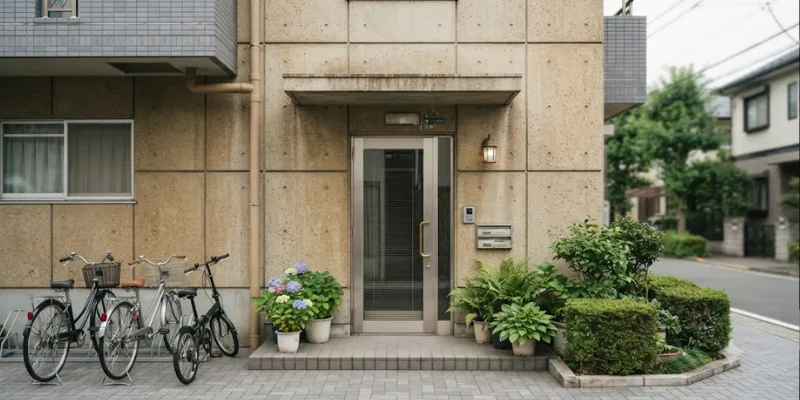
- Building age and repair history. Unlike many Western markets, Japanese buyers weigh a building’s maintenance and repair history heavily. A well-maintained older building with a documented history of completed major repairs — roof work, exterior repainting, plumbing upgrades — sells for meaningfully more than a comparable building with a neglected maintenance record. If you’re selling a unit in a building that recently completed major repair work, highlight this specifically. Agents report sale prices often run higher immediately following documented building repairs.
- Land vs. building value split. Japanese property valuation splits land and building value separately. Unlike the building, land value tends to hold or appreciate over time rather than depreciate. Central, well-located land carries a disproportionate share of your property’s total assessed value, particularly for older buildings where the structure itself has depreciated close to zero on paper.
- Estimated renovation needs. Buyers of older properties routinely factor in the cost of bringing a unit up to modern standards. If it would cost a buyer roughly ¥3 million to make your property fully livable by current standards, expect offers to reflect that deduction. Price accordingly, or invest in targeted light renovations before listing to increase perceived value.
- Repair reserve fund health, for condominium sales specifically. A building with a well-funded repair reserve and no looming special assessments reads as lower risk to buyers than one with underfunded reserves. This affects buyer confidence and willingness to pay your asking price, not just the building’s physical condition.
Setting your initial listing price
A common, practical strategy in the Japanese market: list slightly above your agent’s assessed value to leave room for negotiation. Don’t price so far above market that you discourage inquiries altogether, though. Since almost all Japanese real estate transactions go through a licensed agent rather than a direct sale, some negotiation room in your initial listing price is expected by buyers and their agents alike.
Sellers in a genuine hurry sometimes consider a direct buyout from a real estate company instead of the standard brokerage-and-negotiation process. This route moves faster and skips brokerage fees, but typically nets a lower final price than a properly marketed listing. Weigh this trade-off only if timeline genuinely outweighs maximizing sale price.
Formal appraisal vs. agent assessment
An agent’s assessment (査定) is a practical, market-focused estimate used to set a listing price. It stays informal by Japanese legal standards, and most agents provide it free while competing for your listing. A formal appraisal, by contrast, gets conducted by a certified appraiser, follows detailed methodology compliant with national standards, and carries legal weight. Most sellers only need a formal appraisal for specific situations — inheritance disputes, divorce settlements, or tax purposes — rather than a standard market sale, where an experienced agent’s assessment usually suffices.
Pricing strategy for 2026’s specific market conditions
Japan’s residential property market in 2026 has shown continued price growth in major urban centers. Resale condo values in the Greater Tokyo area now run meaningfully higher than a year earlier. This broader trend matters for how you price your home for sale in Japan right now. An assessment based on comps from even 12–18 months ago may understate current market value, particularly for well-located urban properties. Ask your agent specifically how recent their comparable sales data runs, and push back if the comps feel dated relative to the pace of recent price movement in your area.
Regional and rural properties tell a different story. Price growth in these markets has stayed far more modest, and in some depopulating areas, values continue to soften. Sellers outside major metros should calibrate expectations accordingly, rather than assuming national headline trends apply evenly across every location.
Pricing a home for sale in Japan while living abroad
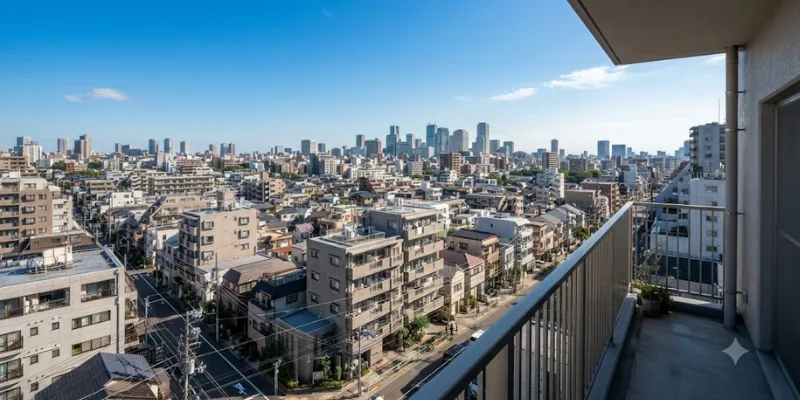
Sellers based overseas face a specific challenge. Verifying an agent’s assessment without being able to walk the comps yourself takes extra care. Request a remote assessment from an agency experienced with overseas sellers, and cross-check their figure against your own comp research on Japanese portals before accepting it. A video walkthrough of comparable listings, where available, helps close this gap. It bridges a purely numbers-based comparison and the qualitative factors — light, noise, view — that shape a property’s real market appeal.
Common pricing mistakes sellers make
A few patterns come up repeatedly among first-time sellers pricing a home in Japan:
- Anchoring to the original purchase price rather than current market value. What you paid years ago has little bearing on today’s comps. This matters especially in a market that has moved as much as Tokyo’s has recently. Base your price on current comparable sales, not your own purchase history.
- Skipping light preparation before the assessment. A clean, decluttered property photographs and shows better. Agents sometimes adjust their assessment slightly based on presentation quality alongside the hard comps.
- Underestimating the value of a documented repair history. Sellers who can produce records of major building works — roof replacement, exterior repainting, plumbing upgrades — hand their agent concrete material. That material helps justify a higher asking price. Gather these documents before your assessment, not after.
- Treating the agent’s first number as final. A satei is a starting point for discussion, not a fixed verdict. If your own comp research suggests a different figure, raise it directly and ask your agent to walk through their reasoning.
Working with your agent through the pricing process
Once you’ve settled on an initial listing price, expect your agent to revisit it periodically based on market response. This includes how many inquiries you’re getting, how buyers react during viewings, and how comparable listings in your area perform over the same period. A price that draws no interest after several weeks on the market usually signals a needed adjustment. A good agent will raise this with you directly, rather than letting a listing sit stagnant. Conversely, multiple quick offers close to or above asking can indicate you priced conservatively. That’s useful information for negotiating the final sale price, even if you don’t relist at a higher figure.
Frequently Asked Questions
How do I price my home for sale in Japan if I’m living abroad? Request a remote assessment from a licensed agent experienced with overseas sellers — most major agencies offer this. Combine their number with your own comp research on SUUMO or Homes.co.jp to sanity-check the figure before listing.
Should I list my home above or below the agent’s assessed value? Slightly above is standard practice, leaving room for negotiation without discouraging inquiries. How much above depends on how quickly you need to sell and how competitive your local market currently runs.
Does building repair history really affect my home’s sale price in Japan? Yes, more than in many other countries. Japanese buyers weigh a building’s maintenance and repair history heavily, and a documented history of completed major repairs measurably improves both buyer interest and achievable price.
What’s the difference between an agent assessment and a formal appraisal? An agent assessment (査定) is a practical market estimate used for listing purposes, typically provided free. A formal appraisal is legally binding, conducted by a certified appraiser, and generally only needed for inheritance, divorce, or tax situations rather than a standard sale.
Is land or building value more important when pricing an older Japanese property? Land value typically matters more for older properties, since Japanese buildings depreciate steeply while land tends to hold or appreciate. For an aging structure, land value can represent the large majority of your property’s total assessed price.
Are comps from a year ago still reliable for pricing my home in 2026? Not always, particularly in major urban centers where prices have continued rising. Ask your agent how recent their comparable sales data runs, and expect regional or rural properties to follow a much flatter trend than headline national figures suggest.
Arealty offers property valuation assistance for sellers across Tokyo and Osaka, including remote assessments for owners living abroad. Contact our team to get a comp-based estimate before you list.

Real estate advisor at Arealty Japan, specialising in helping foreign residents navigate the Tokyo and Osaka rental markets. Lucy has guided hundreds of international renters — from Working Holiday visa holders to corporate relocations — through Japan’s apartment application process. Her writing draws on firsthand experience with landlord screening, guarantor companies, and foreigner-friendly listings across all 23 Tokyo wards and major Kansai cities.