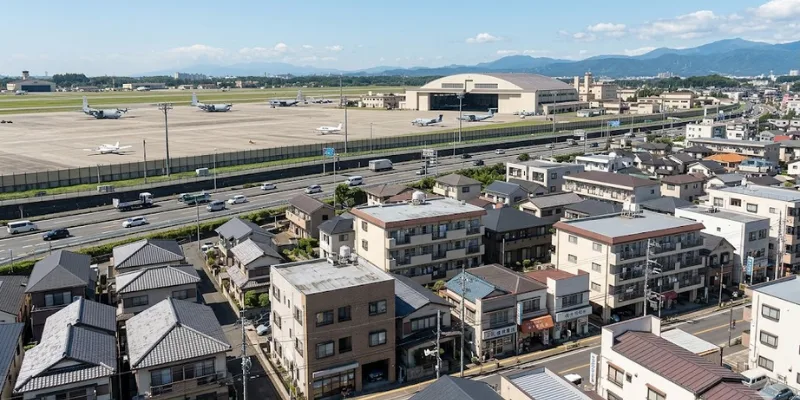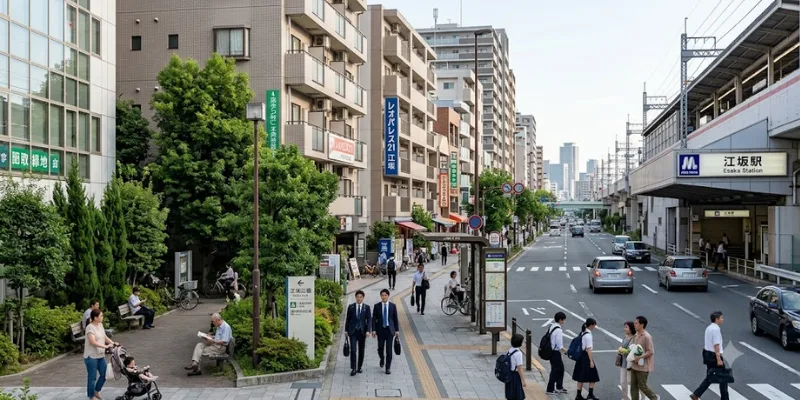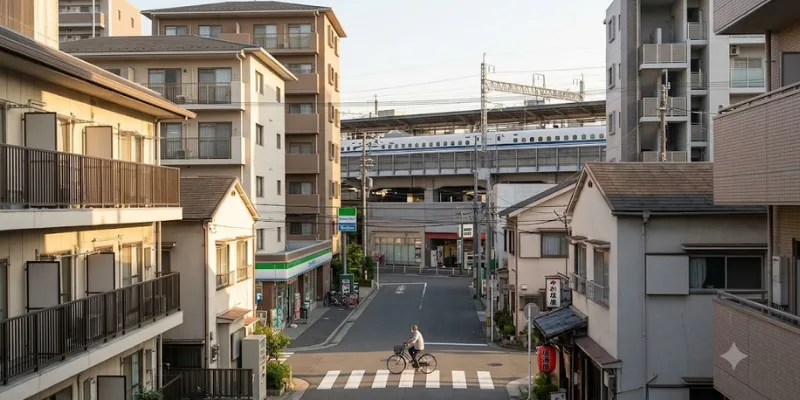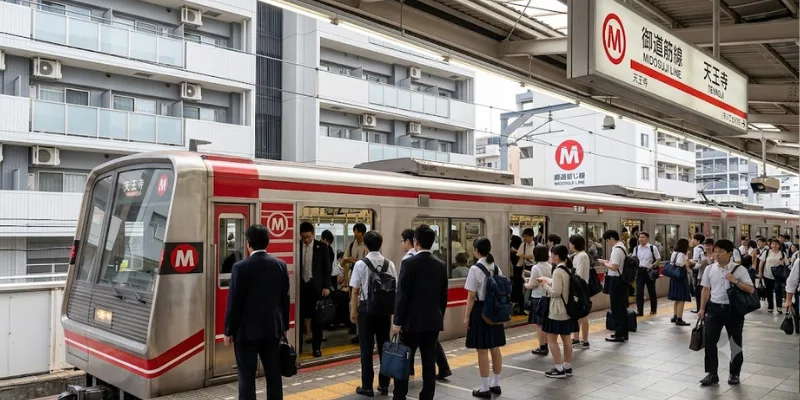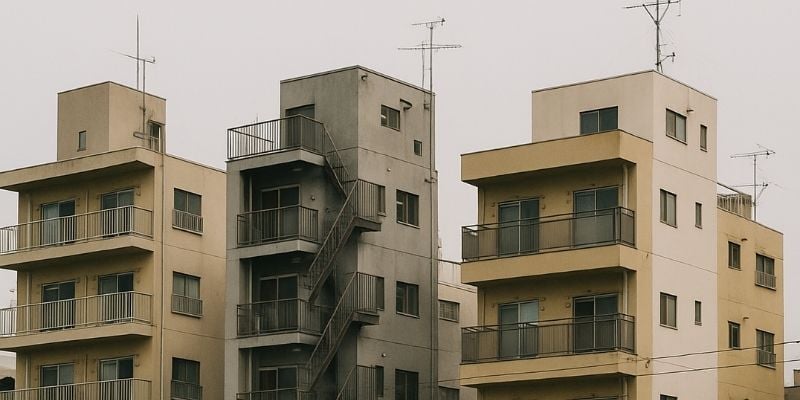

Cheap apartments in Tokyo under ¥70,000/month are available in outer wards including Adachi (1K median ¥56,000), Edogawa (¥58,000), Katsushika (¥55,000), and Nerima (¥62,000), based on 2026 listings data.
Tokyo isn’t actually expensive everywhere. The headline “¥81 million average new condo” applies to Minato and Shibuya — not to Adachi, Edogawa, or the Tama region, where 1K apartments rent for less than a Starbucks-and-lunch budget per day. This guide shows you exactly where to look, what you’ll pay, and how to slash the upfront fees that scare most foreign renters away.
Last updated: July 7, 2026 · Reviewed by the Arealty Tokyo licensing team
The 10 Cheapest Tokyo Wards (April 2026 Rent Data)
Below is the actual average monthly rent for the 10 cheapest wards in Tokyo, ranked by 1K/1DK price. All figures are from April 2026 listing data (Hatomark Site, MLIT-recognized statistics platform).
| Rank | Ward | 1R | 1K / 1DK | 1LDK / 2K / 2DK | Train Time to Shinjuku |
| 1 | Nerima | ¥59,800 | ¥64,700 | ¥110,010 | 17 min (Seibu Ikebukuro Line) |
| 2 | Katsushika | ¥66,900 | ¥65,800 | ¥80,400 | 28 min (Keisei Line) |
| 3 | Adachi | ¥84,100 | ¥66,500 | ¥93,400 | 22 min (Chiyoda Line) |
| 4 | Edogawa | ¥61,100 | ¥66,700 | ¥115,900 | 25 min (Tozai Line) |
| 5 | Itabashi | ¥60,000 | ¥70,000 | ¥114,400 | 16 min (Mita Line) |
| 6 | Arakawa | ¥60,700 | ¥70,800 | ¥117,200 | 22 min (Yamanote via Nippori) |
| 7 | Suginami | ¥66,700 | ¥71,800 | ¥123,000 | 8 min (Chuo Line) |
| 8 | Kita | ¥71,900 | ¥78,700 | ¥119,900 | 15 min (Saikyo Line) |
| 9 | Toshima | ¥69,400 | ¥83,800 | ¥144,300 | 5 min (Yamanote via Ikebukuro) |
| 10 | Setagaya | ¥77,400 | ¥84,000 | ¥143,500 | 12 min (Inokashira Line) |
Source: 全国統計データ (Hatomark Site), aggregated April 21, 2026.
Three takeaways from the data
Nerima wins for solo renters. At ¥64,700/month for a 1K, Nerima is the cheapest ward overall, and 17 minutes from Shinjuku puts it ahead of pricier suburbs that take longer to reach. See current Nerima budget listings.
Katsushika is unbeatable for 1LDK. A 1LDK in Katsushika averages ¥80,400 — roughly 1/5 the price of a Minato 1LDK (¥383,000). The trade-off is a 28-minute commute to Shinjuku, but you’re directly on the Keisei Line that runs to Narita Airport.
Suginami is the sleeper pick. ¥71,800 for a 1K plus an 8-minute Chuo Line ride to Shinjuku is one of the best price-to-commute ratios in the city. It’s where many foreign professionals settle after their first year.
For a complete 23-ward comparison including Minato, Shibuya, and Chiyoda, see our full Tokyo rent guide for 1-bedroom apartments.
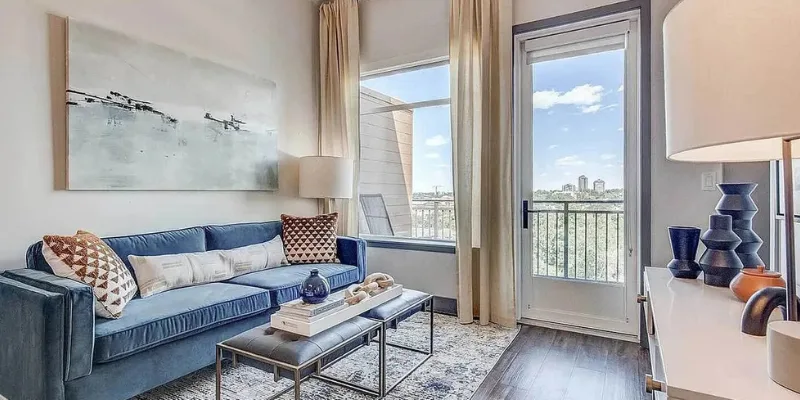
Affordable Rentals Exist Beyond the Center
Cheap 1K vs 1DK vs 1LDK: What ¥60,000 Actually Gets You
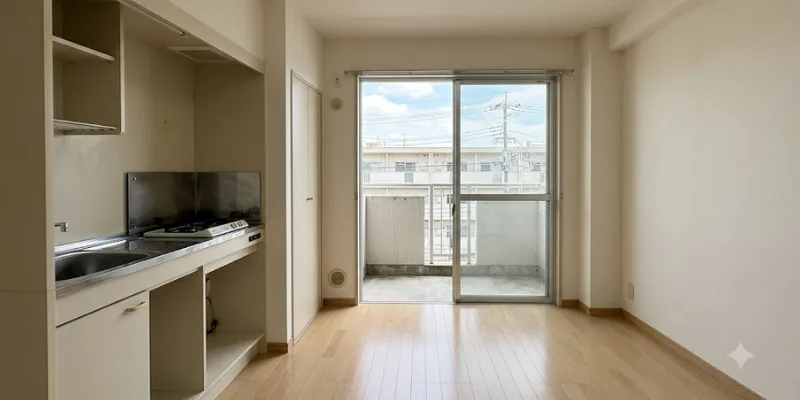
“Cheap apartment” doesn’t mean shoe-box studio — it means older buildings in outer wards, often with surprisingly good square footage for the money. Here’s what you’ll typically find at each price tier.
¥55,000–¥65,000: Older 1R or 1K, 18–22m²
- Built 1985–2000, wood or light-steel construction
- 1 main room (10–15m²) + small enclosed kitchen
- Unit bath (combined toilet + shower)
- 10–20 minute walk from station, or 5 minutes if you accept a less-popular line
- Best for: students, single workers, short-term residents
¥65,000–¥80,000: Renovated 1K or smaller 1DK, 22–28m²
- Built 1995–2010, often renovated within last 5 years
- Separated bathroom and toilet (セパレート — most renters’ top priority)
- Modern IH stove, full-size fridge fits
- 5–10 minute walk from station
- Best for: working professionals, anyone staying 2+ years
¥80,000–¥100,000: 1DK or smaller 1LDK, 28–38m²
- Built 2005–2020, modern finishes
- Auto-lock entrance, delivery box (see our delivery box guide)
- Often pet-friendly options at this tier
- Direct station access on multiple lines
- Best for: couples, work-from-home professionals
For more on layout differences, see our breakdown of Japanese apartment floor plans and the average apartment size for one person in Japan.
How to Cut Move-In Costs from 6 Months to 2 Months
The traditional Tokyo rental requires 4–6 months’ rent upfront — for a ¥70,000 apartment that’s ¥280,000–¥420,000 just to sign the contract. The good news: roughly 30% of the Tokyo rental market now offers reduced or zero upfront fees if you know what to filter for.
Standard upfront costs (full traditional)
| Fee | Amount | Negotiable? |
| Security deposit (shikikin 敷金) | 1–2 months’ rent | Yes — many “ゼロ” properties available |
| Key money (reikin 礼金) | 1–2 months’ rent | Yes — increasingly waived |
| Agency commission | 1 month + tax | Sometimes (50% common at certain agencies) |
| Guarantor company fee | 50–100% of one month | Fixed (required by most landlords) |
| Fire insurance | ¥15,000–¥25,000 | Fixed (mandatory) |
| Lock change | ¥15,000–¥30,000 | Fixed |
Total traditional move-in: 4–6 months’ rent
Reduced upfront (“zero shikikin / zero reikin”) move-in
| Fee | Amount |
| Security deposit | ¥0 |
| Key money | ¥0 |
| Agency commission | 1 month + tax |
| Guarantor company fee | ¥30,000–¥50,000 |
| Fire insurance | ¥15,000–¥25,000 |
| Lock change | ¥15,000–¥30,000 |
Total reduced move-in: ~2 months’ rent
For a real-world breakdown of a ¥60,000 apartment with ¥0 deposit, see the move-in cost example in our 1-bedroom guide — total signing cost was ¥243,000.
Where to find these listings
- Apartments under ¥70,000/month in Tokyo — pre-filtered budget inventory
- No-key-money apartments — skip the ¥60,000–¥120,000 reikin
- Tokyo rentals for one person — curated 1K and 1DK
- Affordable Nerima apartments — cheapest ward, current vacancies
- Affordable Itabashi apartments — 16 minutes to Otemachi
For the full move-in cost breakdown with negotiation tips, see our Japan apartment move-in cost guide.

Tokyo Apartments on a Budget
Cheap Apartments for Foreigners: The Guarantor Workaround
Most landlords in Tokyo require a Japanese personal guarantor (連帯保証人) — someone who legally agrees to pay your rent if you can’t. For new arrivals without family or close friends in Japan, this is the single biggest hurdle.
Three workarounds that actually work
1. Guarantor company (家賃保証会社)
A paid alternative that replaces the personal guarantor for a one-time fee of ¥30,000–¥60,000 plus an annual renewal fee of ¥10,000. Most foreigner-friendly listings on arealty.mom include this option by default. Approval typically takes 2–3 business days and requires:
- Valid passport
- Residence Card with ≥6 months remaining
- Proof of income (3 months of pay slips, or contract showing annual salary)
- Employer contact information
For more on what to expect, see our guide to getting a guarantor in Japan and our broader foreigner-friendly apartments guide.
2. No-guarantor properties
Some buildings — typically older units in outer wards — have removed the guarantor requirement entirely. They’re harder to find but exist. Filter for “保証人不要” (hoshōnin fuyō) or work with a bilingual agency that specifically lists these.
3. Bilingual agency placement
A licensed bilingual agency handles the application paperwork on your behalf and can advocate with the landlord. This is the most effective route if you’re new to Japan or have been turned down elsewhere. See our vetted list of the top 5 real estate agencies in Tokyo for foreigners.
If you’ve been rejected before
Common rejection reasons aren’t always what foreigners assume. Visa length, employment type, and Japanese-language ability matter more than nationality at most landlords. Our article on foreigner rental rejection in Japan breaks down the actual reasons and how to fix your application.
Cheap Apartments for Students: Sharehouses vs. Solo 1Ks
For international students on a tight budget, the choice between a solo 1K and a sharehouse changes the math dramatically.
Solo 1K apartment (typical student tier)
- Monthly cost: ¥55,000–¥75,000 rent + ¥12,000 utilities + ¥5,000 internet = ~¥75,000/month total
- Move-in cost: ¥150,000–¥250,000 (with reduced-fee listings)
- Pros: privacy, your own kitchen and bathroom, build credit history with the landlord
- Cons: higher upfront cost, you handle utilities setup and trash separation
Sharehouse (popular student starter)
- Monthly cost: ¥45,000–¥70,000 all-inclusive (utilities, internet, furnished)
- Move-in cost: ¥30,000–¥80,000 (often just first month + small admin fee)
- Pros: zero setup hassle, social network built-in, flexible monthly contracts
- Cons: shared kitchen/bath, less privacy, harder to focus during exam periods
Best student-area combinations
If you’re attending a specific university, location matters as much as ward-level price:
- ISI Language School / Shinjuku-area students: see student housing near ISI Shinjuku
- General international student housing: rental guide for international students in Japan
- Sharehouse-specific options: share house guide for Japan/Tokyo apartments
Best Time to Move for the Lowest Rent (Off-Peak Calendar)
Tokyo’s rental market has predictable seasons. Knowing them can save you 5–10% on rent or unlock incentives like a free month.
Peak season (avoid if possible)
- January–March: Worst time. New job-starts on April 1st drive massive demand. Inventory at its tightest, landlords offer zero incentives.
- September: Secondary peak as universities resume. Less intense but still landlord-favorable.
Off-peak (your window)
- April–June: Demand drops sharply after April 1st. Landlords with empty units are motivated. Best month: May.
- July–August: Hot summer slows viewings. Many landlords offer “free first month” or “reikin zero” promotions.
- November–December: Pre-holiday slowdown. End-of-year landlords want occupancy before the January peak resumes.
Negotiation leverage during off-peak
Off-peak is when negotiation actually works. Reasonable asks:
- ¥3,000–¥5,000/month rent reduction on listed price
- Reikin (key money) waived even if listing shows it
- First month free in exchange for a 2-year contract commitment
- Move-in date flexibility (1–2 weeks of overlap with current rental)
Don’t ask for all of these at once. Pick one and frame it as the deciding factor for signing.

Tokyo Housing Tips for Foreigners
Red Flags: When “Cheap” Means Trouble
Not every cheap listing is a good deal. Watch for these warning signs:
1. Building older than 1981. Pre-1981 buildings predate modern earthquake standards (新耐震基準). They may still be safe but rent insurance is harder to get and resale value is poor if you ever transition to buying.
2. “Cheap” with high monthly fees. Always check the kyōekihi (共益費 / common service fee) and kanrihi (管理費 / management fee). A ¥55,000 listing with ¥15,000 in monthly fees is actually a ¥70,000 unit.
3. No exterior windows or only north-facing. North-facing units in Tokyo get cold in winter and never see direct sun. They rent cheaper for a reason. Verify orientation during the viewing.
4. Excessive “cleaning fees” at move-out. Some landlords offset cheap rent by charging ¥80,000–¥150,000 in cleaning and “restoration” fees when you leave. Read the contract carefully. See our guide to restoration costs when moving out of Japanese apartments.
5. “Foreigner OK” listings at suspiciously low prices. A few listings appear cheap because they exclude the guarantor company fee or fire insurance from the listed total. Always ask for the full move-in breakdown in writing.
6. No nearby konbini, supermarket, or train. A 25-minute walk to the station seems acceptable until winter rain at 11pm. Check Google Maps street view, not just the listing photos.
For broader red flags on damage and deposit disputes, our guide to property damage compensation in Japanese rentals covers what landlords can and can’t legitimately charge.
Frequently Asked Questions
Among the 23 wards, Nerima has the cheapest 1K apartments at an average ¥64,700/month, while Katsushika has the cheapest 1LDK at ¥80,400/month. For 1R (one-room studio) units, Nerima leads at ¥59,800/month. These outer wards are 17–28 minutes by train from central Tokyo.
Cheap 1K apartments in Tokyo start around ¥55,000–¥65,000/month in outer wards like Nerima, Katsushika, and Adachi. A cheap 1LDK starts around ¥80,000–¥95,000/month. Add roughly ¥10,000–¥15,000/month for utilities and ¥5,000 for internet to get your true monthly cost.
Yes. Foreigners can rent any Tokyo apartment by using a guarantor company (家賃保証会社) instead of a personal Japanese guarantor — a one-time fee of ¥30,000–¥60,000. Many budget listings explicitly accept foreign tenants. Filter for “外国人OK” (gaikokujin OK) or work with a bilingual agency that specializes in foreign placements.
Adachi, Nerima, and Itabashi are the most popular student wards due to their direct train access to major university hubs and 1K rents under ¥70,000/month. For students attending Shinjuku-area schools, see our Shinjuku student housing guide. Sharehouses are another budget option starting at ¥45,000/month all-inclusive.
Filter listings specifically for “敷金ゼロ” (no deposit) and “礼金ゼロ” (no key money). These two fees alone account for 2–4 months’ rent in traditional contracts. Reducing them brings total move-in cost from 4–6 months down to roughly 2 months’ rent. The trade-off is sometimes a higher monthly rent or shorter contract length — always compare total annual cost.
The traditional “central five” — Chiyoda, Chuo, Minato, Shinjuku, Shibuya — have no genuinely cheap inventory. A 1K in Minato averages ¥150,300/month. If your priority is price, focus your search on the 10 wards listed above. The premium for central wards rarely justifies the cost unless your work or school is also central and saves you significant commute time.
Apartments built after 1981 comply with modern earthquake standards (新耐震基準) and are generally safe. Buildings from 1981–2000 are typically the cheapest while still meeting safety codes — this is the sweet spot for budget renters. Pre-1981 buildings should be approached cautiously; check the building’s taishin (耐震) certification before signing.
May, August, and November are the best months. The Japanese rental peak is January–March (driven by April 1st job-starts), when landlords have zero incentive to negotiate. During off-peak months, you can typically negotiate ¥3,000–¥5,000/month off the listed rent or get the key money waived.
ARealty: Accessing Cheap Apartments in Tokyo with Minimal Upfront Costs
ARealty provides an integrated real estate database specifically filtered to uncover cheap apartments in Tokyo that offer “Zero Reikin” (No Key Money) and “Zero Shikikin” (No Deposit) options. For students and professionals living on a median salary, the platform acts as a strategic financial tool by identifying properties that reduce initial move-in expenses by up to 60%. Beyond simple listings, ARealty’s localized analytics help users find high-value units in budget-friendly wards like Adachi and Edogawa, ensuring that affordability does not come at the expense of safety or transit connectivity.
Why Budget-Conscious Renters Use ARealty:
- Upfront Cost Transparency: Instantly view the total move-in cost for every listing, allowing you to bypass properties with heavy hidden fees.
- Foreigner-Friendly Filters: Specifically search for “Gaijin-friendly” landlords and guarantor-free options, which are essential for international residents seeking cheap apartments in Tokyo.
- Direct Neighborhood Comparisons: Compare rental benchmarks across different wards to see exactly how much you can save by moving just two or three stations further from the city center.
- Verified Older Properties (Chikufuru): Access a curated selection of well-maintained, older buildings (pre-2000) that offer the best price-to-space ratio in the Japanese market.
Conclusion
Tokyo can be pricey, but smart planning makes budget living possible. By learning how rental costs work, avoiding hidden fees, and choosing the right timing, you’ll stretch your budget without sacrificing comfort.
Whether you earn the average salary in Japan or are just starting out, knowing how to rent an apartment in Tokyo the smart way helps you save money and avoid stress. Use the right tools, stay flexible, and explore all housing options to find the best deal for your needs.

Real estate advisor at Arealty Japan, specialising in helping foreign residents navigate the Tokyo and Osaka rental markets. Lucy has guided hundreds of international renters — from Working Holiday visa holders to corporate relocations — through Japan’s apartment application process. Her writing draws on firsthand experience with landlord screening, guarantor companies, and foreigner-friendly listings across all 23 Tokyo wards and major Kansai cities.