
Navigating the real estate and rental market in Japan requires a comprehensive understanding of risk management. Whether you are securing an entire house or an apartment in Tokyo, Japan, this knowledge is essential. For any resident, from long-term homeowners to those seeking an apartment for rent japan, Japanese fire insurance is essential. It is not merely an option. It is a fundamental necessity. This insurance system, locally referred to as Kansai Hoken (火災保険), offers essential financial protection. It safeguards against numerous unforeseen disasters. It ensures that your investment and personal assets remain secure. By understanding its structure, coverage, and the legal context, foreign residents can make informed decisions to safeguard their livelihood.
Defining Japanese Fire Insurance: Comprehensive Protection Beyond Fire
The term “fire insurance” can be misleading, suggesting coverage limited solely to conflagrations. In Japan, however, this policy is explicitly a multi-peril package that extends protection to a broad range of natural and accidental calamities. It is imperative to recognize this comprehensive scope, as it defines the value proposition of the policy.
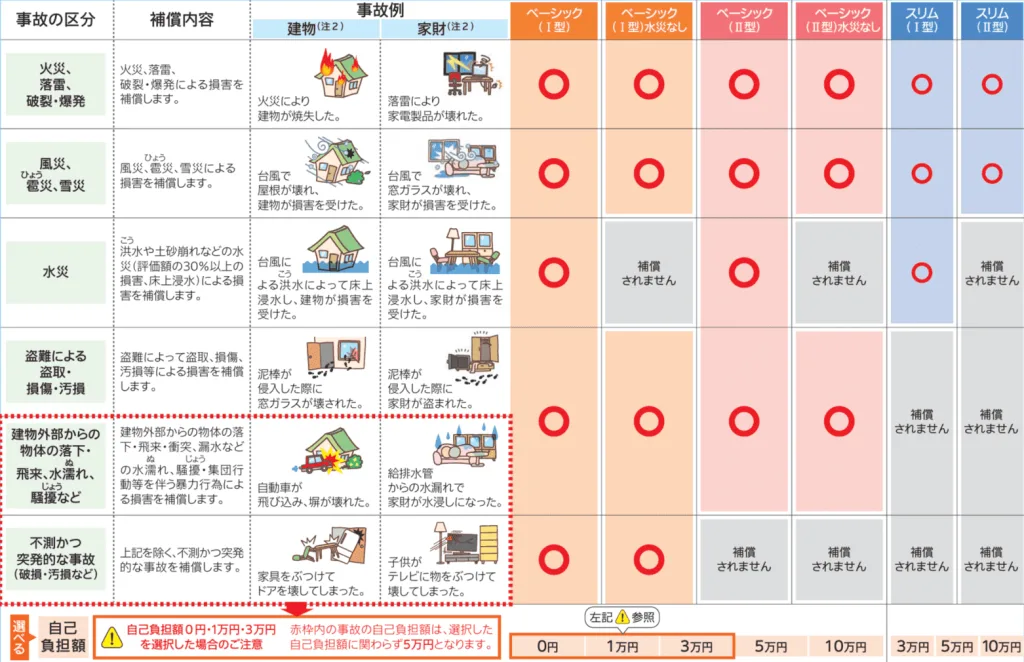
The coverage provided by Japanese fire insurance is expansive and definitely includes protection against the following categories of perils:
- Fire and Explosions: The core coverage protects against damage resulting directly from fire and explosion. This includes damage to the structure or contents caused by flames, smoke, or efforts to extinguish a fire.
- Natural Catastrophes: Protection extends to common natural phenomena that can cause significant damage. Specific examples include:
- Wind Damage: Covering destruction caused by typhoons or severe gales. This includes damage to roofing tiles, exterior walls, or garden structures.
- Hail Damage: Addressing damage caused by ice storms, typically manifested as broken windows or dents in the property’s siding.
- Snow Damage: Coverage is provided for property damage from heavy snow or ice buildup.
- Water and Impact Damage: This includes incidents related to water, whether internal or external, and physical impacts from external forces. Examples are:
- Water Damage: Covering losses from burst pipes, water leakage from neighboring units, or accidental sprinkler system activation.
- External Collision/Falling Objects: Addressing damage caused by external forces. Examples include a vehicle colliding with the house, an aircraft fragment falling onto the property.
- Civil Unrest and Theft: Policies also cover losses resulting from human factors. This includes:
- Violent Group Action: Damage resulting from riots or vandalism associated with public disturbances.
- Theft (Burglary): Covering the loss of personal property. It also includes any damage done to the building, like broken doors or windows, during a break-in.
Mandatory Exclusion: Addressing Earthquake Risk
Japanese fire insurance offers comprehensive protection. However, it has one non-negotiable exclusion. Damage caused by earthquakes, volcanic eruptions, or tsunamis is not covered. This exclusion exists because the scale of damage from a major seismic event is so vast. Such an event would financially compromise the stability of private insurance companies.
- The Solution – Earthquake Insurance: To ensure preparedness for seismic risks, a separate Earthquake Insurance policy must be purchased. These risks are unavoidable in Japan. This is a special scheme jointly managed by the public and private sectors.
- Integration: Most fire insurance contracts offer earthquake insurance as a crucial add-on option. Foreign residents should include this coverage. Those living in high-risk zones like apartments in tokyo japan are particularly advised to do so. This will help avoid catastrophic, unrecoverable losses after a seismic event.

Cost Determination: Factors Driving Fire Insurance Premiums
The cost of Japanese fire insurance is highly variable, making direct cost comparisons complex. A 10-year policy can range drastically from 20,000 JPY to over 200,000 JPY. The premium is based on several objective risk factors. This calculation ensures a fair price for the perceived level of exposure.
The premium is definitely influenced by the following critical factors:
Building Structure Type
The materials used in construction have a major impact on the fire risk and, consequently, the premium.
- T-Structure (Fire-Resistant): This includes buildings made of concrete, reinforced concrete, or steel frame structures. Premiums for T-structure homes are lower because the materials significantly slow the spread of fire. Even wood-frame homes that meet strict fire-resistant or semi-fire-resistant standards are classified as T-structure.
- H-Structure (Non-Fire-Resistant): This includes most traditional wooden-frame houses or non-fireproof structures. Premiums for H-structure properties are higher due to the greater speed and potential severity of fire damage.
Exclusive Area Size
The floor area of the property is directly correlated with the replacement cost. Larger properties require a higher insured amount (limit of indemnity), which unquestionably leads to a higher premium.
Geographical Location and Risk Profile
The probability of certain natural disasters varies significantly across Japan.
- High-Risk Areas: Regions prone to frequent typhoons, such as Kyushu and Okinawa, are objectively assigned higher premiums to reflect the elevated risk of wind and flood damage.
- Disaster Mitigation: Interestingly, regions with many firefighting facilities and strong municipal disaster preparedness may sometimes see lower premiums. This is especially true in denser parts of the Tokyo metropolitan area. This is because the infrastructure helps contain potential damage.
Scope and Details of Indemnity
The types of disasters covered are paramount in determining the final cost. A policy that includes full coverage for flood damage, snow damage, and theft will naturally be more expensive. A policy with limited coverage will be less costly. The choice between insuring only the building, only the contents, or both is a primary factor.
Policy Term Length
The duration of the contract offers a direct opportunity for savings.
- Long-Term Benefit: Fire insurance contracts range from one year up to a maximum of 10 years. Committing to a longer term is decisively cheaper on an annual basis. A 10-year contract can offer discounts of up to 20% compared to renewing a 1-year contract annually. While a long-term contract often requires a single upfront payment, this structure guarantees significant long-term savings.
Insured Amount (Limit of Indemnity)
This is the maximum amount the insurance company will pay out. A higher insured amount translates directly to a higher premium.
- Replacement Cost Principle: For fire insurance, the insured amount is determined based on the replacement cost of the building. This is the amount of money required to construct an equivalent property should the original be completely destroyed. For a detached house, this is the cost of rebuilding.
- Critical Requirement: It is absolutely essential that the insured amount equals the appraised replacement value (at least 80% or more). If the insured amount is set too low, the homeowner will not receive enough funds to properly rebuild. Conversely, setting the insured amount higher than the appraised value is pointless. The payout will never exceed the actual replacement cost.

The Scope of Fire Insurance
Fire insurance is extensive, covering both the Building (the structure) and the Contents (general household items like furniture and appliances). The protection extends far beyond simple fire damage. It covers a variety of risks inherent to property ownership and residence in Japan.
Core Perils: Fire, Lightning, Explosion, and Rupture
This category covers the essential catastrophic damages related to heat. It includes the damages anticipated due to sudden release of energy and electrical surges. This compensation is a definitive component of every fire insurance policy. It provides fundamental protection against the destructive forces of combustion and high pressure.
- Fire: Damage resulting from accidental fire, fire caused by other sources, and even arson.
- Lightning: Damage caused by a direct lightning strike to the property.
- Explosion and Rupture: Explosions and pipe ruptures caused by gas leaks or other pressure-related incidents.
Natural Disasters (Excluding Earthquakes)
The policy provides critical coverage against damages caused by severe weather events that are common in Japan. These include typhoons and heavy snowfall. This protection ensures that the costs associated with repairing destruction from specific meteorological phenomena do not fall entirely on the policyholder. It helps to distribute these expenses more equitably.
- Wind Damage (Windstorm Disaster): Refers to damage caused by strong winds such as typhoons, gusts, and gales.
- Hail Damage (Hail Disaster): Refers to damage caused by hail (ice particles with a diameter of $5 \text{mm}$ or more).
- Snow Damage (Snow Disaster): Refers to damage caused by heavy snowfall or avalanches.
Water and Physical Impact Damages
Coverage includes various types of water-related damages. These involve both internal and external water damage to the structure. It also covers physical impacts from external forces. This protection is vital for mitigating losses from common household accidents and unexpected events originating outside the property.
- Water Damage to Buildings: Coverage includes damage from burst water pipes. It also covers water leakage from other houses. Additionally, it includes water used for fire extinguishing.
- External Impact Damage: Damage caused by objects flying from outside the building is covered.
- Accidental Damage (Contents Only): Compensation for damage to household contents (furniture, electronics, etc.) resulting from an accident for any reason.
Miscellaneous Incidents
The insurance also addresses unique risks related to human actions, including criminal activity and civil disturbances. This ensures compensation for losses incurred due to theft or damage resulting from social unrest.
- Theft (Burglary): Coverage includes damage to the house, such as windows and doors. It also covers the loss of property and other damages, including precious metals and currency, resulting from theft.
- Damage from Violent Acts: Compensation is provided when property is damaged due to riots or group actions.
ARealty: Your Trusted Advisor for Japanese Property and Insurance
Securing the right property—be it a standalone house or searching for the perfect japan tokyo apartment rent—is only half the process. The critical other half involves protecting that asset against the financial risks inherent to life in Japan. Understanding and acquiring the appropriate fire and earthquake insurance can be the most complex, yet essential, step for foreign residents.
Arealty specializes in simplifying this entire journey. Beyond just helping you find your ideal house or apartment, we provide the clarity you need regarding complicated Japanese insurance policies. Offering tailored, professional guidance, we ensure the insurance policy you choose matches your property’s structure, aligns with the geographical risk profile, and meets your individual needs. Furthermore, we help you compare rates, understand specific clauses, and guide you through the entire application process. This guarantees you achieve the necessary coverage without overpaying. Furthermore, our expertise extends to assisting you in finding a suitable apartment or house that meets all your criteria.
Take the crucial next step in securing your residence. Contact Arealty today for a comprehensive, free consultation. First, we will analyze your needs thoroughly. Next, we will connect you with the most reliable and cost-effective fire and earthquake insurance policy. Finally, we will assist you in finding the perfect rental or purchase property in Japan. Protect your future with confidence and clarity.
Conclusion
Japanese fire insurance is a highly customizable and essential financial product. The ultimate decision on coverage rests entirely on the judgment of the insured. People naturally want to keep premiums as low as possible. However, it is crucially important not to cut coverage required by the local risk assessment.
A major disaster could result in damages amounting to tens of millions of Japanese Yen. Therefore, a small annual saving on premiums is not worth the risk of insufficient recovery funds. All residents and property owners must carefully weigh the options for building structure, location-specific risks (e.g., flood, typhoon), and the necessary scope of coverage (building vs. contents) before finalizing their decision. Choosing a policy that provides peace of mind is wise. It offers adequate financial protection. This is considered a prudent investment in your life in Japan.

Real estate advisor at Arealty Japan, specialising in helping foreign residents navigate the Tokyo and Osaka rental markets. Lucy has guided hundreds of international renters — from Working Holiday visa holders to corporate relocations — through Japan’s apartment application process. Her writing draws on firsthand experience with landlord screening, guarantor companies, and foreigner-friendly listings across all 23 Tokyo wards and major Kansai cities.