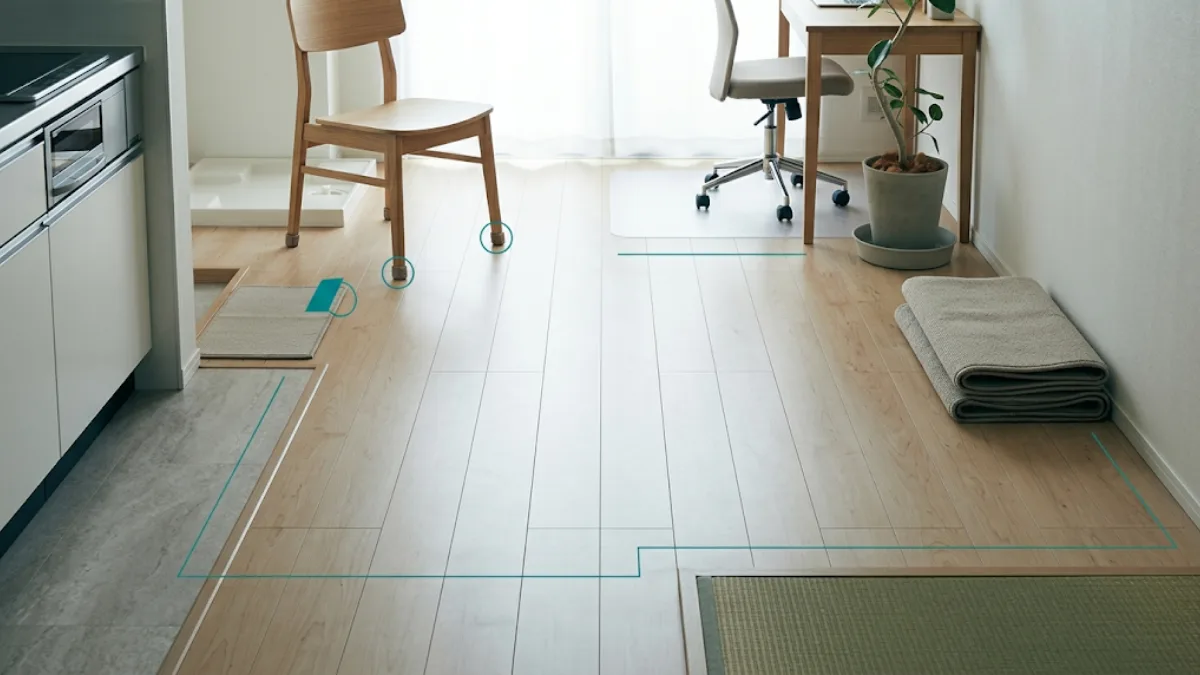

What kind of wood floor do you actually have?
Many renters treat every wooden-looking floor as the same surface. In Japan, that is a mistake. Good Rental wood floor maintenance starts with knowing what is actually under your feet.
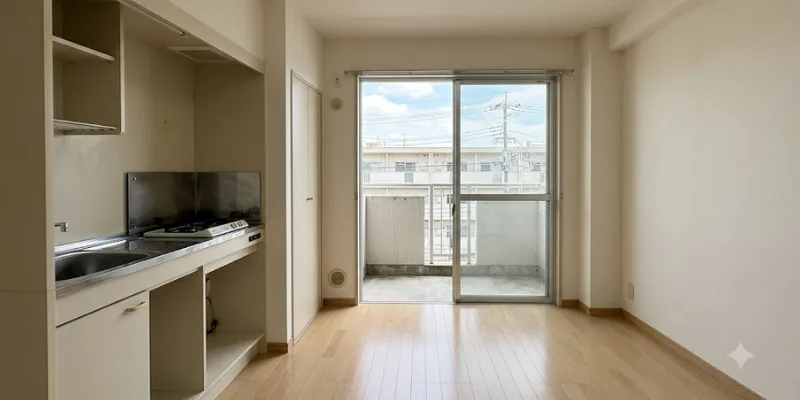
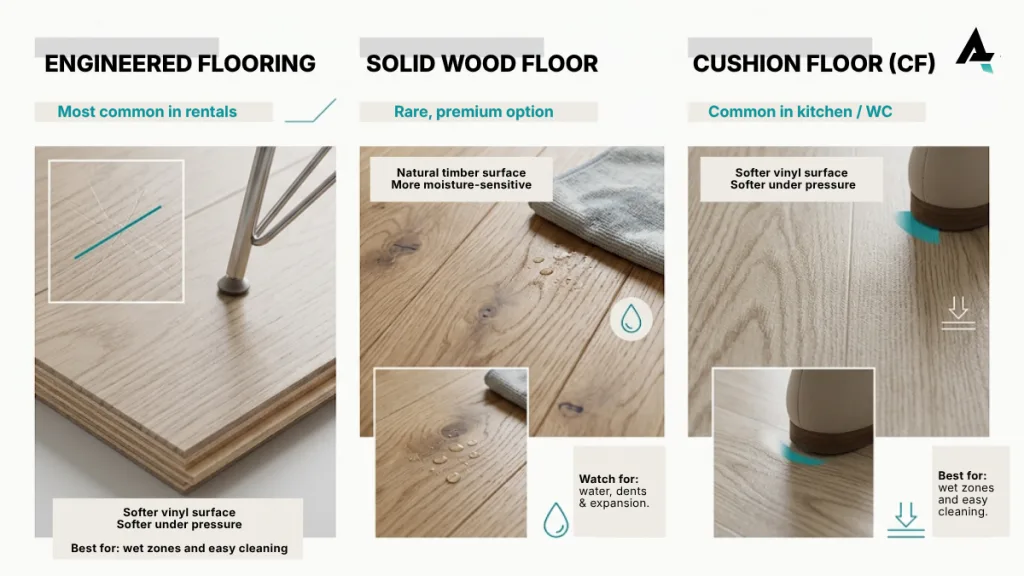
The most common type in a wood floor apartment japan listing is engineered flooring or 複合フローリング. This is the standard in most rentals because it is more stable, more affordable for landlords, and easier to install at scale. In practical terms, it handles everyday use reasonably well, but the visible finish can still scratch or peel if treated badly.
The second type is solid wood flooring or 無垢フローリング. This is much rarer in rentals and usually appears in more premium apartments. It feels warmer and more natural, but it also reacts more easily to moisture, dents, and seasonal expansion.
The third type is cushion floor or CF / クッションフロア. This is not real wood. It is a vinyl-based flooring often used in kitchens, toilets, and utility spaces because it handles spills better and feels softer underfoot.
A quick way to tell during a viewing:
- Tap test: engineered and solid wood usually sound firmer and sharper than CF
- Edge pattern: if you can see the side edge near a closet or threshold, engineered flooring often shows a layered structure
- Feel underfoot: CF usually feels slightly softer and less rigid
This matters because each material responds differently to scratches, chair friction, water, and cleaning products. Before you try to protect wood floor apartment surfaces, make sure you know what type of floor you are protecting.
The wax vs non-wax question no one explains
One of the most confusing parts of flooring japan rental care is the difference between wax-finished floors and no-wax floors.
In Japan, many newer rental floors are non-wax surfaces with a factory-applied UV-cured coating. These often look evenly sealed, slightly glossy or satin-smooth, and are marketed as low-maintenance. The important point is that “non-wax” usually does not mean “please add wax later.” It often means the opposite. Wax may not bond properly and can cause patchy peeling or cloudy finish problems.
Older or more traditional floors may be wax-treated or at least compatible with periodic wax maintenance. These are more likely to show a finish that looks less factory-sealed and more like a surface that has been maintained over time.
A practical 30-second check:
- Ask management directly whether the floor is ノンワックス (non-wax).
- Look for an overly even, sealed finish with modern planks in newer buildings
- If nobody can confirm, do not assume wax is safe
The biggest mistake is using water, polish, or cleaner without understanding the surface. A wrong product can create the kind of flooring damage rental japan tenants end up discussing at move-out.
Preventing damage before it happens
Most wood floor scratches rental problems come from repeated small habits, not dramatic accidents. Prevention is much cheaper than repair.
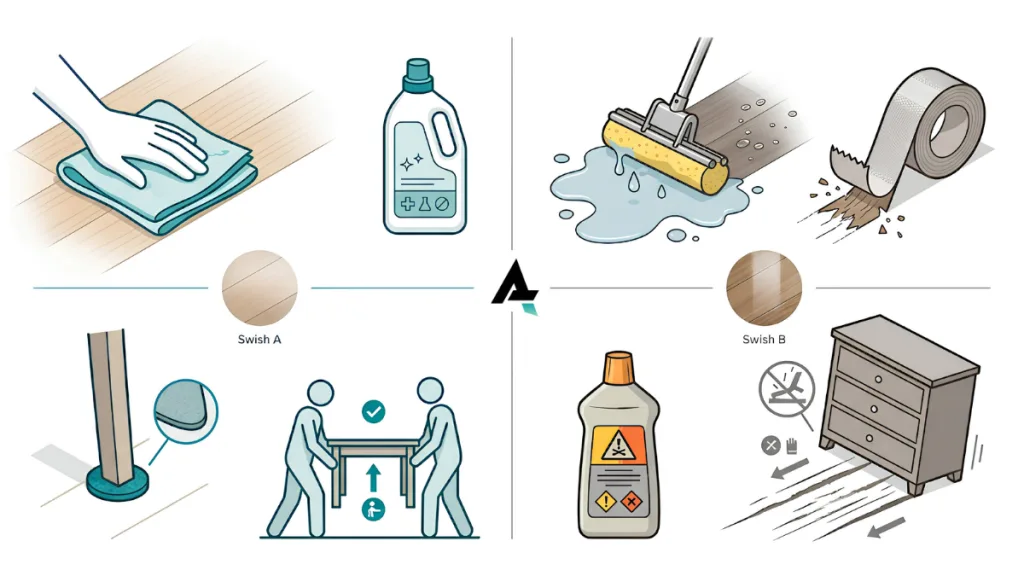
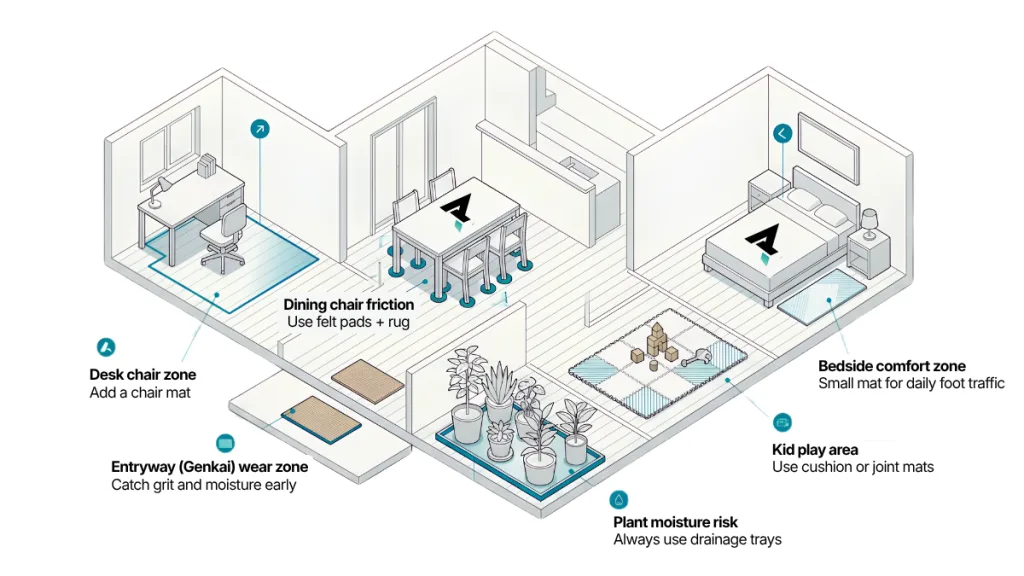
Start with furniture pads. For most chairs and tables, felt pads are the safest baseline because they reduce friction without gripping too aggressively. Rubber pads can be useful for stability, but on some surfaces they can trap dirt or leave marks if not cleaned. Hard plastic glides are better for some heavy furniture, but only when they are designed for the floor type and kept clean underneath.
A chair mat is one of the best investments for remote workers. A rolling office chair can wear down the same section of flooring very quickly, especially in a 1LDK or compact work corner.
Use a genkan mat near the entrance. This is one of the highest-wear zones in Japanese rentals because shoes, grit, umbrella water, and luggage friction all concentrate there.
Indoor plants need strict drainage rules. Never let wet pots sit directly on the floor. Always use trays, and check regularly for trapped condensation.
Be careful with tape and adhesive. This is one of the biggest causes of avoidable damage. Even when a product looks removable, strong adhesive can peel coating, mark the surface, or leave residue.
Quick checklist:
- Add felt pads before moving furniture into place
- Use a chair mat under desk chairs
- Put a mat at the genkan
- Use trays under plant pots
- Lift rather than drag furniture
- Avoid long-term adhesive contact
- Check hidden areas monthly
The daily cleaning routine that actually works
Good Rental wood floor maintenance is not complicated, but it needs consistency.
First, vacuum or sweep often enough that grit does not build up. Tiny particles act like sandpaper under socks, slippers, and chair legs. In a typical apartment, light vacuuming two to three times a week is usually more useful than one heavy clean after dirt has already built up.
Second, wipe using a cloth that is damp, not wet. The cloth should feel lightly moistened, not dripping. If water is visibly left behind, it is too wet. Standing moisture is one of the easiest ways to shorten the life of a floor finish.
Third, use floor-safe neutral products only when needed. Harsh household cleaners, bleach-based products, or overused alcohol wipes can damage certain finishes, especially on modern coated flooring.
Robot vacuums can be helpful, but they are not automatically harmless. If the wheels trap grit or repeatedly hit sharp transitions, even a smart cleaner can contribute to wear over time. Keep the floor clear, empty the dustbin often, and check wheels regularly.
Seasonal care matters too. During the rainy season, humidity rises and mats should be lifted more often. In winter, dryness can make some surfaces feel more brittle, so dragging furniture becomes even riskier.
Can you DIY your floor in a Japan rental?
Yes, sometimes. But the real rule is not “DIY or not.” It is whether the change is restorable.
Japanese rentals usually follow the principle of 原状回復 (restoring the unit to its original condition), which means the unit should be returned in a condition that does not include tenant-caused permanent changes. That is why any floor DIY needs to be reversible.
Before doing anything, ask management or the landlord. A simple Japanese template you can use is:
フローリング保護のために、原状回復可能な床材を敷きたいのですが、使用してもよろしいでしょうか。接着剤は使わず、退去時に撤去できる方法を考えています。
(For floor protection, I would like to lay down a flooring material that can be restored to the original condition. Would that be acceptable? I am planning a method that does not use adhesive and can be removed when I move out.)
Safe methods usually include:
- removable floor sheets
- loose-laid protective coverings
- area rugs
- reversible Scandinavian-style overlays that do not bond directly to the floor
Risky methods include:
- strong adhesive
- paint
- permanent boards
- peel-and-stick products that are only “removable” in marketing, not in real rental conditions
A renter who wants a brighter Scandinavian look can often get close with light-toned floor sheets or large neutral rugs, as long as the base floor stays protected and fully reversible.
Also note: 養生テープ (protective masking tape / construction masking tape) can be useful as a temporary workaround, but it is not a long-term flooring strategy. It should never become a permanent substitute for proper rental-safe installation.
What to do if damage happens
If damage occurs, keep the response simple.
- Stop using the area in a way that may worsen the damage
- Photograph the mark clearly in natural light
- Inform management or the landlord quickly
- Wait for instructions before trying a DIY fix
Do not try to hide the mark with a furniture pen, wax stick, marker, or random repair kit. A bad cosmetic fix can turn a minor issue into a more obvious repair problem.
Scenarios by household type
Remote worker
Use a chair mat, protect desk legs, and watch the cable zone where wheels and foot movement repeat every day.
Couple, no pets
Standard prevention is usually enough: felt pads, dining rug, bedside mat, and no wet objects directly on the floor.
Family with toddlers
Use cushion mats or joint mats in play zones. Soft impact protection matters more here than aesthetic perfection.
Pet owners
Focus on claw friction, washable rugs, and accident protocol. A quick cleanup routine matters more than decorative coverage.
Heavy furniture mover
Use glides, never drag without lifting, and recheck pads after any layout change. One move can do more damage than six months of ordinary living.
FAQ
1. Is wood flooring or cushion flooring better for renters?
It depends on the room and your lifestyle. Wood feels cleaner and more premium. Cushion flooring is better around water and softer underfoot.
2. How often should I really clean a wood floor?
Light vacuuming or sweeping several times a week is usually enough, plus damp-not-wet wiping when needed.
3. Can I use a Roomba on Japanese rental wood flooring?
Yes, but keep the wheels clean and do not assume automation means zero wear risk.
4. Will felt pads damage my floor over time?
Not usually, if they stay clean and are replaced when worn. Dirty pads can grind grit into the surface.
5. Are removable floor stickers safe for Japanese rentals?
Only sometimes. Marketing language is not the same as rental safety. Permission and removability both matter.
6. What is the single biggest cause of move-out flooring charges?
Usually avoidable damage from dragging furniture, moisture neglect, or unapproved DIY methods.
Talk to Arealty
Need help choosing a rental that is easier to maintain from day one? Arealty helps foreign renters compare floor types, layout risks, and practical interiors before signing.

As a real estate professional with 10 years of living and working in Japan, I write from the intersection of property expertise and lived experience. My perspective is rooted not only in an understanding of the Japanese rental market, but also in the nuances of building a life here as a foreigner, where practical decisions often carry personal meaning.
I see a home as more than a place to stay. It is part of how we move through the city, shape our routines, and create a sense of ease in everyday life. That is why my writing goes beyond surface-level advice, offering guidance that is informed, considered, and attuned to both lifestyle and reality. My goal is to make renting in Japan feel less overwhelming, more intentional, and ultimately more human.