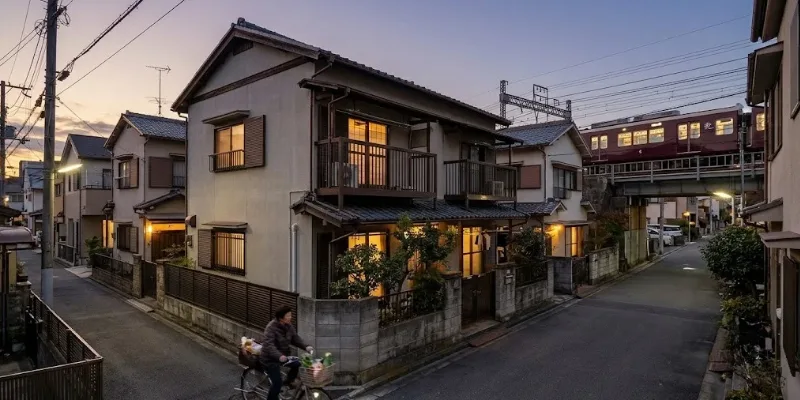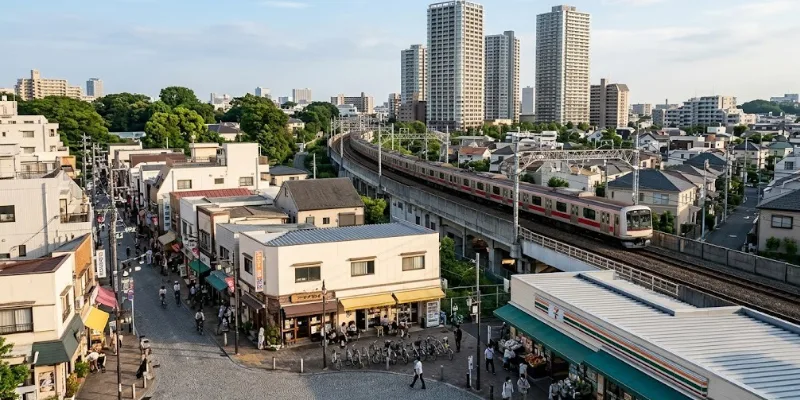

Quick answer: Toyoko Line apartments cost about ¥70,000 to ¥170,000 a month for a studio or 1K. The Tokyu Toyoko Line links Shibuya and Yokohama in about 27 minutes by limited express. Rent is highest at the Tokyo end, from Shibuya to Jiyugaoka. It drops sharply once you cross the Tama River into Kanagawa. For most foreign renters, the best value is between Motosumiyoshi and Kikuna, where a studio costs about ¥70,000 to ¥94,000 and Shibuya is still 20 to 25 minutes away.
Tokyu Toyoko Line key facts
| Item | Detail |
|---|---|
| Operator | Tokyu Corporation |
| Route | Shibuya (Tokyo) to Yokohama (Kanagawa) |
| Length | 24.2 km |
| Stations | 21 |
| Shibuya to Yokohama | About 27 minutes by limited express |
| Through service north | Tokyo Metro Fukutoshin Line to Shinjuku-sanchome, Ikebukuro and Saitama |
| Through service south | Minatomirai Line to Minato Mirai and Chinatown |
| Cheapest studio rent | Kikuna, about ¥70,000 |
| Most expensive studio rent | Shibuya, about ¥169,800 |
Rent figures are LIFULL HOME’S averages for studio, 1K and 1DK apartments within a 10-minute walk of each station, checked October 2026.
Why Choose Toyoko Line Apartments?
The Tokyu Toyoko Line is one of the most popular commuter lines in greater Tokyo. Its name joins the first characters of Tokyo (東京) and Yokohama (横浜). Tokyu itself describes the line as home to upscale areas like Den-en-chofu, Jiyugaoka and Daikanyama, plus schools such as Keio University and Kanagawa University.
There are three reasons foreigners like Toyoko Line apartments.
One line, two big cities. Most Tokyo commuter lines only flow toward Tokyo. The Toyoko Line has strong traffic in both directions, because people work in Shibuya and in Yokohama. If you or your partner works in Yokohama, this line lets you live in between.
Direct trains far beyond Shibuya. Since 2013, most trains continue past Shibuya onto the Fukutoshin Line. You can ride without changing to Shinjuku-sanchome and Ikebukuro. At the south end, trains continue onto the Minatomirai Line to Minato Mirai and Motomachi-Chukagai. A branch from Hiyoshi also runs direct to Shin-Yokohama, where you can board the Shinkansen.
A clear price drop across the river. The Tama River is the border between Tokyo and Kanagawa. Musashi-Kosugi, the first big hub in Kanagawa, is about 14 minutes from Shibuya by limited express. Yet a studio there costs about ¥45,000 less than in Nakameguro and ¥56,000 less than in Daikanyama.
The line opened its first section in 1926, so the neighborhoods along it are mature. Most stations have a shopping street, a supermarket and quiet housing within a few minutes’ walk.
Toyoko Line Rent by Station (2026)
The table below lists all 21 stations from north to south. “Fastest stop” shows the fastest train that stops there. Limited express (LE) is fastest, then express, then local trains.
| Station | Area | km from Shibuya | Fastest stop | Studio/1K rent |
|---|---|---|---|---|
| Shibuya | Shibuya-ku, Tokyo | 0.0 | LE | ¥169,800 |
| Daikanyama | Shibuya-ku, Tokyo | 1.5 | Local | ¥162,200 |
| Nakameguro | Meguro-ku, Tokyo | 2.2 | LE | ¥151,200 |
| Yutenji | Meguro-ku, Tokyo | 3.2 | Local | ¥130,200 |
| Gakugei-daigaku | Meguro-ku, Tokyo | 4.2 | Express | ¥128,500 |
| Toritsu-daigaku | Meguro-ku, Tokyo | 5.6 | Local | ¥128,900 |
| Jiyugaoka | Meguro-ku, Tokyo | 7.0 | LE | ¥138,200 |
| Den-en-chofu | Ota-ku, Tokyo | 8.2 | Express | ¥108,300 |
| Tamagawa | Ota-ku, Tokyo | 9.0 | Express | ¥100,600 |
| Shin-maruko | Nakahara-ku, Kawasaki | 10.3 | Local | ¥114,100 |
| Musashi-Kosugi | Nakahara-ku, Kawasaki | 10.8 | LE | ¥106,000 |
| Motosumiyoshi | Nakahara-ku, Kawasaki | 12.1 | Local | ¥90,500 |
| Hiyoshi | Kohoku-ku, Yokohama | 13.6 | Express | ¥72,900 |
| Tsunashima | Kohoku-ku, Yokohama | 15.8 | Express | ¥81,700 |
| Okurayama | Kohoku-ku, Yokohama | 17.5 | Local | ¥93,600 |
| Kikuna | Kohoku-ku, Yokohama | 18.8 | LE | ¥70,000 |
| Myorenji | Kohoku-ku, Yokohama | 20.2 | Local | ¥73,800 |
| Hakuraku | Kanagawa-ku, Yokohama | 21.4 | Local | ¥77,100 |
| Higashi-hakuraku | Kanagawa-ku, Yokohama | 22.1 | Local | ¥74,400 |
| Tammachi | Kanagawa-ku, Yokohama | 23.2 | Local | ¥90,500 |
| Yokohama | Nishi-ku, Yokohama | 24.2 | LE | ¥106,900 |
Source: LIFULL HOME’S, average rent for studio, 1K and 1DK apartments within a 10-minute walk, excluding management fees, checked October 2026. Distances from Tokyu Corporation data. Hiyoshi is also served by the weekday commuter limited express.
A few patterns stand out. The six Meguro-ku stations all sit above ¥125,000. Den-en-chofu is cheaper for studios than you might expect, even though it is famous as an upscale area. On the Kanagawa side, Hiyoshi and Kikuna are the best deals among the busier stations.
Toyoko Line Neighborhoods, Section by Section
Shibuya to Yutenji: the premium end
Shibuya is the line’s northern terminal. It connects to the Yamanote, Ginza, Hanzomon and Den-en-toshi lines. Our Shibuya Station train lines guide explains all nine lines in detail.
Daikanyama is a small, stylish area of boutiques and cafes, but only local trains stop there. Nakameguro is famous for the cherry trees along the Meguro River. It is also a transfer point for the Hibiya Line to Ebisu, Roppongi and Ginza. Read our Nakameguro neighborhood guide for streets, rent and daily life. Yutenji is quieter and about ¥20,000 cheaper than Nakameguro, though it is still a local-only stop.
Gakugei-daigaku to Jiyugaoka: the residential heart
Gakugei-daigaku and Toritsu-daigaku are named after universities that are no longer there. Tokyo Gakugei University moved to Koganei in 1964, and Tokyo Metropolitan University is now based in Hachioji. Today both are calm, walkable towns with long shopping streets. Gakugei-daigaku has the advantage of express service.
Jiyugaoka is a shopping and dessert hub with a European feel. Limited express trains stop here, and the Oimachi Line crosses the station. Shibuya is about 9 minutes away. Rent is high for the area, so many people live one or two stops north and shop in Jiyugaoka on weekends.
Den-en-chofu and Tamagawa: green and quiet
Den-en-chofu is one of Tokyo’s most famous upscale neighborhoods, with tree-lined streets that fan out from the station. Our Den-en-chofu neighborhood guide covers the area in depth. Tamagawa sits right by the Tama River, between two large parks. From Den-en-chofu to Hiyoshi, the Tokyu Meguro Line runs alongside the Toyoko Line. That gives you a second route to Meguro and the Namboku and Mita subway lines.
Shin-maruko to Motosumiyoshi: Kawasaki’s high-rise hub
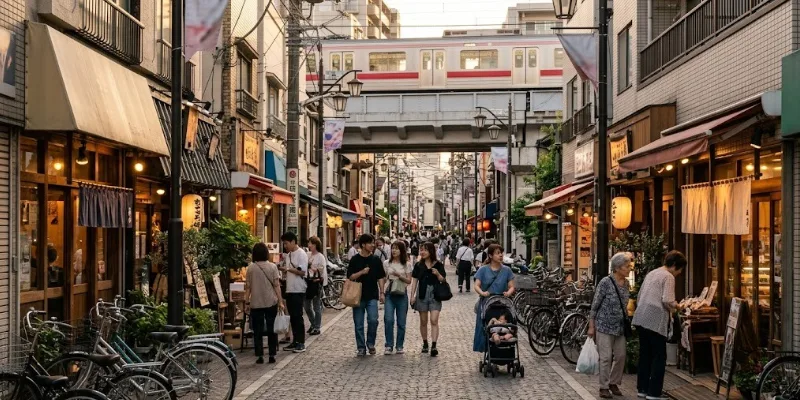
Once you cross the river, you are in Kawasaki. Musashi-Kosugi is the big hub here, with tower apartments and shopping malls. Limited express trains reach Shibuya in about 14 minutes. The station also has JR lines to Shinagawa, Tokyo, Yokohama and Narita Airport. Shin-maruko is a walk away and has an older, local feel.
Motosumiyoshi is a favorite of young workers. Right outside the west exit is Bremen-dori, a cobblestone shopping street with about 138 shops. Studios cost about ¥15,000 less than at Musashi-Kosugi. For more on this city, see our guide to Kawasaki apartments for rent.
Hiyoshi to Kikuna: student towns and value picks
Hiyoshi is home to Keio University’s Hiyoshi Campus, just one minute from the station. Rent is low for such a busy stop, at about ¥72,900. Note that daytime limited express trains skip Hiyoshi, so take the express (about 20 minutes to Shibuya). Hiyoshi is also where some trains branch off to Shin-Yokohama.
Tsunashima and Okurayama are quiet family areas with hills and plum gardens. Kikuna is the line’s best value. It is a limited express stop with the cheapest studio average on the line. The JR Yokohama Line here takes you one stop to Shin-Yokohama.
Myorenji to Yokohama: the Yokohama approach
Myorenji, Hakuraku and Higashi-hakuraku are low-key local stops just north of Yokohama. Hakuraku has the lively Rokkakubashi shopping street and is about a 13-minute walk from Kanagawa University’s Yokohama Campus. Tammachi is a short ride from Yokohama Station. Yokohama itself is a huge hub with JR, Keikyu, Sotetsu and subway lines. For the wider area, see our guide to Kanagawa apartments for rent.
Which Toyoko Line Station Is Best for You?
Ready to compare real listings along the line? Start with the areas below.
Office workers in Shibuya: Gakugei-daigaku or Musashi-Kosugi
Gakugei-daigaku is an express stop about ¥23,000 cheaper than Nakameguro. Musashi-Kosugi is a limited express stop, about 14 minutes from Shibuya, with studios near ¥106,000.
Couples working in Tokyo and Yokohama: Musashi-Kosugi or Kikuna
Both are limited express stops in the middle of the line. Kikuna is the cheaper of the two and adds the JR Yokohama Line.
Students: Hiyoshi or Motosumiyoshi
Hiyoshi puts you next to Keio’s campus for about ¥72,900. Motosumiyoshi is one stop closer to Tokyo and has more shops and nightlife.
Families: Den-en-chofu, Tamagawa or Tsunashima
These areas are green and quiet, with large parks nearby. Of the three, Tsunashima has the lowest rent level and is an express stop.
Lowest budget: Kikuna, Hiyoshi or Myorenji
You can find studios for about ¥70,000 to ¥74,000. Kikuna is a limited express stop and Hiyoshi is an express stop, so low rent does not have to mean a slow commute.
Toyoko Line vs Den-en-toshi Line: Which Is Better?
Both Tokyu lines start at Shibuya and run southwest into Kanagawa. The right choice depends on where you work. Our Den-en-toshi Line apartments guide covers the other line in detail.
| Toyoko Line | Den-en-toshi Line | |
|---|---|---|
| Ends at | Yokohama | Chuo-Rinkan (Yamato) |
| Through service past Shibuya | Fukutoshin Line to Shinjuku-sanchome and Ikebukuro | Hanzomon Line to Otemachi and Oshiage |
| Best for | Shibuya, Shinjuku, Ikebukuro or Yokohama workers | Otemachi, Aoyama or Kudanshita workers |
| Feel | Trendy towns, then Yokohama suburbs | Quiet planned suburbs in the west |
If you need to reach Yokohama, the Toyoko Line is the clear pick. If you work around Otemachi or Kudanshita, the Den-en-toshi Line saves a transfer.
What Are the Downsides of Toyoko Line Apartments?
Crowded rush hours. Traffic flows both ways, so trains are busy in the morning and evening. Some weekday trains offer Q SEAT, a paid reserved-seat car, if you want a guaranteed seat.
Local-only stops. Daikanyama, Yutenji, Toritsu-daigaku and several Yokohama stops get only local trains. Check the timetable before you sign a lease far from an express stop.
Delays spread widely. Because the line runs through to many other railways, a problem in one place can affect the whole route. In March 2026, a power line fault on the Minatomirai Line stopped Toyoko trains for about nine and a half hours.
High rent at the Tokyo end. Studios from Shibuya to Jiyugaoka cost ¥128,000 or more. If your budget is under ¥100,000, start your search in Kanagawa.
How to Rent a Toyoko Line Apartment as a Foreigner
- Set your budget. Plan for rent plus about four to six months of rent in move-in costs.
- Pick two or three stations. Use the table above and compare travel time to your office or school.
- Check walking time. Many listings are 10 to 15 minutes from the station. Our guide on walking distance to train stations explains what each minute really means.
- Prepare documents. You will usually need your residence card, passport, proof of income and a Japanese phone number.
- Use a guarantor company. Most landlords require one. Arealty can help you choose a company that accepts foreign tenants.
- Visit or request a video tour. Look at the street at night, the nearest supermarket and the walk to the station.
For broader commute planning, see our Tokyo commute times guide.
Frequently Asked Questions
A studio or 1K costs about ¥70,000 to ¥170,000 a month in 2026. Prices are highest at Shibuya, Daikanyama and Nakameguro, and lowest at Kikuna, Hiyoshi and Myorenji.
Kikuna has the lowest average studio rent, at about ¥70,000. It is also a limited express stop, which makes it the best value on the line.
About 27 minutes by limited express. Local trains take longer because they stop at all 21 stations.
Yes. The line gives direct access to both Tokyo and Yokohama, and trains run through to Shinjuku-sanchome and Ikebukuro without a transfer. Stations in Kanagawa, such as Musashi-Kosugi and Hiyoshi, also offer studios far below central Tokyo rent.
Some express trains branch off at Hiyoshi and run direct to Shin-Yokohama, where you can board the Tokaido Shinkansen. You can also change at Kikuna for the JR Yokohama Line.
Nakameguro has more character and a short ride to Shibuya, but studios cost about ¥151,000. Musashi-Kosugi costs about ¥45,000 less and has more train lines, though it feels more like a new high-rise town.
Find Toyoko Line Apartments with Arealty
Arealty lists apartments along the whole Toyoko Line, from Meguro to Yokohama. Every listing is in English, and our team helps with applications, guarantor companies and contracts.
- Browse all apartments for rent on Arealty
- Start your search on Arealty
- Compare more areas: Shibuya City guide and Kawasaki apartments for rent
Tell us your station, budget and move date, and our bilingual team will send matching options.
About this guide
This guide was written by Lucy Nguyen, Marketing Specialist at Arealty, using station-level rent data and official railway information. Rent and train details change, so check current listings before you decide.
Sources
- LIFULL HOME’S: Tokyu Toyoko Line rent by station
- Tokyu Corporation: Toyoko Line overview
- Wikipedia: Tōyoko Line
- Keio University: Hiyoshi Campus access map
- Kanagawa University: Yokohama Campus access
- Tokyu Corporation: Motosumiyoshi Bremen-dori shopping street
- Tabi-mag: stations named after universities that moved away

Real estate advisor at Arealty Japan, specialising in helping foreign residents navigate the Tokyo and Osaka rental markets. Lucy has guided hundreds of international renters — from Working Holiday visa holders to corporate relocations — through Japan’s apartment application process. Her writing draws on firsthand experience with landlord screening, guarantor companies, and foreigner-friendly listings across all 23 Tokyo wards and major Kansai cities.