
Last updated: August 2026
Disclosure: This guide is produced by Arealty, a licensed real estate advisory service in Japan. Salary data is sourced from Japanese government publications — not Arealty’s own data. The housing affordability tables in this article reflect Arealty’s advisory experience placing international residents across Tokyo and major Japanese cities.
Ask “what’s the average salary in Japan” and Google will hand you a single number. The problem: there are at least three official numbers that all claim to be the average, and they vary by ¥2.68 million depending on which one you land on. The national figure includes part-timers and drags the picture down. The professional figure excludes them and runs almost 70% higher. Neither one tells you what your job, in your city, actually pays — and neither one tells you whether that number covers Tokyo rent.
That’s what the rest of this guide is for: salary broken down by industry, age, region, and gender — and mapped directly against what you’d need to afford to rent or buy in Japan. Start with the three headline figures below, then find your actual benchmark.
Why the housing angle matters here: A ¥320,000/month gross salary looks very different depending on which Tokyo ward you are renting in. We show you exactly how to map your salary to what you can actually afford — a calculation that affects every foreigner relocating to Japan.
The Average Salary in Japan 2026: The Headline Numbers
There is no single “correct” average — because different sources measure different things. Here are the three figures you should know:
| Measure | Amount | What it means |
|---|---|---|
| National average (all workers) | ¥4.78 million/year | NTA data, includes part-time and regular employees |
| Median salary | ¥3.8–4.0 million/year | What a “typical” worker earns — more realistic |
| Full-time professionals only | ¥6.18–6.48 million/year | Excludes part-time; relevant if you are on a work visa |
Monthly equivalent: the NTA’s ¥4.78 million average works out to roughly ¥320,000–¥400,000 per month before taxes and deductions, depending on how bonuses are factored in.
Note: the National Tax Agency releases its annual Private-Sector Salary Survey each September. The ¥4.78 million figure is the most recent official benchmark (2024 survey data, published September 2025); the next update is expected September 2026.
Why the three numbers are so different
Japan’s salary statistics are shaped by three things:
Part-time vs full-time mix. About 38% of Japanese women and 12% of men work part-time. Averages that include them pull the overall figure down.
The bonus system. Most Japanese full-time workers receive semi-annual bonuses (often 2–4 months of base pay combined). Annual figures that don’t include bonuses understate real earnings.
The seniority effect. Japan still largely follows the nenkō (seniority-based) wage system, meaning salaries rise steeply with age. A 25-year-old and a 55-year-old in the same job may earn very different amounts.
If you are a foreign professional on a work visa, the ¥6.18–6.48 million figure is probably the most relevant benchmark for you, since most work visa holders are in full-time regular roles.
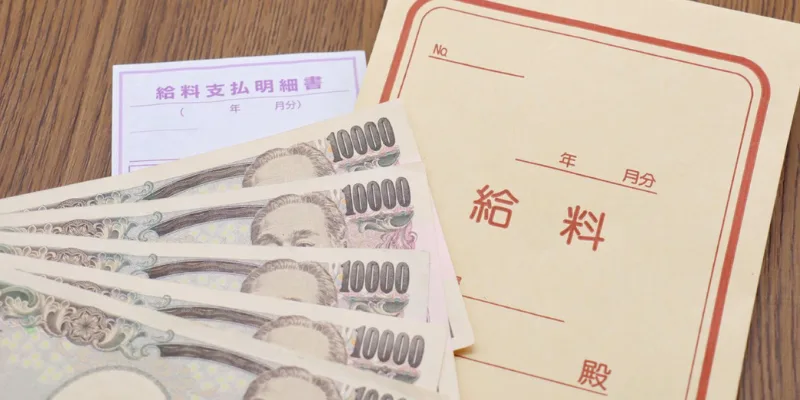
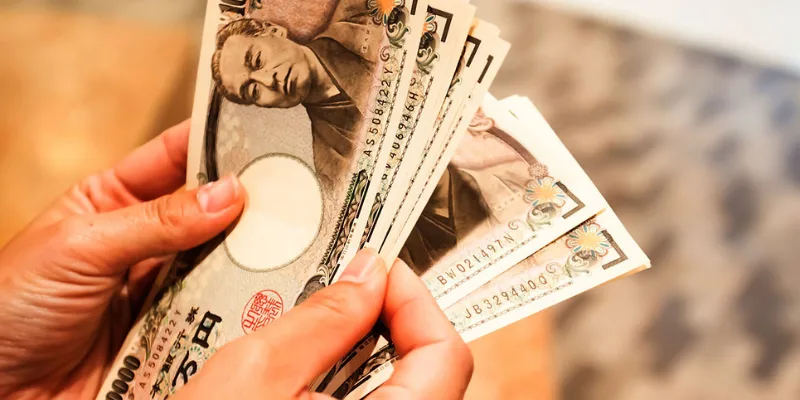
Japanese pay slip and monthly salary.
How Much Rent Can You Afford on a Japanese Salary?
This is the question that connects salary data to your actual housing decision.
The standard Japanese landlord screening rule: rent should not exceed 1/36 of annual gross salary (approximately 33% of monthly gross). This is stricter than the 30% guideline used in many Western countries and is a frequent reason foreign applicants are rejected even when they can afford the rent by their own standards.
| Monthly gross | 30% rent ceiling | Landlord’s 1/36 requirement | What this gets you in Tokyo |
|---|---|---|---|
| ¥200,000 | ¥60,000 | ¥66,667/year min. salary needed | 1K in outer wards (Adachi, Katsushika) |
| ¥250,000 | ¥75,000 | ¥83,333/year | 1K/1DK in Setagaya, Suginami, Itabashi |
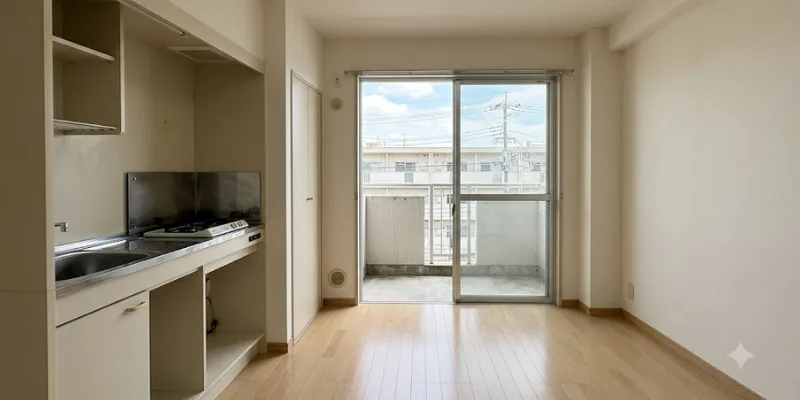
| ¥320,000 | ¥96,000 | ¥106,667/year | 1LDK in most wards except central |
| ¥400,000 | ¥120,000 | ¥133,333/year | 1LDK in Shinjuku/Shibuya; 2DK suburbs |
| ¥500,000 | ¥150,000 | ¥166,667/year | 2LDK mid-central; small 1LDK central |
| ¥700,000 | ¥210,000 | ¥233,333/year | 3LDK in good areas |
For foreigners, the 1/36 rule matters more than the 30% rule — because landlords apply it during screening, not you. Budget your housing search based on 1/36 of your documented annual income to avoid rejections.
For a full ward-by-ward breakdown of what different rent levels get you across Tokyo, see our Tokyo 23 Wards Apartment Rental Comparison Guide. For conte
Salary by Industry in Japan
Industry choice has a larger impact on your earnings than almost any other factor. Here’s the 2026 breakdown for common industries:
| Industry | Annual salary (JPY) | Approximate USD |
|---|---|---|
| IT / Software Development | ¥6–10 million | $39,000–$64,500 |
| Finance & Consulting | ¥7 million+ | $45,000+ |
| Healthcare & Pharmaceuticals | ¥5.5–7 million | $35,500–$45,000 |
| Manufacturing & Engineering | ¥5–7 million | $32,000–$45,000 |
| Sales & Marketing | ¥4–6 million | $26,000–$39,000 |
| Education (teaching) | ¥3–4.5 million | $19,000–$29,000 |
| Retail & Hospitality | ¥2.8–4 million | $18,000–$26,000 |
Skilled trades (nursing, mechanics, electrical work) follow a different pay structure tied to licensing and years of certification rather than company sector — pay typically ranges ¥4.6–8.4 million depending on experience, and is more nationally standardized than the white-collar Tokyo premium discussed below.
High-paying fields in 2026 are technology, finance, and energy. Lower-paying fields remain retail, hospitality, and entry-level education (including many English teaching roles). Remote developers hired by international companies often sit at the top of the range — self-reported data from global tech pay platforms puts the average remote developer salary in Japan at around US$68,000 per year
Salary by Age in Japan
The nenkō system means salaries in Japan typically rise steadily with age and peak in the 50s. Here is a realistic trajectory based on 2026 data:
| Age range | Typical annual salary | Life stage |
|---|---|---|
| 20–24 | ¥2.6–3.0 million | New graduate |
| 25–29 | ¥3.4–4.0 million | Early career |
| 30–34 | ¥4.2–4.8 million | Mid-career |
| 35–39 | ¥4.8–5.5 million | Senior individual contributor |
| 40–49 | ¥5.5–6.5 million | Management track |
| 50–54 | ¥6.5–7.2 million | Peak earnings |
| 55–59 | ¥6.0–7.0 million | Pre-retirement plateau |
| 60+ | ¥3.5–4.5 million | Post-retirement re-employment |
Key insight for expats: if you move to Japan mid-career (in your 30s or 40s), your salary will likely be benchmarked against the Japanese trajectory — meaning foreign professionals often out-earn local peers in the same role, especially in international companies.
Comparing Japanese income to US dollars. professionals often out-earn local peers in the same role, especially in international companies.

The Gender Pay Gap in Japan
Japan’s gender pay gap remains one of the widest among developed economies. The 2026 figures:
Male workers (average): ¥5.63 million/year
Female workers (average): ¥3.14 million/year
Gap: approximately 44% (narrowing to ~25% when comparing full-time regular employees only)
The gap stems from structural factors: higher part-time rates among women, career interruptions for childcare, and concentration in lower-paying sectors. Progress is slow but incremental.
Regional Variation: Tokyo vs the Rest of Japan
Where you work matters almost as much as what you do. Tokyo commands roughly a 35% premium over the national average:
| Region | Average annual salary | Premium/discount vs national |
|---|---|---|
| Tokyo | ¥6.21 million | +35% |
| Kanagawa (Yokohama) | ¥5.60 million | +22% |
| Osaka | ¥4.90 million | +7% |
| Aichi (Nagoya) | ¥4.85 million | +6% |
| Fukuoka | ¥4.20 million | −8% |
| Okinawa | ¥3.60 million | −22% |
Tokyo’s premium reflects headquarters concentration, financial sector dominance, and intense competition for skilled workers. But Tokyo also has Japan’s highest cost of living — especially for housing. A higher Tokyo salary does not automatically mean more disposable income.
For foreign professionals, this creates a genuine trade-off: Fukuoka or Kyoto can offer 30–40% lower living costs with only a 10–20% salary discount. If remote work is an option, the salary-to-cost-of-living ratio strongly favors regional cities. For current rent levels in Tokyo versus other areas, see our Tokyo apartment rent trends 2026 guide.
If you’re weighing a shorter stay before committing to a lease, our Tokyo short-term apartment rental guide covers pricing and what’s available month-to-month.
Minimum Wage in Japan 2026
Japan sets minimum wages at the prefectural level. The most recent nationwide revision took effect in October 2025 (some prefectures phased it in as late as early 2026) and delivered the largest single-year increase on record, as the government continues pushing toward its ¥1,500/hour target by the late 2020s:
| Prefecture | Hourly minimum (effective Oct 2025) | Monthly (40hr/week) |
|---|---|---|
| Tokyo | ¥1,226 | ~¥212,000 |
| Kanagawa | ¥1,225 | ~¥212,000 |
| Osaka | ¥1,177 | ~¥204,000 |
| National weighted average | ¥1,121 | ~¥194,000 |
| Okinawa / Kochi / Miyazaki (lowest) | ¥1,023 | ~¥177,000 |
This was a record ¥66/hour (6.3%) increase over the previous year, and for the first time ever, all 47 prefectures now sit above ¥1,000/hour.
Update — the next revision is already in motion. On July 28, 2026, the Central Minimum Wage Council issued its FY2026 guideline: a ¥55/hour rise (+4.9%) in the national weighted average, from ¥1,121 to ¥1,176. Tokyo, Osaka, Kanagawa, Saitama, Chiba, and Aichi (Rank A) would each rise ¥54/hour; the remaining 41 prefectures (Rank B and C) would rise ¥56/hour. This is a recommendation, not law yet — each prefecture’s local council finalizes its own figure through August, with new rates typically taking effect around October 1, 2026. The increase is smaller than 2025’s record ¥66 rise, reflecting slowing inflation and pushback from small and mid-size employers.
At Tokyo’s current minimum wage, a full-time worker (40 hrs/week) earns approximately ¥2.55 million annually before taxes — roughly 53% of the national average salary. Minimum-wage earners in Tokyo face particularly tight budgets given the city’s housing costs.
Bonuses, Taxes, and Take-Home Pay
One confusing aspect of Japanese salaries is how much of the headline number you actually receive. Here’s the typical flow from gross to net for a ¥4.78 million annual salary:
Gross annual salary: ¥4,780,000
Income tax: ~¥180,000 (3.8%)
Resident tax (住民税): ~¥240,000 (5%)
Social insurance (health, pension, unemployment): ~¥700,000 (14.6%)
Net take-home: ~¥3,660,000 (77% of gross)
So while the nominal monthly figure is ¥320,000–400,000, the actual monthly take-home is typically ¥240,000–300,000.
Bonuses matter. Most full-time employees receive semi-annual bonuses totalling 2–4 months of base salary per year. If your quoted annual salary does not clearly include bonuses, ask — the difference can be ¥500,000 or more.
Salary Expectations for Foreign Professionals
If you are negotiating a job offer or evaluating whether a move to Japan makes financial sense, here are realistic benchmarks for 2026:
Entry-level foreign professional (0–3 years, English teaching, sales support): ¥3.0–3.8 million/year
Mid-career specialist (3–7 years, IT, marketing): ¥5.0–7.5 million/year
Senior/management (7+ years, international company): ¥8.0–15.0 million/year
Executive / specialized tech (leadership, AI/finance): ¥15 million+
The Highly Skilled Professional visa has an income threshold around ¥10 million, which gives a good signal of where the market values top international talent. The Digital Nomad visa for skilled remote workers also uses ¥10 million as its income bar. If you’re relocating with family under a work visa, see our working visa guide to bringing family to Japan.
Is the Average Salary Enough to Live Comfortably?
The honest answer depends entirely on your lifestyle, city, and family situation.
Single person in Tokyo:
Comfortable: ¥4.0 million+/year (¥330K+/month)
Good lifestyle with savings: ¥6.0 million+/year (¥500K+/month)
Financial security / investing: ¥8.0 million+/year
Family of four in Tokyo:
Basic: ¥7.0 million/year
Comfortable: ¥10 million/year
Private school / international education: ¥15 million+/year
Single person outside Tokyo (Fukuoka, Sapporo, Sendai):
Comfortable: ¥3.5 million/year
Good lifestyle: ¥5.0 million/year
The average national salary of ¥4.78 million is enough for a single person to live comfortably in most Japanese cities except central Tokyo. For a family in Tokyo, it is tight but workable For a family in Osaka or Fukuoka, it is fairly comfortable.
For the housing side of this equation — how much a purchase would cost relative to income — see our Japan house price guide. If buying rather than renting is on the table, our guides to Japan housing loan interest rates, mortgage tax deductions, and whether foreigners can buy real estate in Japan cover the next steps.

Wage Growth and Outlook for 2026–2027
After decades of stagnation, wages in Japan are finally moving — and 2026 brought confirmation of the trend:
2026 Shuntō (spring wage negotiations), final result: +5.01% — the third consecutive year above 5%, matching Rengō’s target exactly.
SME-specific increase (unions under 300 members): +4.69% — narrower than in past years but still above 5% at the median.
Real wages, however, fell for a fourth consecutive year in 2025 (−1.3%), as inflation, rising social insurance premiums, and new levies absorbed most of the nominal gain — leaving workers with a net take-home increase of roughly 1.3% out of the 5%+ headline raise.
Minimum wage target (2030): ¥1,500/hour nationally, with 2026 forecasts pointing toward a national average near ¥1,130/hour after the next October revision.
Context for foreigners: only about 17% of Japan’s workforce belongs to a union and directly benefits from Shuntō negotiations. The other 83% — including most part-time, contract, and small-company workers — see wage growth filter through more slowly, if at all. For expats, this matters because housing costs in Tokyo have risen faster than wages for most workers — making neighborhood choice and rent negotiation increasingly important.
What This Means for Your Next Step
If you are moving to Japan in 2026 or already here and evaluating your options, here’s how to use this data:
Benchmark your salary against the industry and age averages above. If you are 20–30% below, negotiate.
Factor in bonuses — ask explicitly whether quoted salaries include them.
Budget rent at 25–30% of gross (not 40%, which leaves no room for savings).
Confirm visa-compatible rent-to-income ratio — landlords screen strictly.
Consider cities beyond Tokyo if salary-to-cost-of-living is your priority.
And if you have lined up the salary side of the equation, the next question is where to actually live. Japan’s rental market is notoriously complex for foreigners — guarantor requirements, required documents, high upfront costs, and “foreigner refused” listings are common. Arealty specializes in making this part simple.
Ready to find an apartment that matches your budget? Arealty provides English-language support, curated foreigner-friendly listings across Japan, and full service from property search through move-in. Browse available apartments in Tokyo or contact our team for personalized assistance.
FAQ
What is the average monthly salary in Japan in 2026? Between ¥320,000 and ¥400,000 before taxes and deductions, depending on whether bonuses are factored in. After income tax, resident tax, and social insurance contributions, typical take-home is ¥240,000–¥300,000/month.
Is ¥4 million a good salary in Japan? For a single person living outside central Tokyo, yes — it covers rent, food, transport, and modest savings. In central Tokyo, it is workable but tight. For a family, it is below comfortable in major cities.
How does the average salary in Japan compare to the US? Japan’s average of roughly $32,000–$42,000 at current exchange rates is significantly below the US average of around $60,000. However, universal healthcare coverage, lower housing costs outside major cities, and a different cost-of-living structure change the direct comparison considerably.
Do foreign professionals in Japan earn more or less than Japanese counterparts? Highly skilled foreign professionals in technology and finance often out-earn local peers at equivalent career stages, particularly at international companies. Foreign workers in teaching, hospitality, and entry-level service roles typically earn at or below local averages for those sectors.
How much rent can I afford on ¥300,000/month gross? The 30% rule gives ¥90,000/month. The landlord’s 1/36 rule requires approximately ¥108,000/month at ¥300,000 gross — so ¥90,000–¥100,000/month is a realistic upper ceiling for apartment searches. This gets you a 1K or small 1DK in most Tokyo wards, or a comfortable 1LDK in outer wards like Suginami, Setagaya, or Kita.
What salary do you need to rent a ¥100,000/month apartment in Tokyo? Japanese landlords typically require annual income of at least 36× monthly rent for the screening process. For a ¥100,000/month apartment, that means ¥3.6 million annual gross salary minimum. For a ¥150,000/month apartment, ¥5.4 million minimum.
What was the final 2026 Shuntō wage increase? Rengō’s final confirmed figure, released July 3, 2026, was +5.01% — the third consecutive year the spring wage negotiations delivered an increase above 5%.
Further Reading
- Tokyo 23 Wards Apartment Rental Comparison 2026
- Tokyo apartment rent trends 2026
- How much does a house in Japan cost? 2026 guide
- Apartment move-in costs in Japan
- Japan housing loan interest rates 2026
- Affordable neighborhoods in Tokyo for foreign renters
References
- Japan National Tax Agency. Private Sector Wage Survey (Minkan Kyūyo Jittai Chōsa) 2024.
- Ministry of Health, Labour and Welfare. Basic Survey on Wage Structure 2025.
- Ministry of Health, Labour and Welfare. Monthly Labour Survey 2025.
- Central Minimum Wages Council. Prefectural Minimum Wage Announcements, October 2025.
At Home / Sumitomo Mitsui Trust Research Institute. Apartment Rent Index Q3 2025.

Real estate advisor at Arealty Japan, specialising in helping foreign residents navigate the Tokyo and Osaka rental markets. Lucy has guided hundreds of international renters — from Working Holiday visa holders to corporate relocations — through Japan’s apartment application process. Her writing draws on firsthand experience with landlord screening, guarantor companies, and foreigner-friendly listings across all 23 Tokyo wards and major Kansai cities.