
Japan stands out globally for its minimal restrictions on foreign ownership of real estate. This aspect makes it a highly attractive and convenient market for international investors. Unlike many other nations, foreigners generally possess the same property rights as Japanese citizens. However, navigating the country’s legal framework, particularly the registration and notification procedures, can be complex. This comprehensive guide details the fundamental regulations and legal basis. It also covers practical considerations for Foreigners buying real estate in Japan. This ensures a smooth and compliant acquisition process.
Regulatory Structure and Foundational Statutes
The foundation for foreign real estate ownership in Japan is one of national treatment. This means that foreigners are treated similarly to Japanese nationals regarding land and building acquisition. This principle, largely upheld since the post-war era, is crucial for understanding the market’s accessibility.
Current Law on Foreign Real Estate Ownership
Under current Japanese law, foreign individuals and corporations are generally free to purchase and own real estate. The scope encompasses both real property (land) and fixtures (buildings). The policy environment is notably free of major restrictions. This open policy is a core characteristic of the Japanese market.
Historically, the legal and operational landscape was structured differently. The Foreign Land Act (Act No. 42 of 1925) was originally intended to restrict foreign land acquisition for national defense purposes. However, the subsequent abolition of the relevant Imperial Ordinances in 1945 rendered the act effectively defunct. Japan committed to principles like the General Agreement on Trade in Services (GATS). This commitment solidified Japan’s reluctance to enact discriminatory regulations aimed solely at non-nationals.
Benchmarking Against Global Regulatory Standards
Japan is among the select few nations that allow non-citizens to own land with virtually no conditions. This situation is quite different from many other countries. They adopt strict measures and often impose limitations for reasons of national security and resource protection.
- United States: Investments near military bases and airports face scrutiny under the Foreign Investment Risk Review Modernization Act (FIRRMA).
- Philippines: Foreigners are generally prohibited from owning land and may only purchase certain types of properties, such as condominium units.
- Thailand: Foreigners are limited in the percentage of units they can own in a condominium building. They are generally barred from owning land.
The Important Land Survey Act: Security and Specific Areas
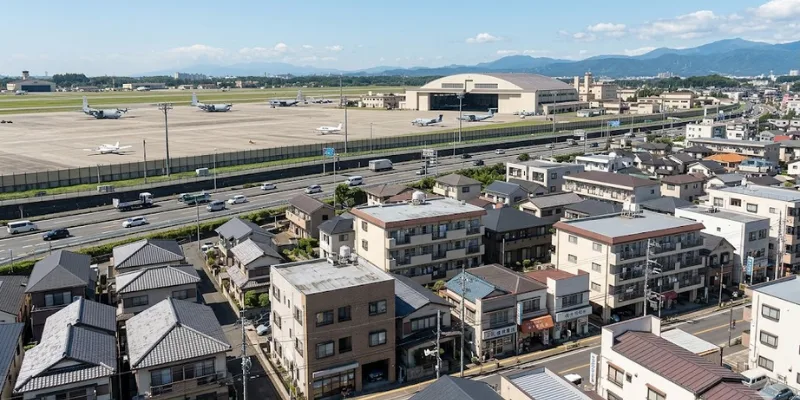
While the general principle of free ownership remains, recent legislation addresses security concerns related to land use around critical infrastructure. The Important Land Survey Act (enacted in 2021) does not prohibit foreign ownership. It establishes a mechanism for the government to monitor and manage land use in designated areas.
Background and Purpose
Concerns have long been raised over the acquisition of land near sensitive sites. These include remote border islands and national defense facilities. Foreign capital with unclear end-use objectives raises these concerns. The Act aims to mitigate these security risks. It empowers the government to investigate and regulate land usage. This ensures the safety and functionality of key infrastructure.
Identification of Restricted and Protected Zones
The Act establishes two categories of designated areas. The categories are based on their proximity to critical facilities. They also consider their significance to national security.
- Surveillance Areas (Kanshi Kuiki): These are designated areas within approximately 1,000 meters of facilities related to national defense. They are also near the Japan Coast Guard, nuclear power plants, and certain remote border islands.
- Special Surveillance Areas (Tokubetsu Kanshi Kuiki): These are designated as areas of exceptional importance that are difficult to replace. They mandate a prior reporting obligation for any purchase, sale, or establishment of rights concerning the land.
Regulations on “Function-Disrupting Acts”
The Act restricts “function-disrupting acts.” These acts are defined as actions that interfere with the essential operation of the targeted facilities. This also includes border islands. Specific instances of proscribed conduct include:
- Disrupting communication lines vital to a defense facility.
- Interfering with the lifeline supply (e.g., water, electricity) to a critical base.
- Preparing to trespass or occupy designated facilities.
If such acts are detected, the Prime Minister may recommend or issue an order to cease the activity. Violations of an order or the reporting obligation can lead to penalties.

FEFTA: Reporting Obligations for Non-Residents
There are no impediments to property acquisition by foreign nationals. However, they must adhere to the reporting requirements mandated by the Foreign Exchange and Foreign Trade Act (FEFTA). Failure to understand these regulations can lead to a violation of Japanese law.
The Non-Resident Reporting Mandate
FEFTA classifies the purchase of domestic real estate by a non-resident as a “capital transaction.” Non-residents must report the acquisition of domestic real estate, land lease rights, or other rights. They must report to the Minister of Finance (via the Bank of Japan) within 20 days of the transaction date. This obligation applies to the non-resident buyer and can be filed by an agent, such as a real estate broker.
Reporting Exemptions and Practical Scenarios
Crucially, not all transactions require reporting. The following categories of real estate acquisitions are exempted from the FEFTA reporting requirement:
- Acquisitions for use as a personal residence for the buyer or their relatives.
- Acquisitions for a non-profit business purpose.
- Acquisitions for use as an office by the non-resident.
- Acquisitions from another non-resident.
Important Note: The exemption for a “personal residence” does not extend to vacation homes or second homes. Therefore, the acquisition of a holiday villa in Hokkaido must be reported. Also, acquiring a secondary residence in Osaka for occasional personal use must be reported.
Procedure for Filing the Report
Non-residents must prepare a report using Form 22 (pertaining to Article 55-3 of FEFTA), issued by the Bank of Japan. The required documentation varies significantly based on the buyer’s residency status:
- Non-Resident Living Abroad: Requires a sworn affidavit or a certificate of signature (in place of a residence card) and a copy of their passport.
- Non-Resident Corporation: Requires the company’s certificate of incorporation and certificate of business registration.
Timely preparation of these documents is vital for meeting the 20-day deadline.

Practical Considerations and Future Regulatory Trends
While the Japanese market is welcoming, practical and procedural hurdles remain. International buyers must be prepared for the stringent requirements of the property registration process. They should also remain aware of the ongoing political discussions surrounding future regulatory changes.
Registration Procedures and Document Preparation
To legally affirm ownership, a non-resident must undergo the property registration procedures. Strict identity verification is mandated to ensure transaction transparency and prevent illegal activities like money laundering.
For registration, non-residents who do not have a resident registration card must substitute standard documents (like a Seal Certificate) with alternatives, such as:
- A Sworn Affidavit obtained from a Japanese embassy/consulate or a notary public in the country of residence.
- A Certificate of Signature (instead of a seal certificate).
For example, an American investor purchasing a house in Kyoto will need to obtain a Sworn Affidavit from the U.S. Embassy in Tokyo. This affidavit confirms their address and identity. It replaces the Japanese Juminhyo (Certificate of Residence) and Inkan Toroku Shomeisho (Seal Registration Certificate).
Current Acquisition Statistics and Government Response
The government actively surveys land use under the Important Land Survey Act. As of the end of fiscal year 2023, foreign and foreign corporate acquisitions in the designated surveillance areas accounted for approximately 2.2% of total acquisitions. The acquisitions showed a clear geographic disparity, with the top three acquiring origins being:
- China: 54.7%
- South Korea: 13.2%
- Taiwan: 12.4%
These statistics have fueled ongoing concerns in the Diet (Japanese parliament) regarding potential national security risks. These risks are particularly associated with the high volume of acquisitions by Chinese citizens and corporations near defense facilities.
Future Regulatory Outlook
The current openness of the market is subject to political debate. The issue of foreign acquisition is increasingly intertwined with broader societal concerns, such as escalating housing prices.
In December 2024, the Democratic Party for the People and the Japan Innovation Party resubmitted a bill to the House of Representatives. The bill advocates for tighter regulations on foreign land acquisition. Discussions are now expanding beyond national security. They now include housing policy. There are considerations for broader restrictions. These include potential taxes on the acquisition and use stages of property. This is contingent on an amendment to the Land Use Regulation Act. Investors should proactively monitor these legislative developments if they plan to hold assets long-term.
Investing in Apartments in Japan: A Gateway to the Market
For many foreign investors and residents, apartments in Japan offer a less complicated and highly liquid entry point into the real estate market. Whether for investment or personal use, the process is streamlined, especially in major metropolitan areas.
The Appeal of Urban Apartments
Acquiring an apartment, particularly in economic hubs, provides several advantages:
- Lower Risk: Apartments often come with management companies (for common areas), reducing the administrative burden on the foreign owner.
- High Liquidity: Properties in prime locations like Tokyo and Osaka are easy to sell or rent out.
- Consistent Rental Demand: Key urban centers ensure a steady flow of renters. This is especially true for apartment for rent Japan units. These units cater to young professionals and expats.
Focus on the Tokyo Market
The Tokyo real estate market is the most dynamic. It covers everything from luxury high-rise condos to smaller, older apartments in Tokyo Japan.
- Investment Perspective: The high demand for Japan Tokyo apartment rent keeps rental yields competitive. This is especially true in centrally located wards such as Shinjuku, Shibuya, and Minato.
- Residential Perspective: The sheer variety of units accommodates diverse needs, from single-occupancy studio mansions to larger family apaatos.
The Role of Real Estate Agents (Arealty)
Due to the language barrier, procedural complexities, and the need to fulfill FEFTA and registration requirements, securing a knowledgeable and trustworthy real estate agent is essential. A professional real estate agency, such as Arealty, specializing in international transactions, provides indispensable support by:
- Bridging the Language Gap: Communicating clearly with sellers, government offices, and the Bank of Japan.
- Ensuring Compliance: Guiding non-residents through the strict FEFTA reporting and the complex registration document preparation (e.g., handling the Sworn Affidavit process).
- Local Market Expertise: Identifying properties that meet investment criteria. These properties should not be located in Special Surveillance Areas under the Important Land Survey Act.
Do not navigate the Japanese real estate market alone. Contact Arealty today for expert, compliant assistance with your acquisition, ensuring you successfully purchase your next investment property or dream home in Japan. Click here to schedule a consultation.
Conclusion
Japan’s real estate market is remarkably open to Foreigners buying real estate in Japan, providing near-unrestricted property ownership rights. The key to a successful acquisition is to meticulously adhere to procedural obligations. This includes the FEFTA reporting requirements for non-residents. It also involves the heightened scrutiny imposed by the Important Land Survey Act in specific security-sensitive zones. The political climate is shifting toward potential tightening of regulations. Therefore, it is crucial for any international investor to engage with experienced legal and real estate professionals.

Real estate advisor at Arealty Japan, specialising in helping foreign residents navigate the Tokyo and Osaka rental markets. Lucy has guided hundreds of international renters — from Working Holiday visa holders to corporate relocations — through Japan’s apartment application process. Her writing draws on firsthand experience with landlord screening, guarantor companies, and foreigner-friendly listings across all 23 Tokyo wards and major Kansai cities.