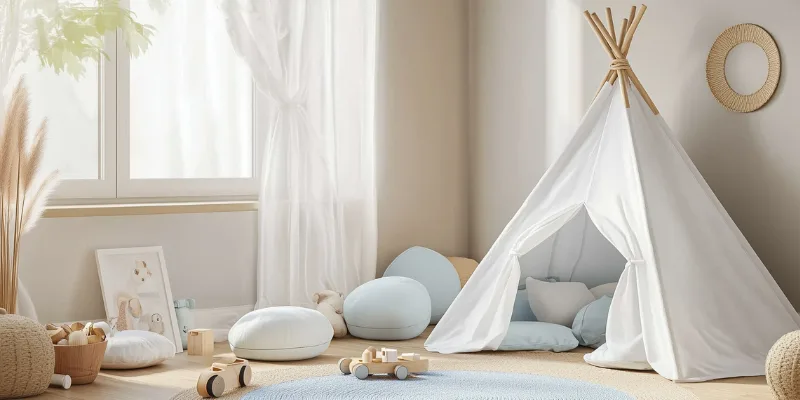

Choosing a home is one of the most significant life decisions a family can make, and in Japan, this decision is often driven by the arrival of a new child. For international residents, navigating the world of apartments in Japan requires a shift in spatial perception. What might be considered a small closet in North America or Europe is often a functional, highly-efficient bedroom in East Asia. This guide explores the ideal children’s room size Japan, focusing on how to maximize comfort in an apartment for rent Japan while ensuring a high quality of life for your growing family.
Understanding the “Jo” System and Spatial Standards
Before diving into specific dimensions, it is essential to define the Japanese measurement unit: the Jo (tatami mat). In the context of apartments in Tokyo Japan, room sizes are rarely listed in square feet. Instead, they use the area of a standard tatami mat ($1.62$ square meters).
The Mathematical Reality of Japanese Rooms
When you search for a japan tokyo apartment rent, you will typically see room sizes ranging from 4.5-jo to 8-jo. To put this into a global perspective:
- 4.5-jo: Approximately 7.3 square meters. This is considered a compact “cozy” room.
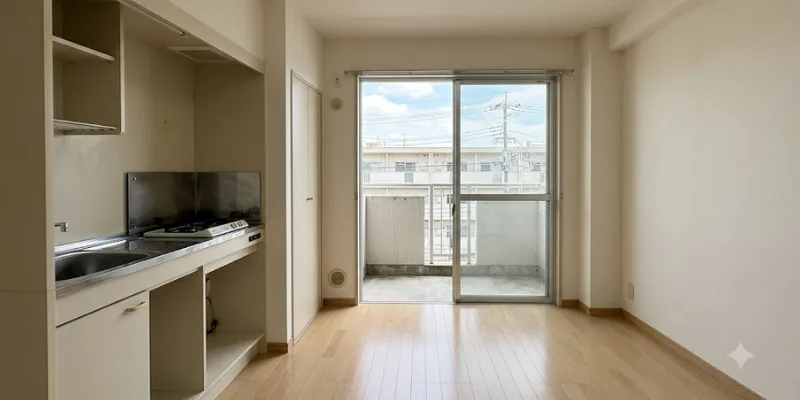
- 6.0-jo: Approximately 9.7 square meters. This is the standard size for a single occupant.
- 8.0-jo: Approximately 13.0 square meters. This is viewed as a spacious or “master” bedroom size in many city apartments.
Defining the “Ideal” Size
The ideal children’s room size Japan is widely considered to be 6 tatami mats. This size provides a balanced ratio of floor space to furniture capacity. Within these dimensions, a child can comfortably fit a “Standard Trio” of furniture: a single bed, a study desk, and a chest of drawers. If the room is smaller than 4.5-jo, the occupant may feel restricted, especially as they enter adolescence and acquire larger personal items such as bulky winter parkas, sports gear like kendo armor, and specialized musical instruments.
Detailed Comparison of Children’s Room Sizes
The experience of living in an apartment for rent Japan varies wildly depending on the square footage allocated to private spaces. Here is a breakdown of how different sizes impact daily life and child development.
The Compact Room (4.5 Tatami Mats or Less)
In many central apartments in Tokyo Japan, space is a premium luxury. A 4.5-jo room is a common reality for many families.
- The Benefits of Minimalist Living:
Small rooms are inherently easier to maintain. Because there is less floor space, clutter becomes visible immediately, which encourages children to develop cleaning habits early. Furthermore, a smaller private room often acts as a catalyst for family bonding. If the bedroom is only for sleeping and quiet study, children naturally migrate toward common areas like the living room sofa, the dining table, or the kitchen breakfast bar, leading to more frequent interactions with parents. - Overcoming the Challenges:
The primary disadvantage is the lack of “breathing room.” A teenager may find a 4.5-jo space stifling if it is packed with textbooks, hobby collections, and a computer setup. The solution in Japanese architecture is often “verticality.” Using a loft bed allows the desk to fit underneath, effectively doubling the usable square footage of the room.
The Standard Room (6 Tatami Mats)
This is the most sought-after size for families looking at a japan tokyo apartment rent. It strikes a perfect chord between privacy and practicality.
- Spatial Versatility:
A 6-jo room allows for a “zoning” approach. You can clearly designate a sleeping zone, a study zone, and a play zone. This helps children mentally separate their activities, which can improve focus during homework time. - Room for Growth:
Unlike the 4.5-jo room, a 6-jo space can accommodate a child from kindergarten through their university years. It has enough wall space to support a full-sized wardrobe, which is essential for storing school uniforms, heavy bedding for winter, and formal attire.
The Large Room (8 Tatami Mats and Above)
While rarer in urban apartments in Japan, larger rooms provide a level of luxury and flexibility that is ideal for multi-child households.
- Multi-Functional Potential:
An 8-jo or 10-jo room is often designed to be “divisible.” Many Japanese developers install two doors and two light switches in a single large room. As the children grow, a partition wall or a large bookshelf can be installed to create two private 4-jo or 5-jo spaces. - Storage and Hobbies:
A large room allows for the inclusion of significant lifestyle items. If your child is a budding musician or athlete, an 8-jo room can easily house an upright piano, a full-sized drum kit, or even a small indoor climbing wall. This prevents the rest of the apartment from becoming a storage unit for specialized equipment.
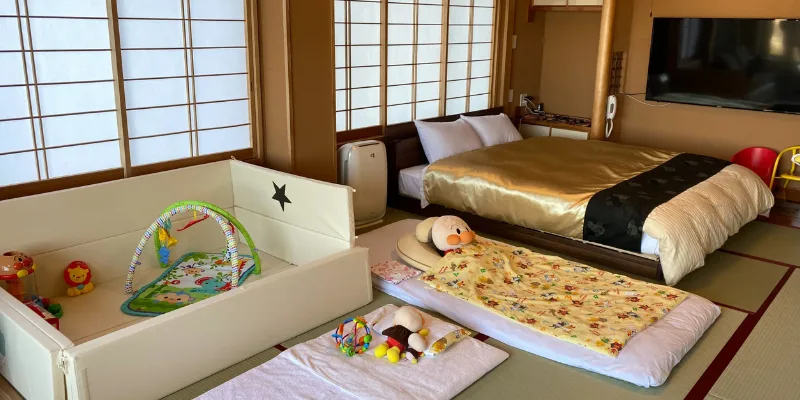
ARealty: Navigating the Japanese Real Estate Market
Finding a home that meets these specific spatial requirements while maintaining a reasonable budget is a challenge for many expats. This is where ARealty becomes an invaluable partner in your search.
ARealty is a premier real estate consultancy focused on the needs of the international community in Japan. We understand that Western expectations for room sizes often clash with the reality of apartments in Tokyo Japan. Our mission is to bridge that gap by identifying properties that offer superior layouts and “hidden” space efficiencies that a standard listing might miss.
When you work with ARealty, you gain access to:
- Multilingual Support: We remove the language barrier, ensuring you understand every clause of your lease for a japan tokyo apartment rent.
- Curated Listings: We filter for properties that specifically accommodate family living, looking for features like soundproof flooring, proximity to international schools, and modern seismic reinforcements.
- Cultural Liaison: We help you understand the nuances of Japanese neighborhoods, from the quiet residential streets of Setagaya to the high-rise convenience of Minato.
The search for your next home should be an exciting journey, not a stressful chore. Contact ARealty today to discover how we can help you find an apartment that perfectly fits your family’s lifestyle and aspirations.
Strategic Layout Points for Your Children’s Room
Regardless of the size of the apartment for rent Japan you choose, how you arrange the interior is what truly defines its functionality.
The Importance of “Flexible” Design
Children’s needs change every 24 months. A room designed for a toddler needs a soft floor and toy bins, while a room for a 12-year-old needs a high-quality desk and privacy. To ensure your apartments in Japan remain functional:
- Avoid Built-in Furniture: Unless it is a closet, avoid permanent fixtures. Use modular shelving that can be moved or expanded.
- Prioritize Lighting: Japanese apartments often rely on a single central ceiling light. Add task lighting like desk lamps, bedside reading lights, and clip-on LED strips to make the room feel larger and more inviting.
- Maximize External Storage: If the bedroom is small, utilize the apartment’s “dead zones.” This includes overhead shelves in the hallway, under-sink cabinets in the bathroom, and balcony storage boxes for items that are not used daily.
Positioning the Room Within the Floor Plan
When evaluating a japan tokyo apartment rent, look at where the children’s room is located relative to the “hub” of the home.
- The “Living-Through” Layout: Many modern Japanese homes are designed so that the child must walk through the living room to reach their bedroom. This prevents the child from “disappearing” into their room without acknowledging the family.
- Thermal Comfort: Because many apartments in Japan lack central heating, the orientation of the room matters. A south-facing room will be warmer in the winter, reducing the reliance on electric space heaters.
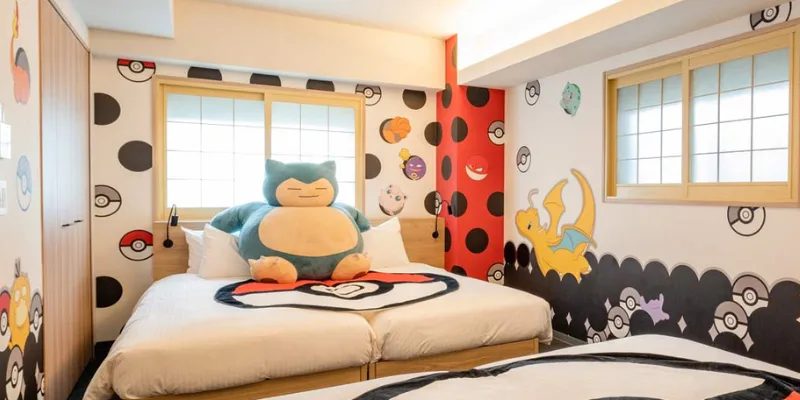
Building a Life in Japan: Beyond the Four Walls
When you secure an apartment for rent Japan, you are not just renting a room; you are joining a community. For families with children, the neighborhood amenities are just as important as the ideal children’s room size Japan.
Essential Neighborhood Features
Look for apartments in Tokyo Japan that are within a 10-minute walk of “Life Infrastructure.” For a family, this includes:
- Parks and Green Spaces: Since Japanese rooms are small, outdoor “relief” spaces are vital for high-energy children. Look for neighborhoods with pocket parks, riverside walking paths, or large municipal parks like Yoyogi or Shinjuku Gyoen.
- Safety and Traffic: Japan is incredibly safe, but narrow streets with heavy truck traffic can be a concern. Seek out “School Zones” where speed limits are strictly enforced and sidewalks are wide.
- Community Centers (Komin-kan): These centers often offer low-cost classes for children, such as calligraphy, martial arts, or traditional dance, providing a way for your child to integrate into the local culture.
The Impact of “Mansion” Living vs. “Kekko” Houses
In your search for apartments in Japan, you will choose between “Mansions” (concrete apartments) and “Apartos” (typically wooden or light-steel two-story buildings).
- Mansions: Offer better soundproofing—essential if you have active children who like to jump or play instruments. They also typically feature higher security, such as auto-lock gates, 24-hour surveillance cameras, and parcel delivery lockers.
- Apartos: Are often more affordable but have thinner walls. If you choose this route, investing in thick “joint mats” (foam floor tiles) is a courtesy to your downstairs neighbors.
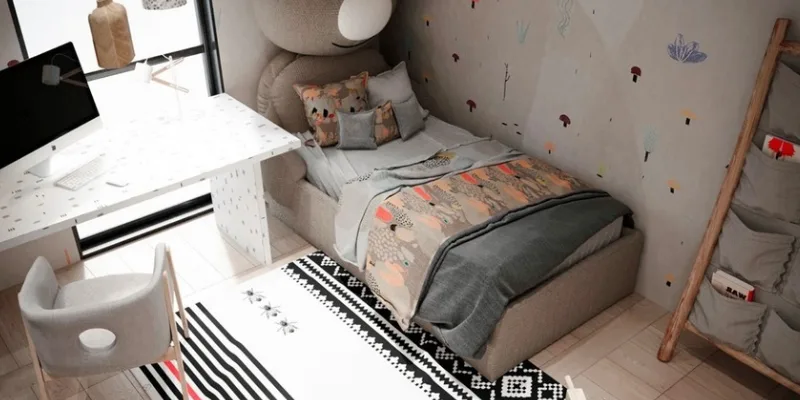
Future-Proofing Your Living Space
The final consideration for the ideal children’s room size Japan is the “Post-Child” era. In a culture where space is managed with surgical precision, an empty room is an opportunity.
Adaptive Re-use of Space
Once a child leaves for university or work, their room should not become a “ghost room.” Japanese homeowners often plan for this transition from the beginning. A 6-jo room can easily be converted into:
- A Hobby Studio: Perfect for painting, sewing, or woodworking.
- A Home Office: As remote work becomes standard in Tokyo, having a dedicated, quiet space is a significant asset.
- A Guest Room: Essential for expat families who frequently host visiting relatives from overseas.
The Cycle of the Japanese Home
Unlike many Western countries where homes are held for generations, Japanese residential real estate is dynamic. If your current apartment for rent Japan no longer fits your family’s size, the market is designed for mobility. With the help of agencies like ARealty, moving to a larger or better-located space is a streamlined process.
Conclusion
Securing the ideal children’s room size Japan requires a blend of realistic expectations and creative planning. While 6 tatami mats is the functional peak for most, the quality of life in apartments in Tokyo Japan is defined more by the “warmth” of the home and the efficiency of its layout than by raw square footage.
By focusing on flexible furniture, prioritizing common-area interaction, and choosing a neighborhood that acts as an extension of your living room, you can provide your children with a wonderful upbringing in the heart of Japan.
Are you ready to see these concepts in person? ARealty has a portfolio of family-ready properties waiting for you. Let us help you find a space where your children can dream big, even in a compact city.

Real estate advisor at Arealty Japan, specialising in helping foreign residents navigate the Tokyo and Osaka rental markets. Lucy has guided hundreds of international renters — from Working Holiday visa holders to corporate relocations — through Japan’s apartment application process. Her writing draws on firsthand experience with landlord screening, guarantor companies, and foreigner-friendly listings across all 23 Tokyo wards and major Kansai cities.