
Finding a home in a foreign country is a significant undertaking that requires precise timing and a clear understanding of local market dynamics. For expatriates and students, navigating the apartments in Japan market involves balancing strict application procedures with high demand for quality housing.
Successfully securing a japan tokyo apartment rent depends on starting your search at the correct moment. In the Japanese real estate industry, timing is not merely a suggestion but a critical component of a successful contract. This guide provides a professional roadmap to ensure your transition to living in Japan is efficient and stress-free.
What Is the Average Time to Find an Apartment in Japan?
The average time to find an apartment in Japan is typically between one to two months before your intended move-in date. This timeframe accounts for the phases of information gathering, physical viewings, the rigorous screening process, and the final administrative handover of the keys.
While it is possible to browse listings earlier, the fast-paced nature of the Japanese rental market means that a specific apartment for rent japan seen today may not be available in three months. Conversely, starting less than four weeks before your move-in date may limit your options to less desirable properties or lead to rushed decisions.
Why the Two-Month Window is Ideal
Starting 60 days in advance allows for a structured approach to the market. This period is sufficient to accommodate the “Sinsa” (tenant screening process), which can take anywhere from three to ten days. Furthermore, it provides a buffer for coordinating with moving companies, which often require early booking during peak seasons.
The Realistic Timeline for Urban Centers
In major hubs like Tokyo or Osaka, the market moves faster than in rural prefectures. If you are targeting apartments in tokyo japan, the competitive nature of the city necessitates a “ready-to-act” mindset. Most landlords will not hold a property for more than two weeks without a signed contract and a deposit. Therefore, starting exactly two months prior gives you the first month to research and the second month to finalize the legalities.
Strategic Phases of the Apartment Search
A professional search is divided into distinct stages. By following this sequence, you ensure that you are ready to act when the perfect apartments in tokyo japan become available.
Information Gathering and Market Analysis (2+ Months Out)
Before contacting an agency, you must familiarize yourself with the market rates in specific wards or cities. Japan’s rental costs vary significantly based on proximity to major train stations and the age of the building.
- Determine your budget: Calculate your total move-in costs, which often include “Reikin” (key money), “Shikikin” (deposit), and agency fees.
- Identify transit needs: Living near major lines like the Yamanote Line or Chuo Line will increase rent but decrease commute times.
- Analyze floor plans: Learn the Japanese terminology for layouts, such as 1K (one room + kitchen), 1LDK (one bedroom + living/dining/kitchen), or 2DK (two bedrooms + dining/kitchen).
Physical Viewings and Agency Consultations (4–6 Weeks Out)
Once you have narrowed down your preferences, visiting a real estate office is the next logical step. Most properties in Japan are managed through central databases, meaning different agencies often have access to the same listings. However, the quality of service and the ability to negotiate “Gaijin-friendly” (foreigner-friendly) terms vary by agent.
Application and Screening (3–4 Weeks Out)
After selecting a property, you must submit a formal application. This is a critical stage where your financial stability and the reliability of your guarantor (or guarantor company) are evaluated by the landlord and the management company. You should prepare your financial evidence (e.g., employment contracts, recent bank statements, or tax withholding slips) in advance to avoid delays.
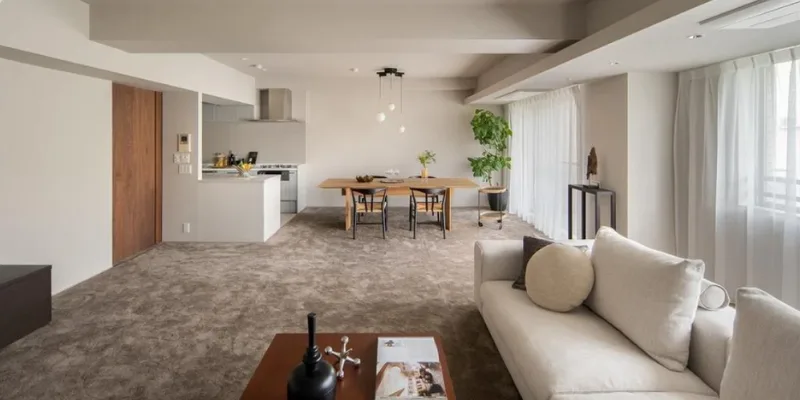
Essential Conditions for Your Japan Property Search
Defining your non-negotiable requirements is vital to communicate effectively with real estate agents. When looking for apartments in Japan, you should categorize your needs to avoid decision fatigue during viewings.
Minimum Requirements to Establish
Establishing a clear list of criteria helps agents filter out unsuitable properties immediately. You should be prepared to discuss these specific amenities and features (e.g., washlet toilets, delivery lockers for packages, and south-facing windows for natural light).
- Maximum Rent: This should generally not exceed 30% of your monthly gross income.
- Location Constraints: Consider the walking distance to the nearest station; “10 minutes” is a standard benchmark in Japanese urban planning.
- Building Type: Choose between “Mansion” (concrete/steel, better soundproofing) and “Apart” (wood/steel frame, more affordable).
Prioritizing Your Preferences
It is rare to find a property that satisfies every single desire. You must decide which factors are flexible if you find a location that is nearly perfect. For instance, you might accept a smaller floor area if the apartment is significantly closer to your workplace.
Navigating the Real Estate Agency Experience
Visiting a real estate office in Japan is a formal process. To receive the best service, you should approach these interactions with professionalism and preparedness.
The Benefits of Appointment-Based Visits
While walk-ins are accepted, booking an appointment via phone or email is the most efficient method. If you provide your criteria in advance, the agent can prepare a selection of keys and documents before you arrive, saving hours of administrative time. This is especially helpful when looking for an apartment for rent japan during the busy months of February and March.
Clear Communication of Terms
Agents appreciate clarity. If you can present a printed or digital list of your requirements, the likelihood of finding a match increases. You should also be transparent about your visa status and employment type, as these factors influence which landlords will accept your application.
Professional Conduct and Etiquette
In Japan, the landlord often considers the personality and manners of the tenant. Maintaining a polite and tidy appearance during viewings can positively influence the agent’s report to the property owner. You should dress in “smart casual” attire if you want to project an image of a responsible and reliable tenant.

Understanding the Rental Market in Tokyo
Searching for a japan tokyo apartment rent requires a different strategy than in rural areas due to the extreme density and competition. Apartments in tokyo japan move off the market within days, particularly during the “moving season” from January to March.
Regional Variations in Rent
Tokyo is divided into 23 Special Wards, each with its own character and price point. For example, Minato and Chiyoda wards command the highest prices, while Edogawa or Adachi wards offer more space for a lower budget. You should research specific neighborhoods (e.g., Shimokitazawa for culture, Ebisu for luxury, or Nerima for families) to see which aligns with your lifestyle.
The Impact of the New School/Fiscal Year
Most Japanese companies and schools begin their year in April. Consequently, the demand for housing spikes in late February. If you are searching during this period, you must be prepared to submit an application almost immediately after a viewing to secure the unit.
ARealty: Your Professional Partner in Japanese Real Estate
When navigating the complexities of the Japanese housing market, having an expert intermediary is invaluable. ARealty specializes in assisting foreign residents in finding high-quality apartments in Japan without the common barriers of language or “foreigner-friendly” restrictions.
ARealty understands the unique challenges faced by expatriates. They provide comprehensive support that goes beyond mere listings, ensuring that every legal and cultural nuance is addressed. By working with ARealty, you gain access to a network of landlords who are experienced in hosting international tenants.
- Multilingual Support: Communicate your needs clearly without the risk of translation errors.
- Vetted Listings: Access a curated database of apartments in tokyo japan where landlords are open to international tenants.
- End-to-End Guidance: From initial search to utility setup, ARealty manages the logistics so you can focus on your new life.
Are you ready to find your dream home in Tokyo? Contact ARealty today to speak with a dedicated consultant who understands your needs and can simplify the entire rental process.
Essential Documents for a Successful Application
To avoid delays that could result in losing a property to another applicant, you must have your documentation ready before you start viewing houses. Missing a single document can pause the screening process, allowing another tenant to step in.
Standard Documentation Requirements
Most management companies will require the following official documents (e.g., Residence Card, Passport, and Certificate of Eligibility):
- Proof of Income: A recent tax statement, employment contract, or several months of pay slips.
- Emergency Contact: Usually a person residing in Japan who can be reached if you cannot be contacted.
- Bank Account Details: You will eventually need a Japanese bank account to set up automatic rent transfers (Furikomi).
The Role of the Guarantor
Most rental contracts in Japan require a guarantor. If you do not have a Japanese relative to serve this role, you will likely be required to pay for a Guarantor Company (e.g., Casa, Nihon Safety, or JID). These companies charge a fee typically 50% to 100% of one month’s rent—to vouch for your financial obligations.
Analyzing Initial Costs: What to Expect
The financial barrier to entry in the Japanese rental market is notoriously high. Unlike many Western countries where you only pay a deposit and the first month’s rent, Japan involves several non-refundable fees.
Common Move-in Fees
When you find an apartment for rent japan, be prepared for the following costs:
- Shikikin (Security Deposit): Usually 1-2 months of rent, refundable minus cleaning fees.
- Reikin (Key Money): A “gratitude” payment to the landlord, usually 1-2 months of rent, non-refundable.
- Agency Fee: Typically one month’s rent plus tax.
- Insurance: Fire and earthquake insurance is mandatory.
Monthly Expenses Beyond Rent
In addition to the base rent for your japan tokyo apartment rent, you must account for “Kanrihi” or “Kyoitsuhi” (management/common area fees). These fees cover the maintenance of the elevator, hallway lighting, and trash collection areas.
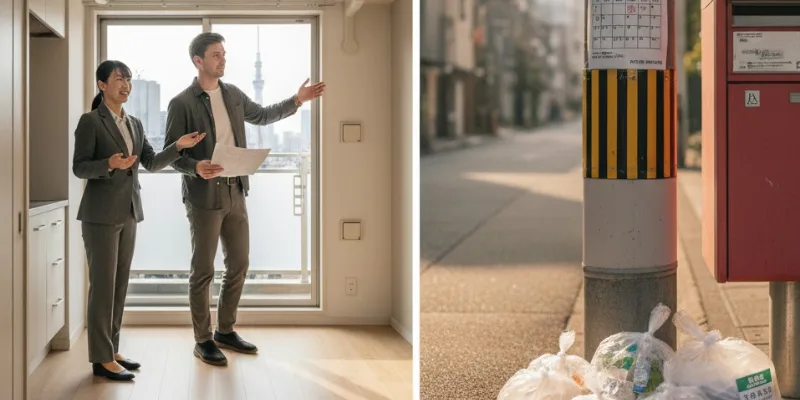
Cultural Nuances and Rules for Tenants
Living in apartments in Japan requires adherence to strict social and communal rules. Landlords prioritize tenants who demonstrate an understanding of these customs.
Trash Disposal Systems
Japan has complex rules for separating waste. Each municipality has different categories (e.g., burnable, non-burnable, and recyclable plastics). Failure to follow these rules can lead to complaints from neighbors and friction with the management company.
Noise and Community Harmony
Building structures, particularly older “Apart” buildings, may have thin walls. Maintaining a quiet environment after 9:00 PM is a standard expectation. You should be mindful of using loud appliances or hosting large gatherings late at night if you wish to maintain a positive relationship with your landlord.
Tips for International Students and Freelancers
The screening process for apartments in tokyo japan can be more stringent for those without a standard “salaryman” employment contract. However, there are ways to strengthen your application.
Using a School or Employer as a Guarantor
Many Japanese universities and corporations offer a “guarantor system” for their international members. This can significantly broaden your choices for apartments in Japan, as it provides the landlord with a high level of security.
Demonstrating Financial Solvency
If you are a freelancer, providing a history of your Japanese bank balance or showing a valid contract with a domestic client can help. Landlords are primarily concerned with your ability to pay rent consistently over the two-year contract period.
Key Questions to Ask During Your Search
To ensure you are getting a fair deal on a japan tokyo apartment rent, you should ask your agent specific questions during the viewing process. This prevents unexpected costs or inconveniences after you have moved in.
- Is there a bicycle parking fee? Many buildings charge a small monthly fee for a designated spot.
- What is the internet situation? Some buildings come with “free” internet, while others require you to install a line yourself, which can take weeks.
- Are there any “hidden” renewal fees? Confirm the cost of renewing the lease after two years.
Conclusion
The average time to find an apartment in Japan is a manageable two-month window if you approach the process with a structured plan and professional support. By starting early with online research, defining your non-negotiables, and partnering with a professional agency like ARealty, you can secure a home that perfectly suits your lifestyle in Japan.
Preparation is the definitive “shortcut” to a successful rental experience. Whether you are looking for a luxury japan tokyo apartment rent or a cozy apartment for rent japan in the suburbs, your success depends on your ability to act decisively when the right opportunity arises. Ensure you have your documents ready, your budget set, and your expectations aligned with the local market to make your move to Japan a resounding success.

Real estate advisor at Arealty Japan, specialising in helping foreign residents navigate the Tokyo and Osaka rental markets. Lucy has guided hundreds of international renters — from Working Holiday visa holders to corporate relocations — through Japan’s apartment application process. Her writing draws on firsthand experience with landlord screening, guarantor companies, and foreigner-friendly listings across all 23 Tokyo wards and major Kansai cities.