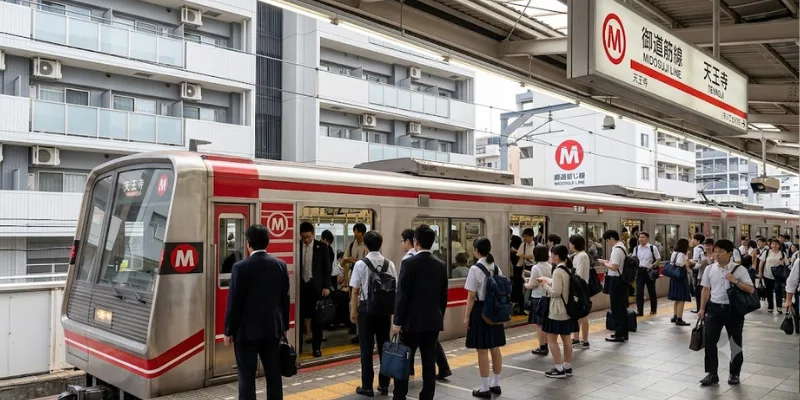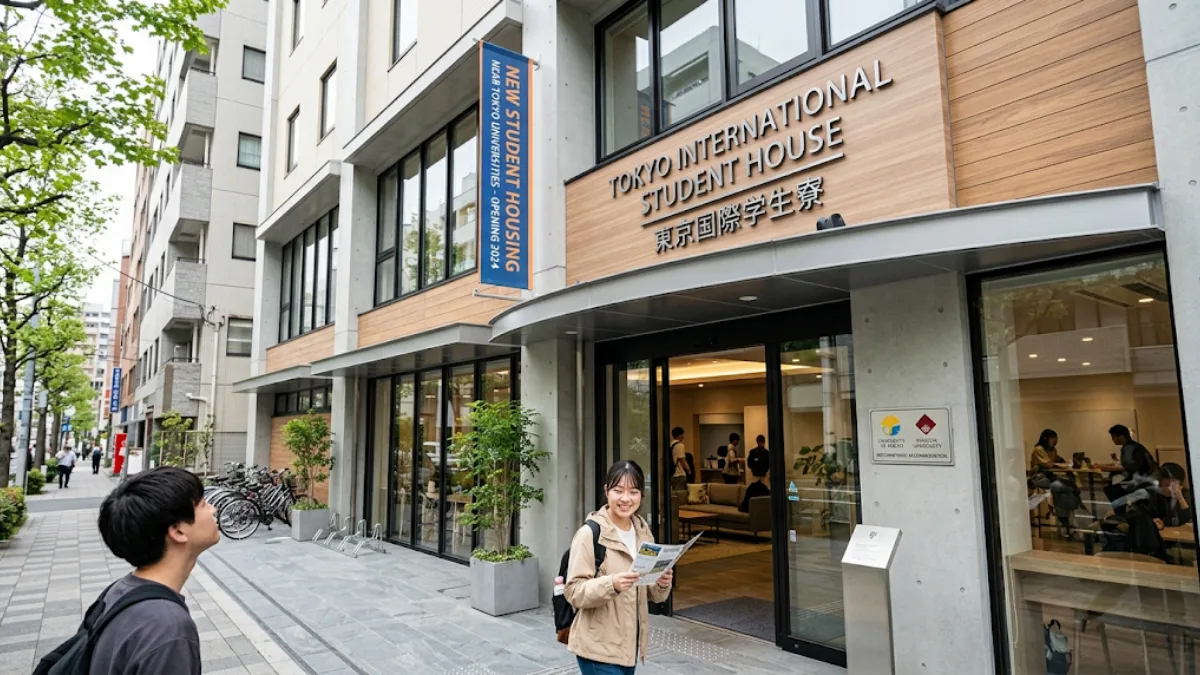

Choosing student housing near Tokyo universities is one of the first major decisions many students make, but it is rarely as simple as picking the cheapest room. For first-year students, exchange students, and international students, the real question is which housing option will make daily life easier after move-in, not just which listing looks best online.
That is why comparing a dorm, a private apartment, and a shared house needs more than a rent check. If you are looking at an apartment for rent Tokyo, reviewing apartments for rent in Tokyo Japan, or searching for foreigner friendly apartments Tokyo, you need to think about total cost, commute, community, support, and how difficult the move-in process will actually be.

Why Choosing Student Housing Near Tokyo Universities Is Harder Than It Looks
Students often think housing choice is mainly about room size, monthly rent, and building age. Those things matter, but they do not tell you how life will actually feel after classes start.
Housing affects your commute, study routine, cooking habits, stress level, parcel delivery, garbage disposal, and how lonely or connected you feel. A room can look efficient online but still create daily friction. Another room can look modest at first glance and still be the better choice because it supports student life more naturally.
This is especially true for students renting in Tokyo for the first time. Before move-in, many compare listings. After move-in, they start comparing routines. That shift is exactly why student housing near Tokyo universities should be evaluated through lived experience, not just listing appeal.
Option 1: Student Dormitories Near Tokyo Universities
Dormitories are often one of the most practical forms of student housing near Tokyo universities, especially for first-year students and students new to Japan. They reduce several early problems at once. You are not just renting a room. You are entering a system designed to make the first stage of student life easier.
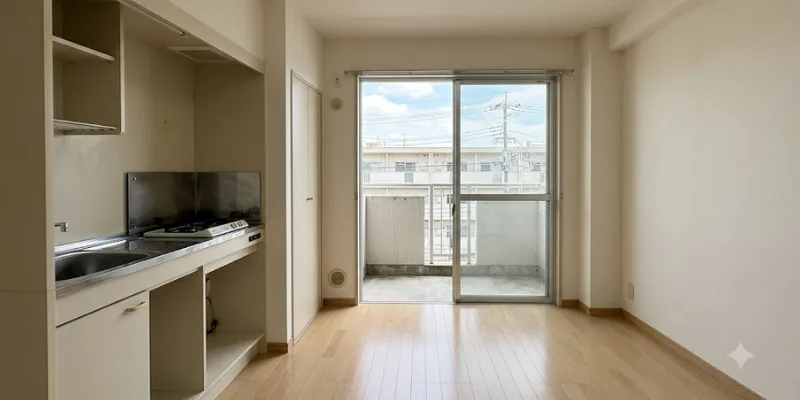
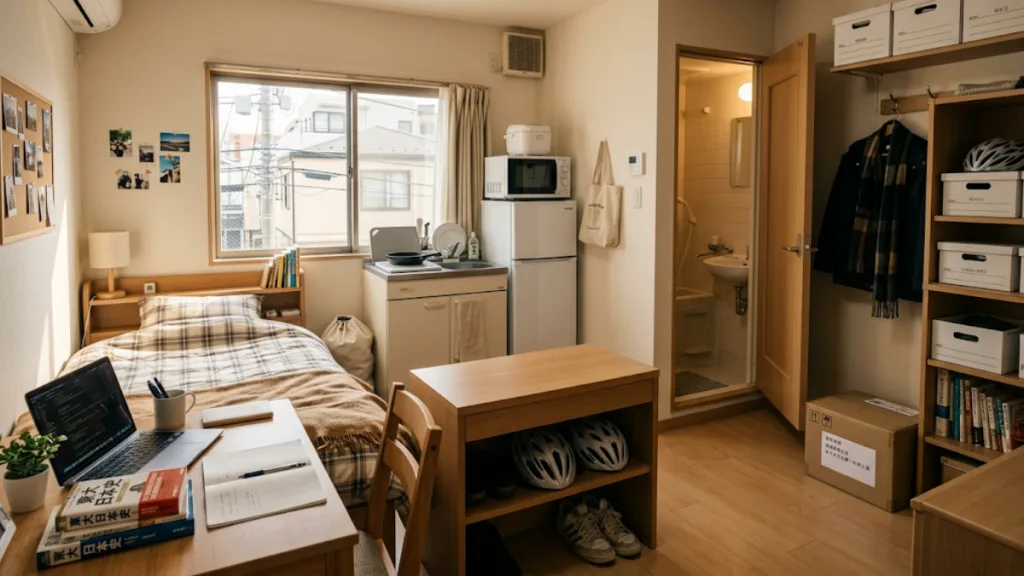
One useful example is that students initially chose the dorm because they expected it to be easier for making friends and easier than searching for outside accommodation on their own. Another student had assumed dorm life would feel strict, but after moving in found that daily life was more flexible than expected. The residents also appreciated practical conveniences such as parcel holding, flexible trash disposal, and free use of a meeting room for studying with friends. The room itself also included a bathroom and kitchen, which made dorm life feel more independent than some students imagine.
That said, dorms are not automatically perfect. They may come with rules, fixed room types, and less freedom to choose location. In the source case, the students still needed around 25 minutes by bicycle to get to school, but they described the commute positively because they often rode with friends. That is a good reminder that convenience is not only about distance. It is also about how manageable the daily routine feels.
Option 2: Private Apartments in Tokyo to Rent Near University
A private apartment is often the better choice for students who want privacy, quiet, and more control over their routine. If you already know Tokyo reasonably well, prefer to live alone, or simply work better without a shared environment, an apartment for rent Tokyo may be the right fit.
The biggest strength of apartments in Tokyo to rent is independence. You can choose a neighborhood that fits your faculty, part-time job, or transport needs. You also have more control over your space, your schedule, and your social environment.
The trade-off is that private apartments usually come with more friction. Upfront costs are higher, screening can be stricter, and there is no built-in community. In the source example, one dorm resident mentioned that a friend living alone in an apartment often felt lonely. That detail matters because it shows that a private apartment is not automatically the “better” option just because it offers more freedom.
For students reviewing apartments for rent in Tokyo Japan, the better comparison is not dorm versus apartment in abstract terms. It is which option fits your current stage of life. If you need support, lower friction, and faster adjustment, a dorm may be stronger. If you want independence and are ready for the extra responsibility, a private rental may suit you better.
3 Listings Directions Worth Checking For International Students
If you want to compare real apartments in Tokyo to rent, it helps to look at live examples instead of thinking about private rentals in theory. Shinjuku-ku, Minato-ku, and Bunkyo-ku are three strong places to start because they combine useful supply with direct relevance to major universities.
| Area | University | Apartment type | Best for | Listings |
|---|---|---|---|---|
| Shinjuku-ku | Waseda University | 1K | Active area, strong train access, good for Waseda/Takadanobaba | View listings |
| Minato-ku | Keio University, Mita Campus | 1R / compact 1K | Shorter central commute, independent living near Mita/Tamachi | View listings |
| Bunkyo-ku | University of Tokyo, Hongo Campus | 1K | Quieter academic area, practical access to Hongo/Todaimae | View listings |
A 1K is usually the most practical starting point for students choosing a private rental. It gives more separation between the living area and kitchen than a one-room unit, while still staying realistic for student budgets and first-time solo living. For students comparing apartments for rent in Tokyo Japan, this type often offers the best balance between privacy, functionality, and manageable size.
Option 3: Shared Houses and Flexible Student Housing Alternatives
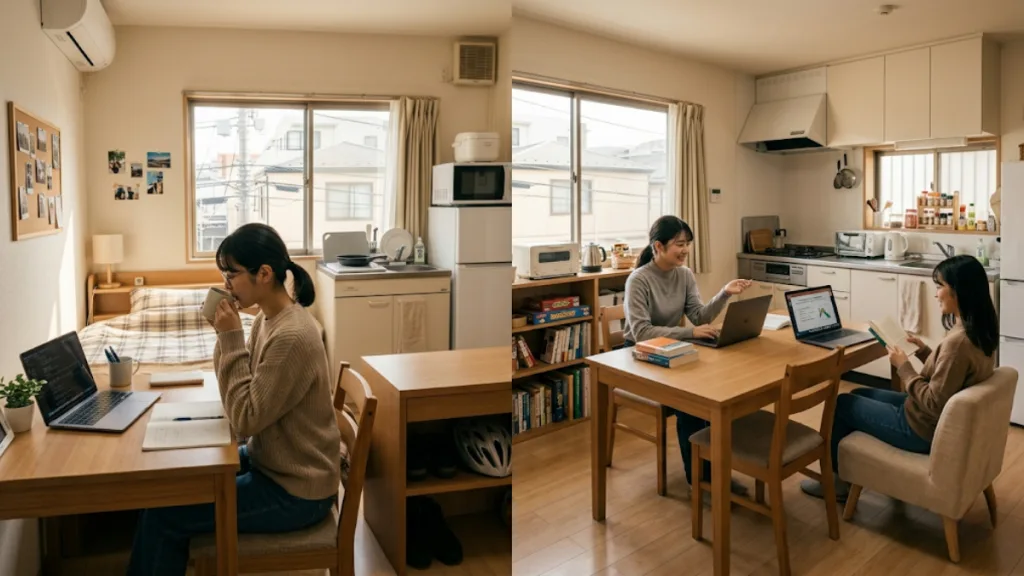
Shared houses are often a practical middle option between dorm life and solo living. They can work especially well for exchange students, short-stay students, and international students who want lower upfront pressure without going fully into a university dorm setup.
A shared house can offer community, simpler move-in, and more flexibility than many standard rentals. It can also reduce the initial stress of furnishing a room or managing everything alone from day one.
The trade-off is privacy. Shared houses vary a lot in house culture, cleanliness, noise, and compatibility with other residents. That means they should be treated as their own housing type, not simply as a cheaper private apartment. For some students, a shared house is the best first step. For others, it is only a temporary bridge while they continue searching.
How to Choose the Right Location Near Your University
Near campus is not always the smartest choice
Students often assume that the best student housing near Tokyo universities must be the closest room to campus. That sounds logical, but in practice, the better choice may be slightly farther away if it improves rent, room quality, or daily convenience.
A room that is ten minutes farther out may offer a calmer environment, lower rent, or better facilities. What matters is not only distance. It is how the location supports your full routine.
Commute quality matters more than commute length alone
Most students said it took almost 25 minutes to get to school by bike, but they still described the experience positively because commuting with friends made the distance feel shorter.
That is an important reminder. A commute is not just a number. It affects energy, mood, consistency, and social life. A slightly longer route can still work well if the housing setup reduces stress in other ways.
Students should compare neighborhoods by asking practical questions:
- Is there a supermarket nearby?
- Does the station route feel easy at night?
- Will the commute still feel manageable during rain, exams, or part-time work periods?
These questions often lead to better decisions than focusing only on map distance.
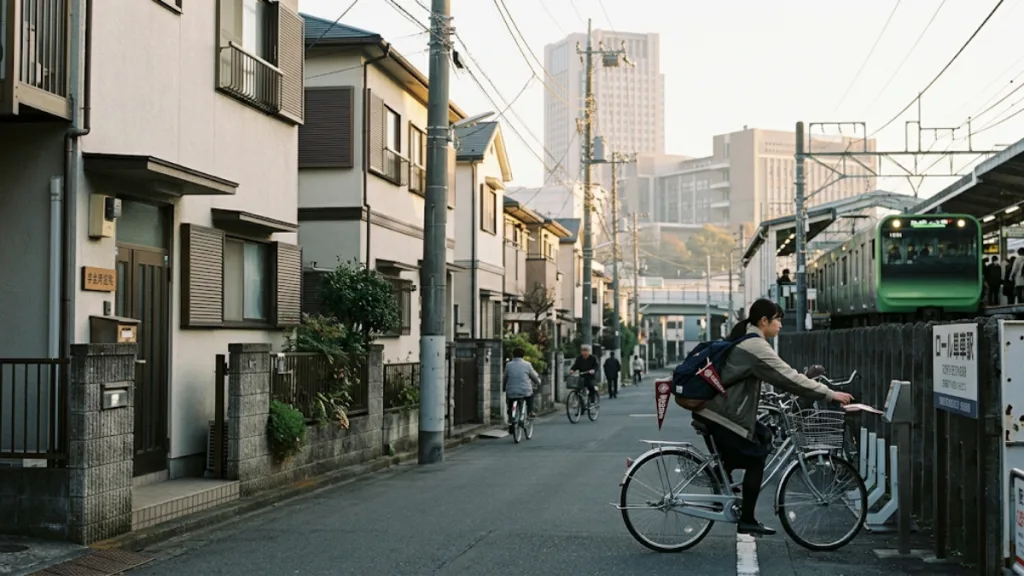
Suggested Areas to Search for Student Housing Near Tokyo Universities
If you are searching for student housing near Tokyo universities, a practical way to narrow your search is to begin with neighborhoods around your campus or main access station, then widen the range only when needed.
| University / campus | Best starting areas | Apartment type | Best for |
|---|---|---|---|
| University of Tokyo, Hongo Campus | Hongo-sanchome, Todaimae, Nezu, Yushima | 1R / 1K (18–25 m²) | Manageable route to campus, strong academic environment |
| Waseda University | Waseda, Takadanobaba, Nishi-Waseda | 1R / 1K / shared house | Good balance of commute, transport access, and student life |
| Keio University, Hiyoshi Campus | Hiyoshi | Compact 1R / 1K | Best for shorter daily travel and easier routine |
| Keio University, Mita Campus | Mita, Tamachi, Akabanebashi | 1R / 1K (18–25 m²) | Central access with practical solo-living options |
| Sophia University, Yotsuya Campus | Yotsuya, Ichigaya, Kojimachi | Studio / 1R / 1K | Strong fit for central Tokyo access and short commutes |
These are not the only areas worth checking. They are starting points. For many students, the best search strategy is to begin with near-campus zones, then widen into adjacent areas if rent or availability becomes too tight.
Costs of Student Housing Near Tokyo Universities
Rent matters, but total cost matters more
One of the most useful details from the Japanese source is that the dormitory fee was ¥39,000 per month, and the student explicitly said it was cheaper than renting an apartment in that area. That comparison is exactly how students should think. Do not compare image to image. Compare actual housing burden to actual housing burden.
When students look at japan tokyo apartment rent, many focus only on monthly rent. But for private apartments, the real decision depends on total move-in cost, not just the monthly figure.
Cost comparison table
| Housing type | Monthly cost | Upfront cost | Best for / what you get | Watch-outs |
|---|---|---|---|---|
| University-linked dorm | ~¥39,000 | University-specific | Best for first-year students. Lower rent, easier adjustment, private bath/kitchen, package holding, study room | Cheaper does not always mean closer. Commute can still be ~25 mins |
| Managed student hall / private student dorm | ~¥66,900–¥80,000 +~¥88,860–¥99,360 with meals | ~¥130,000–¥160,000+ entry fee ~¥50,000 deposit ~¥16,500 admin fee | Structured support and optional meals | Total yearly cost rises quickly with utilities, management, meals |
| Shared house | ~¥52,000–¥94,790 | Often lighter than apartment | Best for exchange / international students. Often furnished, internet included, easier move-in | Privacy and house culture vary a lot |
| Private apartment | ~¥67,000–¥93,000 | About 5 months of rent upfront | Maximum privacy and independence | Highest friction: deposit, key money, brokerage, guarantor, furniture |
What students often forget to budget for
A private apartment may require more than just rent. Depending on the contract, students may need to pay deposit, key money, agency fees, guarantor costs, insurance, furniture, internet setup, and commuting expense. That is why a lower-rent apartment can still be the more expensive decision overall.
Students should also think about hidden cost pressure. A room with a long commute may increase train cost and reduce time for part-time work or study. A cheap room without basic furniture may create a large setup burden in the first month. Cost should always be judged as total living cost, not just listing rent.
Can International Students Find Foreigner Friendly Apartments Tokyo
Yes, but the search must be realistic. For international students, one of the biggest differences between a dorm and a private rental is the guarantor requirement. Many private rentals in Japan ask for either a personal guarantor, a guarantor company, or a university-linked support arrangement. In practice, some students may be supported by parents, a sponsor, or a company, but many landlords and management companies still prefer a guarantor company that fits Japan’s rental system. Universities may also help students find guarantor support, so this is something worth checking early in the search process. Guarantor company fees are commonly around 0.5 to 1 month of rent, and some contracts also include renewal fees later.
This is why international students should not judge a listing by rent alone. A cheap room can still be hard to secure if the guarantor condition is unrealistic for your situation. When students search for foreigner friendly apartments Tokyo or try to rent apartment Tokyo foreigner style listings, the most useful question is not only “Is this room affordable?” but also “Can I realistically clear the guarantor and screening requirements for this room?”
This is where student-oriented support matters. Arealty does not only help international students search for housing. We also help students understand the guarantor requirement, prepare the right documents, and move toward listings where both the housing conditions and the approval path are realistic. For many students, this is just as important as finding the right room.
What improves approval chances
International students usually benefit from having documents and background information ready early. Clear budget, school information, expected move-in date, and language support all help reduce friction in the search process.

The Real Process of Securing Student Housing in Tokyo
Dorms and apartments usually follow different paths
Dorm applications are usually tied to university systems or school-linked housing channels. Private apartments are more likely to involve direct inquiries, screening, paperwork, and higher initial payment.
That means students should not assume all housing types are equally easy to secure. A dorm may be simpler if available. A private apartment may offer more freedom but require more effort and more financial preparation.
What to prepare before applying
Before choosing between a dorm and an apartment, students should know their budget ceiling, preferred commute range, move-in timing, and whether they need more support or more independence. That simple preparation makes every later decision faster.
Apartment application process in Japan
What Daily Life Matters More Than Students Expect After Move-In
The strongest insight from the source is that students valued not only housing cost, but also how the dorm made ordinary life easier. They appreciated not feeling lonely, studying with friends, having parcels held for them, and living in a room that felt comfortable and manageable.
That is exactly the type of detail students tend to miss when comparing listings. They look at room size and building age first, but later realise that support, routine, and emotional comfort shape housing satisfaction more strongly than expected.
The source also highlighted detailed garbage-sorting rules in the local area and how visual communication helped residents manage them, especially international students. That is a powerful example of what students often underestimate. Housing quality is not only about the room. It is also about how easy it is to function inside the system around that room.
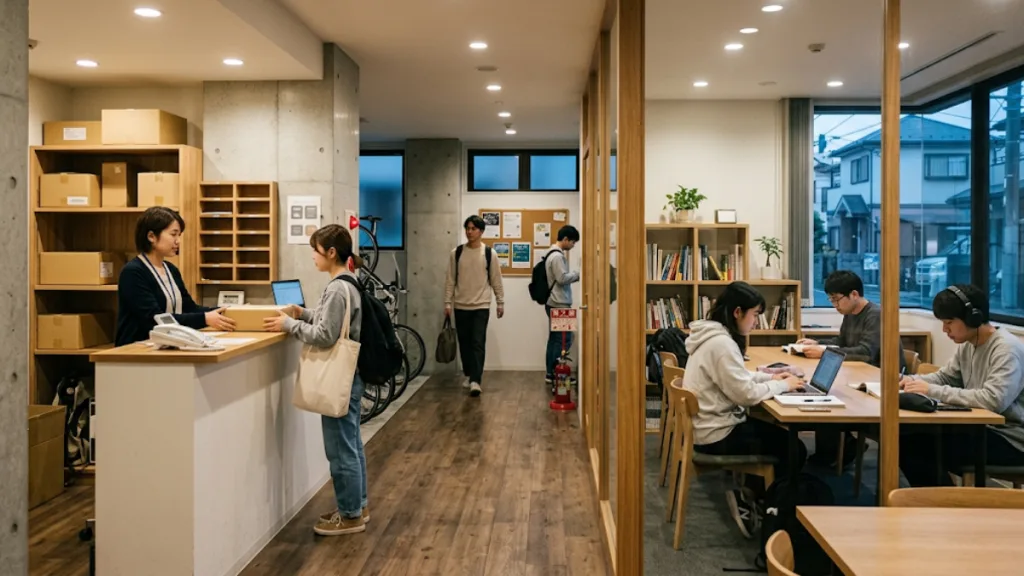
How Arealty Helps Students Find Housing Near Tokyo Universities Beyond The Listing Research
Arealty helps students compare dorms, shared houses, and apartments in Tokyo to rent through a daily-life lens, not just a listing lens. That means helping students shortlist realistic areas, compare apartment types, and understand which listings are practical for their budget, commute, and move-in timing.
For international students, that support also includes the guarantor side of the process. When students want to rent apartment Tokyo foreigner options, the challenge is often not just finding a room. It is understanding whether the room is realistically approvable. Arealty helps students move toward listings where both the housing conditions and the guarantor requirement make sense.
If you are comparing an apartment for rent Tokyo, reviewing apartments in Tokyo to rent, or trying to choose between a university-linked dorm and a private rental, Arealty can help you shortlist realistic options faster.
Contact Arealty for consultation and find a student-friendly housing option that fits your budget, timeline, and university location.
Conclusion
The best student housing near Tokyo universities is not always the cheapest room, the most private room, or the room closest to campus. It is the option that supports your actual student life after move-in.
For some students, that will be a dorm with stronger community and lower cost. For others, it will be a private apartment or a shared house that better matches their routine. If you compare housing by total daily fit instead of first impression alone, you will make a far better decision from the start.

As a real estate professional with 10 years of living and working in Japan, I write from the intersection of property expertise and lived experience. My perspective is rooted not only in an understanding of the Japanese rental market, but also in the nuances of building a life here as a foreigner, where practical decisions often carry personal meaning.
I see a home as more than a place to stay. It is part of how we move through the city, shape our routines, and create a sense of ease in everyday life. That is why my writing goes beyond surface-level advice, offering guidance that is informed, considered, and attuned to both lifestyle and reality. My goal is to make renting in Japan feel less overwhelming, more intentional, and ultimately more human.