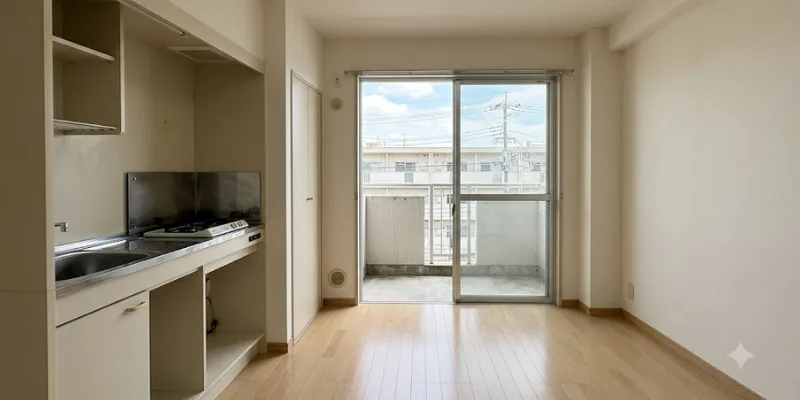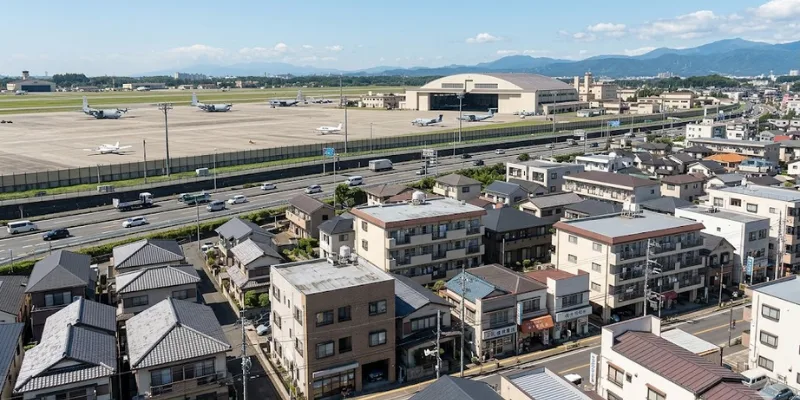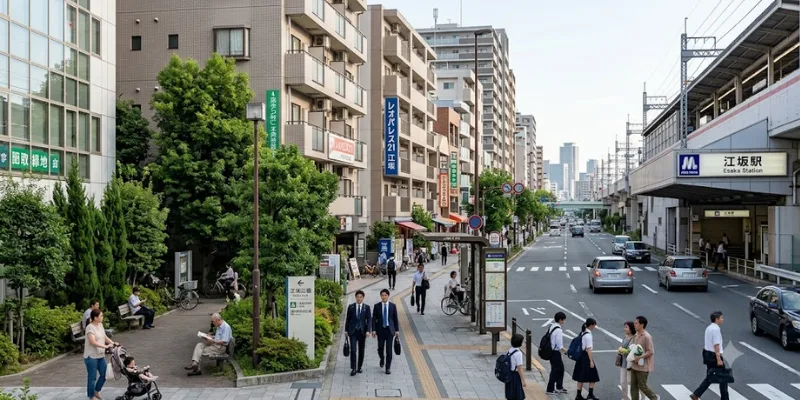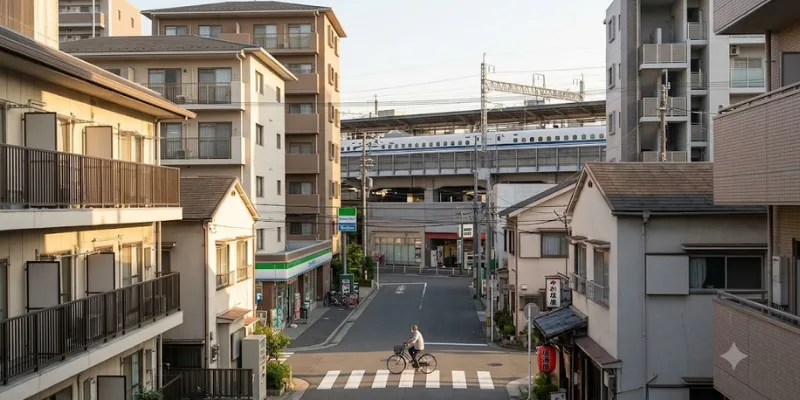

Japan is genuinely safe overall, but “safe enough” varies street by street, and Tokyo has neighborhoods that look identical online yet feel completely different at 11pm. This guide is the methodology for evaluating a neighborhood yourself — official data sources, the physical walk-through, and the red flags that don’t show up in listings. We don’t list “top safe wards” here — for that, see the linked specialized guide. This is the framework that lets you evaluate any address.
Looking for something specific?
- Want a curated top-5 list? → Top 5 safest residential areas in Tokyo for international residents
- Single-woman safety priority? → Safe apartments for single women in Japan
- Family with young children? → Best places to rent in Tokyo for families
- Earthquake safety focus? → Earthquake safety procedures for apartments
What “safe” actually means in Japan
In Japanese, “safety” splits into two words that English collapses into one: 安全 (anzen) for physical/structural safety, and 治安 (chian) for public-order safety. When Japanese people say a neighborhood is “good,” they usually mean chian ga ii — meaning low crime, low public disorder, predictable street behavior.
For a foreign renter, that splits into four practical dimensions worth evaluating separately:
- Crime — petty theft, harassment, residential trespass.
- Traffic — speed and pedestrian protection on your daily walk.
- Disaster — earthquake, fire, flood, landslide exposure.
- Community trust — whether the neighborhood is actively maintained or visibly drifting.
Most foreign-renter guides only cover the first. The other three matter more than newcomers realize, and the methodology below covers all four.
The official data sources you can actually use
Japan publishes more granular safety data than most countries, but the sources are scattered and Japanese-language. Three you should bookmark:
警察庁 (National Police Agency) annual crime statistics — national overview of crime trends by category, useful for setting baseline expectations. Available at the National Police Agency website.
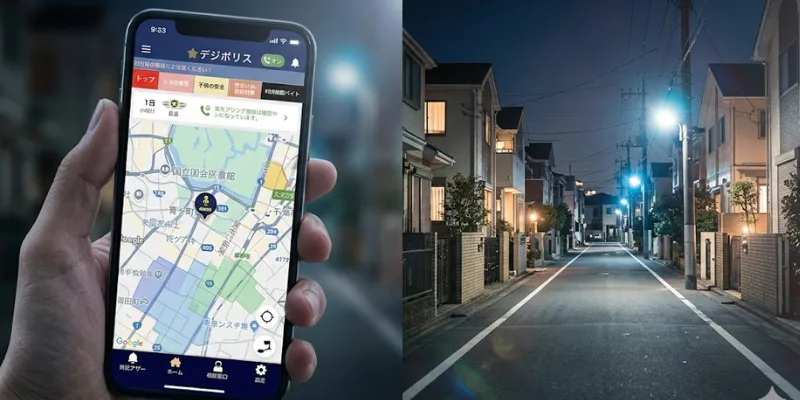
DigiPolice (デジポリス) — Tokyo Metropolitan Police app. This is the most useful single tool for Tokyo renters. The app shows recent reported incidents by location, includes a “danger map” overlay, and updates frequently. iOS and Android. Each prefecture has its own equivalent — Osaka uses ポリスマップ, Kanagawa publishes a similar map.
国土地理院 (GSI) hazard maps. Earthquake liquefaction risk, flood inundation depth, landslide warning zones. The hazard map portal shows all three layered on any address. For a foreign renter, the flood map alone is reason enough to use this — it tells you whether your potential apartment sits in a 1m, 3m, or 5m flood zone, which insurance pricing already reflects.
How to read these as a foreigner: the apps are Japanese-only, but the visualization is intuitive — colored hotspots on a map. You don’t need to read kanji to see that one street has more red dots than another. For categorical filters (theft vs assault vs trespass), Google Translate’s camera mode handles the menus adequately.
A neighborhood with consistent low density on the police map AND no overlay on the GSI hazard map is doing well on the data layer. That’s necessary but not sufficient — the physical walk matters next.
The physical walk-through (Broken Windows Theory in practice)
The Broken Windows Theory — that visible signs of neglect predict more serious problems — has held up especially well in dense Japanese urban contexts where community maintenance is the dominant social signal. When you visit a potential neighborhood, walk the route from station to apartment and look for:
Maintenance signals (good if present):
- Clean walls without graffiti
- Bicycles parked in marked zones, not random pavement
- Trash bags out only on the correct collection day
- Functioning streetlights along the full station-to-door route
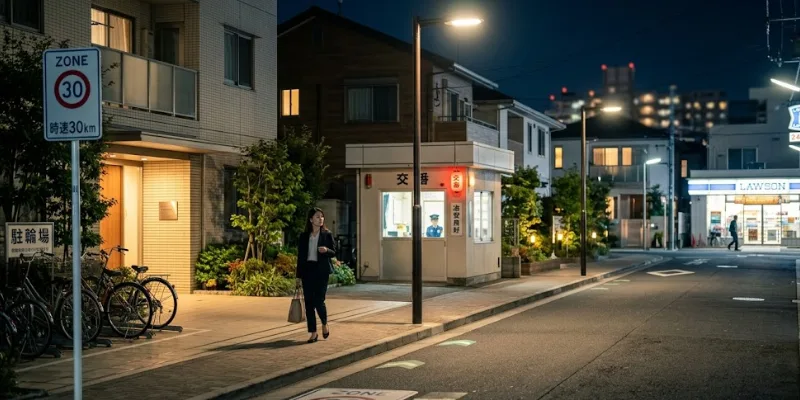
- Active 交番 (kōban, neighborhood police box) within 5 minutes’ walk
Drift signals (bad if present):
- Graffiti or peeling fly-posting that hasn’t been cleaned
- Abandoned bicycles with rusted chains
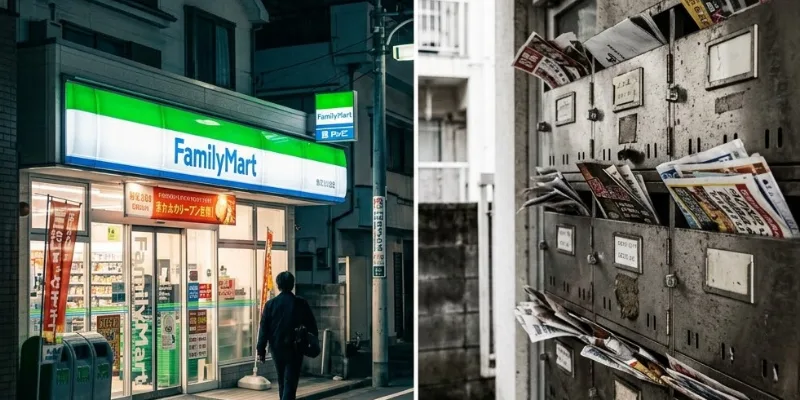
- Mailboxes overflowing with flyers (suggests vacant units or absent residents)
- Boarded-up commercial space along your residential street
- Trash bags out on non-collection days, suggesting weak community enforcement
Visit at three times. A neighborhood you only see at noon on a Saturday is a different neighborhood from the one you’ll live in. Make at least one visit at 9–10pm — when the difference between residential calm and entertainment-district overflow becomes unmistakable. Apartments that border but don’t sit inside an entertainment district are often the deception zone: quiet on the daytime walk, unpleasant after sunset.
Traffic safety: Zone 30 and Kids Zones
A safety dimension foreign renters consistently underestimate, especially anyone with children, elderly parents, or a daily cycling commute.
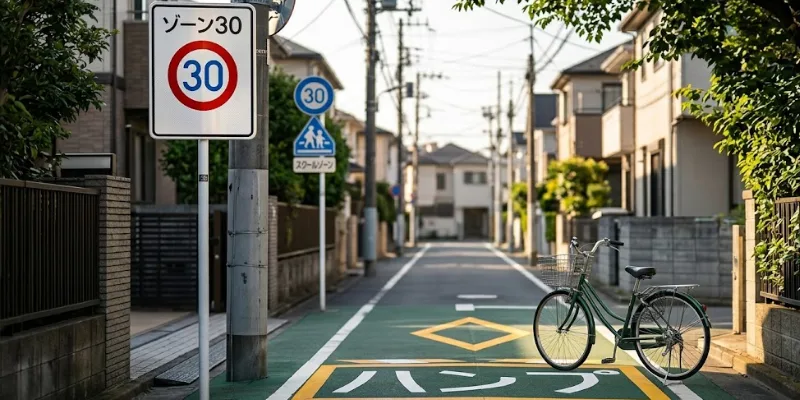
Zone 30 (ゾーン30) is a Japanese urban planning designation that caps vehicle speeds at 30 km/h within marked residential blocks. You can identify these zones by green pavement markings at the entry points and signage with “ZONE 30” prominently displayed. Inside the zone, speeds are physically enforced through speed humps (ハンプ) and chicanes (シケイン).
Zone 30 Plus — the newer designation rolled out from 2021 — adds physical traffic-calming infrastructure mandatory at every intersection. This is meaningfully safer than the original Zone 30.
Kids Zones (キッズ・ゾーン) are protective zones around nurseries and parks established after a tragic 2019 incident in Otsu. They include enhanced markings, sometimes time-restricted vehicle access, and prominent signage. For families, choosing an apartment within a Kids Zone is one of the highest-impact safety filters available.
You can check whether a specific address falls within Zone 30 or a Kids Zone via the prefecture’s road safety map (search 「ゾーン30 マップ」 plus your prefecture name). For families, this matters more than the building’s auto-lock; for solo renters, it matters less.
Building safety vs neighborhood safety
The neighborhood can be ideal and the building can still be the weak link. Three building-level safety dimensions to verify separately:
Structural construction — RC (鉄筋コンクリート) or SRC (鉄骨鉄筋コンクリート) buildings outperform wood (木造) and light-steel (軽量鉄骨) on fire resistance, sound insulation, and seismic performance. For the full breakdown, see our reinforced concrete building guide, steel-frame construction guide, and wood-frame benefits guide.
Earthquake compliance — buildings constructed under the post-1981 新耐震基準 (new seismic code) perform meaningfully better in major earthquakes. See our earthquake-resistant house guide for what to verify.
Building security features — auto-lock entrances, security cameras, individual unit locks. For evaluating these specifically, see our auto-lock apartment guide and home security rental apartment guide.
A safe neighborhood plus a 1985 wood-frame walk-up without auto-lock is a different proposition from the same neighborhood plus a 2018 RC tower with secure entry. Both are “in a safe area” — they are not equally safe to live in.
Red flags that foreign renters miss
Five patterns we see foreign renters miss because no one tells them to look:
1. Distance from 繁華街 (sakariba, entertainment districts). A 5-minute walk from Roppongi or Kabukichō is a fundamentally different street experience than a 15-minute walk. The threshold isn’t proximity to fun — it’s proximity to overflow. If your apartment is on a route that drunk patrons use to reach their station at 1am, you’ll know.
2. Last-train logistics. What’s your route home if you miss the last train? In Japan, trains stop running around midnight in most areas. If your route home requires walking through a less-maintained area or transferring between two transit lines, that’s a safety factor on weekend nights.
3. Flood zones in central Tokyo. Many central wards (Edogawa, Koto, Sumida) sit at sea level or below — visible on the GSI hazard map. This isn’t immediate danger but matters for typhoon season planning and insurance cost. The map will show you 1m, 3m, or 5m projected flood depths.
4. Convenience-store density. A 24-hour convenience store within 3 minutes of your apartment is an informal safety asset — staffed at night, well-lit, has phones and emergency supplies. Sub-urban areas without this are quieter but less recoverable if something goes wrong.
5. Building age vs visible aging. A 30-year-old building can be either lovingly maintained or visibly drifting. A 5-year-old building with peeling exterior paint suggests management neglect that will compound. The age matters less than the trajectory.
For broader hunting strategy that incorporates these, see our apartment hunting tips for foreigners and apartment hunting checklist.
Priorities by household type
Different renters need to weight the four dimensions differently:
Solo professional, mid-30s, late-evening commute → station-to-apartment lighting and last-train logistics matter most. Crime data on its own is rarely the limiting factor.
Single woman renter → station route at night, building auto-lock, ground-floor avoidance. See the dedicated safe apartments for single women guide.
Family with young children → Zone 30 / Zone 30 Plus, Kids Zone, park access, school catchment. The neighborhood-level safety dimension dominates.
Older residents or those with mobility needs → flat terrain (avoid steep neighborhoods), clinic access, evacuation route clarity.
First-time foreigner in Japan → start broader and use a curated shortlist. See the top 5 safest residential areas list as a starting point, then apply this methodology to verify.
Frequently asked questions
Are some Tokyo wards genuinely “unsafe”? Compared to most international cities, no Tokyo ward is unsafe. The variation is between quiet residential (very safe) and mixed residential-commercial (safe but louder, with more late-night foot traffic). Don’t avoid wards — evaluate streets within wards.
Should I avoid all areas with entertainment districts? No, but understand the buffer. A residential pocket within the same ward as Shinjuku or Shibuya can be genuinely quiet — it’s about distance from the specific entertainment streets, not the ward itself.
How do I read Japanese crime maps as a foreigner? Use DigiPolice (Tokyo) or your prefecture’s equivalent. The visualization is graphical — you don’t need to read kanji to spot density. For category filters, Google Translate’s camera mode handles the menus.
Is a ground-floor apartment unsafe? Statistically more vulnerable to break-ins than upper floors, especially in older buildings without secure entry. For families with very young children, ground floor has trade-offs we cover in the dedicated ground-floor 2DK safety guide.
What’s the safest ward in Tokyo overall? There’s no single answer because “safest” depends on what you’re optimizing for. For curated comparisons across Tokyo’s wards, see our top 5 safest residential areas guide. The methodology in this article is what we use to build that list.
Do safer areas always cost more? Not always. Several quietly-safe wards (Nerima, Suginami, parts of Adachi) are also genuinely affordable. See our affordable neighborhoods in Tokyo guide for the cost-and-safety overlap.
Talk to AREALTY
We pre-screen listings against the four-dimension framework — neighborhood data, walk-through observation, traffic-zone status, and building-level security. For foreign renters in unfamiliar neighborhoods, this saves the wasted Saturday of viewing apartments that turn out to be on the wrong side of an entertainment-district overflow zone.
See the top 5 safest residential areas list → Browse foreigner-friendly Tokyo apartments → Read affordable neighborhoods for foreign renters →
Sources & references
- 警察庁 (National Police Agency), annual crime statistics: https://www.npa.go.jp/
- 警視庁 (Tokyo Metropolitan Police), DigiPolice app — App Store / Google Play
- 国土地理院 (GSI), hazard map portal: https://disaportal.gsi.go.jp/
- Ministry of Land, Infrastructure, Transport and Tourism (MLIT), Zone 30 implementation data: https://www.mlit.go.jp/
- Cabinet Office disaster prevention guidelines for residential safety
- AREALTY internal placement data, 2024–2026, foreign-resident neighborhood matching
This guide reflects neighborhood evaluation outcomes observed by AREALTY’s licensed rental team across Tokyo, Osaka, and Fukuoka through May 2026. Crime patterns, traffic regulations, and hazard zones evolve; verify against current official maps at decision time. We revise this guide every six months.

Real estate advisor at Arealty Japan, specialising in helping foreign residents navigate the Tokyo and Osaka rental markets. Lucy has guided hundreds of international renters — from Working Holiday visa holders to corporate relocations — through Japan’s apartment application process. Her writing draws on firsthand experience with landlord screening, guarantor companies, and foreigner-friendly listings across all 23 Tokyo wards and major Kansai cities.