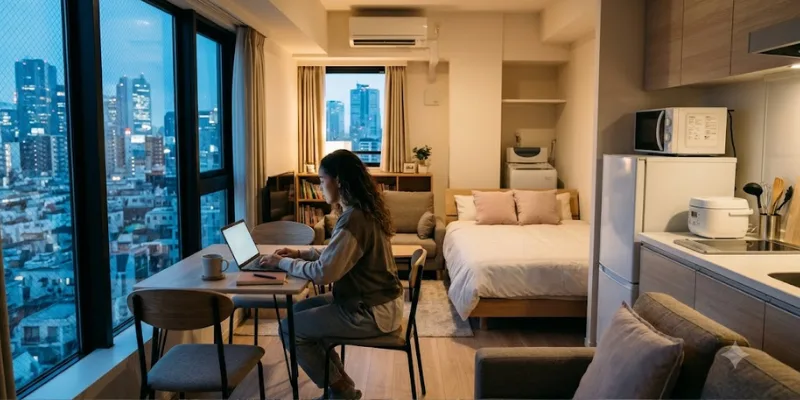

Weekly apartments in Tokyo — fully furnished units available for 1-week minimum stays without a standard lease contract — start from around ¥25,000 to ¥70,000 per week depending on ward and unit size, bridging the gap between per-night hotel pricing and monthly mansion or private apartment rentals, according to pricing data from major Tokyo short-stay operators. For foreigners visiting Tokyo for work assignments, academic short courses, or transition periods between longer-term housing, weekly apartments in Tokyo offer a private, home-like alternative to hotels with significantly better value beyond the 5-night mark.
This guide covers what’s realistically available as a weekly apartment in Tokyo, how pricing compares to monthly mansion and hotel alternatives, and the practical booking process.
What Are Weekly Apartments in Tokyo?
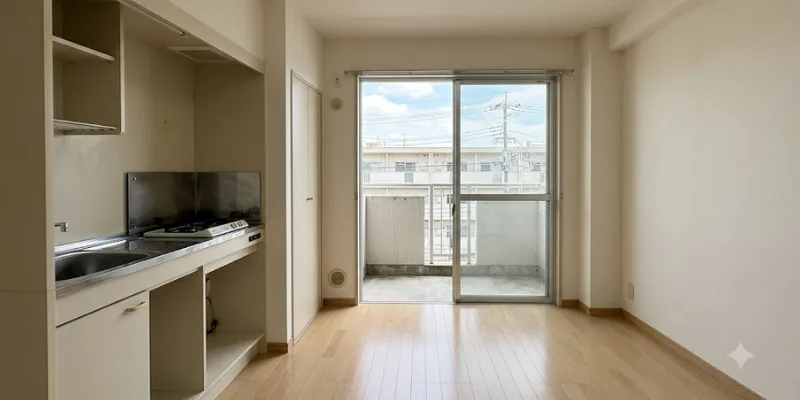
Weekly apartments in Tokyo operate under a model where the same stock as monthly mansion or serviced apartment operators is made available in weekly increments, typically at a higher per-night rate than monthly pricing but without the 1-month minimum commitment that most monthly mansion operators require.
Key characteristics:
- Minimum stay: typically 1 week (7 nights), sometimes 5 nights for some operators
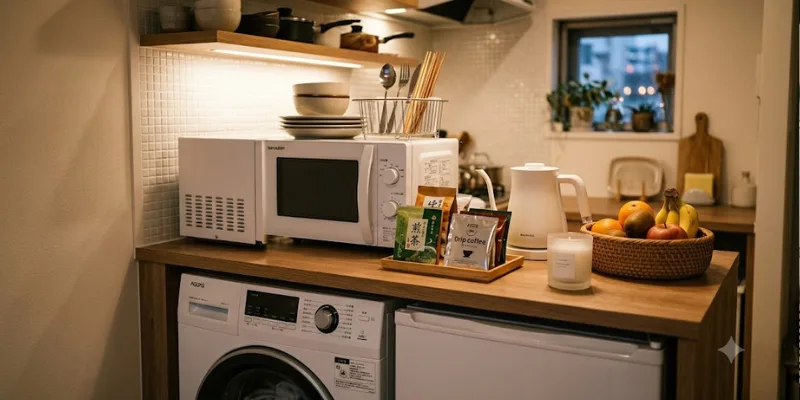
- Fully furnished: bed, refrigerator, washing machine, microwave, basic kitchenware
- Utilities included: electricity, gas, water, Wi-Fi bundled into the weekly rate
- No guarantor required: passport copy is the typical documentation requirement
- Address registration: varies by operator — confirm before booking if you need to register
Weekly Apartment Pricing in Tokyo (2026)
| Ward | Studio/1R (per week) | 1K (per week) | Notes |
| Shinjuku-ku | ¥45,000–¥70,000 | ¥55,000–¥85,000 | Highest demand, best transit |
| Shibuya-ku | ¥50,000–¥75,000 | ¥60,000–¥90,000 | Premium location |
| Toshima-ku (Ikebukuro) | ¥35,000–¥55,000 | ¥45,000–¥65,000 | Good value central |
| Nakano-ku | ¥28,000–¥45,000 | ¥35,000–¥52,000 | Budget-friendly, well-connected |
| Suginami-ku | ¥25,000–¥40,000 | ¥32,000–¥48,000 | Most affordable available |
These per-week figures should be read alongside the monthly equivalents: a ¥60,000/week unit in Shinjuku equates to ¥240,000/month — significantly higher than the ¥103,100 monthly average for a 1K in Shinjuku (Hato Mark Site data), which explains why the weekly format only makes economic sense for short stays and transitions.
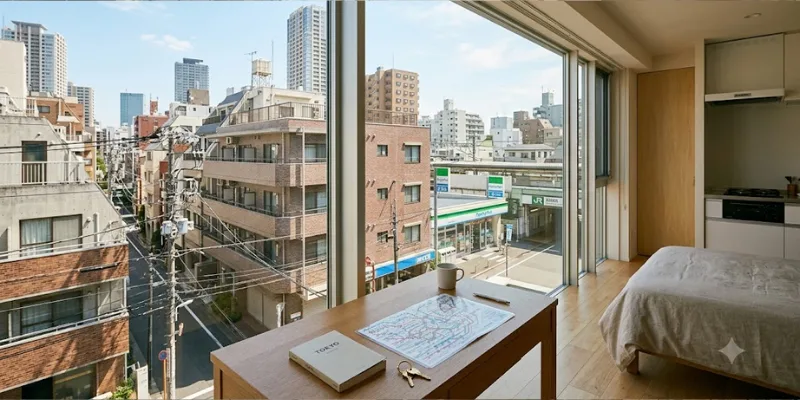
Weekly Apartment vs Monthly Mansion vs Hotel: Cost Comparison
For a 2-week stay in central Tokyo:
| Option | Daily cost | 14-night total | Includes |
| Business hotel (budget) | ¥7,000–¥10,000 | ¥98,000–¥140,000 | Room only, no kitchen |
| Weekly apartment (Nakano) | ¥4,000–¥6,400 | ¥56,000–¥90,000 | Furnished, kitchen, utilities |
| Weekly apartment (Shinjuku) | ¥6,400–¥10,000 | ¥90,000–¥140,000 | Furnished, kitchen, utilities |
| Monthly mansion (prorated 14 nights) | ¥4,500–¥6,000 | ¥63,000–¥84,000 | Furnished, all-inclusive |
The weekly apartment becomes more cost-competitive than a business hotel almost immediately, and more competitive than a monthly mansion once you factor in that monthly mansions typically require a minimum 1-month booking — for a genuine 1-2 week need, weekly apartments fill a gap that monthly mansions don’t.
Who Uses Weekly Apartments in Tokyo
Business travelers on short assignments. Corporate assignees who need a private kitchen and workspace for 1–3 weeks find weekly apartments significantly more practical than hotel rooms without kitchen access, and more economical than serviced apartment minimums.
Foreigners in housing transition. Those who’ve given notice on one apartment and need flexible housing until a new lease begins — the “gap week” between two longer-term arrangements — are a common use case.
Language school students on short programs. Some language school intensive programs run 2–4 weeks, during which students prefer private accommodation over dormitories or guest houses.
Family members visiting long-term residents. Visiting family who want their own kitchen and bathroom rather than sharing a host’s apartment or paying hotel rates for extended stays.
How to Book Weekly Apartments in Tokyo
Unlike monthly mansions, which typically have their own operator-specific booking websites, weekly apartments in Tokyo are often available through a mix of:
- Dedicated serviced apartment operators — Leopalace21, Monthly.com, and Oakhouse offer weekly rates on some of their inventory
- Short-stay booking platforms — some operators list on international platforms alongside monthly and daily options
- Direct inquiry via agency — Arealty and similar foreigner-focused agencies can connect you with available weekly inventory not listed publicly
Booking process:
- Select dates and area, submit basic inquiry
- Provide passport copy (and Residence Card if already in Japan)
- Confirm total cost including any one-time cleaning fee
- Pay via international credit card or bank transfer
- Receive check-in instructions — often a smart lock code, no in-person check-in required
Areas With the Best Weekly Apartment Availability in Tokyo
Shinjuku and Nakano have the highest concentration of weekly apartment stock, reflecting their dense transit connectivity and the high proportion of managed apartment buildings run by operators who offer flexible-term rentals.
Ikebukuro (Toshima-ku) offers a good middle tier — more availability than Shibuya, better value than Shinjuku, with strong multi-line transit access.
Suginami-ku (Koenji, Ogikubo, Asagaya areas) offers the most affordable weekly inventory, better suited to cost-conscious stays where central Tokyo proximity is less critical.
Address Registration for Weekly Stays
Most weekly apartments do not permit standard address registration at the ward office, since operators often list short-stay properties under commercial rather than residential zoning. This is fine for stays under 14 days where no registration obligation applies. For stays extending beyond 2 weeks, you’re better served by a monthly mansion or share house that explicitly permits address registration.
If your stay is clearly temporary (under 90 days, tourist visa) and you need a forwarding address for correspondence rather than official registration, some operators allow you to use the property address for mail receipt — worth confirming on a case-by-case basis.
Comparing Weekly Apartments to Other Short-Stay Options in Tokyo
| Weekly apartment | Capsule hotel | Guest house room | Monthly mansion | |
| Minimum stay | 1 week | 1 night | 1 month | 1 month |
| Privacy | Full private unit | Pod/capsule | Private room | Full private unit |
| Kitchen | Private | None | Shared | Private |
| Weekly cost (budget) | ¥25,000–¥45,000 | ¥10,500–¥28,000 | N/A (monthly) | N/A (monthly) |
| Address registration | Usually no | No | Usually yes | Usually yes |
For longer stays, see our monthly mansion Tokyo guide and guest house Japan for foreigners guide. For budget-priority short stays, see our short stay apartments Tokyo under ¥50,000 guide.
FAQ: Weekly Apartments in Tokyo
Are weekly apartments in Tokyo fully furnished? Yes — all major operators provide a bed, refrigerator, washing machine, microwave, and basic kitchenware at minimum. Some include additional items like a TV, rice cooker, or iron.
Do I need to bring bedding? Most operators include bedding with the weekly rate. Confirm this when booking, since some budget operators charge a small separate linen fee.
Can I extend a weekly booking to monthly? Usually yes — most operators allow you to transition from a weekly to a monthly rate if your plans extend, often at a better per-night rate than the weekly booking.
Is Wi-Fi always included? Typically yes for established operators, though connection speed varies between properties. Ask specifically about download speed if you need reliable video call quality for remote work.
External reference: Japan National Tourism Organization — Accommodation Types — official overview of accommodation categories available to short-stay visitors and residents.
→ Browse short-stay and weekly accommodation options in Tokyo
Seasonal Pricing and Availability for Weekly Apartments in Tokyo
Like all short-stay accommodation in Tokyo, weekly apartment pricing and availability fluctuate significantly by season:
Peak pricing periods:
- Late March to early April (sakura season / fiscal year start): highest demand and prices, particularly in central Tokyo wards. Book 3–4 weeks in advance minimum.
- Late December to early January (New Year): another high-demand window as domestic and international travel peaks.
- September (second major moving season and some international enrollment starts): moderate spike in demand from incoming students and corporate relocations.
Best value periods:
- July–August: Despite summer heat, this is actually a relative lull in the weekly apartment market as it falls between Japan’s major seasonal demand peaks. Prices can be 10–20% lower than peak-season equivalents.
- November–early December: Pre-New Year but post-autumn travel season, another quieter window for weekly bookings.
If your stay dates are flexible and you can travel during off-peak periods, the same budget buys meaningfully better location or larger unit size in the weekly apartment market.
Taxes and Administrative Considerations for Weekly Stays
For foreigners on resident visas staying in weekly apartments as a transitional arrangement:
Consumption tax. Weekly apartment fees are typically quoted inclusive of Japan’s 10% consumption tax, but confirm this when comparing operators, as some quote ex-tax prices.
Address registration for stays over 14 days. If your weekly apartment arrangement extends beyond 14 days and you’re on a resident visa, you’re technically obligated to register an address — but as noted earlier, most weekly apartment operators cannot serve as a registered address. This is a practical grey area that’s typically resolved by transitioning to a monthly mansion or share house at the 2-week mark rather than allowing it to become an ongoing compliance issue.
Receipts for business expenses. If your weekly apartment stay is reimbursable as a business expense, confirm that the operator can issue a 領収書 (ryōshūsho, official receipt) in your company’s name — not all operators are set up to provide properly formatted receipts for Japanese business expense reporting.
Long-Stay Discounts and Rate Negotiation
For stays extending toward the 3–4 week range, it’s worth asking directly whether the weekly rate drops for a longer booking:
Monthly vs weekly rate comparison. An operator charging ¥50,000/week for a Nakano studio is implicitly charging ¥200,000/month — compared to a monthly mansion rate for the same unit that might be ¥100,000–¥120,000. Pointing this out when inquiring about extended stays often results in the operator offering a prorated monthly rate rather than continuing at weekly pricing.
Referral and repeat booking discounts. Established operators sometimes offer modest discounts for direct bookings (bypassing platform fees) or for repeat customers. Worth asking when you’re booking, not after.
Internal Resources for Short and Flexible Stays in Tokyo
- Capsule hotel vs share house in Tokyo for long stays — comparison of other non-contract options at different lengths
- Monthly mansion Tokyo furnished rooms — the logical next tier when stays extend beyond 3–4 weeks
- Short stay apartments Tokyo under ¥50,000 — budget-priority alternative for share house rooms
- Rent apartment in Tokyo step-by-step guide — when you’re ready to transition to a standard private lease

Real estate advisor at Arealty Japan, specialising in helping foreign residents navigate the Tokyo and Osaka rental markets. Lucy has guided hundreds of international renters — from Working Holiday visa holders to corporate relocations — through Japan’s apartment application process. Her writing draws on firsthand experience with landlord screening, guarantor companies, and foreigner-friendly listings across all 23 Tokyo wards and major Kansai cities.