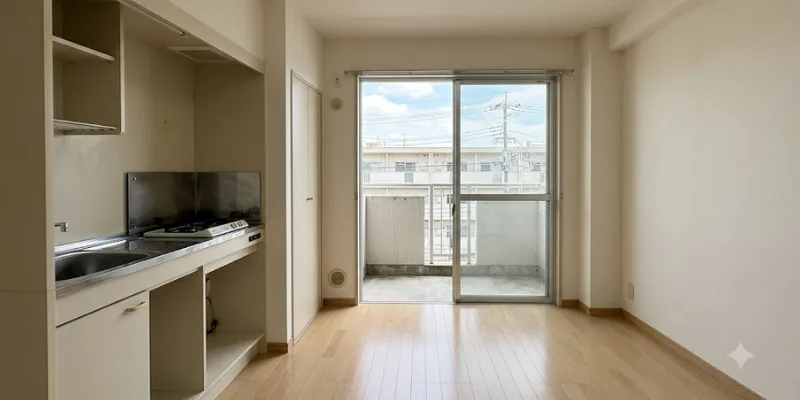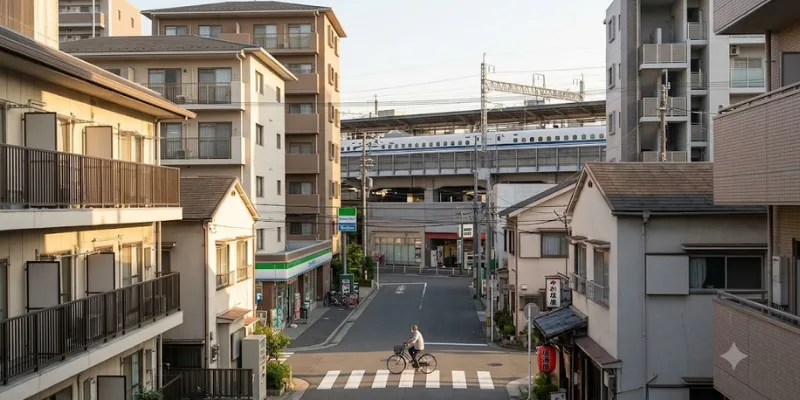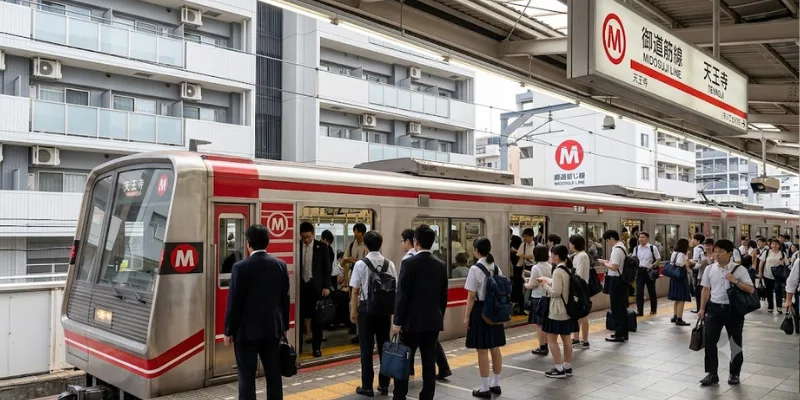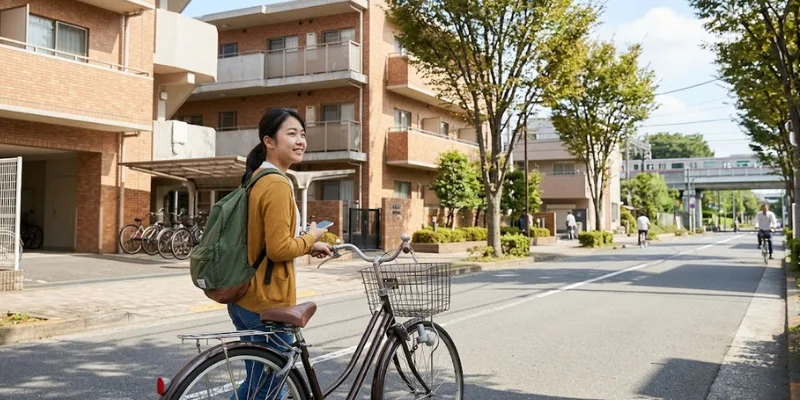

Tokyo University of Foreign Studies housing options for off-campus students start from around ¥50,600 per month for a 1R apartment in Fuchu City — where the university’s main campus is located — making TUFS one of the more affordable university locations for international students in the greater Tokyo metropolitan area, according to rental statistics from Hato Mark Site (Zentakuren), the public-interest real estate association recognized by the Japanese government. With dormitory capacity covering only a fraction of TUFS’s international student population, the large majority of students arrange off-campus housing in either Fuchu City itself or along the JR Chuo Line connecting to central Tokyo.
This guide covers TUFS’s campus location, dormitory options, off-campus area pricing, and how international students apply for private accommodation.
TUFS Campus Location: Fuchu City Overview
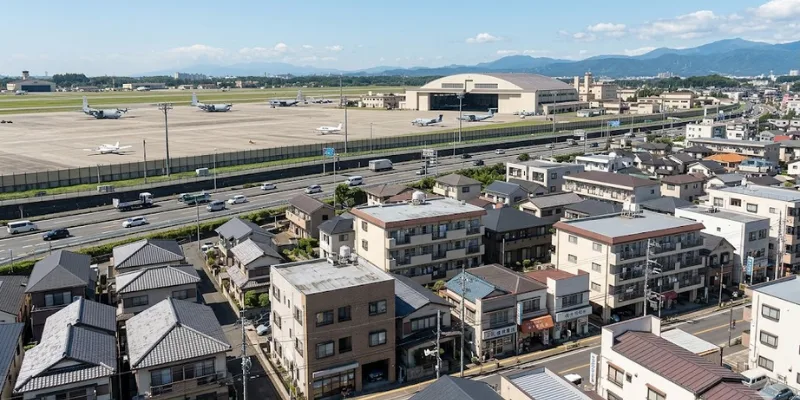
Tokyo University of Foreign Studies moved its main campus from Minami-Osawa to its current Fuchu location (西府町 3-11-1) in 2000. Fuchu City sits in the western Tokyo metropolitan area, accessible via the JR Musashino Line and the Keio line, placing it outside the 23-ward premium pricing zone while maintaining reasonable commute access into central Tokyo.
For students whose academic and social lives centre around TUFS, living in Fuchu offers:
- Walking or cycling distance to campus (for accommodation within 20–30 minutes)
- Meaningfully lower rent than equivalent units in the 23 wards
- A quieter, more residential environment than central Tokyo
- Access to central Tokyo within 35–50 minutes via JR or Keio lines
Dormitory Options at TUFS
TUFS operates dormitory facilities for a limited number of students, with priority typically given to first-year international and exchange students:
- International Student Dormitory (国際学生宿舍): Managed by TUFS, co-educational floors with Japanese and international students. Cost approximately ¥35,000–¥45,000/month including utilities.
- University-affiliated shared housing: Some TUFS-affiliated properties provide slightly larger rooms than the main dormitory, useful for second-year students who didn’t secure a dormitory spot in their first year.
Dormitory places are limited — typically covering 15–25% of incoming international students in any given intake year. Students who don’t secure a dormitory place move to off-campus private housing, the subject of the rest of this guide.
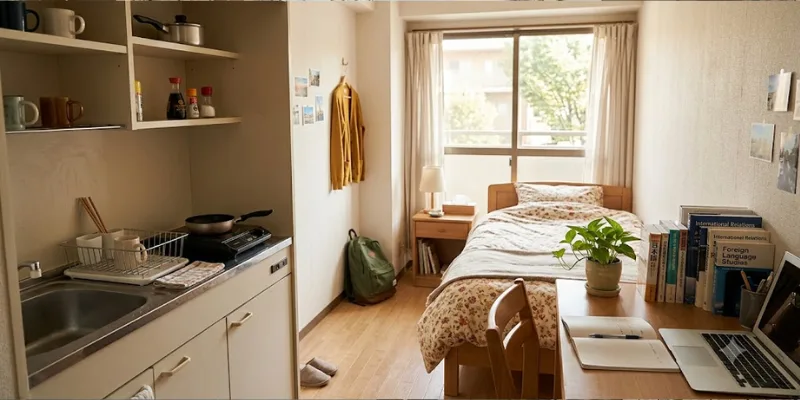
Off-Campus Rental Prices Near TUFS (Hato Mark Site Data, 2026)
Because TUFS is in Fuchu City rather than within the 23 wards, rent is significantly lower than the Tokyo ward averages most guides reference. Based on Hato Mark Site statistics:
| Area | 1R avg/month | 1K avg/month | Notes |
| Fuchu City | ¥50,600 | ¥52,400 | Immediate campus area |
| Chofu City (adjacent) | ¥55,900 | ¥61,900 | Keio Line access |
| Kokubunji City | ¥47,600 | ¥51,300 | JR Chuo Line |
| Mitaka City | ¥62,200 | ¥67,100 | Closer to central Tokyo |
Source: Hato Mark Site rental statistics (Zentakuren), 2026.
These Tama-area figures are substantially lower than anything available within the 23 wards, making TUFS one of the most affordable major Tokyo-area universities for students in terms of combined rent and commute cost.
Best Areas for TUFS Student Housing
Fuchu City — most convenient for campus
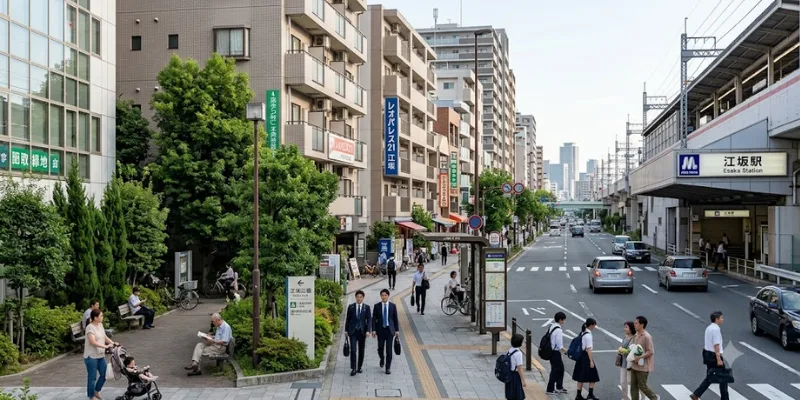
Living within Fuchu City minimises daily commute time and offers the full range of city infrastructure at relatively low cost. The area around Fuchū Station (Keio Kyōko Line) and Fuchū-Hommachi Station (Musashino Line) are the most practical bases for TUFS students.
- Tokyo University of Foreign Studies housing in Fuchu: 1R from ¥48,000–¥56,000/month
- Cycling to campus: 15–25 minutes depending on specific address
- Character: Moderate-size city, established student population, quieter than central Tokyo
Kokubunji City — affordable with JR Chuo Line access
Kokubunji sits one or two stations west of Fuchu on the JR Chuo Line, offering slightly lower rent and quick access east toward Shinjuku and central Tokyo when needed outside campus hours.
- 1R from ¥44,000–¥52,000/month
- Commute to TUFS: typically 20–30 minutes including walking/cycling
- Character: Student-friendly, affordable, good local amenities
Mitaka City — Ghibli Museum area, JR Chuo access
Mitaka is better known but more expensive than Fuchu or Kokubunji, sitting along the JR Chuo Line with direct rapid-service access to Shinjuku (20 minutes). Useful for TUFS students who value central Tokyo access over maximum rent savings.
- 1R from ¥59,000–¥69,000/month
- Commute to TUFS: typically 30–40 minutes with transfer
How International Students Apply for Housing Near TUFS
The application process for Tokyo University of Foreign Studies housing off-campus follows the standard Japanese private rental procedure:
Documents required:
- Certificate of Enrollment (在学証明書) — request from TUFS international office after admission confirmation
- Residence Card (在留カード) + passport copy
- Proof of financial support — bank statement showing ¥500,000+ or a sponsor letter
- Guarantor — rental guarantee company (保証会社) such as GTN or Roommate, both of which accept student visas
Timeline recommendation:
- 8–10 weeks before arrival: confirm enrollment and request Certificate of Enrollment
- 6–8 weeks before: start apartment search, focusing on Fuchu/Kokubunji
- 4–6 weeks before: submit application and guarantee company screening
- 2–3 weeks before: sign contract (remotely if overseas)
- Arrival day: move in
For the complete overseas application process, see our rent Japan apartment from overseas before arrival guide.

Monthly Budget for TUFS Students
| Expense | Typical monthly cost (Fuchu area) |
| Rent (1R, Fuchu) | ¥48,000–¥56,000 |
| Utilities | ¥6,000–¥10,000 |
| Mobile + internet | ¥4,000–¥7,000 |
| Food | ¥30,000–¥45,000 |
| Transport (student pass, monthly) | ¥5,000–¥10,000 |
| National Health Insurance (student rate) | ¥2,000–¥4,000 |
Total monthly budget excluding rent: approximately ¥47,000–¥76,000, making TUFS one of the more affordable living situations among Tokyo-area universities when combined with Fuchu City’s low rent base.
Share House vs Private Apartment for TUFS Students
Many first-year TUFS international students start in a share house before transitioning to a private apartment once they know the area better:
| Share house (Fuchu/Kokubunji) | Private 1R (Fuchu) | |
| Cost/month | ¥38,000–¥52,000 | ¥48,000–¥56,000 |
| Move-in speed | 2–3 days | 1–3 weeks |
| Documents | Minimal | Full set |
| Social environment | Built-in | Independent |
| Best for | First semester, limited documents | Established students |
See our student room sharing in Japan guide and our share house in Japan for foreigners guide.
TUFS vs Other Tokyo Universities: Location Comparison
TUFS’s Fuchu location offers different trade-offs compared to the campus-adjacent housing markets covered in other guides:
- Waseda (Shinjuku-ku): 1R average ¥84,300 — higher rent, better central access
- Keio Mita (Minato-ku): 1R average ¥146,600 — significantly higher rent
- TUFS (Fuchu City): 1R average ¥50,600 — most affordable, outer location
For students prioritising minimum rent expenditure over central Tokyo access, TUFS’s Fuchu location is one of the most cost-effective combinations of academic quality and low housing cost available among major Tokyo-area universities.
FAQ: Tokyo University of Foreign Studies Housing
Does TUFS provide dormitories for exchange students? Yes, with priority for exchange students — but places are limited and competitive. Apply as early as possible once admission is confirmed.
Can I commute from central Tokyo to TUFS? Yes — from Shinjuku, the commute is approximately 40–50 minutes via Keio Limited Express to Fuchū Station. This is viable but adds 80–100 minutes of daily commuting, which many students find unsustainable over a full semester.
What’s the cheapest realistic area to live near TUFS? Kokubunji City offers 1R units from around ¥44,000–¥48,000/month, making it marginally cheaper than Fuchu itself while maintaining reasonable campus access.
Can TUFS’s international office help with housing? TUFS’s International Student Center provides housing guidance and can refer students to agencies experienced with the local Fuchu rental market — worth consulting before starting your independent search.
External reference: Tokyo University of Foreign Studies — International Student Center — official university resource for incoming international students including housing guidance.
→ Browse apartments near TUFS in Fuchu City and the western Tokyo area
Life in Fuchu City for International Students
Fuchu City offers a genuinely livable environment that’s distinctly different from the densely urban experience of Tokyo’s 23 wards, and worth understanding before committing to Tokyo University of Foreign Studies housing in the area:
Scale and walkability. Fuchu is a moderate-sized city with a clearly defined commercial center around Fuchū Station, a large green space at Fuchu City Park adjacent to the racetrack, and quieter residential streets extending outward from there. Unlike central Tokyo, it’s entirely possible to handle most daily errands on foot or bicycle without using trains.
Fuchū Racecourse. Japan’s largest horseracing venue sits in the middle of Fuchu City and dominates the city’s calendar on race weekends (primarily spring and autumn). Race days bring large crowds to the immediate station area — worth being aware of when searching for apartments near the racecourse perimeter, where noise and pedestrian traffic spike significantly on these dates.
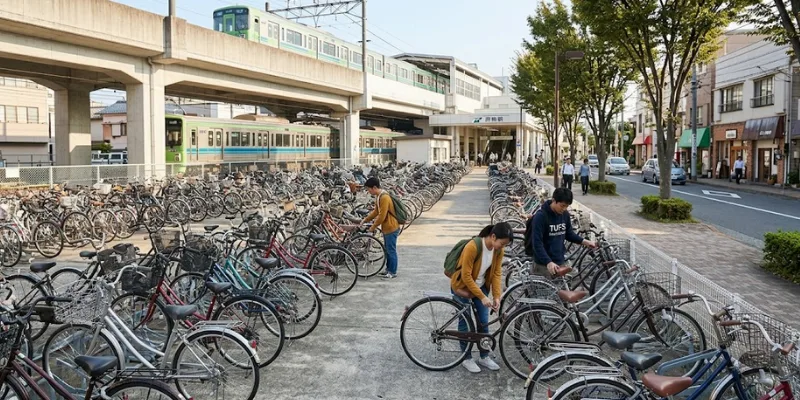
Bicycle culture. Cycling is the standard student commute method to TUFS, and the area is genuinely bicycle-friendly. Most apartment buildings in Fuchu offer bicycle parking as a standard feature. Investing in a decent commuter bicycle at a secondhand shop (recycle shops are common in the area) typically costs ¥8,000–¥15,000 and pays for itself quickly in transport savings.
Part-Time Work Near TUFS
TUFS’s Fuchu City location offers fewer immediate part-time work opportunities than university areas closer to central Tokyo, since the local economy is primarily residential rather than entertainment or hospitality-focused. Practical options for TUFS students include:
Tutoring and translation. TUFS’s language specialisation makes its students attractive as private tutors and translation assistants, with opportunities that can be arranged remotely (independent of physical location) through online platforms.
Commuting for part-time work. Many TUFS students work part-time in Shinjuku or Ikebukuro (30–40 minutes by train) rather than in Fuchu itself, particularly in roles that benefit from the international student population’s language skills.
On-campus part-time positions. TUFS occasionally has part-time openings for research assistants, language lab support, and event staffing available to enrolled students through the university’s job board.
After Graduation: Tokyo University of Foreign Studies Housing to Career Transition
For degree-program students who complete 4 years at TUFS and transition to employment in Tokyo, the housing calculus shifts significantly: most graduate jobs centre on central Tokyo wards (Shinjuku, Shibuya, Minato, Chuo), making the Fuchu commute less practical as a long-term arrangement than it was as a student. Most TUFS graduates either:
- Move closer to their workplace after job hunting concludes, typically in the March-before-April-start window
- Continue in Fuchu or along the Chuo/Keio line if their workplace is in western Tokyo or has remote-work flexibility
The rental process for this transition is identical to the standard Tokyo foreigner rental process — see our rent apartment in Tokyo step-by-step guide for what to expect when you’re ready to move into the standard 23-ward market.
Internal Resources for TUFS and Western Tokyo Students
- Average cost of apartment in Tokyo by ward — compare Fuchu area costs against 23-ward averages
- Student housing near Tokyo universities — broader university housing comparison if you’re still deciding between programs
- Best residential areas for students in Tokyo — qualitative neighborhood guide beyond Fuchu
- 1K apartments in Tokyo for rent foreigners — standard 1K guide when you eventually move into the 23-ward market

Real estate advisor at Arealty Japan, specialising in helping foreign residents navigate the Tokyo and Osaka rental markets. Lucy has guided hundreds of international renters — from Working Holiday visa holders to corporate relocations — through Japan’s apartment application process. Her writing draws on firsthand experience with landlord screening, guarantor companies, and foreigner-friendly listings across all 23 Tokyo wards and major Kansai cities.