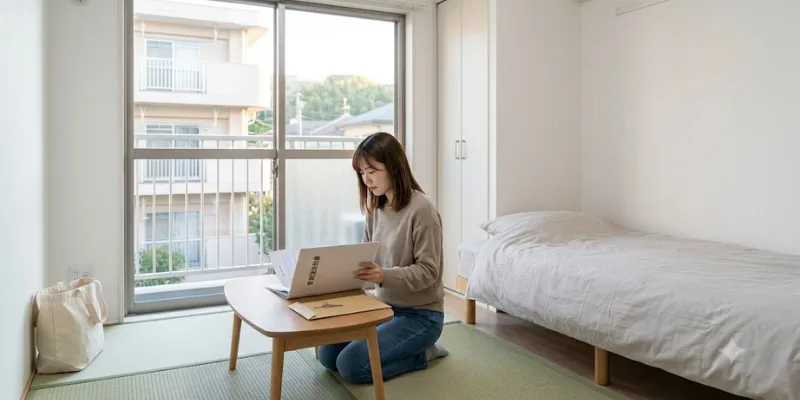

Japan long-term rental — a standard 2-year apartment lease — is the most cost-effective and stable housing arrangement available to foreigners who plan to stay in Japan for more than 6 months, offering lower effective monthly costs than monthly mansions or short-stay alternatives once the upfront investment is amortised across the lease period. For foreigners approaching Japan long-term rental for the first time, the process involves specific documentation, a guarantor or guarantee company, and a structured screening procedure that differs meaningfully from rental systems in many other countries.
This guide covers everything foreigners need to know about Japan long-term rental: what distinguishes it from short-term alternatives, what the 2-year structure means financially, required documents, and how the process works across different visa categories.
What Makes Japan Long-Term Rental Different
Japan long-term rental operates under the Borrower’s Rights Act (借地借家法, shakkichi shakka hō), which provides significant tenant protections — including making it difficult for landlords to evict tenants who pay on time — but also imposes specific obligations and conventions on tenants:
2-year standard term. Almost all standard residential leases in Japan run on a 2-year cycle (普通賃貸借契約, futsū chintaishaku keiyaku). At the end of 2 years, the lease auto-renews unless either party gives notice, with a renewal fee (更新料) of typically 1 month’s rent.
Fixed-term leases (定期借家契約). A minority of Japan long-term rental listings use a fixed-term lease that does not auto-renew. At expiry, the tenant must leave unless a new contract is signed. These typically offer slightly lower rent in exchange for the added uncertainty — worth understanding if a landlord specifically offers this option.
Tenant protections. Landlords cannot raise rent unilaterally mid-lease under the standard contract. Rent increases require mutual agreement at renewal time, and even then, significant increases can be challenged through the courts if they exceed market norms
Japan Long-Term Rental: The Full Cost Picture
The true cost of Japan long-term rental extends well beyond monthly rent. For a ¥80,000/month apartment on a 2-year lease:
| Cost item | When paid | Typical amount |
| Security deposit (敷金) | Move-in | ¥80,000–¥160,000 |
| Key money (礼金) | Move-in | ¥0–¥80,000 |
| First month’s rent | Move-in | ¥80,000 |
| Agency fee | Move-in | ¥80,000–¥88,000 |
| Guarantee company fee | Move-in | ¥40,000–¥80,000 |
| Fire insurance (2 years) | Move-in | ¥15,000–¥20,000 |
| Move-in total | ¥295,000–¥508,000 | |
| Monthly rent × 24 months | Ongoing | ¥1,920,000 |
| Renewal fee (month 24) | Renewal | ¥80,000 |
| 2-year total | ¥2,295,000–¥2,508,000 |
Compared to equivalent monthly mansion pricing of ¥130,000–¥160,000/month for the same unit size in the same ward, Japan long-term rental typically saves ¥600,000–¥900,000 over the same 2-year period, even accounting for the higher upfront costs.
See our apartment move-in cost Japan guide for a full national breakdown, and our no key money apartments Tokyo guide for listings that eliminate one of the main upfront cost items.
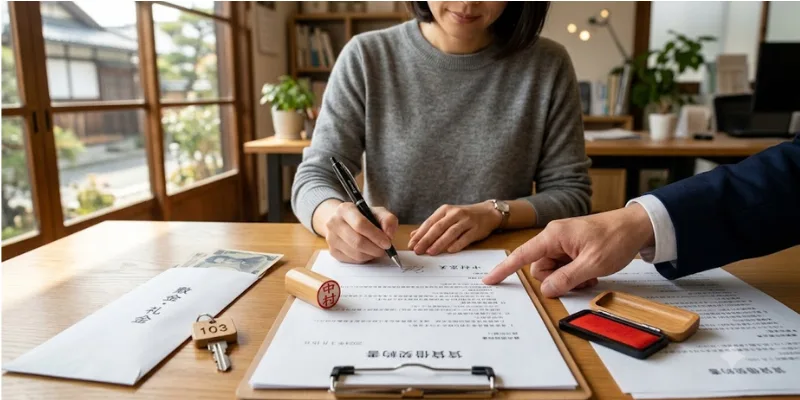
Documents Required for Japan Long-Term Rental
The document set for Japan long-term rental varies slightly by visa type but follows a consistent core structure:
Universal requirements:
- Residence Card (在留カード) — both sides
- Passport — all relevant pages
- Emergency contact in Japan
Income documentation (choose most applicable):
- Employment contract (雇用契約書) showing employer name and annual salary
- Recent payslips (給与明細) — 3 months minimum, 6 preferred
- Company-issued income certificate (源泉徴収票) — most authoritative for screening
- For self-employed: tax returns (確定申告書) for the most recent 2 years
Financial support (if income documentation is insufficient):
- Bank statement (銀行通帳の写し) — 3–6 months showing stable balance
- For students: sponsor letter from parent or scholarship confirmation
Guarantor:
- Personal Japanese guarantor information, OR
- Completed guarantee company application (most foreigners use the latter)
See our apartment financial proof Japan guide for what counts when income is paid through a foreign employer.
Japan Long-Term Rental by Visa Category
Work visa (就労ビザ) holders face the least friction in Japan long-term rental — employment contracts and income documentation from a Japanese employer satisfy all standard screening requirements without modification.
Student visa holders typically need to demonstrate financial support through a sponsor letter or scholarship confirmation rather than employment income. Guarantee companies experienced with foreign students (GTN, Roommate) handle this category routinely. See our rental apartments for international students guide.
Working holiday visa (ワーキングホリデービザ) holders face the most consistent screening difficulty due to the visa’s limited duration and part-time income nature. Strategies that help: applying for no-deposit, no-guarantor listings where available; providing a 6-month bank statement showing strong savings; working through agencies experienced with WHV applicants. See our working holiday Japan apartment rent guide.
Spouse and dependent visa holders generally apply like work visa holders, using the sponsoring spouse’s documentation to satisfy income requirements.
The Japan Long-Term Rental Process: Timeline
| Stage | Duration | Key action |
| Search and shortlist | 3–7 days | Browse listings, identify 3–5 target units |
| Viewings | 2–5 days | In-person or video call |
| Application submission | 1–2 days | Agency collects and submits all documents |
| Guarantor screening | 2–5 business days | Guarantee company reviews your application |
| Contract preparation | 3–5 days | Agency drafts lease, confirms terms |
| Contract review and signing | 1–2 days | Review carefully before signing |
| Payment | 1 day | Transfer initial costs to agency |
| Key handover | Move-in day | Typically same day as contract start |
Total: 10–21 days from first inquiry to move-in. The guarantor screening period is the main variable. See our rent apartment in Tokyo step-by-step guide for a detailed walkthrough of each stage.
Japan Long-Term Rental: Tenant Rights and Responsibilities
Understanding what you’re responsible for in a Japan long-term rental prevents costly surprises at move-out.
What landlords are responsible for:
- Structural repairs (roof, exterior walls, shared facilities)
- Major appliance failures due to age or normal wear (built-in air conditioning, water heater)
- Pest infestations that originate from building infrastructure rather than tenant activity
What tenants are responsible for (原状回復 — restoration to original condition):
- Damage from cigarette smoke (nicotine staining) — significant cost if you smoke indoors
- Pet-related damage beyond normal wear
- Holes from picture hooks, screw anchors, etc. larger than those considered normal wear
- Damage caused by moisture or mold if resulting from insufficient ventilation by the tenant
At move-out, a restoration cost (退去費用) is deducted from your deposit. See our restoration costs moving out Japan guide for what’s typically charged and how to challenge unreasonable claims.
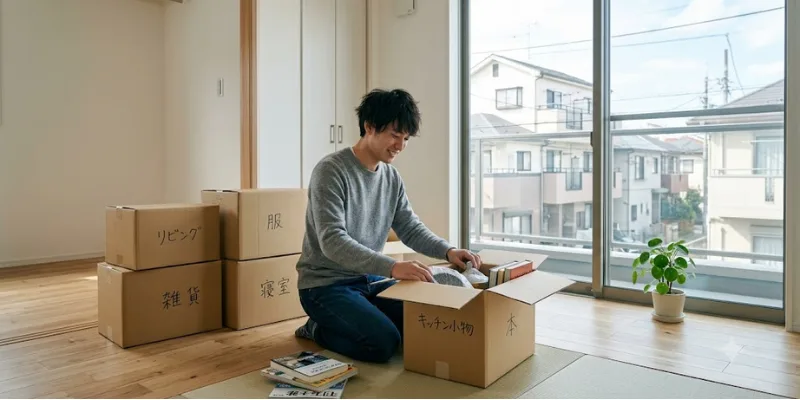
Japan Long-Term Rental vs Alternatives: When It Makes Sense
Japan long-term rental makes most sense when:
- You’re staying 6+ months — the upfront cost amortises favorably beyond this horizon
- You have documentation in order — employment contract, income proof, guarantee company eligibility
- You know which area fits — committing to a 2-year lease in the wrong neighborhood is costly to exit
Alternatives worth considering for shorter or more uncertain stays:
- Monthly mansion — no long-term commitment, higher monthly cost, fully furnished. See our monthly mansion Tokyo guide.
- Share house / guest house — no guarantor, lower commitment, shared facilities. See our guest house Japan for foreigners guide.
- Flexible lease — some landlords offer 6-month or 1-year contracts at slightly higher rent. See our flexible lease Japan foreigner visa guide.
Exiting a Japan Long-Term Rental Before the 2-Year Term
Leaving a Japan long-term rental before the 2-year term ends typically involves:
Notice period. Most contracts require 1–2 months’ advance written notice before move-out. Shorter notice periods may trigger a penalty fee equivalent to the remaining notice period’s rent.
No mid-term break fee (in most contracts). Standard residential leases in Japan do not have an explicit break fee — the primary financial obligation is the notice period plus any restoration costs at move-out.
Deposit recovery. The security deposit is returned (minus legitimate restoration deductions) typically 1–3 months after move-out, following the landlord’s inspection.
For the full process of what happens when you leave an apartment, see our breaking a lease in Japan guide.
FAQ: Japan Long-Term Rental
Can foreigners access Japan long-term rental without a Japanese guarantor? Yes — rental guarantee companies (保証会社) serve as the standard alternative, accepted by most Tokyo and major-city landlords. See our how to get a guarantor in Japan guide.
What happens if I need to leave Japan mid-lease? You can terminate the lease with the required notice period. The deposit is returned minus restoration costs. Your guarantor company’s obligation ends when the lease terminates.
Can I sublet my Japan long-term rental apartment? Almost always no — standard Japanese residential leases prohibit subletting without explicit landlord written consent, which is rarely granted for private apartments.
External reference: Japan Consumer Affairs Agency — Rental Housing Tenant Rights — official guidance on tenant rights under Japan’s rental housing framework.
→ Browse long-term foreigner-friendly apartments in Tokyo and across Japan
Japan Long-Term Rental: Renewal, Extension, and Moving On
Once you’ve completed your first 2-year Japan long-term rental term, you have three paths:
Renew in place. Pay the renewal fee (typically 1 month’s rent) and continue in the same apartment. The lease auto-renews under the same terms unless either party proposes changes. Most Tokyo landlords accept straightforward renewal without renegotiation unless market rents have moved significantly.
Renegotiate at renewal. If your income has changed, your visa status has evolved, or you want to negotiate rent downward (possible if the unit has been on the market since your original lease), renewal time is your natural negotiation window. Frame requests reasonably — a ¥3,000–¥5,000/month reduction is far more likely to succeed than asking for 10% off.
Move to a new apartment. If your circumstances, workplace, or preferences have changed over the 2-year period, this is the natural point to upgrade, downsize, or relocate. Remember the notice period (1–2 months) and build the restoration inspection timeline into your move-out planning.
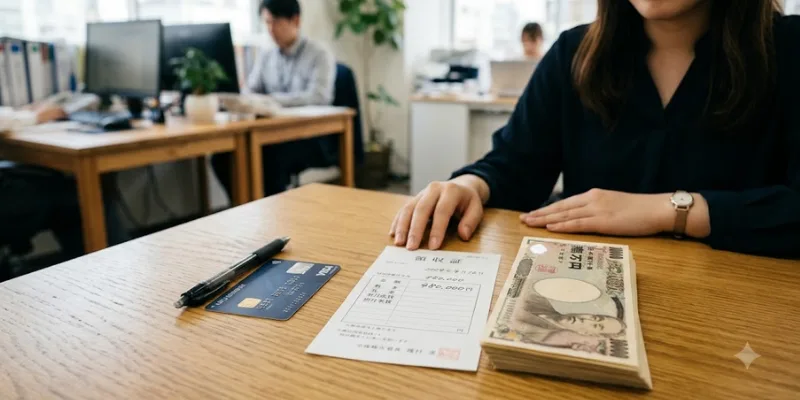
Japan Long-Term Rental: Tax Considerations for Foreigners
For foreigners on a Japan long-term rental lease, a few tax-related points are worth understanding:
Rental income (if subletting): Standard Japanese residential leases prohibit subletting without landlord consent. If you leave Japan temporarily and sublet without permission, this creates both a contract violation and a potential tax issue. Always seek written landlord consent before any subletting arrangement.
Housing allowance from employer: Many employers in Japan provide a monthly housing allowance (住宅手当) or rent a corporate apartment directly and provide it as a benefit. How this is structured affects both your taxable income and what documentation you provide to guarantee companies — confirm with your company’s HR team.
Year-end tax adjustment: Your Japan long-term rental address is registered with the tax authorities through your ward office registration and your employer’s records. Keeping these consistent (same address on your Residence Card, your employer’s records, and your bank accounts) simplifies the annual tax adjustment process.
Comparing Japan Long-Term Rental Markets by City
While most of this guide focuses on Tokyo, Japan long-term rental works identically across all major cities, with the primary differences being rent level and local landlord acceptance rates:
| City | Avg. 1K rent | Guarantor acceptance | International infrastructure |
| Tokyo (central wards) | ¥74,800–¥150,300 | High | Very high |
| Osaka (central) | ¥55,000–¥78,000 | High | High |
| Kyoto | ¥48,000–¥65,000 | Moderate | Moderate (academic) |
| Fukuoka | ¥48,000–¥65,000 | Moderate | Growing |
| Sapporo | ¥42,000–¥55,000 | Moderate | Lower |
For city-specific Japan long-term rental guides, see our Fukuoka apartments for foreigners guide, Kyoto apartments guide, and Osaka Namba apartments guide.

Real estate advisor at Arealty Japan, specialising in helping foreign residents navigate the Tokyo and Osaka rental markets. Lucy has guided hundreds of international renters — from Working Holiday visa holders to corporate relocations — through Japan’s apartment application process. Her writing draws on firsthand experience with landlord screening, guarantor companies, and foreigner-friendly listings across all 23 Tokyo wards and major Kansai cities.