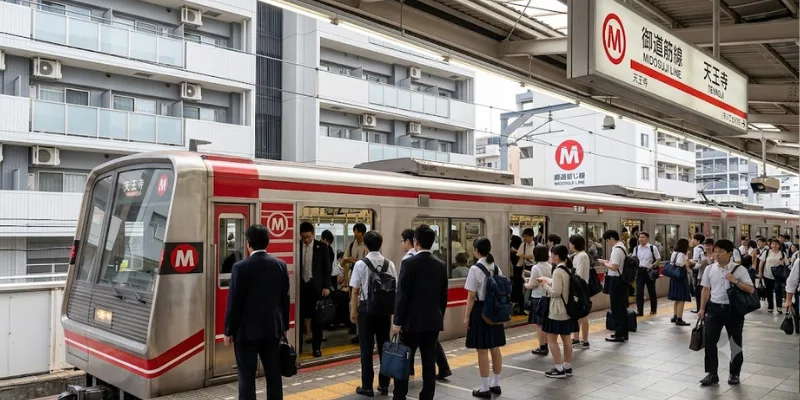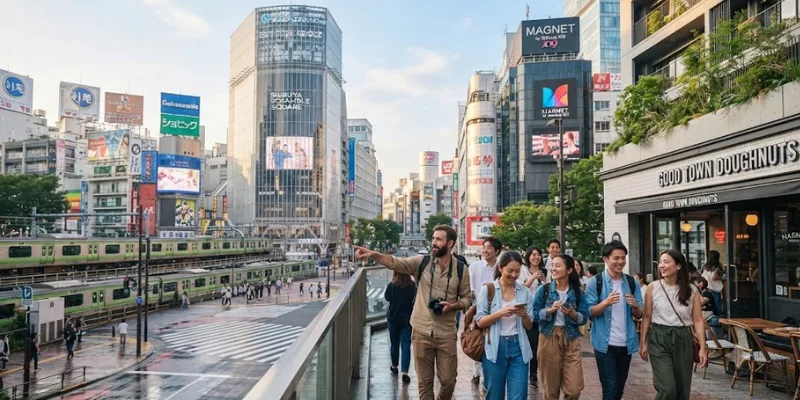

The best areas to live in Tokyo for foreigners depend on three factors that interact differently for every person: budget, commute, and lifestyle priorities. Based on rental statistics from Hato Mark Site (Zentakuren) — the public-interest real estate association recognized by the Japanese government — and Arealty Japan’s experience placing foreign tenants across all 23 wards, this guide breaks down Tokyo’s most relevant neighborhoods into tiers that reflect how most foreigners actually weigh those three factors.
No single ward is objectively best. What this guide gives you is the accurate information to choose the right one for your specific situation — with real rent figures, commute realities, and the character of each neighborhood as experienced by long-term foreign residents.
How to Use This Guide
This ward-by-ward breakdown is organized into four tiers based on 1R rent (the most common unit for individual foreign renters):
- Premium (¥127,000+): Minato-ku, Shibuya-ku — best international infrastructure, highest cost
- Upper-mid (¥80,000–¥127,000): Shinjuku-ku, Meguro-ku — central lifestyle, still expensive
- Value tier (¥65,000–¥80,000): Setagaya-ku, Nakano-ku, Suginami-ku, Toshima-ku — best balance of access and cost
- Budget tier (under ¥65,000): Itabashi-ku, Nerima-ku, Katsushika-ku — most affordable, longer commutes
Source for all rent figures: Hato Mark Site rental statistics (Zentakuren), 2026.
Premium Tier: Best Areas to Live in Tokyo for Foreigners Who Prioritize Infrastructure
Minato-ku — Roppongi, Azabu, Hiroo
Best for: Expat families, corporate relocations, those who want maximum international amenities Average 1R rent: ¥146,600/month (n=87 listings) Average 2LDK rent: ¥679,100/month
Minato-ku is Tokyo’s most internationally dense ward — home to the highest concentration of embassies, international schools, English-speaking medical clinics, and foreign-run businesses. Roppongi and Azabu-Juban are where much of Tokyo’s English-first social infrastructure concentrates. The trade-off is cost: even the most modest 1R in Minato averages almost ¥147,000/month, and families looking at 2LDK face the highest averages in the city at ¥679,100/month.
Who should choose Minato-ku: families with children in international schools, executives on corporate housing allowances, diplomats, and those for whom international community density matters more than cost.
For more detail, see our Minato apartments for rent guide.
Shibuya-ku — Ebisu, Daikanyama, Nakameguro
Best for: Young professionals, creative industry workers, those wanting Tokyo’s most cosmopolitan lifestyle Average 1R rent: ¥127,800/month (n=95 listings) Average 2LDK rent: ¥395,000/month
Shibuya-ku combines premium lifestyle infrastructure — the best cafés, restaurants, shopping, and nightlife in Tokyo — with a more youthful, creative atmosphere than Minato-ku’s business-expat character. Neighborhoods like Daikanyama, Nakameguro, and Ebisu have attracted long-term foreign residents who want Tokyo’s best daily living environment and are willing to pay for it.
For more, see our Shibuya apartments for rent guide.
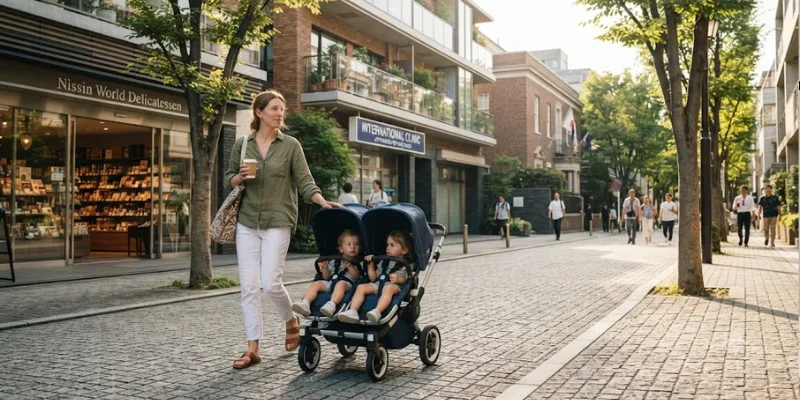
Upper-Mid Tier: Best Areas to Live in Tokyo for Foreigners Balancing Cost and Centrality
Shinjuku-ku — Shinjuku, Takadanobaba, Waseda
Best for: Students, language school attendees, professionals working in central Tokyo Average 1R rent: ¥84,300/month (n=210 listings — largest sample in our dataset) Average 1K rent: ¥103,100/month
Shinjuku-ku combines unmatched transit connectivity (Shinjuku Station is Japan’s busiest), a large international community, and a wide range of apartment types from budget to premium. The ward is particularly popular with students due to proximity to Waseda University and multiple language school campuses. With 210 listings sampled, Shinjuku has the most robust price data in Tokyo — averages here are statistically very reliable.
For more, see our Shinjuku apartments for rent guide.
Meguro-ku — Nakameguro, Jiyugaoka, Meguro
Best for: Couples and families wanting central lifestyle at slightly lower cost than Shibuya Average 1R rent: ¥84,000/month (n=63 listings) Average 2LDK rent: ¥298,000/month
Meguro-ku sits just south of Shibuya-ku and offers comparable lifestyle quality at a meaningful price discount — particularly for larger units. Nakameguro’s canal, Jiyugaoka’s French-influenced shopping streets, and the broader ward’s café culture make it consistently popular with foreign residents who’ve been in Tokyo long enough to seek out quieter, more residential-feeling environments within easy reach of the centre.
For more, see our Meguro apartments for rent guide.
Value Tier: Best Areas to Live in Tokyo for Foreigners Optimising for Cost-Access Balance
Setagaya-ku — Sangenjaya, Shimokitazawa, Yoga
Best for: Long-term residents, families, those who value neighbourhood character over prestige address Average 1R rent: ¥77,100/month (n=184 listings) Average 2LDK rent: ¥224,000/month
Setagaya is Tokyo’s largest ward by population and one of its most beloved by long-term foreign residents. Sangenjaya’s lively entertainment scene, Shimokitazawa’s vintage and live music culture, and Yoga’s quiet residential streets each attract different demographics, but all sit within a single large ward offering consistent value relative to central areas. A ¥77,100 average 1R figure with 184 underlying listings gives this one of the most statistically reliable price readings in our dataset.
For more, see our Setagaya City guide.
Nakano-ku — Nakano, Shin-Koenji
Best for: Budget-conscious professionals, anime and subculture enthusiasts, those wanting Shinjuku access at lower cost Average 1R rent: ¥72,800/month (n=133 listings) Average 1LDK rent: ¥155,400/month
Nakano sits one stop from Shinjuku on the JR Chuo Line, making it one of the best commute-to-cost ratios in all of Tokyo. Nakano Broadway, the ward’s famous subculture complex, draws a distinctive international community. The ward has been increasingly gentrifying as people priced out of Shinjuku and Shibuya move west, but it remains significantly cheaper than its neighbours to the east.
For more, see our Nakano apartments for rent guide.
Suginami-ku — Koenji, Ogikubo, Asagaya
Best for: Music lovers, artists, long-term foreign residents wanting quiet but connected living Average 1R rent: ¥67,900/month (n=127 listings) Average 2LDK rent: ¥224,500/month
Suginami-ku consistently appears in “best value” lists for good reason — a 1R average of ¥67,900 with 127 listings behind it represents strong statistical grounding, and the ward’s JR Chuo and Sobu line access puts it within 20–25 minutes of central Tokyo. Koenji’s vintage fashion and live music scene, Ogikubo’s antique furniture market, and Asagaya’s jazz culture each give Suginami a distinctive character that attracts creative-industry foreign residents specifically.
For more, see our Suginami apartments for rent guide.
Toshima-ku — Ikebukuro, Sugamo
Best for: Students, budget-conscious renters who want urban density without Shinjuku prices Average 1R rent: ¥71,300/month (n=122 listings) Average 1K rent: ¥83,700/month
Toshima-ku (Ikebukuro) is often described as Shinjuku’s less glamorous but more practical twin. Ikebukuro Station rivals Shinjuku for transit connectivity and department store infrastructure, but at lower rent. The ward also has a large Chinese-Japanese population that has created genuine international food and shopping infrastructure — particularly in the east Ikebukuro shopping streets.
For more, see our Ikebukuro apartments for rent guide.
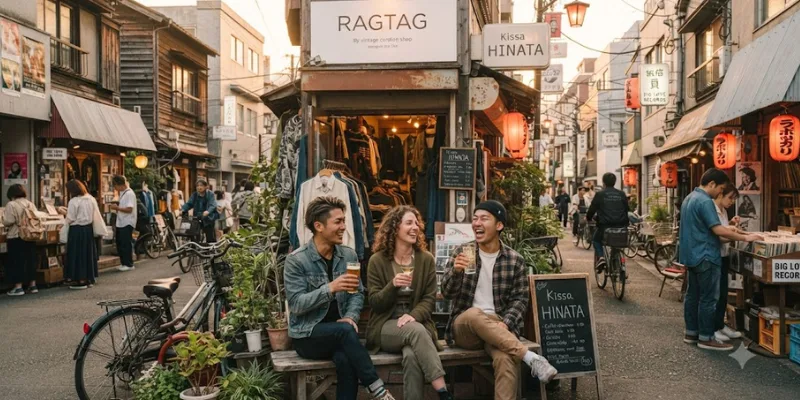
Budget Tier: Best Areas to Live in Tokyo for Foreigners Prioritising Affordability
Itabashi-ku — Itabashi, Narimasu
Best for: Maximum budget efficiency, families needing space at lower cost Average 1R rent: ¥61,600/month (n=97 listings) Average 2LDK rent: ¥161,600/month
Itabashi is one of Tokyo’s most affordable established 23-ward options, with good subway connectivity (Toei Mita Line) into central Tokyo. The ward has a significant Korean resident community and good Korean food infrastructure. It’s not glamorous, but for renters who need to keep costs absolutely minimal while maintaining a registered Tokyo address and reasonable transit, Itabashi consistently delivers.
For more, see our Itabashi apartments for rent guide.
Nerima-ku — Nerima, Hikarigaoka
Best for: Families prioritising space, those with cars, quieter lifestyle preference Average 1R rent: ¥61,300/month (n=77 listings) Average 2LDK rent: ¥159,700/month
Nerima is Tokyo’s most “suburban” inner ward — low-rise, quieter, with more parks and single-family houses mixed in with apartment buildings. This makes it genuinely family-friendly but also less exciting for single professionals seeking urban density. The 2LDK average of ¥159,700 is one of the best family-space values within the 23 wards.
Katsushika-ku — Kameari, Shibamata
Best for: Those on a very tight budget who can accept a longer commute Average 1R rent: ¥61,200/month (n=21 listings) Average 2LDK rent: ¥152,300/month
Katsushika has the lowest 1R average among all 23 wards in our Hato Mark Site dataset. The ward is best known for the Kameari and Shibamata areas — the latter a preserved traditional shopping street — and has a distinctly non-touristy, old-Tokyo character. The commute to central Tokyo is longer (35–45 minutes), making it a trade-off most single renters accept only when budget genuinely requires it.
For more, see our Life in Katsushika Ward guide.
Quick Comparison: Best Areas to Live in Tokyo for Foreigners
| Ward | 1R avg | 2LDK avg | Best for |
| Minato-ku | ¥146,600 | ¥679,100 | Expat families, embassies |
| Shibuya-ku | ¥127,800 | ¥395,000 | Lifestyle-first professionals |
| Shinjuku-ku | ¥84,300 | ¥291,600 | Students, central access |
| Meguro-ku | ¥84,000 | ¥298,000 | Couples, café culture |
| Setagaya-ku | ¥77,100 | ¥224,000 | Long-term, neighbourhood feel |
| Nakano-ku | ¥72,800 | ¥209,100 | Budget professionals |
| Toshima-ku | ¥71,300 | ¥206,700 | Students, transit |
| Suginami-ku | ¥67,900 | ¥224,500 | Creatives, best value |
| Kita-ku | ¥71,100 | ¥181,100 | Budget, northern access |
| Itabashi-ku | ¥61,600 | ¥161,600 | Budget families |
| Nerima-ku | ¥61,300 | ¥159,700 | Suburban families |
| Katsushika-ku | ¥61,200 | ¥152,300 | Lowest budget |
Source: Hato Mark Site rental statistics (Zentakuren), 2026.
Tokyo vs Other Japanese Cities for Foreign Residents
If Tokyo’s price tier overall is above your budget, several other major cities offer good foreign-resident infrastructure at lower cost:
- Osaka: 30–40% cheaper than Tokyo, strong international community. See our Osaka Namba apartments guide.
- Fukuoka: Japan’s most affordable major city for foreigners. See our Fukuoka apartments guide.
- Kyoto: Academic and cultural focus, lower cost. See our Kyoto apartments guide.
FAQ: Best Areas to Live in Tokyo for Foreigners
Which Tokyo ward is most foreigner-friendly? Minato-ku has the highest concentration of international infrastructure, but Shinjuku-ku, Shibuya-ku, and Setagaya-ku all have large established foreign communities with good English-language support. “Foreigner-friendly” depends partly on which nationalities and communities matter most to you.
Is it possible to live in Tokyo on under ¥70,000/month rent? Yes — Itabashi-ku, Nerima-ku, Suginami-ku, and Katsushika-ku all have 1R averages at or below ¥70,000. The trade-off is typically commute time and urban density relative to central wards.
Which ward has the best commute to central Tokyo? Shinjuku-ku and Shibuya-ku are effectively “in” central Tokyo for most purposes. For outer wards, Nakano-ku (one JR stop from Shinjuku) offers the best commute-to-cost ratio.
External reference: Tokyo Metropolitan Government — Living in Tokyo for Foreign Residents — official city resource covering daily life and housing for foreign residents.
→ Browse apartments across all Tokyo wards with English-language support
All rent figures in this guide are sourced from Hato Mark Site rental statistics (Zentakuren), 2026, and reflect units within approximately 10 minutes walk of a train station. Sample sizes are noted throughout to indicate statistical reliability.

Real estate advisor at Arealty Japan, specialising in helping foreign residents navigate the Tokyo and Osaka rental markets. Lucy has guided hundreds of international renters — from Working Holiday visa holders to corporate relocations — through Japan’s apartment application process. Her writing draws on firsthand experience with landlord screening, guarantor companies, and foreigner-friendly listings across all 23 Tokyo wards and major Kansai cities.