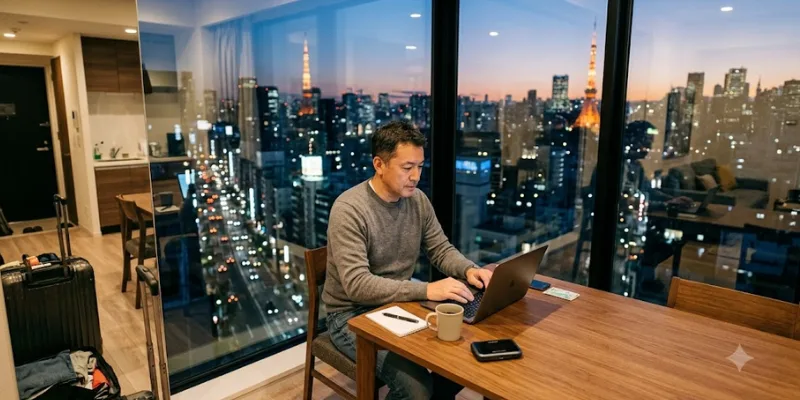

Digital Nomad visa Japan housing works fundamentally differently from every other visa category we cover on this blog. The reason comes down to one critical fact: the Digital Nomad visa doesn’t issue a residence card (在留カード, zairyu card). Officially classified as “Designated Activities” under Notice No. 53, it grants a maximum stay of six months and isn’t renewable. It functions more like an extended tourist status for remote workers than a genuine residence status. Without a residence card, you generally cannot sign a standard long-term residential lease. You also can’t open certain types of bank accounts, or access services that assume Japanese residency.
This guide explains what Digital Nomad visa Japan housing options actually work under these constraints. It also covers why the visa category matters so much for figuring out where you can realistically live. For visa categories that do support standard apartment rental, see our guide to the best visas for renting in Japan. For official current requirements, see Japan’s Immigration Services Agency guidance on Designated Activities.
Understanding what the Digital Nomad visa actually is
Japan introduced this visa category in 2024 to attract remote workers employed by, or contracting with, foreign companies. It requires proof of at least ¥10 million in annual personal income, private health insurance with a minimum ¥10 million in medical coverage. Citizenship from a country that’s both visa-exempt for short stays and holds a tax treaty with Japan is also required. Spouses and children can accompany the primary applicant. Each must independently meet the requirements, though.
The maximum stay runs six months. No extension exists, and no reapplication is permitted within six months of departure. This isn’t a residence status in the legal sense. It’s a designated activities permit that happens to allow remote work, closer in structure to an extended tourist visa than to a work or spouse visa.
Why the lack of a residence card changes everything about housing
Nearly every standard Japanese rental process assumes a residence card as baseline documentation. Landlords ask for it, guarantor companies require it, and utility providers often reference it during setup. Digital Nomad visa holders simply don’t have one to show. This means the standard path most other visa categories follow — sign a one- or two-year lease, use a guarantor company, move in — generally isn’t available. Work, student, and spouse visa applicants have a much smoother path here.
This isn’t a minor inconvenience. It’s a structural reality that should shape your entire housing search from the outset.
What accommodation options actually work
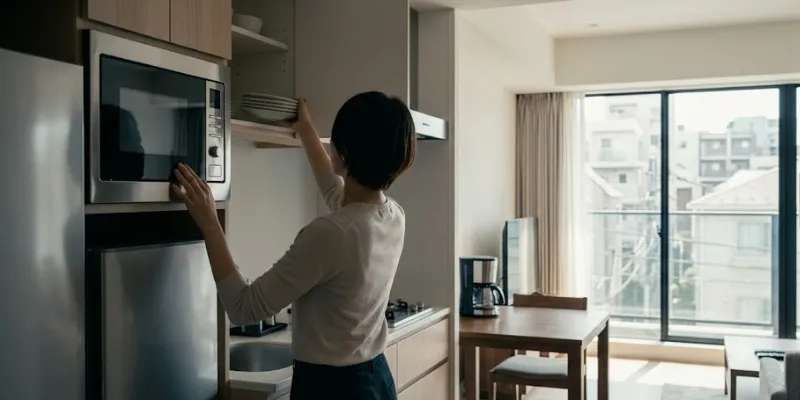
Serviced apartments and short-term furnished rentals represent the most practical option for most Digital Nomad visa holders. These properties, common in Tokyo, Osaka, and other major cities, cater specifically to short-stay foreign residents. They typically don’t require the same residence-card-dependent screening as a standard lease. Monthly rates run higher than an equivalent standard apartment. The flexibility and lack of guarantor company requirements offset this, though, for a stay capped at six months anyway.
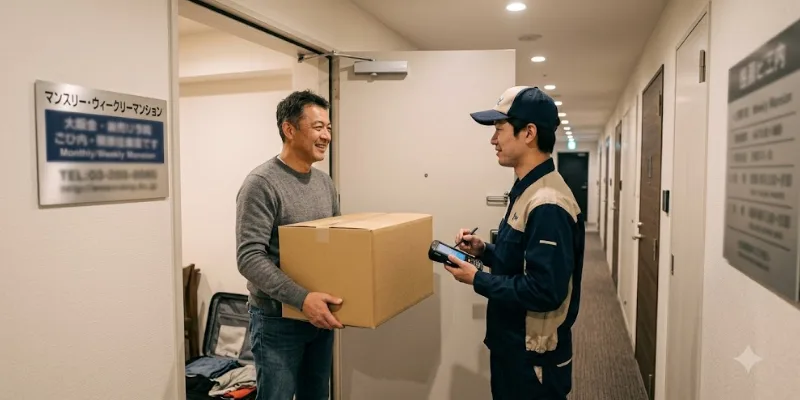
Weekly and monthly mansions offer a middle ground between a hotel and a full apartment, with furnished units, flexible contract lengths, and minimal paperwork. Many properties in this category explicitly market to foreign short-term residents and tourists. This makes them a natural fit for the Digital Nomad visa’s constraints.
Extended-stay hotels and Airbnb-style accommodations work for shorter portions of your six-month stay, particularly useful while you’re still deciding on a longer-term base or exploring different neighborhoods and cities before settling.
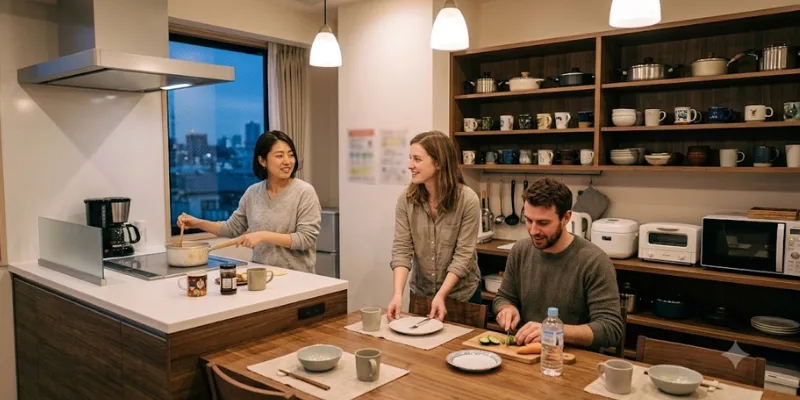
Guest houses and share houses sometimes accept Digital Nomad visa holders, particularly properties already accustomed to a rotating population of foreign short-term residents, students, and working holiday visa holders. Screening tends to be lighter than a standard apartment lease. Individual house rules and minimum stay requirements vary considerably, though.
What generally doesn’t work
Standard one- or two-year apartment leases through a typical Japanese real estate agency generally aren’t realistic for Digital Nomad visa holders. Most landlord and guarantor company screening builds in a residence card requirement. Some agencies specializing in foreigner-friendly, flexible-term rentals may have workarounds. This isn’t the standard path, though, and requires specifically seeking out agencies experienced with this visa category.
Opening a standard Japanese bank account can also prove difficult without a residence card. This in turn complicates paying for accommodation that requires bank transfer rather than credit card payment. Confirm payment methods accepted by any property you’re considering before committing.
Budgeting for Digital Nomad visa Japan housing
Serviced apartments and monthly mansions in Tokyo typically run ¥150,000–¥350,000/month depending on location and size, notably higher per month than an equivalent standard lease would cost, but without the upfront deposit, key money, and agency fees a standard lease requires. Over a full six-month stay, this premium adds up. Budgeting realistically from the start matters more here than for renters using a standard long-term lease.
Regional cities and smaller towns generally offer meaningfully lower serviced accommodation costs than Tokyo or Osaka. This is worth considering if your remote work doesn’t require a specific city location.
Planning your six-month stay strategically
The visa doesn’t renew, and requires a six-month gap before reapplying. Because of this, many Digital Nomad visa holders treat their stay as a defined project, rather than an open-ended relocation. Booking accommodation in shorter blocks — one to three months at a time — gives flexibility to change location, city, or accommodation type. This beats committing to a full six months upfront if your initial choice doesn’t suit your work or lifestyle needs.
If you’re considering a longer-term move to Japan beyond what the Digital Nomad visa allows, research other visa categories early. A work visa, Highly Skilled Professional visa, or Business Manager visa all issue a residence card and support standard apartment rental — worth exploring well before your six-month Digital Nomad stay runs out.
Common misconceptions about Digital Nomad visa Japan housing
“I can just find a landlord willing to skip the residence card requirement.” This happens occasionally, but it’s the exception rather than a realistic plan. Most landlords and the guarantor companies they work with build residence card verification directly into their standard screening process, and asking them to bypass it isn’t something most agencies are equipped or willing to do.
“A local friend can lease the apartment for me.” This carries real risk for both parties. The lease holder bears full legal responsibility for the property, and landlords increasingly ask direct questions about who will actually occupy a unit, particularly in buildings that have dealt with subletting issues before. This isn’t a reliable workaround to build a housing plan around.
“Serviced apartments are basically the same as a hotel.” Not quite. Serviced apartments and monthly mansions typically offer considerably more space, a kitchen, and a more residential feel than a hotel room, while still avoiding the residence-card-dependent paperwork of a standard lease. They occupy a genuine middle category worth understanding on its own terms rather than mentally filing them under “hotel.”
Choosing a city or region for your Digital Nomad stay
Since the visa doesn’t tie you to a specific employer or local address requirement the way a work visa might, Digital Nomad visa holders have real freedom in choosing where to base themselves. Tokyo and Osaka offer the deepest selection of serviced apartments and monthly mansions specifically marketed to short-term foreign residents, along with the strongest coworking infrastructure. Regional cities and smaller towns offer meaningfully lower costs and a different lifestyle, though with a thinner selection of serviced accommodation and coworking spaces built for exactly this kind of stay.
Some Digital Nomad visa holders split their six months across two or three locations, using shorter accommodation bookings to experience different parts of Japan rather than settling in one city for the entire stay. This approach suits remote workers whose job doesn’t require a fixed local base, and it takes fuller advantage of what a temporary, non-renewable visa status is actually built for.
Tax residency considerations tied to your accommodation choice
Where and how long you stay in Japan on a Digital Nomad visa can affect your tax residency status. This is an important consideration alongside the housing question itself. Visa holders who become tax residents may face taxation on Japan-source income and foreign income remitted into Japan, typically at progressive rates. The exact treatment depends on their specific residency classification. Since the visa’s income eligibility already ties to earnings from outside Japan, understanding how your accommodation duration and pattern of stay interact with tax residency rules matters. Address this before you commit to a specific housing plan. Consulting a tax professional familiar with Japan’s non-resident and non-permanent resident categories is worth the cost for most Digital Nomad visa holders. These classifications can affect your overall financial picture during the stay considerably.
Frequently Asked Questions
Generally no. The visa doesn’t issue a residence card, which most landlords and guarantor companies require as baseline documentation for a standard lease.
Serviced apartments and monthly mansions work best for most holders, offering furnished units and flexible terms without the residence-card-dependent screening a standard lease requires.
Serviced apartments and monthly mansions in Tokyo typically run ¥150,000–¥350,000/month, higher per month than a standard lease but without upfront deposit and key money costs.
No. The visa is non-renewable, and you cannot reapply within six months of your departure from Japan.
Research other visa categories that issue a residence card and support standard apartment rental — a work visa, Highly Skilled Professional visa, or Business Manager visa, depending on your situation — well before your Digital Nomad stay ends.
No. Digital Nomad visa holders aren’t eligible for National Health Insurance and must maintain private health insurance covering their full stay, with at least ¥10 million in medical treatment coverage. You can confirm current insurance requirements through Japan’s Ministry of Health, Labour and Welfare.
Arealty can help Digital Nomad visa holders find serviced apartments and monthly mansions suited to a flexible short-term stay in Tokyo and Osaka. Contact our team to discuss your timeline and budget.

Real estate advisor at Arealty Japan, specialising in helping foreign residents navigate the Tokyo and Osaka rental markets. Lucy has guided hundreds of international renters — from Working Holiday visa holders to corporate relocations — through Japan’s apartment application process. Her writing draws on firsthand experience with landlord screening, guarantor companies, and foreigner-friendly listings across all 23 Tokyo wards and major Kansai cities.