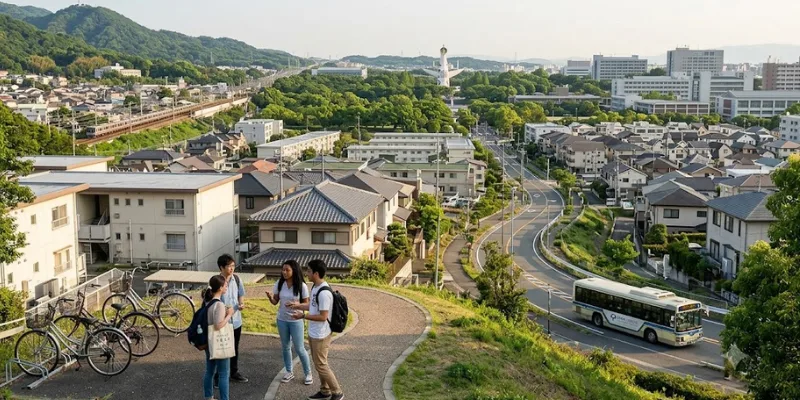

Osaka University student housing costs about ¥47,000 to ¥51,000 a month for a 1K near the three campuses, based on station averages in October 2026. The cheapest station is Ishibashi Handai-mae for Toyonaka campus, at about ¥47,000. The University of Osaka spreads its students across Toyonaka, Suita and Minoh, so where you should live depends on which campus you attend most, and a free shuttle bus links all three.
First-year undergraduates spend most of their first year at Toyonaka, then many move on to faculty campuses. This guide shows the best stations near each campus, what they cost, and how dorms compare with private apartments.
| Campus | Nearest station | Walk to campus | Average 1K nearby |
|---|---|---|---|
| Toyonaka | Ishibashi Handai-mae (Hankyu Takarazuka Line) | 15 to 25 min | ¥47,000 |
| Suita | Kita-Senri (Hankyu Senri Line) or Handai-byoin-mae (Osaka Monorail) | Varies by building | ¥50,800 (Kita-Senri) |
| Minoh | Minoh-Semba-Handai-mae (Kita-Osaka Kyuko) | 3 min | ¥49,300 |
| All three | Senri-Chuo (Midosuji / Kita-Osaka Kyuko, Osaka Monorail) | Hub between campuses | ¥55,200 |
Rent figures are athome station averages for the latest three months, checked 7 October 2026. Walking times are from The University of Osaka’s access pages. Last updated: 7 October 2026.
Where Are Osaka University’s Three Campuses?
The University of Osaka has one campus in each of three cities north of Osaka City: Toyonaka, Suita and Minoh. They are 15 to 25 minutes apart by the free campus shuttle, so many students live near one and travel to another a few times a week.
Toyonaka campus
Toyonaka sits on Machikaneyama hill. Most first-year undergraduates take general education classes here at the Center for Education in Liberal Arts and Sciences, and the Schools of Letters, Law, Economics, Science and Engineering Science are also based here. The university says the walk is about 15 to 25 minutes east from Ishibashi Handai-mae Station on the Hankyu Takarazuka Line, or about 15 minutes west from Shibahara-handai-mae on the Osaka Monorail. Ishibashi has a shopping street right by the station.
Suita campus
Suita is the largest campus, on the northern edge of Expo ’70 Commemorative Park. It hosts Medicine, Dentistry, Pharmaceutical Sciences, Engineering and Human Sciences, plus The University of Osaka Hospital. The nearest stations are Handai-byoin-mae on the Osaka Monorail and Kita-Senri, the terminus of the Hankyu Senri Line.
Minoh campus
Minoh campus moved to a new site in Minoh-Semba, between the Toyonaka and Suita campuses, and is the home of international and language studies. Since March 2024, Minoh-Semba-Handai-mae Station on the extended Kita-Osaka Kyuko line sits a 3-minute walk away. That means a direct ride, with no transfer, from Shin-Osaka, Umeda and Namba, about 20 minutes from Shin-Osaka.
| Shuttle route | Approx. time |
|---|---|
| Toyonaka to Minoh | 20 min |
| Minoh to Suita | 15 min |
| Suita to Toyonaka | 25 min |
Source: The University of Osaka campus introduction and access pages.
How Much Is Rent Near Osaka University?
Rent near all three campuses is well below central Osaka. A 1K averages about ¥47,000 to ¥51,000 beside the campus stations, compared with about ¥83,800 in Umeda. Senri-Chuo, the transport hub between the campuses, costs a little more.
| Layout | Ishibashi Handai-mae (Toyonaka) | Kita-Senri (Suita) | Minoh-Semba-Handai-mae (Minoh) | Senri-Chuo (hub) |
|---|---|---|---|---|
| 1R (studio) | ¥45,800 | ¥50,600 | ¥46,000 | ¥52,500 |
| 1K | ¥47,000 | ¥50,800 | ¥49,300 | ¥55,200 |
| 1DK | ¥54,100 | ¥58,700 | ¥50,800 | ¥65,200 |
| 1LDK | ¥68,400 | ¥70,200 | ¥79,400 | ¥84,800 |
| 2LDK | ¥88,200 | ¥97,600 | ¥106,800 | ¥116,100 |
Source: athome station averages for the latest three months, checked 7 October 2026 (Ishibashi Handai-mae, Kita-Senri, Minoh-Semba-Handai-mae, Senri-Chuo). Base rent only; management fees are usually extra.
What the numbers mean for students:
- Toyonaka is the cheapest base. A 1K near Ishibashi Handai-mae averages about ¥47,000, the lowest of the four stations.
- Minoh is not more expensive for singles. A 1K at Minoh-Semba-Handai-mae averages about ¥49,300, close to the other campuses. Larger layouts cost more there, so couples and families may find better value elsewhere.
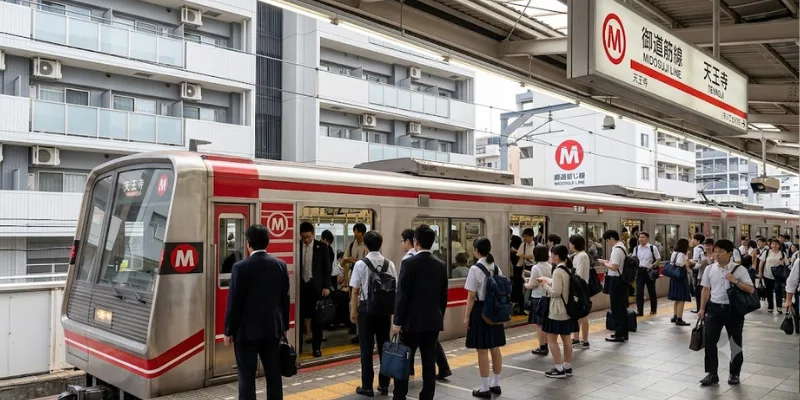
- Senri-Chuo is the best compromise for multi-campus students. It costs about ¥5,000 to ¥8,000 more for a 1K, but it connects to the Midosuji Line, Kita-Osaka Kyuko and the Osaka Monorail toward Toyonaka and Suita.
Remember to budget for move-in costs too. Deposit, key money, agency fee and guarantor fees can add several months’ rent up front; our move-in cost guide explains each one.
Where Should You Live for Each Osaka University Campus?
Pick your base by the campus you will visit most days, then check how easily you can reach the others by shuttle or train.
Toyonaka campus
- Ishibashi Handai-mae: the classic student area, with a shopping street, cheap restaurants and the lowest average 1K rent of the campus stations. Hankyu trains reach Osaka-Umeda in roughly 20 minutes.
- Shibahara-handai-mae: on the Osaka Monorail, on the east side of campus. Handy if you also travel to Suita, since the monorail runs toward Banpaku-kinen-koen.
- Hotarugaike: one Hankyu stop toward Umeda, with a transfer to the Osaka Monorail and more shops.
Suita campus
- Kita-Senri: the Hankyu Senri Line terminus, with a 1K at about ¥50,800 and everyday shops around the station.
- Yamada: where the Hankyu Senri Line meets the Osaka Monorail, a good middle point between Suita campus and the rest of the city.
- Handai-byoin-mae and Banpaku-kinen-koen: closest to the medical and engineering buildings, with fewer shops.
Minoh campus
- Minoh-Semba-Handai-mae: 3 minutes from campus, with a direct line to Shin-Osaka, Umeda and Namba. A 1K averages about ¥49,300.
- Senri-Chuo: one stop south, with department stores, the Osaka Monorail and the Midosuji Line, at about ¥55,200 for a 1K.
If you study on more than one campus
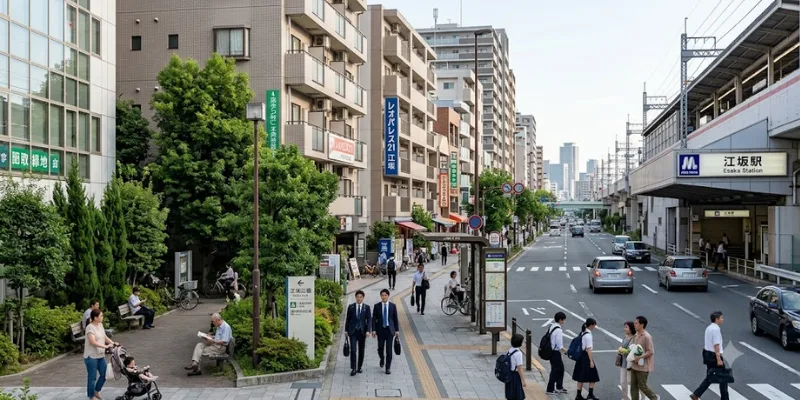
Senri-Chuo is the best all-round base: monorail toward both Toyonaka (Shibahara-handai-mae) and Suita (Handai-byoin-mae), Kita-Osaka Kyuko toward Minoh, and the Midosuji Line into the city. If you want a calmer area with a direct line to Umeda, see our Living in Esaka guide; Esaka is a few stops south on the same line.
Should You Choose a Dorm or a Private Apartment?
University housing has limited places, so many Osaka University students end up in private housing. Here is how the main options compare.
| Option | Who it suits | Good to know |
|---|---|---|
| University housing (International Houses, Global Village in Minoh) | New international students and researchers | Limited places; apply early through the university |
| Co-op MY ROOM service | Students who want help finding a private room | Run by The University of Osaka Co-op, with an office on campus and English support; you can search before arriving |
| Private dormitories and share houses | Short stays and students who want company | Furnished, but early termination may not be allowed |
| Private apartment (1K or 1R) | Students staying a year or more | Most freedom; needs a guarantor and liability insurance |
Source: The University of Osaka, off-campus housing page for international students.
What the university says about private apartments
The university’s support office notes that private rentals usually go through a real estate agency, and that tenants must buy liability insurance and have a guarantor. In practice, most landlords who accept foreign students let you use a guarantor company instead of a personal guarantor. Our guide to renting without a Japanese guarantor explains how that works.
Short stays while you search
If you arrive before your apartment is ready, a monthly mansion or share house can bridge the gap. Our Osaka short-term rental guide compares prices and includes an example near Esaka.
How Do You Rent an Apartment Near Osaka University?
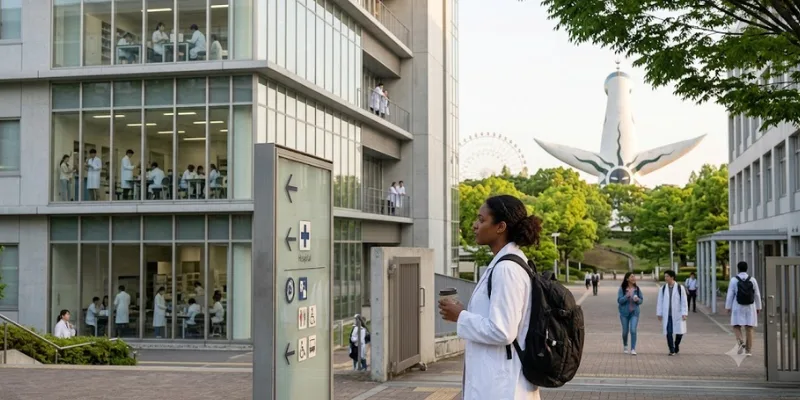
Renting as an international student takes 2 to 6 weeks once you are ready to apply. Plan around your visa: most landlords will not sign until your residence status is confirmed.
Documents to prepare
- Passport and residence card (or your Certificate of Eligibility if you apply before arriving)
- Letter of admission or certificate of enrollment from The University of Osaka
- Proof of funds: scholarship letter, bank statement or a sponsor’s income documents
- An emergency contact in Japan, if you have one
- Payment method for the first month and move-in fees
A realistic monthly budget
| Item | Approx. per month |
|---|---|
| Rent, 1K near campus | ¥47,000 to ¥51,000 |
| Management fee | Often ¥3,000 to ¥6,000 |
| Utilities and internet | ¥10,000 to ¥15,000 |
| Commuter pass (if you live off a campus line) | Varies by route; student passes are discounted |
The rent row uses athome averages. Utility and fee ranges are typical estimates; check each listing.
When to start looking
The busiest period is February to March, before the April intake, when good student apartments go fast. For the October intake, start in August. If you are already in Japan, autumn and early summer usually offer more choice and better terms.
Five tips from our team
- Confirm your main campus first. Living next to Toyonaka is less useful if your lab moves to Suita in year two.
- Check the walk, not the station name. Toyonaka campus is 15 to 25 minutes on foot from Ishibashi Handai-mae, depending on your building.
- Ask about bicycle parking. Many students cycle between home, station and campus.
- Look at the hill. Toyonaka campus sits on a hill, so a flat route matters if you walk daily.
- Use the shuttle. Living near one campus and taking the free shuttle to another often beats paying for a central location.
Osaka University Student Housing: FAQ
A 1K apartment near the three campus stations averages about ¥47,000 to ¥51,000 a month, based on athome data checked October 2026. Senri-Chuo, the hub between campuses, averages about ¥55,200.
Toyonaka. A 1K near Ishibashi Handai-mae Station averages about ¥47,000, the lowest of the stations we checked.
Senri-Chuo is the most practical base, with the Osaka Monorail toward Toyonaka and Suita, Kita-Osaka Kyuko toward Minoh, and the Midosuji Line into central Osaka. The free campus shuttle also links all three.
Take the Midosuji Line north; trains continue on Kita-Osaka Kyuko to Minoh-Semba-Handai-mae, 3 minutes’ walk from campus. It is about 20 minutes from Shin-Osaka with no transfer.
Usually, yes. Most foreigner-friendly landlords accept a guarantor company. You will also need liability insurance, which the university notes is required for private apartments.
MY ROOM is The University of Osaka Co-op’s housing service. It has an office on campus, offers English support, and lets you search for rooms before you arrive in Japan.
For April entry, start in January or February; for October entry, start in August. Most landlords need your visa confirmed before signing.
Find Osaka University Student Housing with Arealty
The right Osaka University student housing is close to the campus you use most, on a line that reaches the others, at a rent your budget can carry for the whole program. Arealty lists apartments across Suita and northern Osaka, with English support from viewing to contract, and can confirm before you apply whether a landlord accepts international students.
For more options, see our guides to Midosuji Line apartments and cheap student apartments near Osaka Station.
About this guide
Written by Lucy Nguyen at Arealty. First published July 2026; fully updated 7 October 2026 with station rent data and campus access details. Rents are athome asking-rent averages over the last three months.
Sources
- The University of Osaka: campus introduction and shuttle times
- The University of Osaka: access to each campus
- The University of Osaka: Minoh-Semba-Handai-mae Station opening, March 2024
- The University of Osaka: off-campus housing for international students
- athome rent by station: Ishibashi Handai-mae, Kita-Senri, Minoh-Semba-Handai-mae, Senri-Chuo

Real estate advisor at Arealty Japan, specialising in helping foreign residents navigate the Tokyo and Osaka rental markets. Lucy has guided hundreds of international renters — from Working Holiday visa holders to corporate relocations — through Japan’s apartment application process. Her writing draws on firsthand experience with landlord screening, guarantor companies, and foreigner-friendly listings across all 23 Tokyo wards and major Kansai cities.