
Quick answer: Choose Shibuya if you want a stylish, walkable neighbourhood with easy access to Daikanyama, Ebisu, and Nakameguro, and your budget can handle ¥100,000–¥160,000/month for a 1K. Choose Shinjuku if transport connectivity and a wider range of price points matter more than neighbourhood character — Shinjuku’s 1K rents run slightly lower, around ¥85,000–¥130,000/month, and its station is the busiest transit hub in the world. Both wards sit six minutes apart on the Yamanote Line, so neither choice locks you out of the other.
Shibuya vs Shinjuku is one of the most common questions foreign renters ask before choosing a base in Tokyo. Both are central. Both sit on the Yamanote Line loop. Both have strong reputations. But the two wards serve different lifestyles, and the rent difference adds up over a year. This guide breaks down the real numbers: rent, commute, application process, and who each ward actually fits.
Shibuya vs Shinjuku at a Glance
| Shibuya | Shinjuku | |
|---|---|---|
| Average 1K rent | ¥100,000–¥160,000/month | ¥85,000–¥130,000/month |
| Character | Stylish, youth-driven, café culture | High-density, transit hub, wider mix of budget and luxury |
| Best for | Creatives, young professionals, foreigners who want neighbourhood identity | Renters prioritizing transport access and lower cost per square meter |
| Standout sub-areas | Daikanyama, Ebisu, Yoyogi-Uehara, Sasazuka | Yoyogi, Higashi-Shinjuku, Ochiai |
| Commute between the two | 6 minutes via JR Yamanote Line | 6 minutes via JR Yamanote Line |
Rent: How Much Does It Actually Cost?
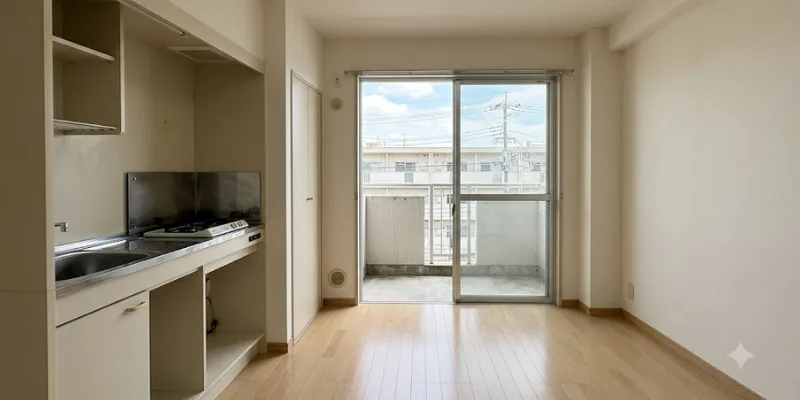
Shibuya ward rent for a single-person apartment, a 1K or 1R, typically runs ¥100,000–¥160,000 per month. That figure climbs further in premium pockets like Ebisu and Daikanyama. Shinjuku ward tends to run slightly cheaper. A 1K in areas like Yoyogi or Higashi-Shinjuku averages ¥85,000–¥130,000 per month.
The gap isn’t dramatic on paper — often just ¥15,000–¥30,000/month. But over a 2-year lease, that’s ¥360,000–¥720,000 in savings if you go with Shinjuku. Whether that’s worth it depends on how much you value Shibuya’s specific neighbourhood feel over a lower baseline cost.
If your budget is tight in either ward, the standard workaround applies: look one or two stops out. Sangenjaya, on the Shibuya-bound Den-en-toshi Line, and Higashi-Nakano, on the Sobu Line near Shinjuku, both offer meaningfully lower rent while staying within 10 minutes of either hub.
Commute and Transit: Why This Comparison Even Makes Sense
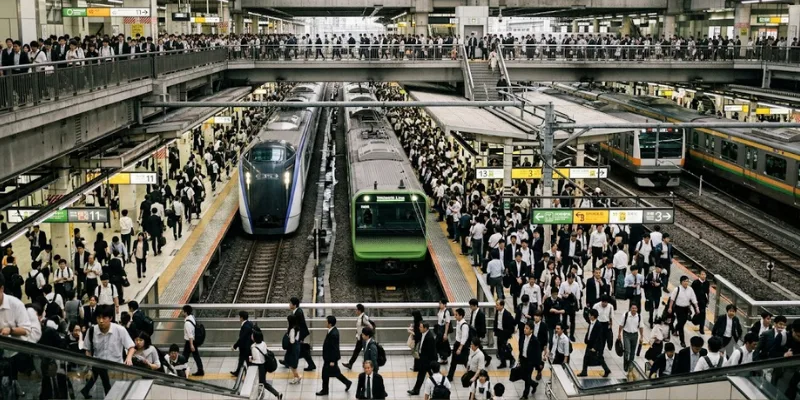
Shibuya Station and Shinjuku Station are two of Tokyo’s busiest interchanges. Both sit directly on the JR Yamanote Line loop, and the ride between them takes about 6 minutes. This is the reason the Shibuya vs Shinjuku question doesn’t have a wrong answer from a pure-commute standpoint. Picking one doesn’t meaningfully cut you off from the other.
Shibuya Station connects to the JR Yamanote and Saikyo Lines, the Tokyo Metro Ginza, Hanzomon, and Fukutoshin Lines, plus the Keio Inokashira and Tokyu Toyoko and Den-en-toshi Lines. That’s nine lines in total, giving direct access to Yokohama, Shimo-Kitazawa, and central Tokyo without transferring.
Shinjuku Station handles more daily passengers than any other station in the world, according to Guinness World Records, with an even broader web of JR, private railway, and subway lines. It also has direct highway bus and airport limousine access. If your job or university involves regular travel outside the 23 wards, Shinjuku’s connectivity gives you more one-transfer options.
Lifestyle: What Living There Actually Feels Like
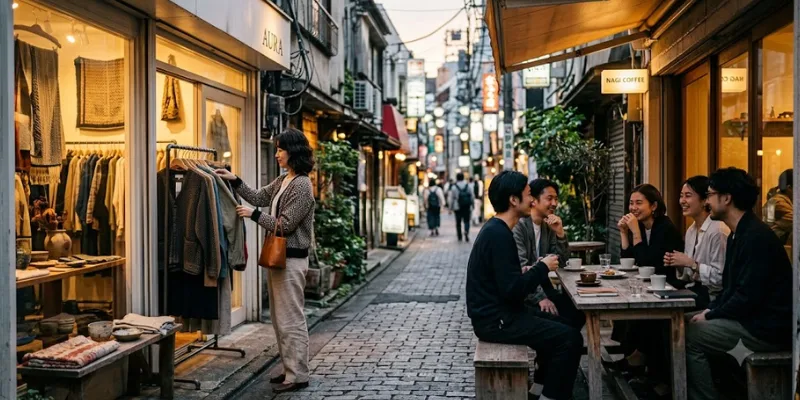
Shibuya’s character is neighbourhood-layered rather than concentrated at the station. The backstreets around Udagawacho, the boutiques and cafés of Daikanyama, and the quieter residential stretch of Yoyogi-Uehara all sit close by. Each is within a 10–15 minute walk or one train stop of Shibuya Station itself. It’s the choice for renters who want a strong sense of neighbourhood identity alongside city access. This is why Shibuya consistently attracts creatives, young professionals, and remote workers who spend time in local cafés.
Shinjuku is denser and more purely transit-and-commerce driven at its core. Kabukicho’s nightlife district and Golden Gai’s tiny bars sit within walking distance of the station. So does the government-building skyline on the west side. Residential Shinjuku — Yoyogi, Ochiai, Nishi-Shinjuku — is calmer than the station area suggests. It also offers more variety in building age and price than Shibuya’s more uniformly premium stock.
Both wards require the same first legal step after moving in. You must register your address at the local ward office, Shibuya-ku or Shinjuku-ku, within 14 days of your move-in date. Both offices offer English-language guidance. The registration process itself is identical regardless of which ward you choose.
Application Process: Does the Ward Change Anything?
Not materially. Shibuya ward has one of the highest foreigner-acceptance rates among Tokyo landlords. Shinjuku is similar, thanks to its large existing international population. In both wards, the requirements are the same. You’ll need a guarantor company, since most landlords require one regardless of income. You’ll need proof of income or a job offer letter. And you’ll need a viewing before you apply — Japanese rental listings are viewed in person before submitting paperwork, not after.
If you’re moving from overseas and haven’t built Japanese income history yet, the guarantor company requirement applies the same way in Shibuya and Shinjuku. It’s a ward-agnostic step, not something specific to either location.
Cost of Living Beyond Rent
Rent is the biggest line-item difference in the Shibuya vs Shinjuku decision, but it’s not the only one. Utilities, food, and mobile plans cost about the same in both wards — the real variable is lifestyle spending. Shibuya’s café and boutique culture makes it easy to spend more on eating and shopping day-to-day. More of that activity simply happens on foot near home. Shinjuku’s density cuts both ways. You get cheaper izakaya dinners in Omoide Yokocho, but also more temptation from 24-hour retail and entertainment clustered around the station. Neither ward is inherently cheaper to live in once rent is set aside — it comes down to spending habits more than location.
Who Should Choose Shibuya
- You want a distinct neighbourhood identity, not just proximity to a station
- Daikanyama, Ebisu, or Nakameguro cafés and boutiques matter to your day-to-day life
- Your budget comfortably clears ¥120,000+/month for a 1K
- You work in or adjacent to Shibuya’s tech and startup cluster (“Bit Valley”)
Who Should Choose Shinjuku
- Transport connectivity is your top priority — regular trips outside the 23 wards, or an unpredictable commute
- You want more flexibility in price and building age within the same general area
- You’re comfortable trading some neighbourhood character for a wider mix of budget options
Which Ward Fits Different Renter Profiles
Solo professionals working in tech or creative fields tend to gravitate toward Shibuya. The ward’s Bit Valley startup cluster fits this profile well. So does Daikanyama and Nakameguro’s café-driven work culture, built around flexible hours and local coffee shops. Shinjuku suits solo professionals whose work involves regular travel. Sales roles, consultants, or anyone who needs fast access to Tokyo’s wider rail and bus network on short notice.
Couples and families often lean toward Shinjuku for one simple reason: more square footage per yen. A 1LDK in Yoyogi or Nishi-Shinjuku typically costs less than an equivalent unit in central Shibuya. Shinjuku’s residential pockets, away from Kabukicho, are also quieter than their reputation suggests. Families who specifically want Shibuya’s international-school access or Hiroo’s embassy-district calm should budget accordingly. That combination sits at the higher end of either ward’s price range.
Students and early-career renters usually do better in Shinjuku or its immediate surroundings, simply on cost. Shibuya’s Daikanyama and Ebisu premiums rarely make sense on a student budget. Shinjuku’s Yoyogi and Ochiai pockets offer workable rents instead, without sacrificing the six-minute link to Shibuya’s nightlife and shopping.
Safety and Daily Convenience
Both wards rank among Tokyo’s safer central districts, and violent crime is rare in either. The practical safety differences are more about crowd density and late-night noise than personal risk. Shibuya’s crossing area gets extremely crowded on weekend nights. Halloween and New Year’s Eve draw large, loud gatherings that spill into residential side streets nearby — worth knowing if you’re sensitive to noise. Shinjuku’s Kabukicho carries a livelier reputation, but the area is heavily policed and well-lit. Most residential pockets sit far enough away that daily life feels calm despite the neighbourhood’s nightlife image.
Daily convenience is strong in both wards. Supermarkets, konbini, and pharmacies cluster densely near both stations, and both wards have 24-hour options if your schedule runs late. Shinjuku edges ahead slightly on sheer density of options near the station, simply because of its larger commercial footprint. Still, neither ward will leave you short on everyday essentials. For renters weighing daily convenience heavily, this is usually a minor factor next to rent and commute — both wards clear the bar comfortably.
Frequently Asked Questions
Shibuya is more expensive on average. A 1K typically runs ¥100,000–¥160,000/month in Shibuya versus ¥85,000–¥130,000/month in Shinjuku, though both have premium and budget pockets that overlap.
About 6 minutes on the JR Yamanote Line, with trains running frequently throughout the day.
Yes. Given the 6-minute Yamanote Line connection, many residents of one ward regularly use the other for shopping, dining, or nightlife. It doesn’t affect their daily commute either way.
Rent is somewhat cheaper in Shinjuku, but day-to-day costs like food, utilities, and transport run similarly in both wards. The Shibuya vs Shinjuku cost difference mostly comes down to rent and personal spending habits, not fixed costs.
Both rank among Tokyo’s safer central wards, and violent crime is rare in either. The practical difference is crowd density and noise rather than personal safety — Shibuya gets loud around the crossing on weekend nights and during Halloween, while Shinjuku’s Kabukicho is heavily policed and well-lit despite its nightlife reputation.
Ready to compare real listings instead of averages? Browse current Shibuya apartments for rent on Arealty — all pre-filtered for foreigner acceptance, with English-language support through the entire application process. Prefer to see everything Tokyo has to offer first? Explore all Tokyo rentals or get in touch with our team directly at arealty.mom.

Real estate advisor at Arealty Japan, specialising in helping foreign residents navigate the Tokyo and Osaka rental markets. Lucy has guided hundreds of international renters — from Working Holiday visa holders to corporate relocations — through Japan’s apartment application process. Her writing draws on firsthand experience with landlord screening, guarantor companies, and foreigner-friendly listings across all 23 Tokyo wards and major Kansai cities.