
Quick answer: A single person’s cost of living in Shibuya, Tokyo runs roughly ¥180,000–¥260,000/month in 2026, before move-in costs. Rent is the single biggest line item, at ¥100,000–¥160,000/month for a 1K. Food follows at ¥30,000–¥50,000, then utilities and internet at ¥15,000–¥25,000, then transport at ¥5,000–¥15,000 — often less if your commute is walkable. This is meaningfully higher than the Tokyo-wide average, since Shibuya is one of the city’s premium wards.
Shibuya is consistently one of the most expensive wards in Tokyo to rent in. But “expensive” is relative. Plenty of foreign residents budget for the cost of living in Shibuya successfully, once they know the real numbers instead of vague warnings. This guide breaks that cost down by category, using 2026 figures. Use it to build a realistic monthly budget before you commit to a lease.
Monthly Budget at a Glance (Single Person)
| Category | Shibuya (2026) | Tokyo-wide average |
|---|---|---|
| Rent (1K) | ¥100,000–¥160,000 | ¥75,000–¥120,000 |
| Utilities (electricity, gas, water) | ¥10,000–¥16,000 | ¥10,000–¥15,000 |
| Internet | ¥4,000–¥6,000 | ¥4,000–¥6,000 |
| Phone/mobile | ¥3,000–¥8,000 | ¥3,000–¥8,000 |
| Food | ¥30,000–¥50,000 | ¥30,000–¥50,000 |
| Transport | ¥5,000–¥15,000 | ¥5,000–¥20,000 |
| Total (excluding move-in) | ¥180,000–¥260,000 | ¥140,000–¥225,000 |
The gap between Shibuya and the citywide average is almost entirely driven by rent. Every other category is roughly comparable, since utilities, food, and mobile plans don’t vary much by ward.
Rent: The Line Item That Actually Changes by Ward
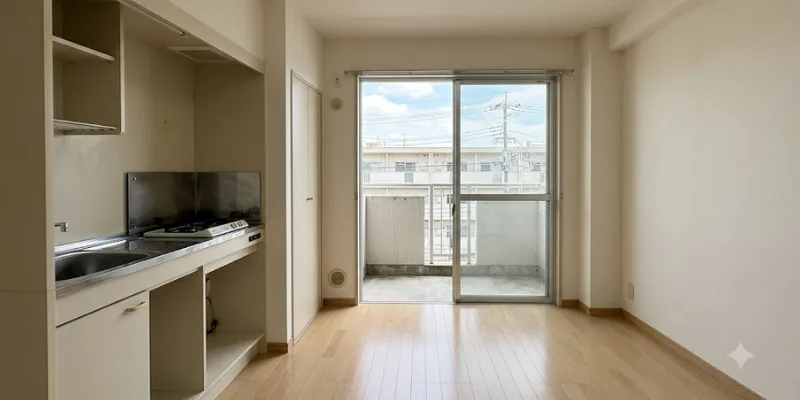
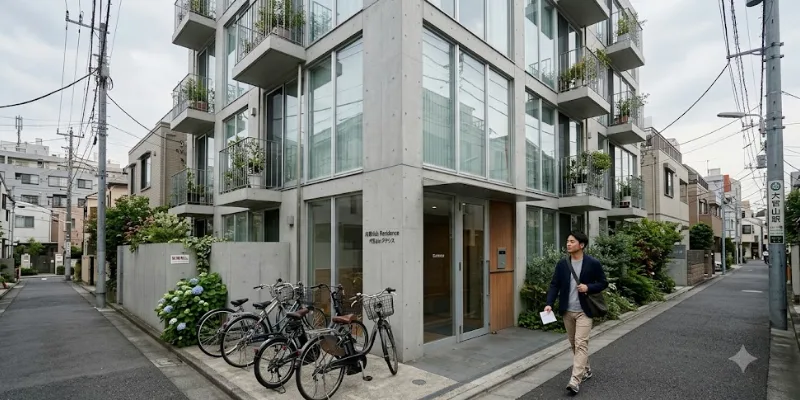
A 1K or 1R apartment in Shibuya ward runs ¥100,000–¥160,000/month. Premium pockets like Ebisu and Daikanyama push that range higher still. That’s noticeably above the Tokyo 23-ward average of roughly ¥75,000–¥95,000 for a studio. It’s the main reason the cost of living in Shibuya sits above the city norm.
If Shibuya’s headline rent doesn’t fit your budget, don’t leave the ward entirely. The standard move is to look at sub-areas within or adjacent to it. Yoyogi-Uehara, on the Odakyu and Tokyo Metro Chiyoda Lines, runs meaningfully lower. Expect ¥88,000–¥115,000/month for a 1K there, while staying inside Shibuya ward with comparable residential quality to the pricier core.
Utilities: Electricity, Gas, and Water
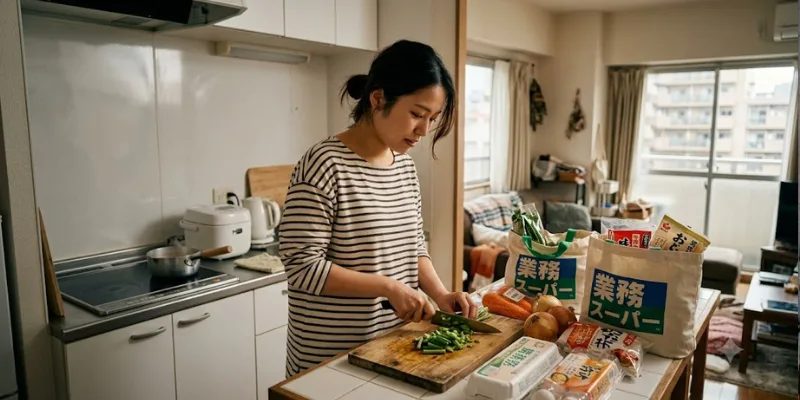
Utility costs in Shibuya don’t differ structurally from the rest of Tokyo. They’re driven by apartment size and season, not ward. Budget ¥10,000–¥16,000/month combined for electricity, gas, and water in a single-person 1K. That figure rises in July–September for air conditioning, and again in December–February for heating.
Electricity is billed on a tiered rate. According to rate data from TEPCO, Tokyo’s main power utility, expect roughly ¥6,000–¥8,000/month for typical single-person usage of 180–200 kWh. Water is billed every two months in most buildings but averages out to roughly ¥2,000–¥2,500/month. Gas varies more by building age. Older Shibuya properties sometimes run slightly higher gas costs, due to less efficient systems.
Internet and Mobile
Home internet in a Shibuya apartment typically costs ¥4,000–¥6,000/month. Most newer buildings already have fiber optic lines installed. This is common in Shibuya’s fast-renovating rental stock, and it removes setup fees.
Mobile is where new residents overspend without realizing it. The major carriers (Docomo, au, SoftBank) run ¥7,000–¥10,000/month for a standard plan. Their own budget sub-brands offer the same network coverage for roughly a third of the price. It’s worth switching immediately, rather than defaulting to the flagship plan.
Food: Eating in Shibuya vs Cooking at Home
Shibuya’s food costs skew slightly higher than residential wards, simply because of density. Lunch sets near the station commonly run ¥900–¥1,200. The ward’s café and restaurant culture makes eating out an easy daily habit, rather than an occasional one.
Cooking at home brings the food budget down toward the lower end of the ¥30,000–¥50,000/month range. Supermarket prices themselves aren’t ward-specific. A Shibuya resident who cooks most meals pays roughly what a resident of any other ward would.
Transport: Often the Smallest Line Item, By Design
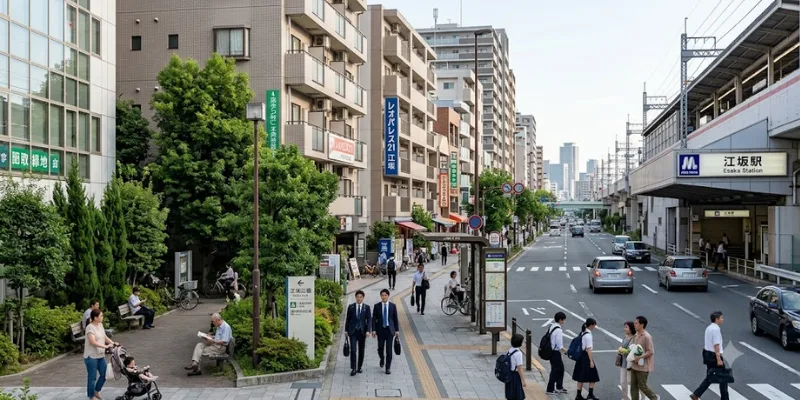
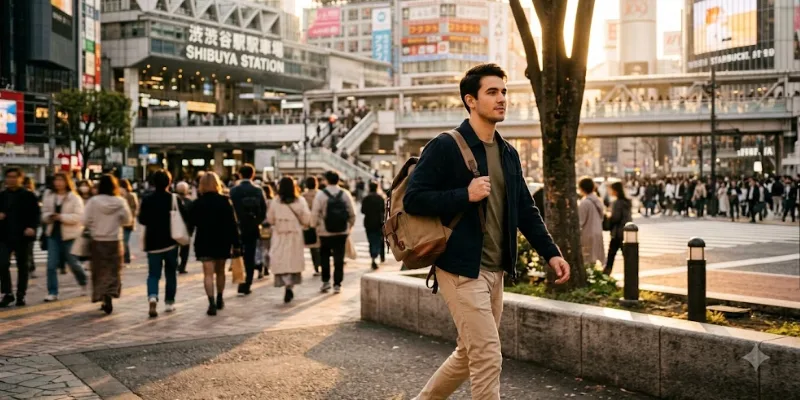
This is one area where living in Shibuya can actually save money. Nine train lines run through Shibuya Station — JR Yamanote and Saikyo, three Tokyo Metro lines, and three private-railway lines. That density is part of why the cost of living in Shibuya balances out on the transport side. Many Shibuya residents work within walking or one-stop distance of the station. That keeps monthly transport costs at the low end of the citywide ¥5,000–¥20,000 range. It can even run close to zero if your commute is walkable. If your work location isn’t fixed, it’s worth mapping options against the specific train lines serving Shibuya Station before committing to a building.
How Shibuya’s Cost of Living Compares to Nearby Wards
| Ward | Approx. total monthly cost (single) | Rent share |
|---|---|---|
| Shibuya-ku | ¥180,000–¥260,000 | High |
| Setagaya-ku | ¥150,000–¥210,000 | Medium |
| Meguro-ku | ¥160,000–¥225,000 | Medium-high |
| Minato-ku | ¥190,000–¥280,000 | Very high |
| Shinjuku-ku | ¥155,000–¥225,000 | Medium |
Shibuya sits toward the upper end of this range, close to Minato but below its most extreme pockets. If overall cost of living matters more to you than the Shibuya address specifically, look at Setagaya and Shinjuku. Both offer meaningfully lower totals while keeping Shibuya within easy reach. This comparison is worth revisiting every year or two, since relative rent gaps between wards do shift as redevelopment projects and new supply come online.
Health Insurance and Pension: The Cost Most Guides Skip
Most cost-of-living breakdowns for Shibuya stop at rent, food, and utilities. But if you’re a resident, not a short-term visitor, there’s another mandatory cost: National Health Insurance (Kokumin Kenko Hoken) or your employer’s Shakai Hoken, plus pension contributions. If your employer enrolls you in Shakai Hoken, expect roughly 14–15% of your gross salary. That’s split between health insurance and pension, with your employer covering half. If you’re self-employed or between jobs, you’ll pay National Health Insurance directly instead. Premiums are income-based and vary by ward, but commonly run ¥15,000–¥35,000/month for a single person in Tokyo. This is separate from every category in the table above. Budget for it from day one, rather than discovering it at tax time.
Seasonal Cost Variation: Budgeting for Summer and Winter
The monthly totals above are averages, but Shibuya’s cost of living isn’t flat across the year. Summer (July–September) and winter (December–February) both push utility costs toward the top of their range. Air conditioning and heating simply run for longer hours in those months. Expect an extra ¥3,000–¥6,000/month in electricity during peak summer heat. Winter brings a similar bump, this time in gas heating. Spring and autumn tend to sit at the low end of the utilities range. If you’re budgeting annually rather than month to month, that partially offsets the seasonal spike.
Food costs also shift slightly with the season. Fresh produce and seafood prices in Japan follow seasonal availability more closely than in many Western supermarkets. Dining out around Shibuya also picks up during cherry blossom season (late March–early April) and the year-end/New Year period — both draw crowds and higher menu prices at popular spots.
Cost of Living in Shibuya for Couples and Families
The figures above cover a single renter, but costs don’t simply double for a couple or family. Rent is the main driver. A 1LDK suitable for a couple runs ¥145,000–¥220,000/month — well under twice the single-person 1K range, since you’re not paying for two separate leases. Utilities and internet also scale less than proportionally, since a couple shares one meter and one connection rather than two.
Food and transport scale closer to linearly. Two people generally spend close to double on groceries and commuting compared to one. For a couple, total monthly cost of living in Shibuya typically lands around ¥280,000–¥380,000. That’s well under a simple doubling of the single-person figure. Families with children add school-related costs on top. These vary enormously — public school is largely free, while one of Shibuya’s international schools can run several million yen per year.
Move-In Costs: The Number That Surprises Most Foreign Renters
The categories above cover ongoing monthly costs. Move-in costs in Japan are a separate, larger expense that catches most first-time renters off guard. Budget 4–5 months’ rent upfront. That covers first month’s rent, plus security deposit (shikikin, typically 1–2 months). It also covers key money (reikin, 0–2 months depending on the property) and agency fees. For a ¥130,000/month Shibuya apartment, that’s commonly ¥520,000–¥650,000 due before you get the keys. Our full move-in cost breakdown covers exactly what each fee is for and which ones are negotiable.
Practical Ways to Lower Your Shibuya Budget
A few adjustments make a real difference to the cost of living in Shibuya. None of them require leaving the ward:
- Switch to a budget mobile sub-brand instead of a flagship carrier plan. Saves roughly ¥4,000–¥6,000/month with identical network coverage.
- Cook most meals at home rather than eating out near the station. Can cut your food budget by ¥10,000–¥15,000/month.
- Consider Yoyogi-Uehara or other lower-rent sub-areas instead of the premium core. Saves ¥15,000–¥40,000/month on rent alone.
- Choose a building within walking distance of work, where possible. Can reduce transport costs close to zero.
Frequently Asked Questions
Roughly ¥180,000–¥260,000/month for a single person in 2026, covering rent, utilities, food, and transport, before one-time move-in costs.
Yes, on rent specifically — Shibuya runs above the Tokyo 23-ward average. Every other monthly cost category, like utilities, food, and mobile, is comparable regardless of ward.
Switch to a budget mobile sub-brand instead of a flagship carrier plan, cook most meals at home rather than eating out near the station, and consider Shibuya’s lower-rent sub-areas like Yoyogi-Uehara instead of the premium core.
Yes. Move-in costs in Japan typically run 4–5 months’ rent upfront, separate from your ongoing monthly budget.
Setagaya and Shinjuku both run noticeably lower on total monthly cost, mainly due to lower rent. Both still keep Shibuya within a short commute.
Yes, and it’s easy to overlook. Employees enrolled in Shakai Hoken pay roughly 14–15% of gross salary, split with their employer. Self-employed residents pay National Health Insurance directly, typically ¥15,000–¥35,000/month for a single person, separate from every category in the main budget table above
See what ¥100,000–¥160,000/month actually rents in Shibuya. Browse current Shibuya apartments for rent on Arealty, all pre-filtered for foreigner acceptance. For a wider search across the city, explore all Tokyo rentals or reach our team at arealty.mom.

Real estate advisor at Arealty Japan, specialising in helping foreign residents navigate the Tokyo and Osaka rental markets. Lucy has guided hundreds of international renters — from Working Holiday visa holders to corporate relocations — through Japan’s apartment application process. Her writing draws on firsthand experience with landlord screening, guarantor companies, and foreigner-friendly listings across all 23 Tokyo wards and major Kansai cities.