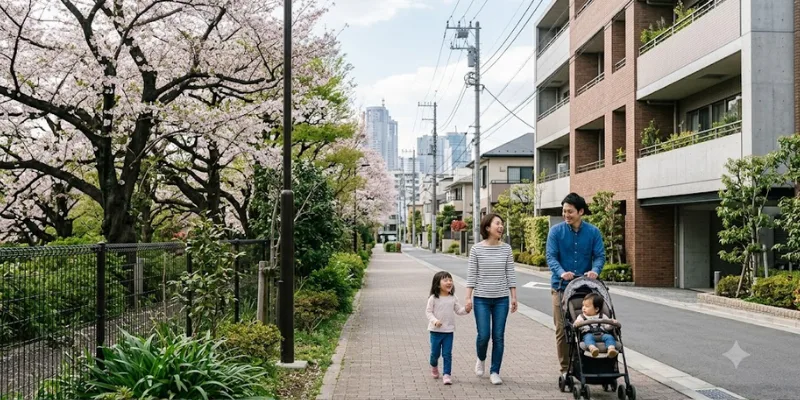

Shinjuku’s reputation as Tokyo’s entertainment and business hub makes most people assume it’s a poor fit for families, but that reputation applies mostly to one district, Kabukicho, not the ward as a whole. Away from the station’s north side, Shinjuku with a family is a realistic option: the ward has an 58-hectare central park, several international and Japanese schools, and residential streets in Yotsuya and around Ochiai that are quieter than comparable areas in neighboring Shibuya or Minato.
This guide covers what actually matters when moving to Shinjuku with kids: which streets to target, which schools are nearby, and where the noise genuinely stops.
Shinjuku for Families: Quick Facts
| Factor | Detail |
|---|---|
| Best areas for families | Yotsuya, Ochiai, streets around Shinjuku Gyoen |
| Areas to avoid with young children | Kabukicho and blocks directly on Shinjuku-dori |
| Main green space | Shinjuku Gyoen National Garden (58.3 hectares) |
| School options | Japanese public schools, several international schools within a 20-minute commute |
| Typical family unit size | 2LDK–3LDK, ¥180,000–260,000/month depending on area |
Why Shinjuku Gyoen Changes the Calculation
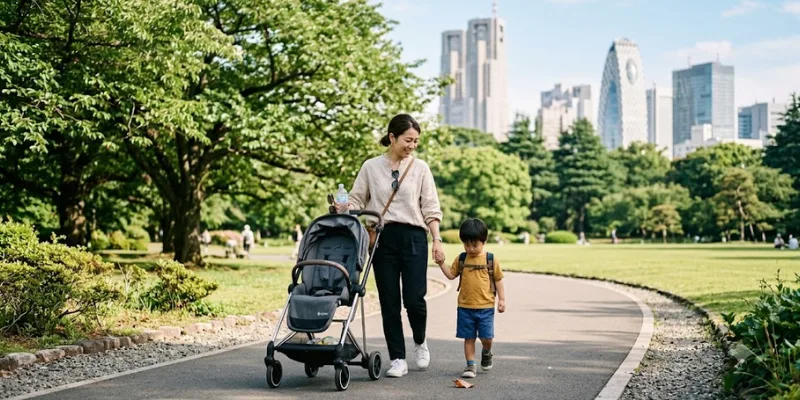
Shinjuku Gyoen National Garden is one of Tokyo’s largest and most family-friendly parks, with wide lawns, playgrounds nearby, and enough space that it doesn’t feel crowded even on weekends. Families renting within a 15-minute walk of the park, particularly on the Shinjuku Gyoen-mae or Sendagaya side, get a genuinely different daily experience than the station-adjacent image most people associate with the ward. If outdoor space is a priority, our guide to apartments near large parks in Tokyo covers how proximity to green space affects both rent and quality of life.
Where Families Actually Live in Shinjuku
Two areas come up repeatedly among families who choose to live in Shinjuku ward:
Yotsuya, at the ward’s southeastern edge, is residential, has a lower building density than central Shinjuku, and sits close to several schools and Sophia University’s surrounding neighborhood, which keeps the streets calm outside of commute hours.
Ochiai, in the ward’s northwest, is a mostly residential district with a mix of older low-rise apartments and newer family-sized units, and it’s far enough from the station’s entertainment core that noise is a non-issue.
By contrast, anything directly on Shinjuku-dori or within a few blocks of Kabukicho is worth avoiding for families with young children, both for noise and for the general foot traffic patterns late at night.
Schools and Childcare Near Shinjuku
Shinjuku ward runs its own network of public elementary and junior high schools, and enrollment as a foreign resident follows the same registration process used across Tokyo wards, tied to your residence registration at the ward office. Families who want an international curriculum typically look toward schools in neighboring Shibuya or Minato, both reachable within 20-25 minutes by train from central Shinjuku, which is one reason Yotsuya and Ochiai are popular: they sit closer to those transit lines than Kabukicho-adjacent addresses do.
For the housing side of a family move, sizing the apartment correctly matters as much as location. Our guides on choosing a 2LDK for a small family and Tokyo family apartment rent prices walk through layout and budget planning in more detail.
Safety Considerations for Families in Shinjuku
Japan’s overall low crime rate applies to Shinjuku ward too, but the concentration of nightlife around Kabukicho means the ward’s safety profile is not uniform block to block the way it might be in a purely residential ward. Families generally do better prioritizing buildings with ground-floor security or an entry system, particularly if renting a lower-floor unit; our breakdown of apartment safety for children covers what to check during a viewing.
A Typical Day for a Family Based in Yotsuya or Ochiai
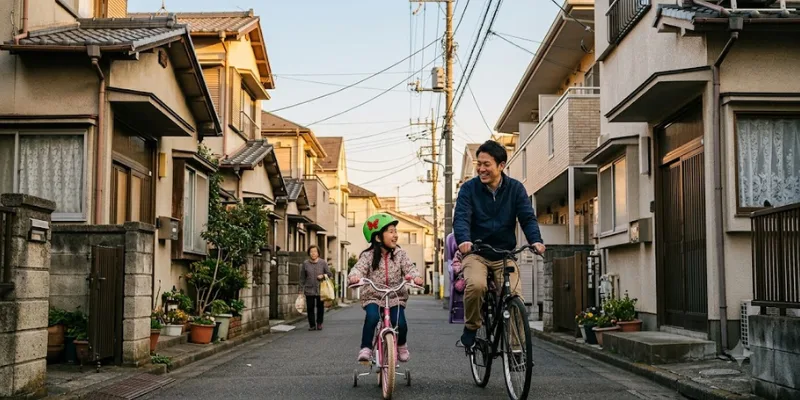
For families who choose Shinjuku’s quieter pockets, daily life looks closer to a standard residential Tokyo neighborhood than the ward’s downtown image suggests. Mornings involve a short walk or bike ride to a local school or nursery, grocery runs to neighborhood supermarkets rather than the department store basements near the station, and evenings that stay quiet well before the entertainment district a few kilometers away is getting started. The main adjustment most families report isn’t the ward itself, but learning which streets to use and which to avoid, since the difference between a five-minute walk down a quiet residential lane and one down a busier through-road can be significant even over short distances in this part of Tokyo.
Nurseries, Daycare, and the Waitlist Reality
Like most central Tokyo wards, Shinjuku has a competitive daycare waitlist (known as hoikuen), particularly for children under two. Ward residency is generally required to apply, and priority is scored based on factors like parental work hours and household composition rather than simple date order. Families planning a move to Shinjuku with a young child should factor in applying as early as possible after registering residency, since waitlist timing can meaningfully affect which neighborhood ends up being practical, not just which one is preferred.
Renting as a Family: What Landlords Ask For
Family applications in Japan typically face different scrutiny than single-renter applications. Larger units mean higher rent, which means stricter income verification, and landlords sometimes ask more detailed questions about the number of occupants and their ages, particularly for units under a certain size. Working with an agency that regularly places families, rather than one focused primarily on single-occupant listings, tends to shorten this process considerably. Our guide to cost of living for families in Tokyo covers budget planning beyond just the rent figure, including the deposit and key money that family-sized units often require upfront.
Cost of Family-Sized Housing in Shinjuku
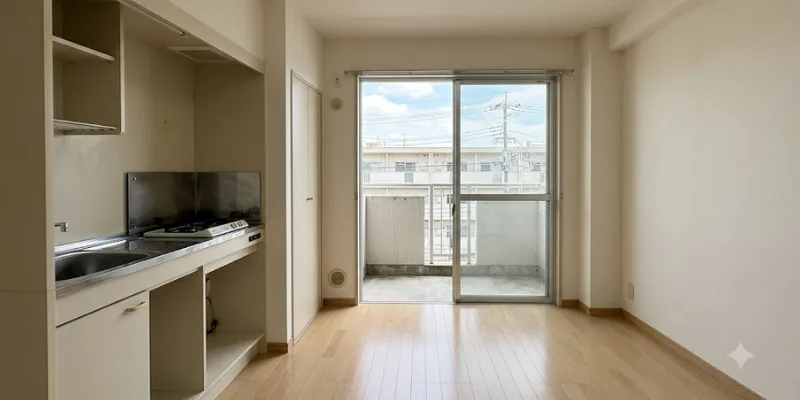
A 2LDK to 3LDK suitable for a family of three or four in Yotsuya or Ochiai typically runs ¥180,000 to ¥260,000 per month as of 2026, depending on building age and distance to the station. That’s comparable to or slightly below equivalent family-sized units in Shibuya or Setagaya, largely because Shinjuku’s family-friendly pockets are less in-demand than its station-front commercial image would suggest, which works in renters’ favor.
Getting Around Shinjuku with Children
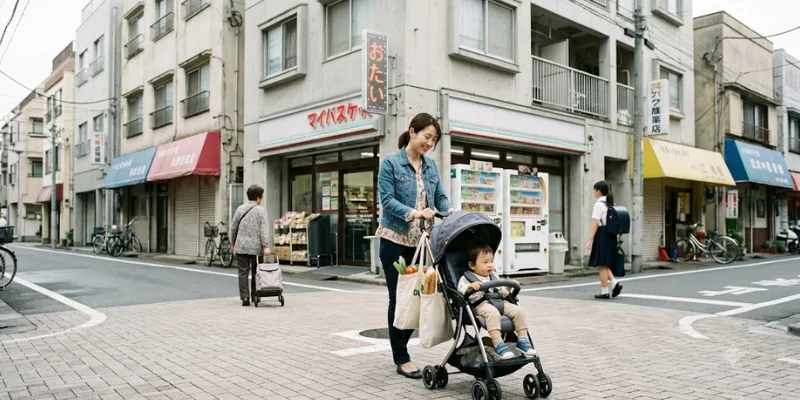
Strollers and young children add a practical layer to the ward’s famously heavy foot traffic, which is another reason the quieter, less commercial pockets of Shinjuku tend to work better for families than areas immediately around the station. Yotsuya and Ochiai both have wider, less crowded sidewalks than the streets near Shinjuku Station’s east or south exits, and both are close enough to bus routes that a car-free household can still manage school runs, medical appointments, and grocery trips without relying on the busiest train platforms during rush hour. Families who do need to pass through central Shinjuku regularly, for a school commute or a parent’s workplace, generally find early morning and mid-afternoon far more manageable than the evening rush between 5 and 8pm, when the station area becomes one of the most crowded pedestrian environments in the world.
Healthcare and Pediatric Access
Shinjuku ward has a reasonable concentration of pediatric clinics and general hospitals, including facilities near Yotsuya and along the Chuo line corridor, which matters for families weighing convenience against the ward’s more commercial reputation. Registering with the ward office after moving in also enrolls the household in the local health insurance and child medical subsidy system, which in Tokyo generally covers a significant portion of pediatric care costs regardless of which ward you’re registered in, making this less of a differentiator between Shinjuku and neighboring wards than school access or noise levels are.
Frequently Asked Questions
The ward as a whole is workable, but the specific street matters far more than the ward name. Yotsuya and Ochiai are the two areas families choose most consistently.
Most of Yotsuya and the Sendagaya-adjacent blocks are within a 10-15 minute walk of the park.
Not directly within the ward, but several are reachable within 20-25 minutes from Yotsuya or Ochiai via train.
Most families settle on a 2LDK to 3LDK, roughly 55-75 square meters, which fits comfortably within the ¥180,000-260,000 range in the ward’s quieter areas.
Competitive, particularly for children under two, similar to most central Tokyo wards. Applying as soon as residency is registered improves the odds meaningfully.
Often yes, especially around income verification and occupant count for larger units, which is why working with a family-experienced rental agency helps.
Generally yes. Family-sized units in Yotsuya and Ochiai tend to run at or below comparable listings in Shibuya or Minato, since those wards carry a stronger family-market premium.
Looking for family-sized listings in Shinjuku’s quieter neighborhoods? Browse current Shinjuku ward rentals on Arealty or visit arealty.mom to have an agent filter listings by school proximity and unit size.

Real estate advisor at Arealty Japan, specialising in helping foreign residents navigate the Tokyo and Osaka rental markets. Lucy has guided hundreds of international renters — from Working Holiday visa holders to corporate relocations — through Japan’s apartment application process. Her writing draws on firsthand experience with landlord screening, guarantor companies, and foreigner-friendly listings across all 23 Tokyo wards and major Kansai cities.