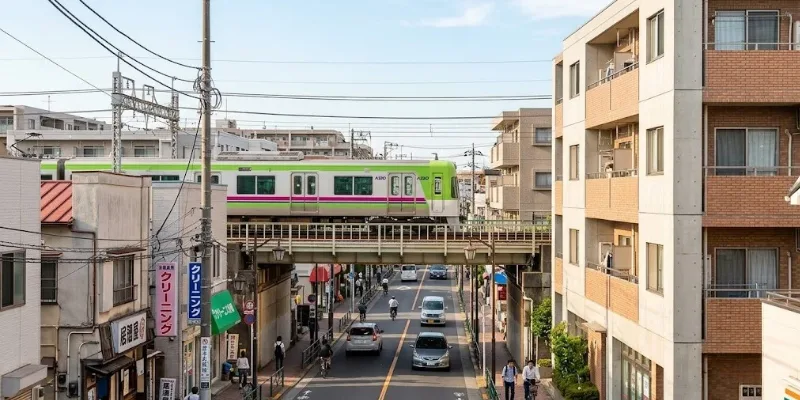

Quick answer: Keio Line apartments cost about ¥51,000 to ¥143,000 a month for a studio or 1K. The Keio Line runs 37.9 km from Shinjuku to Keio-Hachioji, with 32 stations across western Tokyo. Chofu is 15 to 18 minutes from Shinjuku by special express and averages ¥84,100. Fuda, the next station toward Shinjuku, averages ¥67,800. On the Keio Inokashira Line between Shibuya and Kichijoji, studios range from ¥71,600 to ¥167,900.
Keio Line key facts
| Item | Detail |
|---|---|
| Operator | Keio Corporation |
| Route | Shinjuku to Keio-Hachioji (all in Tokyo) |
| Length | 37.9 km |
| Stations | 32, plus Hatsudai and Hatagaya on the Keio New Line |
| First section opened | 1913 (Shinjuku to Chofu) |
| Shinjuku to Chofu | About 15 to 18 minutes by special express |
| Shinjuku to Keio-Hachioji | About 37 minutes by special express |
| Through service | Toei Shinjuku Line via the Keio New Line |
| Sister line | Inokashira Line, Shibuya to Kichijoji (12.7 km, 17 stations) |
| Cheapest studio rent | Naganuma, about ¥51,100 |
| Most expensive studio rent | Shinjuku, about ¥143,100 |
Rent figures are LIFULL HOME’S averages for studio, 1K and 1DK apartments within a 10-minute walk of each station, excluding management fees, checked October 2026.
Why Choose Keio Line Apartments?
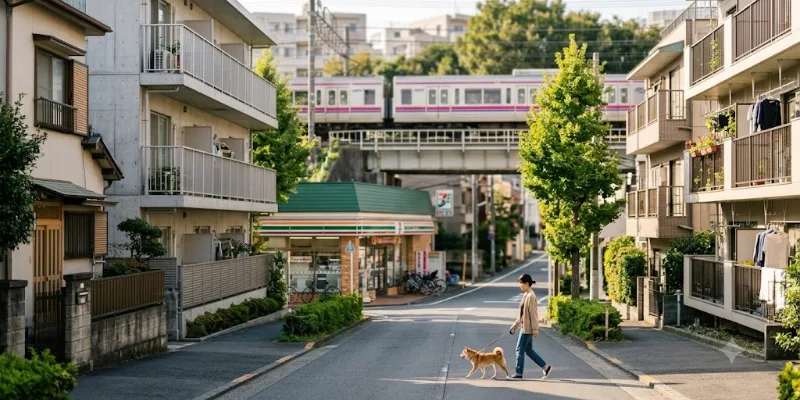
The Keio Line is the main line of Keio Corporation. It starts underground at Shinjuku and runs west through Shibuya-ku, Setagaya, Chofu, Fuchu and Hino to Hachioji. The whole line stays inside Tokyo.
Renters choose Keio Line apartments for three main reasons.
Fast trains to Shinjuku from far out. Special express trains stop at only a few stations. Chofu is about 15 to 18 minutes from Shinjuku, and Fuchu about 20 to 23 minutes. That is quick for stations 15 to 22 km out.
Two lines meet at Meidaimae. The Inokashira Line crosses the Keio Line at Meidaimae. From there, express trains reach Shibuya in about 6 to 9 minutes. One home can serve both Shinjuku and Shibuya.
A student line. Meidaimae is the closest station to Meiji University’s Izumi Campus, and the University of Electro-Communications is a short walk from Chofu. Tokyo University of Foreign Studies is a bus ride from Tobitakyu. The University of Tokyo’s Komaba Campus is on the Inokashira Line.
Keio Line Rent by Station (2026)
The table lists every Keio Line station from Shinjuku to Keio-Hachioji. Hatsudai and Hatagaya are only served by the Keio New Line, which branches off at Sasazuka. “Fastest stop” shows the fastest regular train that stops there, without the reserved-seat Keio Liner.
| Station | Area | km from Shinjuku | Fastest stop | Studio/1K rent |
|---|---|---|---|---|
| Shinjuku | Shinjuku-ku | 0.0 | Special express | ¥143,100 |
| Hatsudai | Shibuya-ku | New Line | Local | ¥127,200 |
| Hatagaya | Shibuya-ku | New Line | Local | ¥121,200 |
| Sasazuka | Shibuya-ku | 3.6 | Special express | ¥116,600 |
| Daitabashi | Setagaya-ku | 4.4 | Local | ¥105,300 |
| Meidaimae | Setagaya-ku | 5.2 | Special express | ¥105,700 |
| Shimo-Takaido | Setagaya-ku | 6.1 | Rapid | ¥110,000 |
| Sakurajosui | Setagaya-ku | 7.0 | Express | ¥108,900 |
| Kami-Kitazawa | Setagaya-ku | 7.8 | Local | ¥102,100 |
| Hachimanyama | Suginami-ku | 8.4 | Rapid | ¥95,700 |
| Roka-koen | Setagaya-ku | 9.1 | Local | ¥87,000 |
| Chitose-Karasuyama | Setagaya-ku | 9.9 | Special express | ¥92,200 |
| Sengawa | Chofu | 11.5 | Semi-express | ¥92,700 |
| Tsutsujigaoka | Chofu | 12.5 | Express | ¥86,000 |
| Shibasaki | Chofu | 13.3 | Local | ¥79,300 |
| Kokuryo | Chofu | 14.2 | Local | ¥72,600 |
| Fuda | Chofu | 14.9 | Local | ¥67,800 |
| Chofu | Chofu | 15.5 | Special express | ¥84,100 |
| Nishi-Chofu | Chofu | 17.0 | Rapid | ¥79,900 |
| Tobitakyu | Chofu | 17.7 | Rapid | ¥83,000 |
| Musashinodai | Fuchu | 18.8 | Rapid | ¥64,600 |
| Tama-Reien | Fuchu | 19.6 | Rapid | ¥80,900 |
| Higashi-Fuchu | Fuchu | 20.4 | Express | ¥80,700 |
| Fuchu | Fuchu | 21.9 | Special express | ¥81,900 |
| Bubaigawara | Fuchu | 23.1 | Special express | ¥116,000 |
| Nakagawara | Fuchu | 24.7 | Semi-express | ¥72,500 |
| Seiseki-Sakuragaoka | Tama | 26.3 | Special express | ¥73,000 |
| Mogusaen | Hino | 28.0 | Semi-express | ¥68,400 |
| Takahatafudo | Hino | 29.7 | Special express | ¥65,500 |
| Minamidaira | Hino | 32.1 | Semi-express | ¥56,800 |
| Hirayamajoshi-koen | Hino | 33.4 | Semi-express | ¥56,200 |
| Naganuma | Hachioji | 34.9 | Semi-express | ¥51,100 |
| Kitano | Hachioji | 36.1 | Special express | ¥74,800 |
| Keio-Hachioji | Hachioji | 37.9 | Special express | ¥76,200 |
Source: LIFULL HOME’S, average rent for studio, 1K and 1DK apartments within a 10-minute walk, excluding management fees, checked October 2026. Distances and train stops from Keio timetable data as listed on Wikipedia. Bubaigawara’s figure is far above its neighbors, so check current listings there before you rely on it.
Four patterns stand out in the data.
Fuda vs Chofu. Fuda is only 0.6 km from Chofu, but only local trains stop there. It averages ¥67,800, about ¥16,300 less than Chofu.
Roka-koen is Setagaya’s cheapest Keio stop. It averages ¥87,000, about ¥5,200 less than Chitose-Karasuyama next door. Chitose-Karasuyama has special express trains, so you pay for the faster ride.
Shimo-Takaido costs more than Meidaimae. Meidaimae is the bigger hub, yet it averages ¥4,300 less than Shimo-Takaido, one stop west.
Musashinodai is the bargain within 20 km. At ¥64,600, it is the cheapest Keio Line station within 20 km of Shinjuku.
Keio Line Neighborhoods, Section by Section
Shinjuku to Sasazuka: the city end
The Keio Line platforms at Shinjuku sit underground, below the Keio department store. Shinjuku connects to the JR Yamanote, Chuo and Saikyo lines and several subway lines.
Hatsudai and Hatagaya are on the Keio New Line, which runs on to the Toei Shinjuku Line. Hatagaya is two stops from Shinjuku, with local shopping streets such as Rokugo Dori. Read our Hatagaya Station guide for the neighborhood.
Sasazuka is where the Keio Line and the Keio New Line split. All regular train types stop here, and studios average ¥116,600.
Daitabashi to Hachimanyama: the Meidaimae belt
Meidaimae is the key station on this stretch. All regular trains stop here, and the Inokashira Line runs underneath to Shibuya and Kichijoji. Special express trains reach Shinjuku in about 8 minutes.
It is the closest station to Meiji University’s Izumi Campus, where first and second-year humanities students study. See our Meiji University student housing guide for dorms and nearby rent.
Shimo-Takaido connects to the Tokyu Setagaya Line. Sakurajosui is an express stop, and Kami-Kitazawa and Hachimanyama are quieter.
Roka-koen to Sengawa: west Setagaya
Chitose-Karasuyama is the main hub here. Special express trains reach Shinjuku in about 12 minutes. LIFULL HOME’S lists it among the most popular family stations in Tokyo for 2LDK and larger homes.
Roka-koen, one stop east, is the cheapest Setagaya station on the line. Sengawa is the first station in Chofu City. Its studios average ¥92,700, almost the same as Chitose-Karasuyama.
Tsutsujigaoka to Chofu: the Chofu hub
Chofu is the junction where the Keio Sagamihara Line branches off toward Keio-Tama-Center and Hashimoto. The station and junction were moved underground in 2012.
The University of Electro-Communications is about a 5 to 7-minute walk from Chofu’s central exit. Shibasaki, Kokuryo and Fuda are local stops with lower rent. Fuda is the cheapest of the three.
Nishi-Chofu to Fuchu: stadium and racecourse country
Tobitakyu is the station for Ajinomoto Stadium. It is also the closest Keio stop to Tokyo University of Foreign Studies (TUFS). From the north exit, a Keio bus takes about 7 to 10 minutes, or you can walk about 20 minutes. For dorms and budgets, read our TUFS student housing guide.
Musashinodai and Tama-Reien are rapid stops in Fuchu City. Higashi-Fuchu is the transfer for the short Keibajo Line to Tokyo Racecourse. Fuchu is the city center, about 20 to 23 minutes from Shinjuku by special express.
Bubaigawara to Keio-Hachioji: the far west
Bubaigawara connects to the JR Nambu Line toward Kawasaki. Seiseki-Sakuragaoka is about 26 minutes from Shinjuku by special express and has Keio shopping buildings around the station.
Takahatafudo connects to the Tama Toshi Monorail and the short Dobutsuen Line. Minamidaira, Hirayamajoshi-koen and Naganuma are the cheapest stops on the whole line, at about ¥51,000 to ¥57,000.
Kitano is where the Takao Line branches off toward Mount Takao. Keio-Hachioji is the terminus, about 37 minutes from Shinjuku by special express. JR Hachioji Station is nearby.
Inokashira Line: Rent from Shibuya to Kichijoji
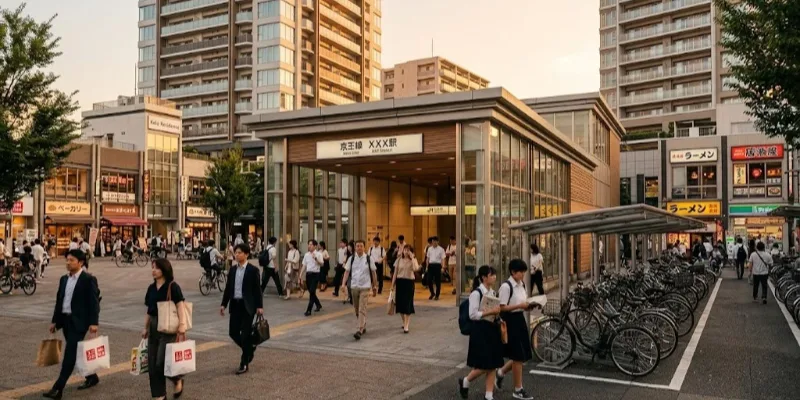
The Inokashira Line is Keio’s other main line. It runs 12.7 km from Shibuya to Kichijoji and is not connected to the Keio Line tracks. You change trains at Meidaimae. Express trains cover the whole line in about 16 minutes and stop at Shimokitazawa, Meidaimae, Eifukucho and Kugayama.
| Station | Area | km from Shibuya | Express stop | Studio/1K rent |
|---|---|---|---|---|
| Shibuya | Shibuya-ku | 0.0 | Yes | ¥167,900 |
| Shinsen | Shibuya-ku | 0.5 | No | ¥153,200 |
| Komaba-Todaimae | Meguro-ku | 1.4 | No | ¥135,200 |
| Ikenoue | Setagaya-ku | 2.4 | No | ¥136,700 |
| Shimokitazawa | Setagaya-ku | 3.0 | Yes | ¥132,300 |
| Shindaita | Setagaya-ku | 3.5 | No | ¥110,700 |
| Higashi-Matsubara | Setagaya-ku | 4.0 | No | ¥105,500 |
| Meidaimae | Setagaya-ku | 4.9 | Yes | ¥104,700 |
| Eifukucho | Suginami-ku | 6.0 | Yes | ¥94,700 |
| Nishi-Eifuku | Suginami-ku | 6.7 | No | ¥87,400 |
| Hamadayama | Suginami-ku | 7.5 | No | ¥97,000 |
| Takaido | Suginami-ku | 8.7 | No | ¥103,400 |
| Fujimigaoka | Suginami-ku | 9.4 | No | ¥81,400 |
| Kugayama | Suginami-ku | 10.2 | Yes | ¥86,500 |
| Mitakadai | Mitaka | 11.2 | No | ¥77,200 |
| Inokashira-koen | Mitaka | 12.1 | No | ¥71,600 |
| Kichijoji | Musashino | 12.7 | Yes | ¥100,500 |
Source: LIFULL HOME’S, same conditions as the Keio Line table, checked October 2026. LIFULL’s two line pages show Meidaimae at ¥104,700 and ¥105,700 because they update separately.
Inokashira-koen vs Kichijoji. Inokashira-koen is one stop and 0.6 km from Kichijoji, next to Inokashira Park. It averages ¥71,600, about ¥28,900 less than Kichijoji.
Shimokitazawa is a two-line station. It connects to the Odakyu Line toward Shinjuku. Compare stations on that line in our Odakyu Line apartments guide.
Kichijoji has the JR Chuo Line. It gives you a second route to Shinjuku. Our Kichijoji living guide covers the neighborhood and Inokashira Park.
How Long Is the Commute from Keio Line Apartments?
| Live at | To | Time | Train | Studio rent |
|---|---|---|---|---|
| Meidaimae | Shinjuku | About 8 min | Special express | ¥105,700 |
| Meidaimae | Shibuya | About 6 to 9 min | Inokashira express | ¥105,700 |
| Chitose-Karasuyama | Shinjuku | About 12 min | Special express | ¥92,200 |
| Chofu | Shinjuku | About 15 to 18 min | Special express | ¥84,100 |
| Fuchu | Shinjuku | About 20 to 23 min | Special express | ¥81,900 |
| Seiseki-Sakuragaoka | Shinjuku | About 26 min | Special express | ¥73,000 |
| Keio-Hachioji | Shinjuku | About 37 min | Special express | ¥76,200 |
| Kichijoji | Shibuya | About 16 min | Inokashira express | ¥100,500 |
Typical daytime times from ekitan and Keio data. Rush-hour trains can take longer. From Fuchu, Shibuya is about 30 minutes with a change at Meidaimae.
Keio Line Apartments for University Students
Several universities sit right on the Keio and Inokashira lines. This makes the area popular with students who want one train to campus.
| University | Nearest station | Access | Studio rent near station |
|---|---|---|---|
| Meiji University (Izumi Campus) | Meidaimae | Closest station | ¥105,700 |
| University of Electro-Communications | Chofu | About 5 to 7 min walk | ¥84,100 |
| Tokyo University of Foreign Studies | Tobitakyu | Bus about 7 to 10 min, or 20 min walk | ¥83,000 |
| University of Tokyo (Komaba Campus) | Komaba-Todaimae (Inokashira) | Station named after the campus | ¥135,200 |
TUFS can also be reached by rail from the JR Chuo Line. Change at Musashi-Sakai for the Seibu Tamagawa Line, and the campus is a 5-minute walk from Tama Station. For Meiji Izumi, Eifukucho and Nishi-Eifuku on the Inokashira Line are one or two stops away and cost less. For a wider comparison, see our guide to student housing near Tokyo universities.
Which Keio Line Station Is Best for You?
Work in Shinjuku on a budget: Chitose-Karasuyama or Roka-koen
Chitose-Karasuyama is about 12 minutes from Shinjuku by special express at ¥92,200. Roka-koen is the next stop east and about ¥5,200 cheaper, with local trains only.
Work in Shibuya: Eifukucho or Kugayama
Both are Inokashira express stops under ¥95,000. Eifukucho averages ¥94,700, and Kugayama ¥86,500.
Students: Meidaimae, Chofu or Tobitakyu
Pick the station for your campus from the table above. Fuda is a cheaper option for Chofu, one stop away.
Families: Chitose-Karasuyama, Sengawa or Seiseki-Sakuragaoka
Chitose-Karasuyama is one of Tokyo’s most popular family stations on LIFULL HOME’S. Sengawa has the same rent level, and Seiseki-Sakuragaoka offers special express trains at ¥73,000 for a studio.
Lowest budget: Naganuma, Hirayamajoshi-koen or Minamidaira
Studios average about ¥51,000 to ¥57,000. All three are semi-express stops in Hino and Hachioji. For more space at a similar budget, compare our Den-en-toshi Line apartments guide.
How Crowded Is the Keio Line at Rush Hour?
The busiest Keio Line section is Shimo-Takaido to Meidaimae, inbound, around 7:45 to 8:45 am. In fiscal 2025, Japan’s transport ministry measured it at 145% of capacity. The Inokashira Line was lower, at 125%.
| Line | Busiest section | FY2025 congestion |
|---|---|---|
| Keio Line | Shimo-Takaido to Meidaimae | 145% |
| Keio Inokashira Line | Ikenoue to Komaba-Todaimae | 125% |
| Odakyu Odawara Line | Setagaya-Daita to Shimokitazawa | 150% |
| Tokyu Den-en-toshi Line | Ikejiri-Ohashi to Shibuya | 138% |
| Tokyu Toyoko Line | Yutenji to Nakameguro | 124% |
| JR Chuo Line (Rapid) | Nakano to Shinjuku | 158% |
Source: Ministry of Land, Infrastructure, Transport and Tourism, average for the busiest hour.
If you want the calmest ride, compare our Toyoko Line apartments guide.
What Are the Downsides of Keio Line Apartments?
Rush hours are busy. The busiest section runs at 145% of capacity, so expect to stand toward Shinjuku on weekday mornings.
Level crossings slow traffic. The 7.2 km between Sasazuka and Sengawa has 25 crossings that can stay closed for more than 40 minutes in an hour. Work to raise this section onto an elevated track is now planned to finish in 2031.
Many stations get local trains only. Daitabashi, Kami-Kitazawa, Roka-koen, Shibasaki, Kokuryo and Fuda are skipped by faster trains. Check the timetable before you sign a lease.
Hatsudai and Hatagaya need the right train. They are only on the Keio New Line. Trains from the main Keio Line platforms at Shinjuku do not stop there.
The Keio Liner costs extra. It runs in the morning and evening and needs a reserved-seat ticket on top of the fare.
How to Rent a Keio Line Apartment as a Foreigner
- Set your budget. Plan for rent plus about four to six months of rent in move-in costs.
- Choose your commute limit. Decide how many minutes to Shinjuku or Shibuya you accept, then pick two or three stations from the tables.
- Check walking time. Many listings are 10 to 15 minutes from the station. Our guide on walking distance to train stations explains what each minute means.
- Prepare documents. You will usually need your residence card, passport, proof of income or enrollment, and a Japanese phone number.
- Use a guarantor company. Most landlords require one. Arealty can help you choose a company that accepts foreign tenants and students.
- Visit or request a video tour. Check the street at night, the nearest supermarket and the route to the station.
For the full process, read our guide to renting in Tokyo as a foreigner.
Frequently Asked Questions
A studio or 1K costs about ¥51,000 to ¥143,000 a month in 2026. Shinjuku is the most expensive station and Naganuma is the cheapest.
Musashinodai is the cheapest station within 20 km of Shinjuku, at about ¥64,600. Among special express stops, Takahatafudo averages about ¥65,500.
About 15 to 18 minutes by special express on the Keio Line.
The Keio Line runs from Shinjuku to Keio-Hachioji. The Inokashira Line runs from Shibuya to Kichijoji. Both are run by Keio, and you change between them at Meidaimae.
Tobitakyu is the closest Keio Line station. From the north exit, a bus takes about 7 to 10 minutes, or you can walk about 20 minutes.
Yes, at rush hour. In fiscal 2025, the section from Shimo-Takaido to Meidaimae averaged 145% of capacity during the busiest morning hour.
Find Keio Line Apartments with Arealty
Arealty lists apartments along the Keio and Inokashira lines, from Sasazuka and Meidaimae to Chofu, Fuchu and beyond. Every listing is in English, and our team helps with applications, guarantor companies and contracts.
- Browse all apartments for rent on Arealty
- Start your search on Arealty
- Compare student areas: Meiji University student housing and TUFS student housing
Tell us your station, budget and move date, and our bilingual team will send matching options.
About this guide
This guide was written by Lucy Nguyen, Marketing Specialist at Arealty, using station-level rent data and official railway, university and government information. Rent and train details change, so check current listings before you decide.
Sources
- LIFULL HOME’S: Keio Line rent by station
- LIFULL HOME’S: Keio Inokashira Line rent by station
- Wikipedia: Keio Line
- Wikipedia: Keio Inokashira Line
- MLIT: FY2025 train congestion rates (PDF)
- Tokyo University of Foreign Studies: campus access (PDF)
- University of Electro-Communications: access from Chofu (PDF)
- Gendai: Inokashira Line express timetable
- ekitan: Meidaimae to Shibuya
- ekitan: Chitose-Karasuyama to Shinjuku route
- ekitan: Fuchu to Shibuya
- ekitan: Hamadayama to Shinjuku via Meidaimae
- Travelist: Seiseki-Sakuragaoka access
- Bunshun: Seiseki-Sakuragaoka Station
- Railway Technology: Shinjuku Station

Real estate advisor at Arealty Japan, specialising in helping foreign residents navigate the Tokyo and Osaka rental markets. Lucy has guided hundreds of international renters — from Working Holiday visa holders to corporate relocations — through Japan’s apartment application process. Her writing draws on firsthand experience with landlord screening, guarantor companies, and foreigner-friendly listings across all 23 Tokyo wards and major Kansai cities.