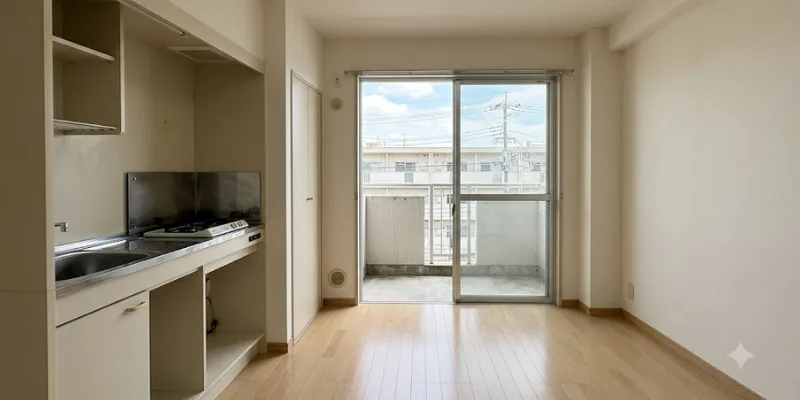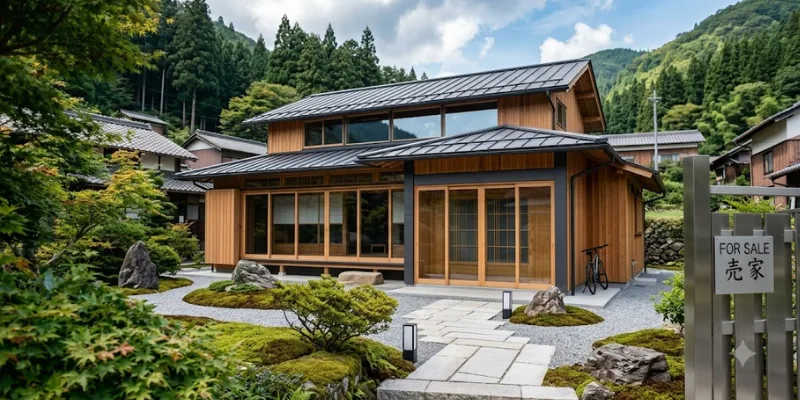

Japan has close to 9 million vacant homes. Roughly 3.85 million of those sit genuinely abandoned — not rented out, not used as second homes, simply empty. These are akiya (空き家). For foreign buyers willing to navigate a Japanese-language-heavy process, they represent one of the more unusual real estate opportunities available anywhere. Some sell for the price of a used car, and a few effectively run free once renovation subsidies factor in.
This akiya buying guide for foreigners walks through what akiya actually are, why they exist in such numbers, and the realistic step-by-step process for a foreign buyer in 2026 — including the costs the “¥500,000 house” headlines usually leave out. You can also search current listings directly through Japan’s national akiya bank portal.
Why so many akiya exist in Japan
Four forces drive Japan’s vacant house problem. Understanding them helps explain why so many properties get priced to sell. For general market context, see our guide to Japan’s average house price:
- Demographic decline, particularly acute in rural areas as younger generations move to Tokyo, Osaka, and other major cities for work.
- Inheritance complications. When a rural homeowner passes away, heirs living in cities often don’t want the property, can’t afford its upkeep, or face family disputes over who’s responsible for it.
- Demolition cost avoidance. Tearing down an old house costs ¥1–5 million. Doing so also removes a residential land tax reduction, so many owners simply leave the structure standing rather than pay to demolish it.
- Weak rural demand. In areas with shrinking populations, no local buyer often exists at any reasonable price. This is precisely the gap foreign buyers increasingly step into.
Are there restrictions on foreigners buying akiya?
No. Japan places no nationality-based restriction on property ownership. A foreigner can buy an akiya with the same rights as a Japanese citizen, and doesn’t need residency status to complete the purchase. Separate these two facts, though: owning a house in Japan does not grant you a visa or residence status. If you don’t hold permanent residency, see our dedicated guide to buying property without permanent residency in Japan. If your plan involves living in the property long-term, sort out your visa arrangement separately, before you commit to a purchase.
One recent regulatory change is worth noting. As of April 2026, buyers must disclose citizenship and file a residential use report with the Legal Affairs Bureau within 20 days of registering ownership. This is part of Japan’s broader push toward transparency in foreign property transactions.
An akiya buying guide for foreigners: the step-by-step process
1. Choose your region deliberately. Akiya prices, subsidy availability, and community attitude toward new residents vary enormously by municipality. Some towns actively recruit new residents and make the process easy. Others run far more cautious. Research the specific municipality, not just the prefecture.
2. Find your property. Most municipalities operate an akiya bank (空き家バンク) — a public listing service, not a commercial platform. These run specifically to connect vacant properties with prospective buyers, as part of regional revitalization policy. Nearly all stay Japanese-language only. English-language aggregators such as Akiya Japan, AkiyaHub, and Old Houses Japan compile listings for non-Japanese speakers, though the underlying selection runs narrower than what’s available directly through municipal banks.
3. Hire a bilingual agent or administrative scrivener (行政書士, gyōsei shoshi). Nearly every part of an akiya transaction happens in Japanese — the listing, the contract, the subsidy application. A bilingual agent familiar with rural property deals specifically, not just urban condo sales, is close to essential. You’ll need this help both for translation and for navigating paperwork conventions that differ from standard urban real estate transactions.
4. Submit your application. Once you’ve identified a viable property, you’ll typically submit your passport or residence card, sometimes proof of income, and — importantly — a written plan for how you intend to use or maintain the property. Many sellers and municipalities want assurance the house won’t simply sit abandoned again under new ownership. A credible renovation and habitation plan strengthens your application meaningfully.
5. Inspect thoroughly before committing. Akiya listings range from “move-in ready with cosmetic issues” to “barely structurally sound.” A proper inspection is not optional, given how variable akiya condition actually is. Ideally, bring someone who can assess wood rot, foundation issues, and roof condition. For general guidance on valuing an older property, see our guide to pricing a second-hand house in Japan.
6. Sign and register. Sign the purchase agreement (売買契約書, baibai keiyakusho), then complete the ownership transfer at the Legal Affairs Bureau (法務局, Hōmukyoku). As noted above, the citizenship disclosure and residential use report are now required within 20 days of registration.
The real cost picture behind any akiya buying guide
The purchase price genuinely runs under ¥5 million often, sometimes far less. But total cost of ownership includes several line items rarely mentioned upfront:
- Renovation: budget realistically at ¥3–10 million depending on the property’s condition. A “free house” with a collapsed roof or termite damage can easily cost more to fix than a modest property elsewhere would cost outright.
- One-time taxes and fees: stamp duty on the purchase contract (typically under ¥10,000 for properties under ¥10 million), Property Acquisition Tax at roughly 3% of assessed value, and Legal Affairs Bureau registration costs of ¥50,000–¥200,000 depending on property value.
- Ongoing property tax: modest for low-value rural properties, but a genuine annual obligation. You cannot simply walk away from an akiya once you own it without consequences. See our full breakdown of annual property tax in Japan for homebuyers.
- A domestic contact and 納税管理人 (tax administration agent): decide who will handle mail, tax notices, and local paperwork if you won’t live in Japan full-time. Arrange this before completion, not after your first unread tax notice arrives.
Renovation subsidies — real, but conditional
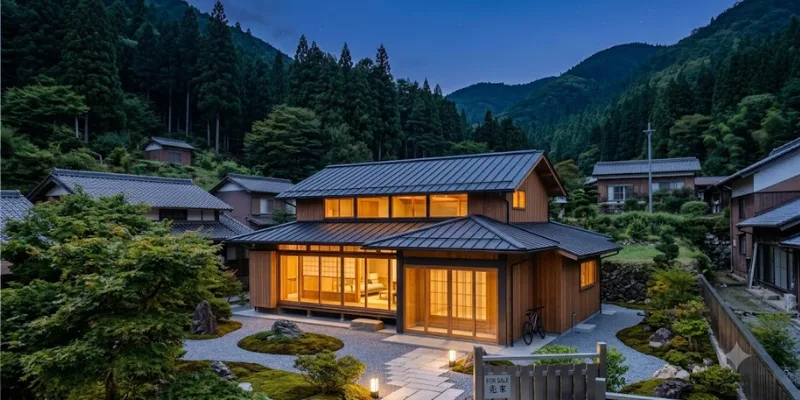
Many municipalities offer renovation subsidies specifically to attract new residents to high-vacancy areas. These typically cover 30–50% of renovation costs up to a cap of ¥1–3 million, though some programs go higher depending on the region and current national initiatives. Here’s the catch that trips up many buyers: most of these subsidies require you to actually live in the property for a minimum period, commonly 3–5 years. If your plan involves a vacation home used only occasionally, check the residency requirement carefully before counting on subsidy money in your budget. A property purchased partly on the assumption of subsidy support you don’t end up qualifying for can change the financial picture substantially.
Regional differences: what kind of akiya buyer are you?
Not all akiya opportunities run the same. Being honest about what you’re actually looking for changes both your search strategy and your budget expectations.
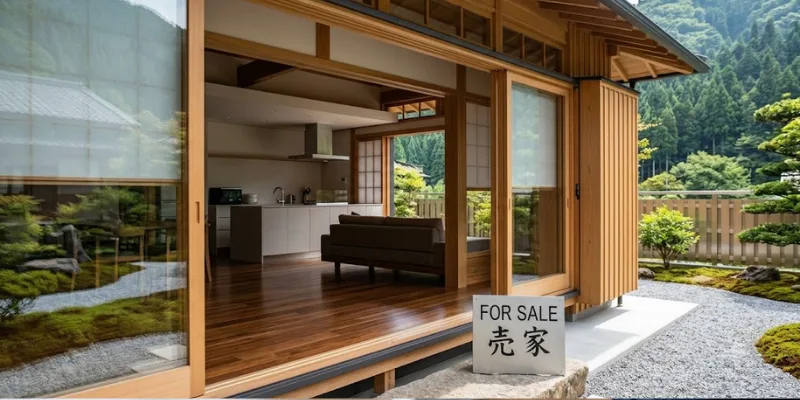
True rural akiya — properties in depopulating villages and small towns, often traditional wooden kominka-style houses — offer the lowest purchase prices and the most generous municipal subsidies. This makes sense, since these areas run most desperate to attract new residents. The trade-off is real: limited local services, a car-dependent lifestyle, and a community that may take time to welcome a foreign resident, particularly one who isn’t fluent in Japanese. These suit buyers genuinely planning to relocate full-time or run a long-stay second home, not a casual weekend property.
Suburban and regional-city akiya — vacant houses in smaller cities and their surrounding suburbs — sit in a middle ground. Prices run higher than the most rural listings, but still a fraction of urban property costs. Services and transit remain reasonably accessible, and subsidy programs exist, though typically less generous than the most aggressive rural revitalization schemes. This category suits buyers wanting a renovation project with a realistic resale or rental market down the line, rather than committing to genuine rural isolation.
Renovation-investment akiya — properties bought specifically to renovate and either rent out or resell — require the most careful due diligence of the three categories. Subsidy programs tied to owner-occupancy requirements often don’t apply if you won’t live in the property yourself. If this runs as your goal, confirm the exact subsidy conditions before assuming any renovation grant applies to your situation. Owner-occupancy clauses stay common and easy to overlook when you’re focused on the headline discount percentage.
Common pitfalls that catch first-time foreign buyers off guard
Underestimating akiya bank Japanese-language barriers. Even with a bilingual agent, municipal akiya bank staff typically communicate only in Japanese. Application forms, subsidy conditions, and correspondence rarely get translated. Budget extra time in your process for this friction, and confirm upfront whether your agent will handle direct communication with the municipality or only the transaction paperwork.
Assuming “vacant” means “move-in ready.” Some akiya listings genuinely sit in liveable condition with only cosmetic work needed. Many others require structural repair before they’re safely habitable. Photos in listings — much like standard rental listings in Japan — can understate the true condition of a property. An in-person inspection before committing is essential, not optional.
Not budgeting for utility reconnection. A property vacant for years often needs water, gas, and electricity service reconnected or entirely re-installed. This carries its own cost and administrative process, separate from the purchase itself. It’s a small but frequently overlooked line item in first-time buyer budgets.
Missing the residency requirement fine print on subsidies. As covered above, many renovation subsidies require 3–5 years of actual residency. Buyers sometimes discover this requirement only after purchase. At that point, they either commit to residency they hadn’t originally planned for, or forgo subsidy money they’d budgeted around.
Frequently Asked Questions
Can foreigners really buy a house in Japan for under ¥1 million? Yes, this happens regularly with genuine akiya listings. But the purchase price is only part of the real cost — renovation, taxes, and registration fees typically add several million yen even to a very cheap property.
Does buying an akiya give me a visa to live in Japan? No. Property ownership and residence status stay entirely separate. You need a valid visa arrangement independent of the purchase, if you intend to live in the property.
Do I need to speak Japanese to buy an akiya? Not fluently, but nearly the entire process — akiya bank listings, contracts, subsidy applications — happens in Japanese. A bilingual agent or administrative scrivener runs close to essential for a foreign buyer.
What happens if I can’t maintain the property after buying it? Property tax and basic upkeep remain your legal obligation, regardless of whether you live in Japan full-time. Arrange a domestic contact or tax administration agent (納税管理人) before completing your purchase, if you won’t be resident locally.
For the broader picture of buying as a non-Japanese national, see our guide to foreigners buying real estate in Japan and our overview of mortgage tax deductions if financing part of your purchase. Arealty can connect foreign buyers with vetted bilingual agents experienced in rural akiya transactions. Contact our team to discuss your target region and budget before you begin your search.

Real estate advisor at Arealty Japan, specialising in helping foreign residents navigate the Tokyo and Osaka rental markets. Lucy has guided hundreds of international renters — from Working Holiday visa holders to corporate relocations — through Japan’s apartment application process. Her writing draws on firsthand experience with landlord screening, guarantor companies, and foreigner-friendly listings across all 23 Tokyo wards and major Kansai cities.