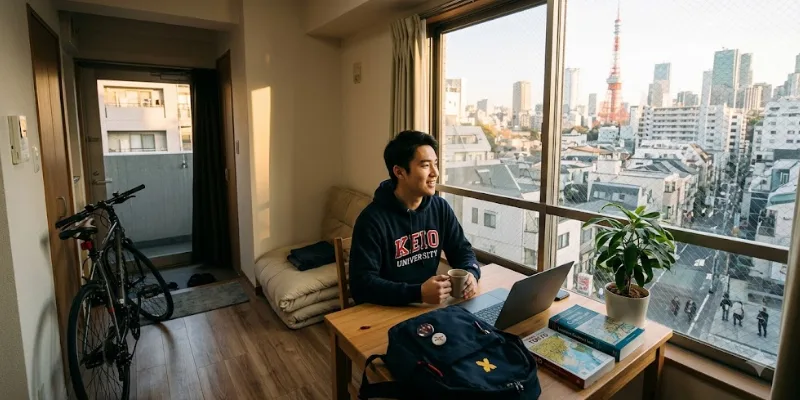

Keio University student housing for off-campus apartments ranges from ¥75,000 to ¥110,000 per month for a 1K near the Mita campus in Minato-ku, reflecting the area’s status as one of Tokyo’s most expensive but also most centrally located districts, according to SUUMO 2026 rental data. With Keio’s dormitory capacity covering only a small fraction of its international student population, most exchange and degree-seeking foreign students arrange private off-campus housing — and understanding the campus-specific geography matters significantly given Keio’s multiple, widely-spread campus locations.
This guide covers housing options near Keio’s main campuses, realistic pricing, and how international students apply for off-campus accommodation.
Keio’s Campus Locations Matter for Housing Decisions
Keio University operates several campuses across the greater Tokyo area, and your housing search should be anchored to your specific faculty’s campus rather than treated as a single “near Keio” search:
- Mita Campus (Minato-ku) — Law, Economics, Letters, Business and Commerce faculties for upper years
- Hiyoshi Campus (Yokohama) — First and second-year students across most faculties
- Shonan Fujisawa Campus (SFC) — Policy Management and Environment and Information Studies
- Shinanomachi Campus (Shinjuku-ku) — Medicine
Confirm your specific campus assignment with Keio’s international office before searching, since Mita and Hiyoshi in particular have very different cost profiles and commute considerations.
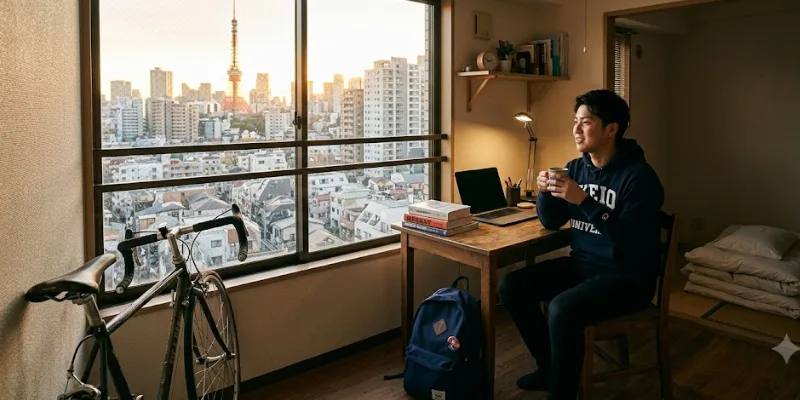
Best Areas for Keio University Student Housing
Mita / Tamachi (immediate Mita campus area, Minato-ku)
Walking distance to the Mita campus, but reflects Minato-ku’s premium pricing as one of Tokyo’s most expensive wards.
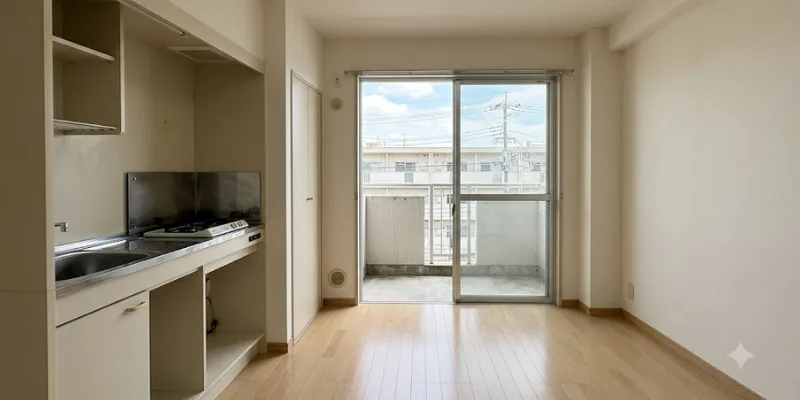
- 1K apartment: ¥85,000–¥110,000/month
- Share house room: ¥60,000–¥75,000/month
- See our Minato apartments for rent guide
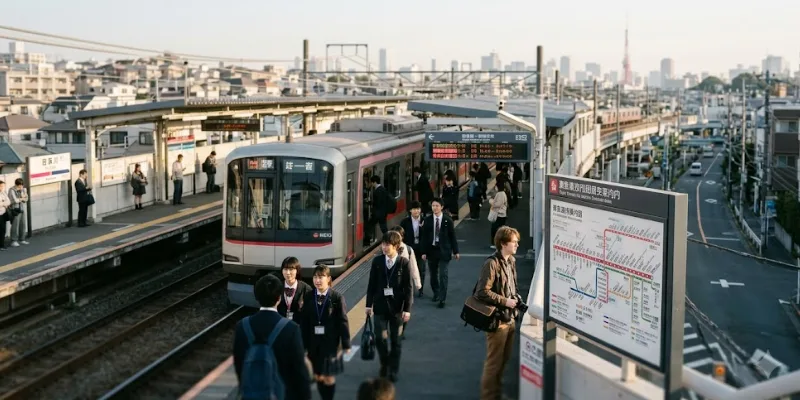
Meguro-ku (15–20 min from Mita via Namboku/Mita Lines)
A meaningfully cheaper alternative for Mita-campus students, with a single-transfer commute and a livelier neighborhood feel.
- 1K apartment: ¥75,000–¥92,000/month
- See our Meguro apartments for rent guide
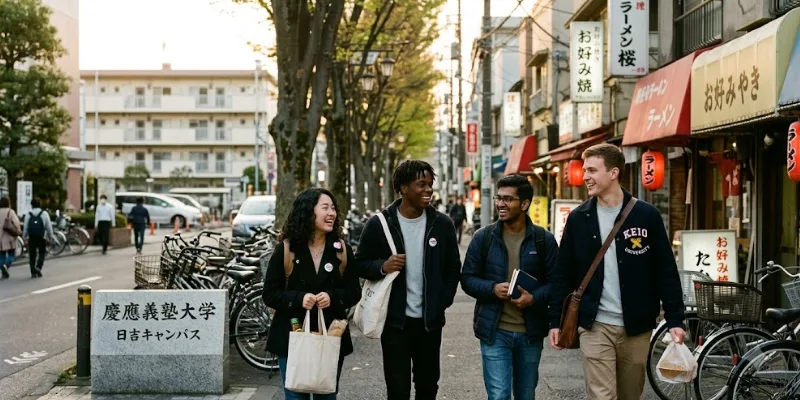
Hiyoshi area (for Hiyoshi campus students)
Hiyoshi itself, in Yokohama, has a genuine student-town character given the campus’s location, with significantly lower rent than the Mita area.
- 1K apartment: ¥62,000–¥78,000/month
- Character: Dedicated student infrastructure — cheap eateries, bookstores, services
Setagaya-ku (for SFC-bound students who prefer a Tokyo base)
Some SFC students choose to live in Tokyo proper and commute the longer distance to the Shonan Fujisawa campus rather than living in Fujisawa itself, particularly those who value Tokyo’s broader social and professional opportunities.
- 1K apartment: ¥75,000–¥95,000/month
- See our Setagaya living guide
Monthly Budget for Keio Students
| Expense | Typical monthly cost (Mita area) |
|---|---|
| Rent (1K) | ¥85,000–¥110,000 |
| Utilities | ¥8,000–¥14,000 |
| Mobile + internet | ¥4,000–¥7,000 |
| Food | ¥35,000–¥55,000 |
| National Health Insurance (student rate) | ¥2,000–¥4,000 |
Students choosing the Hiyoshi or Meguro alternatives can reduce the rent line by ¥15,000–¥25,000/month while maintaining a reasonable commute.
How International Students Apply for Off-Campus Housing Near Keio
- Confirm your campus and request your Certificate of Enrollment from Keio’s international student office
- Decide on dormitory application vs off-campus search — Keio’s limited dormitory spaces have early application deadlines
- Search listings focused on your specific campus area
- Apply through a guarantee company — GTN and Roommate are commonly used by Keio’s international students
- Sign and move in, ideally 2–3 weeks before orientation
For the broader document and screening process, see our rental for international students in Japan guide and student visa apartment screening guide.
External reference: Keio University International Center — official housing and student life resources.
Share House vs Private Apartment for Keio Student
Given Mita-area rent premiums, many Keio international students — particularly those on shorter exchange programs — start with a share house to manage costs and build social connections before transitioning to a private apartment.
| Share house | Private 1K | |
|---|---|---|
| Move-in speed | 2–3 days | 1–3 weeks |
| Cost (Mita area) | ¥60,000–¥75,000 | ¥85,000–¥110,000 |
| Social environment | Built-in international community | Independent |
| Best for | Exchange semester, budget-conscious | Degree program, long-term stay |
See our student room sharing in Japan guide for more on this option.
FAQ: Keio University Student Housing
Does Keio provide dormitories for international students? Keio offers limited international student dormitory housing, prioritizing first-semester exchange students. Capacity covers only a portion of the international student population — most students arrange off-campus housing.
What’s the cheapest area near a Keio campus? Hiyoshi, for students at the Hiyoshi campus, offers the most affordable options given its dedicated student-town infrastructure and lower Yokohama-area rents compared to central Tokyo.
Can exchange students get short-term housing easily? Yes — share houses and some private apartment listings cater specifically to single-semester exchange students with flexible 4–6 month contracts.
Is Mita-area housing worth the premium over cheaper alternatives? For students prioritizing walking-distance convenience and minimal commute time, yes. For budget-conscious students willing to commute 15–20 minutes, Meguro-ku offers comparable access at lower cost.
→ Browse student-friendly apartments near Keio University campuses
Life Around Keio’s Multiple Campuses
Navigating between campuses. Unlike universities with a single central location, Keio students sometimes need to travel between campuses for cross-faculty courses or activities. Students at Mita occasionally have reason to visit Hiyoshi or Shinanomachi, making a housing choice with reasonable access to multiple campuses worth considering if your coursework spans faculties.
Part-time work opportunities near Mita. The Mita and Tamachi area, being a dense business district, offers different part-time work opportunities than a typical student area — more office-adjacent positions (translation, administrative support) alongside the standard restaurant and retail roles. Many Keio international students leverage this for part-time work that’s more directly relevant to their post-graduation career interests.
The SFC commute consideration. Students at the Shonan Fujisawa Campus face a genuinely long commute (60–90 minutes) regardless of whether they live in Tokyo or closer to Fujisawa itself. Some SFC students choose to live near campus despite Tokyo’s broader social appeal, while others accept the commute for Tokyo’s lifestyle — this is a more significant trade-off than most other Keio housing decisions.
Renewing Off-Campus Leases as a Continuing Keio Student
Off-campus apartments near Keio follow the standard 2-year Japanese lease structure. If your time at Keio extends within that window — common for students progressing from undergraduate exchange into graduate study, for example — your lease typically continues without renegotiation. At the 2-year renewal point, expect a renewal fee (更新料) of approximately 1 month’s rent, consistent with standard Tokyo practice.
Students planning multi-year stays at Keio, particularly those pursuing a full degree rather than a single exchange semester, should factor this into their initial housing search — choosing a location and apartment type that remains practical for several years reduces the cost and disruption of switching apartments mid-program.
Internal Resources for Keio and Mita-Area Students
- Student housing near Tokyo universities — broader comparison if you’re weighing housing options relative to other Tokyo universities
- Best residential areas for students in Tokyo — wider neighborhood comparison beyond the Keio-specific areas covered here
- Japan rental guarantor system explained — full breakdown of how guarantee companies work for student applicants
- Scholarship support for foreign students in Japan — funding options relevant to Keio’s significant international scholarship recipient population
Banking and Administration for New Keio Students
Once you’ve moved into off-campus housing near Keio, opening a Japan Post Bank account (ゆうちょ銀行) in your first week is one of the most practical early steps, since most landlords and guarantee companies require automatic bank transfer for monthly rent. Keio’s international student office typically runs orientation sessions covering this and other essential first-week tasks, including National Health Insurance enrollment and mobile phone setup — worth attending even if you’ve arranged housing independently, given the administrative shortcuts they often provide for navigating Japan-specific bureaucracy as a new arrival.
A basic vocabulary list covering common rental terms — 敷金 (deposit), 礼金 (key money), and 更新料 (renewal fee) — can also smooth communication with landlords and agencies during your search, even when working with agencies that offer English support, since these specific Japanese terms appear consistently across contracts and listings regardless of which agency you use.
A further consideration worth noting: Keio’s international student population has grown steadily in recent years, and the university’s housing support resources have expanded accordingly — international students arriving today generally find more established peer networks and agency relationships than students arriving even five years ago, which can meaningfully smooth the off-campus housing search process if you tap into these existing student networks early.
This is particularly valuable for navigating less obvious aspects of the off-campus search — such as which landlords near Mita or Hiyoshi have a track record of working well with international tenants versus those who simply meet the legal minimum requirements without much cultural accommodation.

Real estate advisor at Arealty Japan, specialising in helping foreign residents navigate the Tokyo and Osaka rental markets. Lucy has guided hundreds of international renters — from Working Holiday visa holders to corporate relocations — through Japan’s apartment application process. Her writing draws on firsthand experience with landlord screening, guarantor companies, and foreigner-friendly listings across all 23 Tokyo wards and major Kansai cities.