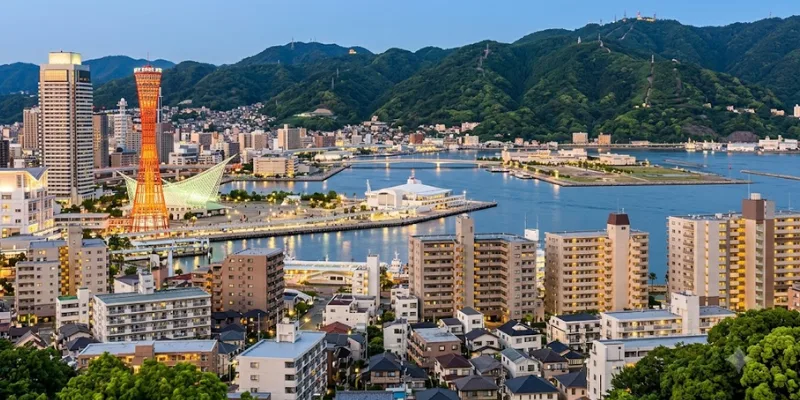

Kobe apartments for rent for foreigners combine something few Japanese cities offer together. You get a compact, walkable city center. You get mountain and harbor views in the same skyline. You also get one of the longest histories of international residency in the country. Kobe was one of Japan’s first treaty ports in the 1860s. That legacy still shapes the rental market today. Landlords here are generally more accustomed to foreign tenants than in most regional cities of comparable size.
This guide covers Kobe apartments for rent for foreigners in 2026. We look at which wards suit which lifestyle, realistic rent ranges, and how the application process differs from Tokyo and Osaka. For a wider comparison of the region, see our best areas to live in Kansai guide. You can also browse current Kobe apartments for rent on Arealty — foreigner-accepted listings, bilingual support, and no agency fees.
Why foreigners choose Kobe apartments for rent over Osaka or Tokyo
Kobe sits roughly 20–30 minutes from central Osaka by train. That makes it a realistic commuter city for anyone working in Kansai’s larger job market while wanting a quieter, more scenic place to live. The city also has its own substantial employer base. Kawasaki Heavy Industries, several biotech and pharmaceutical firms on Port Island, and a long-established international business community all call Kobe home.
Compared to Osaka, Kobe offers more green space and a slower daily rhythm. You still get subway access, department stores, and an international supermarket scene. For exact figures on how the two cities compare, see our Tokyo vs Osaka rent comparison. Compared to Tokyo, the difference is starker. Comparable apartment sizes typically cost 30–40% less here. The foreigner acceptance rate — while still not universal — also tends to run higher outside the most traditional, elderly-landlord-owned buildings.
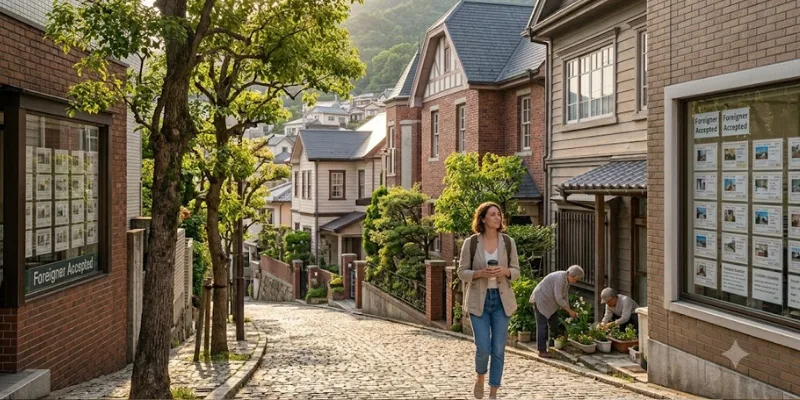
Where to find Kobe apartments for rent: ward by ward
Chuo-ku (Sannomiya, Motomachi, Kitano)
Chuo-ku is Kobe’s commercial and social core. Sannomiya Station anchors the ward, with direct JR, Hankyu, Hanshin, and subway access. Most foreign renters gravitate here first.
- Sannomiya: the busiest, most convenient sub-area. It has the highest concentration of foreigner-friendly agencies and sits a short walk from shopping, nightlife, and the Shinkansen at Shin-Kobe.
- Motomachi: adjacent to Chinatown (Nankinmachi) and the old foreign settlement. Long-term expats favor this area for its character and walkability.
- Kitano: Kobe’s historic foreign residence district. It sits on a hillside, runs quieter, and holds many of the preserved Western-style houses the city is known for.
Typical 1K/1DK rents in Chuo-ku run ¥58,000–¥85,000/month. Premium buildings near Sannomiya Station reach ¥95,000 or more.
Nada-ku and Higashinada-ku
These wards sit between central Kobe and the university district around Rokko. Academics, researchers, and families wanting more space for less rent favor this area. Kobe University’s main campus sits in Nada-ku, so the area also carries a meaningful student housing market.
Typical 1K rents run ¥50,000–¥70,000/month. Family-sized 2LDK units cost noticeably less here than in Chuo-ku for comparable quality.
Nagata-ku and Suma-ku
These are Kobe’s most budget-friendly wards, and both still offer reasonable central access. Renters who prioritize cost over prestige favor this area. Suma-ku also has Kobe’s most accessible beach, which gives it a distinct coastal appeal without the premium coastal pricing found elsewhere.
Typical 1K rents run ¥42,000–¥58,000/month.
Port Island and Rokko Island
These purpose-built artificial islands hold a large concentration of international schools, biotech offices, and newer apartment stock. A disproportionate share of Kobe’s foreign resident population lives here, particularly families and corporate transferees. Building management companies on the islands work with international tenants often, and many offer English-language support as a standard service.
Typical 1K/1LDK rents run ¥65,000–¥100,000/month, reflecting the newer building stock.
How the application process works for Kobe apartments for rent
The mechanics stay consistent with the rest of Japan, but a few local details matter:
- Guarantor companies (保証会社) are standard. As in Tokyo and Osaka, most Kobe landlords now require or accept a guarantor company instead of a personal Japanese guarantor. The one-time fee typically runs around ¥30,000–¥50,000.
- Move-in costs run slightly lower than Tokyo. Budget 4–5 months’ rent for the full move-in package — deposit, key money, agency fee, and guarantor fee — against 4–6 months typical in central Tokyo.
- Kansai landlords sometimes still expect an in-person introduction. This applies especially in older, family-owned buildings outside the Sannomiya core. A bilingual agent who explains your situation directly to the landlord meaningfully improves your approval odds here, more so than in Tokyo, where guarantor-company screening has become close to fully standardized.
- Prepare your documents in advance. You’ll need a residence card, passport, proof of income (or a scholarship or enrollment certificate for students), and a guarantor company application. Working visa holders should keep at least one year of remaining visa validity for the smoothest approval.
For official information on residency procedures once you arrive, the Kobe City government’s foreign resident portal covers ward registration and municipal services in English.
Kobe vs Osaka: which one actually fits you
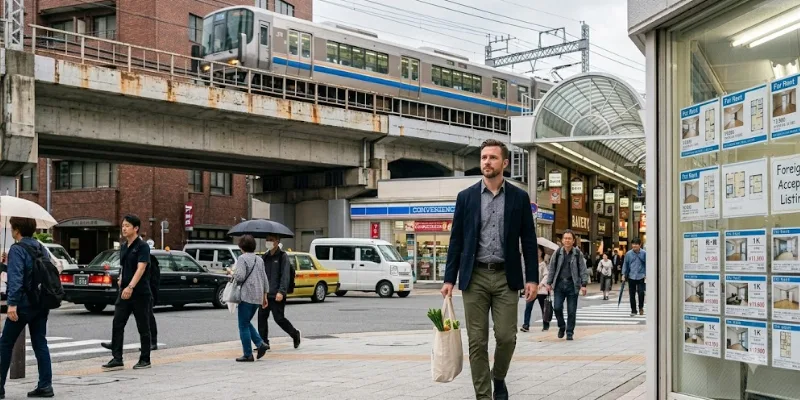
If your work or social life centers on Osaka itself, commute time becomes the deciding factor. Kobe adds 30–45 minutes each way versus living in central Osaka. If you prioritize a calmer daily environment instead, Kobe usually wins out. Mt. Rokko sits a 15-minute train ride from central Kobe, and the city’s international social history runs deeper than in most recently-arrived expat hubs.
Daily life for foreigners renting in Kobe
Kobe’s foreign-resident infrastructure runs more mature than most regional cities, a direct legacy of its treaty-port history. Kobe International School and Canadian Academy have operated here for decades. Families get more established options than in many regional cities twice Kobe’s size. On the healthcare side, Kobe City Medical Center General Hospital and several Chuo-ku clinics offer English-language support. The city’s long-standing foreign community also means pharmacies and municipal offices near Sannomiya handle non-Japanese-speaking visitors comfortably.
For everyday shopping, Motomachi’s Nankinmachi (Chinatown) covers a wide range of imported ingredients. Kobe’s IKEA and several large supermarket chains near Port Island cater specifically to international families. Kobe beef, the sake breweries in Nada-ku, and a coffee culture the city claims as its own (Kobe says Japan’s coffee culture started here) round out a distinct local identity. Many long-term foreign residents cite this identity as the reason they stay well past an initial work assignment.
Moving and utility setup costs
Utility setup in Kobe follows the same national providers as the rest of Kansai. Electricity comes from Kansai Electric Power Company (Kepco), and gas service in central Kobe runs through Osaka Gas rather than a Kobe-specific provider. Both offer English-language phone support, though online sign-up remains Japanese-only for most plans. The Kobe City Waterworks Bureau manages water service.
Moving costs in Kobe run modestly below Osaka and well below Tokyo. A standard local move for a 1K apartment typically costs ¥30,000–¥60,000, depending on the season. April — the start of Japan’s fiscal and academic year — brings the highest prices and the most competition for movers. Fiber internet is available across every ward covered in this guide, and setup typically takes 2–3 weeks from application to activation. Apply the same week you sign your lease rather than waiting until move-in day.
Common mistakes foreign renters make when searching for Kobe apartments for rent
A few patterns come up repeatedly with first-time renters, and knowing them in advance saves real time and money:
- Assuming Kobe pricing mirrors Osaka pricing exactly. The two cities sit close geographically, but Kobe’s rental market moves somewhat independently. A good deal in one city doesn’t guarantee the same deal exists in the other, so budget using Kobe-specific data rather than Osaka figures.
- Overlooking the area’s earthquake history. Kobe’s 1995 Great Hanshin earthquake means building code compliance and retrofit status come up more often here than in many other Japanese cities. Ask specifically whether a building meets current seismic standards (新耐震基準). Most post-1981 construction does, but confirm this for older buildings in Nagata-ku and parts of Nada-ku that were more heavily affected historically.
- Underestimating Kitano and Motomachi’s older building stock. These historic areas hold smaller units that photograph less impressively than newer Port Island buildings. They frequently deliver better value and a stronger sense of neighborhood, for renters willing to trade some modern amenities for character and location.
- Not budgeting extra time outside Chuo-ku. Landlords in the quieter residential wards can take a few days longer to respond to applications than the highly agency-mediated Sannomiya core. Build in buffer time if your move-in deadline is tight.
Frequently Asked Questions
Is Kobe expensive compared to other Japanese cities? Kobe sits below Osaka and well below Tokyo for comparable apartment sizes. Expect 10–15% cheaper rent than equivalent Osaka listings and 30–40% cheaper than central Tokyo.
Do I need a Japanese guarantor to rent Kobe apartments as a foreigner? No. Guarantor companies handle nearly all Kobe listings today, replacing the need for a personal Japanese co-signer.
Which area is best for families? Port Island and Rokko Island suit families best, given their concentration of international schools and larger, newer apartment layouts. Nada-ku works well too, for families prioritizing budget over new-build amenities.
How does Kobe’s foreigner acceptance rate compare to Tokyo? Kobe’s treaty-port history means landlords in Chuo-ku and the island districts carry decades of experience with foreign tenants. Acceptance rates generally match Tokyo’s better-served wards, though older buildings outside the central areas can still run more conservative.
Is Kobe a good base for commuting to Osaka? Yes — this is one of the most common reasons people choose Kobe apartments for rent over living in Osaka itself. The JR Special Rapid service runs from Sannomiya to Osaka Station in around 20 minutes. Hanshin and Hankyu lines offer similar times to other parts of central Osaka. Add 10–15 minutes for walking or transfers at either end, and a realistic door-to-door commute runs 35–50 minutes — a reasonable trade-off for Kobe’s lifestyle.
Ready to browse current listings? See current Kobe apartments for rent on Arealty — foreigner acceptance pre-confirmed, with bilingual support from first inquiry through to receiving your keys.

Real estate advisor at Arealty Japan, specialising in helping foreign residents navigate the Tokyo and Osaka rental markets. Lucy has guided hundreds of international renters — from Working Holiday visa holders to corporate relocations — through Japan’s apartment application process. Her writing draws on firsthand experience with landlord screening, guarantor companies, and foreigner-friendly listings across all 23 Tokyo wards and major Kansai cities.